Published: 6 August 2026
The English Chronicle Desk
The English Chronicle Online
Padel has become one of the fastest-growing sports in the UK, with new courts appearing across towns and cities at a rapid pace. Yet despite its growing popularity, the sport is facing a significant challenge: attracting more women players.
The racquet sport, which combines elements of tennis and squash, has experienced a major surge in recent years. Played mainly in doubles, padel uses smaller stringless racquets and allows players to hit the ball against surrounding walls, creating a fast-paced and social style of play.
In 2025, the Lawn Tennis Association described padel as one of the fastest-growing sports in Britain. However, figures from Padelstars, which operates 15 facilities across England, suggest women remain underrepresented, making up only around 30% of current players.
To address the imbalance, Padelstars has launched She Rallies, a series of free women-only coaching sessions designed to encourage more women to try the sport in a welcoming environment.
The initiative aims to remove some of the barriers that may prevent women from taking part, including concerns about confidence, accessibility and entering spaces where male players dominate.

James Andreotti, a Padelstars coach and regional manager, said some women may feel uncomfortable attending facilities where most players are men.
“The gender gap might be down to men feeling a little bit more comfortable or confident walking in on their own,” he said.
“It could be slightly intimidating for a female walking into a heavily populated male environment.”
He added that the company wanted to create more opportunities specifically for women.
“We wanted to do more for the women,” Andreotti said.
Padel’s rapid expansion has transformed the sporting landscape in many parts of England. Padelstars now operates venues across the South, including locations such as Bournemouth, Bracknell, Egham, Guildford, Chichester, Reading and Southampton.
The company said improving gender balance and making the sport more accessible had become a major consideration when planning new venues.
This includes looking at practical issues that can affect people’s confidence and safety, such as the distance between courts and car parks, lighting conditions and whether facilities feel welcoming during darker winter evenings.
For many women interested in starting a new sport, the environment can be just as important as the activity itself.
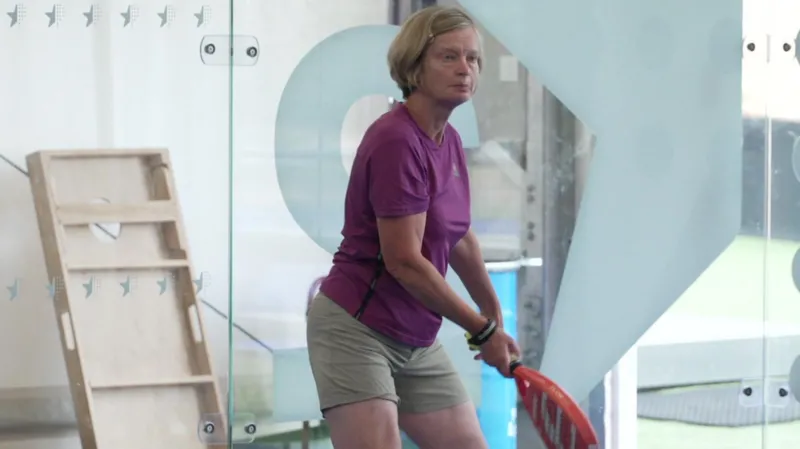
Women attending a She Rallies session in Bracknell told the BBC that they appreciated having opportunities to play in women-only groups as well as mixed teams.
One participant said increasing female participation would be a positive development for the sport.
“Getting more women into the game would be fabulous,” she said.
Another described padel as an enjoyable and social way to stay active.
“It’s great fun, a great way of keeping fit and really social,” she said.
She added that more women would likely enjoy the sport once they gave it a chance.
“It would be great to get more ladies into the game and I think they’d love it once they get into it.”
Padel’s appeal comes partly from its accessibility. Unlike some competitive sports that require years of experience, many beginners can quickly learn the basics and enjoy playing with friends or new teammates.
The smaller court size, slower learning curve compared with traditional tennis and doubles format make it attractive to people looking for exercise combined with social interaction.
However, sports participation research has repeatedly shown that women can face additional barriers when entering activities traditionally dominated by men. These can include confidence issues, concerns about being judged, lack of female role models and uncertainty about whether facilities are designed with their needs in mind.
Padelstars believes creating specific entry points for women can help change perceptions and encourage more people to participate.
The company said more than 145 women attended its July She Rallies sessions, with around half being completely new to padel.
Following the success of the programme, further sessions are planned before the end of the year.
The push to attract more female players comes at a time when padel is expanding rapidly across the UK. New courts are being built in leisure centres, private clubs and community spaces, while more people are discovering the sport through friends, social media and organised events.

Supporters say increasing female participation will be important for the long-term growth of padel, ensuring it develops into an inclusive sport rather than one associated with a particular group of players.
For many women who have already discovered padel, the sport offers more than just physical exercise. It provides an opportunity to meet people, build friendships and enjoy competitive activity in a relaxed environment.
As more clubs focus on accessibility and creating welcoming spaces, organisers hope the gender gap will continue to narrow.
Padel’s future success may depend not only on how many new courts are built, but also on who feels confident enough to step onto them.
With initiatives such as She Rallies encouraging more women to pick up a racquet for the first time, the sport is hoping its next stage of growth will be more balanced and inclusive.
Related News:
 The Hidden Hurdle: Breaking the Silence on Athletic Incontinence
 One Lap, 400 Miles, One Week: GP Sets Sights on Cornwall Perimeter Record Run
 Tragic Death Strikes Half-Marathon in Stoke-on-Trent: Runner Dies Shortly After Crossing Finish Line
 Questions Remain as Rugby Legend Lewis Moody Faces Motor Neurone Disease Diagnosis
 Illegal Skin Lightening Cream Being Sold in UK Butchers, Watchdog Warns
 Adoption Breakdown Ended My Career and Relationship – ‘We’re Told to Get On With It’
 Mystery GP on Train Saves Passenger’s Life
 ‘I Almost Died After a Touch‑and‑Go C‑Section’
 Lewis Moody: ‘I’d Take the Risks Again’
 Water Cremation Introduced in UK First
 Scots Firefighter Cycles 800 Miles for MND Charity
 Woman, 29, ‘Chucked’ Into Care Home 100 Miles Away
 Father Dies by Suicide Weeks After Wedding in Clitheroe
 SNP Health Secretary Criticised Over NHS Failures Locally
 Scotland Combines Alcohol and Drug Strategy to Cut Addiction Deaths
 Dad Delivers Baby After Midwife Flees During High‑Risk Labour in UK
 Schnauzer Travels 140 Miles for Life-Saving Spinal Surgery
 Brain-Damaged Scot ‘Stuck’ in Hospital at Centre of Police Probes
 ‘A Living Nightmare’: Parents of Vaccinated Teenager Speak Out After Rare Meningitis B Battle
 The High Cost of Survival: How the 2026 Fiscal Outlook is Redefining British Life
 Safety Fears at New £200m Maternity Unit: Mums-to-Be ‘Put at Risk’
 ‘Ripple of Fear’: Iran War Fears Sink UK Consumer Confidence to 11-Month Low
 Fuel Famine: How African Nations are Rationing Power and ‘Diluting’ Petrol to Survive
 ‘My Daughter is Under the Rubble’: The Human Cost of the Tehran Strikes
 Parents Warned Against Letting Children Cuddle Lambs Following Infection Spike
 ‘Look After the Children’: The 84-Year-Old Widower Fighting a Broken Care System
 ‘The Best Decision I Ever Made’: A Mother’s Viral Plea After a Near-Miss with Lung Disease
 Swept Out in Seconds: Rip Current Warning After Dramatic Rescue of Five Teens
 The Miracle of Phoenix: ‘Half Dead’ Rescue Dog Defies the Odds in Worcestershire
 The Friendship Friction: Would You Call Out Your Friend’s Toxic Behaviour?
 The Sofa Sanctuary: Llantwit Major Family Living in ‘Disgusting’ Rat Infestation
 Near-Miss Tragedy: 11-Year-Old Injured After Found Gun Discharges
 The Price of Help: Fuel Surge Threatens Charitable ‘Power Plant’
 Heroism on the Platform: Strangers Save Youth After Seizure on Train Tracks
 Toxic Trail: Dog Owners Warned Over ‘Vile’ Poisoned Meat Found in Parks
 The Wheels of Hope: Charity Delivers ‘Seismic’ Joy Through Specialized Bikes for Children with Cancer
 The Waiting Ward: ‘Month of Worry’ as Doctor Strikes Trigger Seismic Surgery Delays
 Rights and Respect: Nurse Wins Legal Settlement Over Transgender Pronoun Dispute
 Accountability in Care: Nurse Struck Off Following ‘Seismic’ Failure to Administer Medication
 ‘A Walking Miracle’: UK’s Youngest In-Utero Transfusion Patient Celebrates Recovery
 Sky Blue Thinking and Boro Brilliance: Lampard and Hackney Sweep EFL Awards
 ‘The Cost of a Life’: Air Ambulances Fear Fuel Spikes May Force Operational Grounding
 The Price of Safety: Why Parents are Quitting Careers to Manage Child Food Allergies
 Together in the Long Run: Southport Dads Become “Like Brothers” Ahead of Marathon
 Together in the Long Run: Southport Dads Become “Like Brothers” Ahead of Marathon
 Running for our Girls: Southport Dads Forge “Brotherly” Bond at London Marathon
 NHS Safety Fears as Nurses Cover Doctor Gaps
 Farke’s Leeds revival: from pressure to FA Cup glory chase
 A Nation in Flux: UK Healthy Life Expectancy Plummets to Record Lows
 “Three-Wheeled Triumph”: Mayor of Erewash Completes 2,000-Mile European Charity Run
 The “Cancer Commute”: Patient Warns of Breaking Point Over 40-Mile Treatment Trek
 Breaking the “Glass Turnstile”: Bradford City Leads Charge for Greater Gender Diversity
 John Terry Faces Backlash Over Political Posts
 “A Death Sentence for Levi”: Family Speaks Out on the Aftermath of Sexual Violence
 “Adult Trends” for Children: Mum’s Viral Horror at “Sexualised” Swimwear in Major UK Retailer
 Robotic Revolution: UK Surgeons Complete First “Fully Autonomous” Abdominal Procedure
 “The Weight of the Nation”: Campaigners Demand Overhaul of “Fragmented” Eating Disorder Care
 “Invisible Agony”: 98-Year-Old Woman Left in “Severe Pain” for Days Amidst Care Backlog
 The “Time Tax” of Memory: Why Dementia Care is the Ultimate Test of UK Resilience
 The “Final Fence”: A Guide to Navigating the 2026 Badminton Horse Trials
 “Fear is a Choice”: The 80-Year-Old Great-Grandmother Defying the “Dopamine Desert”
 The “Dementia Deficit”: Why 2026 is the Breaking Point for UK Social Care
 Precision Without the Scalpel: UK Team Reaches “New Frontier” in Robotic Abdominal Surgery
 Emergency Caesareans Rise Across England
 ‘Epilepsy Makes Finding Work Much Harder’
 Co-Housing Grows as People Battle Loneliness
 Family Says Heatwave Drownings Reopen Grief
 Woman Warns of Lifelong Damage From Ketamine
 Signs of Recovery Emerging for Young People
 Who Is NHS Nurse Harriet Sperling, the Newest Royal Connection?
 The 50-Mile Bus Journey to a Doctor Just Four Miles Away
 “I Never Thought About Concussion” — Rugby Player Reassesses Career Risks
 “My Drinking Days Are Over” — How to Enjoy an Alcohol-Free World Cup
 Harriet Sperling: The NHS Nurse Drawn Into the Royal Spotlight
 Catherine Shares Emotional Family Reunion After Three Peaks Challenge
 London Tube Heat Reaches Dangerous Levels
 Free Pharmacy Service Expands Access to Morning-After Pill
 Why Wimbledon Is Embracing Indian Flavours and Bollywood Beats
 Calls Grow to Ban Toxic Pet Flea Treatments
 Walk-In Mental Health Hubs Planned Across England