Published: 26 August 2026. The English Chronicle Desk. The English Chronicle Online
The US immigration enforcement system recorded its highest monthly number of arrests during President Donald Trump’s second administration in July, according to newly released government data, providing fresh evidence that the White House’s deportation campaign has continued to expand even as enforcement tactics have become less visible.
US Immigration and Customs Enforcement (ICE) arrested 49,571 people in July, according to data provided by ICE to the Deportation Data Project and analysed by the Associated Press. The figure represents a 15% increase from June, when 43,021 people were arrested, and is about 70% higher than the 29,241 arrests recorded in February.
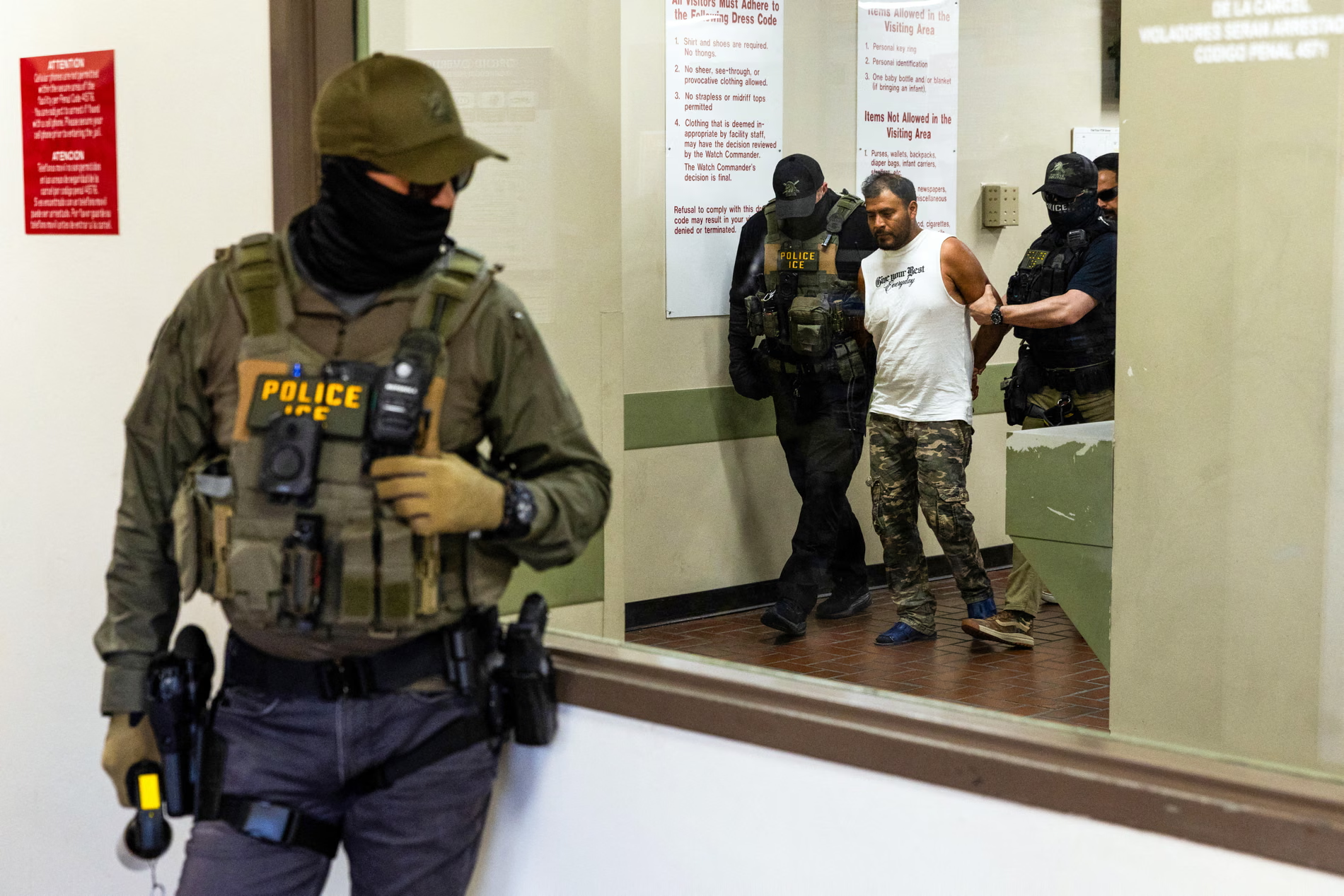
The figures show a substantial change in the scale and character of immigration enforcement inside the United States. Rather than relying predominantly on highly visible raids involving large numbers of federal agents, authorities have increasingly carried out arrests during traffic stops, at ICE offices, outside homes and at other locations where immigration enforcement can attract considerably less public attention.

Attorneys and immigrant advocates say the quieter approach does not necessarily mean enforcement has become less aggressive. Instead, they argue, immigration authorities are using more targeted operations that can be difficult for members of the public to identify as immigration arrests.
“The way that people are being detained is far less flashy, but we are still continuing to see arrests,” said Melissa Shepard, director of legal services at the Southern California-based ImmDef, according to reporting on the latest figures.
She said attorneys were increasingly seeing officers make individual arrests rather than conducting large, highly visible operations involving numerous agents.
The July figures are particularly significant because the Trump administration has repeatedly made mass deportation a central immigration policy objective. The Department of Homeland Security has sought to increase the number of daily arrests, while expanded funding has provided immigration authorities with additional resources for enforcement and detention.
The administration has also expanded cooperation with state and local law enforcement agencies through the 287(g) programme. The programme allows participating local officers to perform certain immigration-enforcement functions under agreements with the federal government.
Data cited by the Associated Press indicate that state and local law-enforcement partnerships accounted for about 6,500 ICE arrests in July, approximately 13% of the monthly total. A year earlier, such arrests represented less than 5% of ICE’s monthly total.
That expansion has raised concerns among immigration lawyers and civil-rights groups because a routine encounter with local police can potentially become an immigration enforcement action.
For immigrant communities, advocates say, the distinction between ordinary policing and immigration enforcement is becoming increasingly difficult to identify.
The latest data also challenge the administration’s repeated emphasis on targeting people with criminal records.
According to an analysis cited in reporting on the July figures, more than half of those arrested during the month had no criminal convictions or charges. The Guardian reported that 51% of July’s arrestees had no criminal convictions or charges, making it the first month during the second Trump administration in which people without such records constituted a majority of those arrested.
That does not mean all those individuals were unlawfully present in the US or had no immigration-related cases. Immigration enforcement can involve people with outstanding removal orders, pending proceedings or other immigration circumstances that are separate from criminal convictions.
Nevertheless, the increase in arrests of people without criminal histories has become one of the most contentious aspects of the administration’s enforcement strategy.
The Deportation Data Project, which obtains immigration records through public-records litigation and analyses government data, has previously documented a major expansion in interior immigration enforcement during Trump’s second term. Its earlier research found that ICE arrests resulting in detention had increased sharply, while arrests conducted outside jails and prisons became far more common.
The organisation’s latest data release extends the available government records into August 2026, although it has warned that some aspects of the ICE removals data raise reliability concerns.
The increase in arrests has been accompanied by a rise in removals.
Nearly 34,000 people were removed from the United States in July, according to the figures cited in reporting on the latest enforcement data. That would make July the highest month for removals since the beginning of Trump’s second administration.
The distinction between arrests and removals is important. An arrest does not automatically result in immediate deportation. Immigration cases can involve detention, hearings, appeals and other legal proceedings before a person is ultimately removed.
The administration’s enforcement drive has nevertheless created growing pressure on immigration courts, detention facilities and legal-services organisations.
Attorneys say people with different immigration statuses are increasingly concerned about travelling or appearing for routine appointments. Some lawyers have advised clients with temporary or pending protections to seek advice before travelling, particularly as immigration authorities increase enforcement at airports and other locations.
Temporary Protected Status has become a particularly sensitive issue.
The administration has moved to end protections for certain groups of migrants, while court decisions have affected the government’s ability to terminate or maintain those protections. Haitian and Syrian migrants have been among those affected by recent legal developments, while temporary protections for Salvadorans are also due to expire in September.
In Springfield, Ohio, advocacy groups have reported increased immigration enforcement involving Haitians who had previously benefited from TPS. Some people have reportedly been required to report to ICE offices and have been fitted with electronic monitoring devices.
The first deportation flight to Haiti since a recent Supreme Court decision concerning Haitian TPS arrived last week, according to the reporting supplied for the story.
For immigrant advocates, the developments have created growing uncertainty about what will happen as more temporary protections expire.
The expansion of the 287(g) programme has added another layer to those concerns. Federal officials have described closer cooperation with local law enforcement as a crucial component of the administration’s enforcement strategy.
Markwayne Mullin, the DHS secretary, has described the programme as a major partnership and said it would help authorities conduct immigration enforcement in a quieter manner.
Supporters of the policy argue that local cooperation gives federal authorities greater capacity to identify and remove people who are subject to deportation. Critics counter that involving local police in immigration enforcement can undermine trust between immigrant communities and law enforcement.
They also warn that people may become reluctant to report crimes or cooperate with police if they fear that an interaction with local officers could result in immigration consequences.
The latest figures arrive after a period of fluctuation in enforcement activity.
Arrests declined after a surge connected with federal operations in Minnesota earlier in the year, but then began rising again. The July total now represents a new high for Trump’s second term.
The scale of the increase also reflects the administration’s broader investment in immigration enforcement. Billions of dollars in additional funding have been directed towards immigration authorities, allowing the government to expand staffing, detention capacity and operational activity.
For the administration, the numbers provide evidence that its promise to intensify immigration enforcement is being implemented.
For immigrant communities and their legal representatives, however, the same figures signal a period of heightened uncertainty.
The change in tactics may also make enforcement more difficult to monitor. Large raids are highly visible and can be documented by journalists, lawyers and community observers. Individual arrests at traffic stops, government offices or residential locations can happen quickly and may receive little immediate public attention.
Volunteer organisations that previously trained observers to document large immigration operations are now adapting their methods to track a more dispersed pattern of arrests.
That shift could make accurate public accounting of enforcement more difficult even as the overall number of arrests continues to rise.
The July figures therefore represent more than a record monthly statistic. They illustrate how immigration enforcement under the Trump administration has become broader, more decentralised and increasingly integrated with local policing.

With the White House continuing to push for higher daily arrest numbers, temporary immigration protections facing further uncertainty and local-federal enforcement partnerships expanding, immigration policy is likely to remain one of the most consequential and contested issues in American politics.
The immediate question is whether the administration can sustain the pace of arrests and removals while navigating legal challenges, pressure on detention and court systems, and concerns from civil-rights organisations.
For thousands of immigrants and their families, however, the issue is less abstract. The latest figures mean that encounters once considered routine — including reporting to an immigration office, driving to work or travelling through an airport — can increasingly carry the possibility of detention.
The record numbers suggest that the US immigration crackdown is not receding. It is changing form, becoming less conspicuous in some places while expanding in scale across the country.
Related News:
 Emails Show Epstein Funded Mandelson’s Husband After Jail
 Father’s Tip Leads to Arrest in Charlie Kirk Murder Case
 Charlie Kirk Killing Used to Mobilise UK’s Largest Far-Right Rally in Decades
 Jailed Georgian Opposition Leaders Warn UK of Iranian Links to Ruling Party
 Files Link Andrew to Epstein Dinner After Prison Release
 Cartel crackdown raises fears of fresh violence
 Judge halts deportation of Yemeni refugees in US
 US judge dismisses Kilmar Abrego Garcia indictment
 China mine blast death toll rises to 90
 Ebola outbreak in DRC overwhelms health system as cases surge
 Former ICC prosecutor condemns US sanctions
 Gunman Killed After White House Security Shootout
 Irish Gangland Figure Fails in Dublin Election Bid
 New Footage Revives Peter Falconio Mystery
 Ukraine Creates Long-Range Strike Command
 Dreyfus Statue Finally Gets Permanent Paris Home
 Israeli Strike in Southern Lebanon Kills Seven
 Trump Administration Dismisses 17 Immigration Judges, Sparking Debate Over Judicial Independence
 Tasers Introduced in UK Prisons to Combat Rising Violence and Protect Staff
 Northern Ireland Family of Three Shot Dead in Maguiresbridge Home Incident
 A Fugitive’s Double Life Uncovered: My Interview with Nicholas Rossi, Scotland’s Notorious Escapee Facing Utah Rape Trial
 Police Advised to Disclose Ethnicity of Suspects in High-Profile Cases
 Failed New Mexico Candidate Sentenced to 80 Years for Drive-By Shootings at Lawmakers’ Homes
 Channel Crossings Surge: Over 1,000 People Arrive in the UK in Small Boats in a Single Day
 Boris Johnson Breached Rules on Post-Office Business Contacts
 UK Extradition Law Change Sparks Fears Among Hong Kong Dissidents
 Kosovo agrees to host Britain’s refused asylum seekers
Johnson Approved China’s London ‘Super-Embassy’ in 2018
Kosovo agrees to host Britain’s refused asylum seekers
Johnson Approved China’s London ‘Super-Embassy’ in 2018
 French Taxi Driver Cleared in David Lammy Theft Case After Fare Dispute
 UK University Faces Counter-Terror Probe Over China Pressure
 Just Stop Oil Protesters Convicted Amid Climate Defence Row
China-critical UK academics face ‘extremely heavy’ pressure from Beijing
Just Stop Oil Protesters Convicted Amid Climate Defence Row
China-critical UK academics face ‘extremely heavy’ pressure from Beijing
 Met Police Culture Makes Racial Harm ‘Inevitable’
 British Grandmother to Return Home After Death Sentence in Bali
 Remaining rebel Labour MPs have whip restored
 Ukraine-Russia war latest: Putin’s troops exploit bad weather to force Kyiv withdrawal from multiple towns
 New Epstein Files Spark Political Clash in Washington
 Trump Urges Herzog to Grant Netanyahu Full Pardon
 New review urges UK to repatriate Shamima Begum, others from Syria
 Victims’ commissioner Baroness Newlove dies aged 63
 US Justice Department Files Lawsuit Against California Over Partisan Voting Maps
 Oklahoma Governor Grants Last-Minute Clemency to Death Row Inmate
 Indian authorities demolish Kashmir home linked to Red Fort blast
 Greene Pushes Epstein Files Amid Trump Fallout
 Trump Deploys DHS to Charlotte in Major Arrest Operation
 South African Detained After Neo-Nazi Rally in Australia
 Congress Approves Release of Epstein Files, Trump Expected to Sign
 Trump Signs Bill Releasing Justice Department Files on Epstein
 WhatsApp Messages Expose Nathan Gill’s Bribery
 Venezuela Threatens Nobel Winner Machado with Fugitive Status
 Texas Governor Faces Lawsuit From CAIR
 Trump Envoy to Discuss Ukraine Peace at Kremlin
 Video shows Israeli troops kill Palestinians after surrender
 Chinese & Japanese Boats Clash Near Disputed Islands
 Putin Meets US Envoy Amid Key Ukraine Peace Talks
 Iran Leader Blames Protesters, Says They Serve Trump
 Guterres Warns Global Cooperation Under Threat at UN’s 80th Year
 The ‘Untouchable Hacker God’ and Finland’s Darkest Digital Crime
 South Korea Jails Ex-President in Martial Law Ruling
 UK and EU Signal Fresh Push for Defence Cooperation Talks
 Thousands Protest ICE Operations in Nationwide US Day of Action
 Thousands Protest ICE in New York Against Trump Deportation Campaign
 Sydney Protest Clash Triggers Police Probe
 Report Says Pezzullo Acted ‘Recklessly’ in Dealings
 Hungary election: Orbán faces biggest test amid scandal
 Suspected Plot Targets Pipeline Before Hungary Vote
 Ben Roberts-Smith Denies War Crime Allegations in First Statement
 Learner Driver Charged After Expo Tragedy
 OpenAI CEO Apologizes After Canada Shooting Case
 US Charges Sinaloa Governor in Major Cartel Case
 US Court Ruling Reshapes Voting Rights Landscape
 US states redraw maps after voting rights ruling
 Activists allege abuse after Gaza flotilla seizure
 Trump warns Iran as Middle East tensions surge again
 US ‘Narco Boat’ Strikes Draw Global Outcry
 Afghan Families Left in Limbo Face Risk of Deportation
 Trump Announces 3-Day Russia–Ukraine Ceasefire Deal
 Immigration Judges Fear Pressure in Trump Era
 US green card applicants must apply from abroad, DHS says
 Le Pen’s Popularity Holds Despite Conviction