Published: 26 August 2026. The English Chronicle Desk. The English Chronicle Online
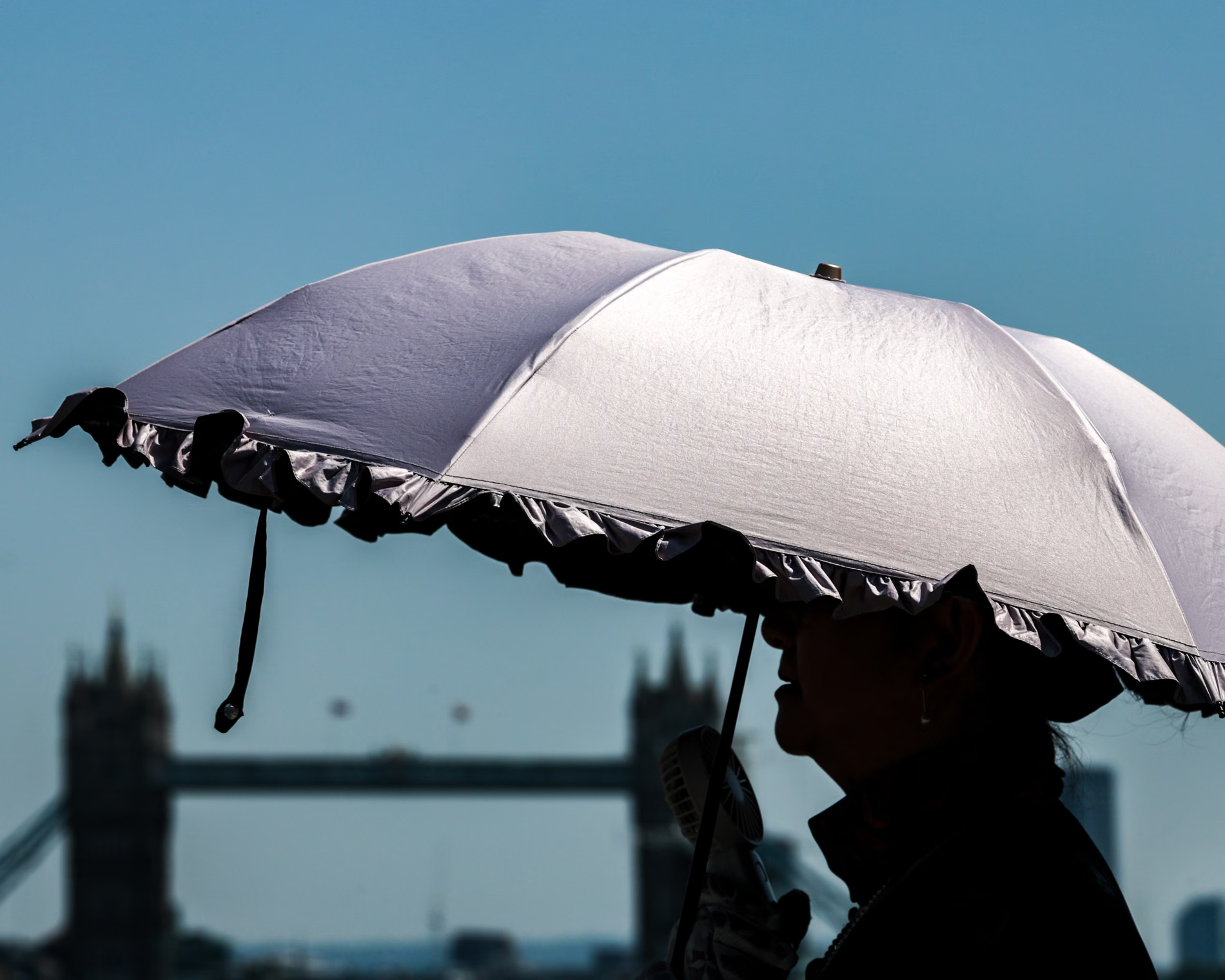
More than 40,000 additional deaths in England were associated with the hottest days between 1988 and 2025, according to newly published figures from the Office for National Statistics, highlighting the growing health risks posed by rising temperatures.
The figures show how the impact of extreme heat has become increasingly significant over recent decades. While cold weather historically accounted for substantially more excess deaths, the gap between heat-related and cold-related mortality has narrowed considerably, with the latest data showing heat emerging as an increasingly serious public-health threat.
The findings come as England experiences another period of unusually high temperatures and follows a summer in which heatwaves placed significant pressure on hospitals, emergency services and vulnerable communities.

The ONS analysis examined mortality in England and Wales in relation to unusually hot and cold temperatures between 1988 and 2025. It found that more than 40,000 deaths in England were associated with the hottest days during that period, while around 139,000 deaths were linked to the coldest days.
The difference remains substantial over the full period, but researchers say the trend is changing. In the most recent year covered by the analysis, 2,805 heat-related deaths were recorded in England and Wales, compared with 2,244 deaths associated with extreme cold.
James Tucker of the ONS said the results demonstrated that the historical difference between heat-related and cold-related mortality had narrowed in recent years as the proportion of deaths linked to high temperatures increased.
The figures have intensified concerns among climate scientists and public-health experts that extreme heat is becoming a structural threat to Britain’s health system rather than an occasional summer emergency.
Dr Clair Barnes, a statistician at Imperial College London who studies the effects of climate change on extreme weather, said the country could face a point where heat-related deaths exceed those occurring during the coldest periods.
She argued that the increasing danger from heat was already evident and warned that the situation could deteriorate further unless governments reduced greenhouse-gas emissions and expanded measures to protect people from excessive temperatures.
The risks are particularly serious for older people, children and those living with existing health conditions. High temperatures can place considerable strain on the cardiovascular and respiratory systems, while dehydration and heat exhaustion can rapidly become dangerous for vulnerable individuals.
The elderly are particularly exposed because the body’s ability to regulate temperature can weaken with age. People living alone may also face additional risks if they become unwell during prolonged periods of extreme heat.
England’s healthcare system has already experienced the consequences of the increasingly difficult summer conditions. Emergency departments have reported exceptionally high demand, with almost 2.5 million attendances recorded each month in May, June and July.
Extreme temperatures have also affected healthcare workers themselves. Nursing organisations have warned that staff have been working in exceptionally difficult conditions, with some workers reportedly becoming unwell during shifts as hospitals struggled to cope with excessive indoor temperatures.
The pressure has extended beyond hospitals. Emergency services in London have faced unusually high demand during periods of extreme heat. The London ambulance service received thousands of additional calls compared with the previous year, adding to concerns about the ability of emergency systems to cope with simultaneous weather and health crises.
The ONS figures also reveal significant regional differences. London recorded the highest number of deaths attributable to the hottest temperatures during the period examined.
Almost every English region experienced a substantial increase in the risk of death once temperatures rose above 24C. Wales also recorded thousands of deaths associated with the hottest days, although cold temperatures continued to account for a much larger number of deaths there over the longer period.
For decades, discussions about weather-related mortality in Britain have tended to focus on winter. Cold temperatures can increase the risk of respiratory infections, cardiovascular complications and other illnesses, particularly among older people.
However, climate change is altering the balance.
The average global temperature has risen as a result of human activity, with the burning of fossil fuels increasing concentrations of heat-trapping greenhouse gases in the atmosphere. One consequence is that extreme heat events are becoming more frequent and intense in many parts of the world.
Britain is not immune to that trend.
Historically, many homes and public buildings in the UK were designed primarily to retain heat during winter rather than to remain cool during increasingly hot summers. This creates additional challenges when temperatures remain high for several consecutive days.
The problem can be particularly severe in urban areas. Concrete buildings, roads and other infrastructure can absorb and retain heat, creating so-called urban heat islands in which temperatures remain higher than surrounding rural areas, particularly overnight.
London’s large population and dense built environment make it particularly exposed.
Public-health specialists have repeatedly argued that preparation for extreme heat needs to extend beyond emergency responses during individual heatwaves. They say building design, urban planning, access to green spaces and public-health communication all have roles to play.
Cooling measures are also becoming increasingly important. These can include ensuring homes and hospitals have adequate ventilation, providing shaded public spaces and identifying vulnerable residents before extreme weather arrives.
The ONS figures have also prompted renewed debate about how heat-related deaths should be understood.
Bob Ward of the Grantham Research Institute on Climate Change at the London School of Economics said comparisons between cold and heat deaths should not be used to minimise the seriousness of heat-related mortality.
He argued that deaths associated with both extremes are important and that many could potentially be prevented through better preparation and public-health measures.
The significance of the latest figures is not simply the number of deaths recorded. The longer-term trend suggests that the health consequences of rising temperatures are becoming more visible.
The most recent figures provide a particularly striking indication of that change. In 2025, heat-related deaths in England and Wales exceeded those associated with cold temperatures, reversing the traditional pattern seen across much of the historical record.
The ONS analysis does not include the full impact of the current summer, meaning the latest figures cannot yet provide a complete assessment of deaths associated with this year’s heatwaves.
Earlier estimates from the UK Health Security Agency suggested that thousands of additional deaths were associated with heatwaves during May and June alone. If further periods of extreme heat occur, the eventual annual total could increase.
Climate researchers say the demographic changes taking place in Britain could further amplify the problem. As the population ages, the number of people particularly vulnerable to high temperatures is expected to increase.
This means that climate policy and health policy are becoming increasingly interconnected.
Reducing greenhouse-gas emissions remains central to limiting the long-term increase in temperatures, but experts also say adaptation is unavoidable. Even with significant emissions reductions, some degree of further warming is already expected because of greenhouse gases accumulated in the atmosphere.
The challenge for governments will therefore be to reduce the causes of climate change while simultaneously making communities more resilient to the conditions that are already emerging.

The latest mortality data offers a stark warning of what is at stake. Extreme heat is no longer simply a matter of uncomfortable summer weather. For thousands of people, particularly those already vulnerable, it can become a life-threatening condition.
As temperatures continue to rise, experts say the question is increasingly one of preparedness: whether governments, health services and communities can adapt quickly enough to prevent extreme heat from claiming even more lives.
The figures suggest that the UK’s traditional understanding of weather-related health risks is changing. Cold weather remains a major cause of excess mortality, but heat is rapidly becoming a much larger part of the public-health picture.
Without stronger adaptation and continued efforts to tackle climate change, researchers warn that the narrowing gap between heat and cold mortality could eventually disappear altogether.
Related News:
 Storm Leonardo Triggers Election Delay Calls in Iberia
 Evacuations Ordered as California Wildfires Spread Fast
 Storm Dave Disrupts Travel but Conditions Set to Ease
 Queensland Braces for Potential Second Severe Cyclone Hit
 Cyclone Vaianu Forces Mass Evacuations in New Zealand
 Japan Snack Giant Drains Colour as Oil Crisis Hits Home
 Sydney Records Hottest June Since 1859 as Expert Warns New High a ‘Signature’ of Global Warming
 Wildfires rage across Europe as hundreds arrested in France
 Kate Winslet to Narrate Film Highlighting King’s Environmental Mission
 Trump’s UK Ambassador Urges North Sea Drilling to Strengthen US Ties
 UK Bans Fake Numbers: Scammers Lose Their Trick
 Vibe coding’ named Collins dictionary’s word of the year
BBC to Apologise Over Edited Trump Speech Amid Backlash
Vibe coding’ named Collins dictionary’s word of the year
BBC to Apologise Over Edited Trump Speech Amid Backlash
 Millionaires group urge Reeves to introduce wealth tax to ‘lift kids out of poverty’
 Reeves rejects £1bn plea for NHS redundancy payouts
 PM Condemns Leaks, Vows Loyalty to Ministers and Stability
 Phillipson Accused of Appeasing Unions by Diluting EBacc
 Saka Solidifies Role as Tuchel’s Key England Lieutenant
 Greene Pushes Epstein Files Amid Trump Fallout
 Zelenskyy Signs Fighter Jet Deal Amid Russian Drone Attacks
 Sundar Pichai Cautions on AI Hype and Market Risks
 Shadow Fleet at Sea: Europe’s Battle Against Illicit Oil Shipping
 Snow and Ice Cause Travel Chaos in North Yorkshire
 Director Michael Caton-Jones Reflects on Career and Beginnings
 Inside the Helpline Protecting Missing Children in the UK
 PlayStation PS5 Deals Hit Lowest Prices Ahead of Black Friday
 US Suspends Afghan Immigration After White House Shooting
 Five-Year-Old Dies After Rare Tonsil Surgery Complication
 Starmer Says Labour’s Economic Plan Needs Years to Deliver
 ‘Extinct’ Antelope Returns to Sahara, Bringing Hope
 IndiGo Cancels Hundreds of Flights Amid Pilot Shortages
 Young Britons Face Heaviest Burden from Ageing Population, Lords Warn
 U‑Turn on Farmers’ Inheritance Tax Sparks Political Firestorm
 Aston Villa Remain Arsenal’s Key Obstacle in Title Pursuit
 Irish Beach Tragedy: Irish Drown at Whitehaven Beach in Australia
 Starmer Faces Parliamentary Battles Over UK-EU ‘Reset’ Plan
 Met Police Vetting Failures Let Serial Rapists Remain
 Federal Immigration Shift: Officers Leave Louisiana for Minneapolis
 Fatal Bolton Taxi Crash Claims Three Teens and Driver
 Australia grants Asio powers to designate hate groups under new laws
 Friedman Uninvited From 2024 Adelaide Writers’ Week
 ScottishPower Tops List of Worst UK Energy Suppliers
 Investigation Into Anti-Trump Motives After Gala Shooting
 Dubai Assets Linked to Sudan’s RSF Militia Exposed
 Blue Badge Abuse: The Rising Tide of Public Hostility
 Tragedy Strikes at Parafield Airport
 Scott Parker Leaves Burnley After Premier League Drop
 Silent Tracks: Rail Line Without Passengers
 Arteta urges Arsenal to step up in Atlético semi-final
 RFU Backs Borthwick Despite England’s Poor Six Nations
 Major test for Labour as polls open in Great Britain
 High-Profile Murder Trial Begins for Ian Watkins Death
 Trump Rejects Tehran Peace Plan as Regional Truce Crumbles
 Wes Streeting faces narrow road to Labour members’ favour
 Keir Starmer Struggles to Secure His Grip on Downing Street
 Trump and Xi Convene in Beijing for Historic High-Stakes Summit
 Farage Faces Standards Probe Over Cash Property Purchase
 Closing the Gap: UK Pensions Commission Demands Action
 Reality TV Under Scrutiny Following Serious Allegations
 UK Eases Russian Oil Sanctions as Fuel Costs Soar
 Alice Capsey Sparks England Win With Brilliant Fifty
 Maldives Cave Diving Tragedy Raises Safety Alarm
 Russian Electronic Attack Targets UK Defence Chief Jet
 UK Shoppers Face Prolonged Price Rises At Tills
 Tube Strike Brings Capital to a Standstill Over Shift Disputes
 Makerfield Voters Demand Real Change as Election Looms
 Man City Threaten Legal Action Over Haaland Real Madrid Shirt
 Celestial Waltz: Venus and Jupiter Meet at Twilight
 Abbott Signals Bold Strategy Change For Australian Right
 Ryanair Faces Probe Over Mandatory Family Seating Fees
 Britain’s Crowning Butterfly Takes the Nation by Storm
 Fifa Official Under Investigation Over Hand Gesture Controversy
 US Trafficking Arrest Exposes Shocking Exploitation
 Trump Signs Landmark Iran Accord in Versailles
 Grief and Devotion Amidst the Rubble of Nabatieh
 Stirchley Community Housing Scheme Faces Crisis
 Watchdog Warns Ministers to Pause Impending HS2 Reset
 EU Slashes Steel Quotas But Grants UK Favourable Rates
 Trump Faces Backlash Over $2bn Earnings Since Return
 Starling Bank Trims Jobs for AI Future