Published: 08 June 2026. The English Chronicle Desk. The English Chronicle Online.
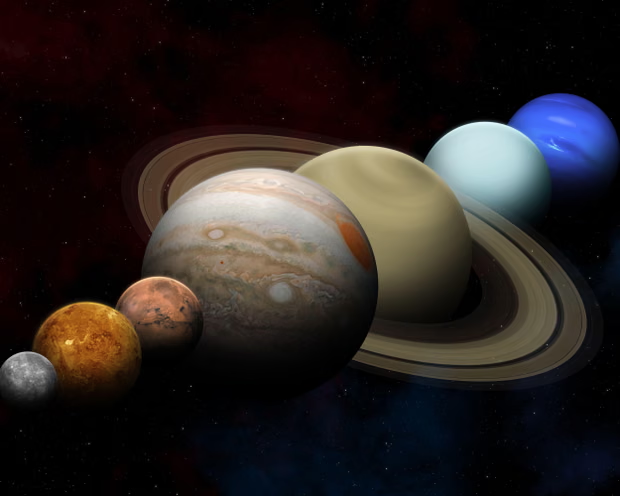
The evening sky offers a beautiful spectacle this week for stargazers across the United Kingdom. Two of the brightest planets in our solar system are putting on a dramatic show together. Venus and Jupiter are currently drawing close to one another in the western twilight sky. This celestial meeting provides an excellent excuse to look up after the sun goes down. Amateur astronomers and casual observers alike are preparing their binoculars for a truly wonderful view.
The planetary pairing will be visible looking toward the west-northwest horizon at around nine forty-five. At this specific time, the twilight sky will still hold a deep blue summer glow. Most stars will not have emerged yet because the atmosphere remains quite bright with sunset. However, Venus and Jupiter are both powerful enough to pierce through this lingering evening light. They will appear as two brilliant jewels set against the slowly darkening canvas of space.
Observing this event requires a clear view because the planets sit very low indeed. You will need to find a location that is completely free of obstructing buildings. Heavy treelines and tall city structures will easily block this beautiful low-lying planetary display. Finding a nearby hill will greatly improve your chances of catching the whole event. A higher vantage point lifts your line of sight above the immediate local obstacles around.
The physical separation between the two planets will be roughly one and a half degrees. To visualize this distance, imagine the width of three full moons placed side by side. This close proximity makes the cosmic pair look like a brilliant double star system. It is a rare perspective that highlights the dynamic movement of our solar neighbourhood. Such alignments always capture the public imagination because they are so easily seen without telescopes.
Category: Science & Nature | Public Events
Venus is definitely the easier of the two cosmic neighbors to spot first tonight. It currently serves as our brilliant evening star, shining with immense power and clarity. The planet blazes brightly at an impressive astronomical magnitude of around minus four point zero. This extreme brightness makes Venus the third brightest object in the entire sky after the moon. You will notice it gleaming sharply long before any actual stars begin to appear.
Jupiter is technically the fainter sibling in this pairing but remains remarkably bright nonetheless. The giant gas planet shines at a respectable magnitude of about minus one point nine. While it cannot match the intense glare of Venus, it still outperforms every star. Together, they form an arresting sight that will naturally draw your eyes westward this week. Their contrasting brightness adds a lovely depth to this beautiful twilight encounter in the sky.
Both planets are currently traversing through the famous zodiac constellation known officially as Gemini. The stars representing the mythical twins are hidden initially by the bright western twilight glow. As the sky gradually darkens, the entire planetary tableau will slip closer to the horizon. This means the cosmic background will emerge just as the planets are setting from view. It creates a beautiful race against time for observers wishing to see the full constellation.
The two brightest stars of Gemini will be the very first to pierce through. These famous stellar twins are named Castor and Pollux by astronomers across the globe. They will appear just above the planets as the twilight finally fades into true night. Their appearance completes a magnificent heavenly picture that rewards patient watchers in the countryside. The entire view provides a perfect snapshot of our solar system intersecting with deep space.
Category: Local Skywatching | Science Feature
Those blessed with a truly perfect western horizon might catch a third planetary visitor. The elusive inner planet Mercury is currently lurking very low in the same region. It is situated roughly midway down the bodies of the legendary celestial twins of Gemini. Finding Mercury is always a notorious challenge because it stays so close to the sun. This week provides a rare but difficult opportunity to spot three planets simultaneously tonight.
Chasing Mercury requires a direct race against the rapidly rotating planet we live upon. The sky must darken sufficiently for the faint planet to become visible to us. However, Mercury will simultaneously be sinking lower toward the horizon line every single minute. It will likely disappear below the edge before the sky becomes fully dark tonight. This creates a very narrow window of opportunity for dedicated skywatchers across Britain.
Using a simple pair of binoculars will greatly assist your search for elusive Mercury. Be absolutely certain that the sun has completely set before using any optical equipment. Looking at the sun through binoculars can cause permanent and irreversible damage to your eyes. Once the sun is safely gone, sweep the lower horizon gently with your glasses. You might just catch a glimpse of the fleet-footed planet before it departs.
Events like this planetary conjunction remind us of our magnificent place in the universe. They require no expensive scientific equipment to enjoy, only clear skies and a little time. This week offers a perfect chance to step outside and enjoy nature’s free theatre. Gather your family, find a high hill, and watch the beautiful western sky unfold. The dance of Venus and Jupiter is a timeless spectacle you will not forget.
Related News:
 Reeves Faces Setback as Labour May Miss Homes Target
 Kate Winslet to Narrate Film Highlighting King’s Environmental Mission
 Trump’s UK Ambassador Urges North Sea Drilling to Strengthen US Ties
 UK Bans Fake Numbers: Scammers Lose Their Trick
 Vibe coding’ named Collins dictionary’s word of the year
BBC to Apologise Over Edited Trump Speech Amid Backlash
Vibe coding’ named Collins dictionary’s word of the year
BBC to Apologise Over Edited Trump Speech Amid Backlash
 Millionaires group urge Reeves to introduce wealth tax to ‘lift kids out of poverty’
 Reeves rejects £1bn plea for NHS redundancy payouts
 PM Condemns Leaks, Vows Loyalty to Ministers and Stability
 Phillipson Accused of Appeasing Unions by Diluting EBacc
 Saka Solidifies Role as Tuchel’s Key England Lieutenant
 Greene Pushes Epstein Files Amid Trump Fallout
 Zelenskyy Signs Fighter Jet Deal Amid Russian Drone Attacks
 Sundar Pichai Cautions on AI Hype and Market Risks
 Shadow Fleet at Sea: Europe’s Battle Against Illicit Oil Shipping
 Snow and Ice Cause Travel Chaos in North Yorkshire
 Director Michael Caton-Jones Reflects on Career and Beginnings
 Inside the Helpline Protecting Missing Children in the UK
 PlayStation PS5 Deals Hit Lowest Prices Ahead of Black Friday
 US Suspends Afghan Immigration After White House Shooting
 Five-Year-Old Dies After Rare Tonsil Surgery Complication
 Starmer Says Labour’s Economic Plan Needs Years to Deliver
 ‘Extinct’ Antelope Returns to Sahara, Bringing Hope
 IndiGo Cancels Hundreds of Flights Amid Pilot Shortages
 Young Britons Face Heaviest Burden from Ageing Population, Lords Warn
 U‑Turn on Farmers’ Inheritance Tax Sparks Political Firestorm
 Aston Villa Remain Arsenal’s Key Obstacle in Title Pursuit
 Irish Beach Tragedy: Irish Drown at Whitehaven Beach in Australia
 Starmer Faces Parliamentary Battles Over UK-EU ‘Reset’ Plan
 Met Police Vetting Failures Let Serial Rapists Remain
 Federal Immigration Shift: Officers Leave Louisiana for Minneapolis
 Fatal Bolton Taxi Crash Claims Three Teens and Driver
 Australia grants Asio powers to designate hate groups under new laws
 Friedman Uninvited From 2024 Adelaide Writers’ Week
 US and Iran Agree to Two-Week Provisional Ceasefire
 Battle of Britain Tower to House Tourists and Bats
 The Challenger: Will Péter Magyar End the Orbán Era?
 UK Government Poised to Revive Stalled Hillsborough Law
 Democrats Move to Impeach Defense Secretary Pete Hegseth
 Security Alert Near Israeli Embassy as Police Investigate
 Ben Roberts-Smith Denies War Crime Allegations in First Statement
 Home Office Faces Legal Risks Over Asylum Hotel Living
 US-Iran Standoff: Will Trump Deploy Ground Troops?
 Crisis in NHS Surgery Scheduling Hits Patients Hard
 Investigation Into Anti-Trump Motives After Gala Shooting
 Dubai Assets Linked to Sudan’s RSF Militia Exposed
 Blue Badge Abuse: The Rising Tide of Public Hostility
 Tragedy Strikes at Parafield Airport
 Scott Parker Leaves Burnley After Premier League Drop
 Silent Tracks: Rail Line Without Passengers
 Arteta urges Arsenal to step up in Atlético semi-final
 RFU Backs Borthwick Despite England’s Poor Six Nations
 Major test for Labour as polls open in Great Britain
 High-Profile Murder Trial Begins for Ian Watkins Death
 Trump Rejects Tehran Peace Plan as Regional Truce Crumbles
 Wes Streeting faces narrow road to Labour members’ favour
 Keir Starmer Struggles to Secure His Grip on Downing Street
 Trump and Xi Convene in Beijing for Historic High-Stakes Summit
 Farage Faces Standards Probe Over Cash Property Purchase
 Closing the Gap: UK Pensions Commission Demands Action
 Reality TV Under Scrutiny Following Serious Allegations
 UK Eases Russian Oil Sanctions as Fuel Costs Soar
 Alice Capsey Sparks England Win With Brilliant Fifty
 Maldives Cave Diving Tragedy Raises Safety Alarm
 Russian Electronic Attack Targets UK Defence Chief Jet
 UK Shoppers Face Prolonged Price Rises At Tills
 Tube Strike Brings Capital to a Standstill Over Shift Disputes
 Makerfield Voters Demand Real Change as Election Looms
 Man City Threaten Legal Action Over Haaland Real Madrid Shirt
 The Hidden Crisis Eroding Trust in British Communities
 Saving the Scalloped Hammerhead: The Pacific Battle
 Stolen Mobiles Could Soon Become Useless Bricks
 Clean Air Initiatives Spark Major Fall in London Hospital Admissions
 Fearless Pioneer of Investigative Journalism Dies Aged 83
 Trump Urged to Condemn UFC Fighter Over Obama Slurs
 The Fear Gap: Why Europe Feels Less Safe Than It Is
 US Military Pacific Boat Strike Kills Three People
 Dettol Apologises for ‘Toxic Men’ Advert Backlash in China
 UK Care Crisis: Row Explodes Over New Visa Settlement Rules
 Sainsbury’s Boss Optimistic As Grocery Inflation Eases