Published: 08 September 2025. The English Chronicle Desk
Nepal has been engulfed in its most violent street protests in recent years after the government imposed a sweeping ban on 26 major social media platforms, sparking fury among young people across the country. At least 14 people were reported killed and more than a hundred injured as demonstrators, largely from Generation Z, clashed with police and security forces in Kathmandu and other major cities. The unrest has triggered a nationwide crisis, raising urgent questions over freedom of expression, state control, and the future of democracy in the Himalayan nation.

The protests erupted after Prime Minister K. P. Sharma Oli’s administration ordered the blocking of globally popular platforms including Facebook, YouTube, Instagram, WhatsApp, X (formerly Twitter), and LinkedIn. Officials defended the decision, citing concerns over hate speech, misinformation, fake accounts, and online fraud. The Ministry of Communication and Information Technology said the companies were given repeated requests to register locally and obtain government licenses but failed to comply. “We requested them to enlist with us five times. What to do when they don’t listen to us?” ministry spokesman Gajendra Kumar Thakur told reporters.
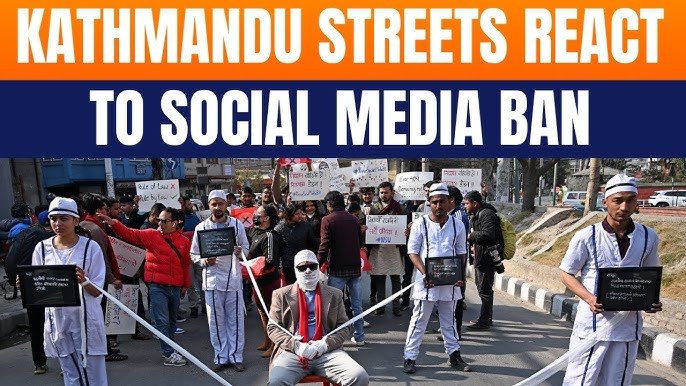
Yet critics believe the move reflects a far more sweeping attempt by the government to muzzle dissent and extend control over online spaces that have become powerful tools for political mobilisation and criticism of corruption. Protesters who took to the streets in Kathmandu carried placards with slogans such as “Shut down corruption, not social media” and “Unban social media,” while waving the national flag in defiance of curfew orders. By Monday afternoon, demonstrators had clashed with riot police near parliament, some briefly entering parliamentary grounds before being forced back.
Authorities responded with a heavy hand. The government confirmed that the army had been deployed alongside police to enforce curfews in the capital and other flashpoints. Security forces used rubber bullets, batons, water cannons and tear gas to disperse crowds, while protesters retaliated by throwing stones, setting fire to barricades and toppling police cordons. Eyewitness images and footage shared by local outlets depicted chaotic scenes of smoke-filled streets, young people in school uniforms standing against riot shields, and injured protesters being carried away on makeshift stretchers.

The death toll has been contested. State-run Nepal Television initially reported just one fatality and around 50 injuries, while local newspapers raised the count to six before revising it upwards. By late afternoon, The Kathmandu Post and other independent outlets were reporting at least 14 dead. Officials acknowledged more than 100 injured, with hospitals in Kathmandu and Biratnagar overwhelmed by the influx of casualties.
For many of the protesters, the unrest has gone beyond opposition to the social media ban and has turned into a broader condemnation of systemic corruption and authoritarian governance. “We were triggered by the social media ban, but that is not the only reason we are gathered here,” said 24-year-old student Yujan Rajbhandari, quoted by AFP. “We are protesting against corruption that has been institutionalised in Nepal.” Another young demonstrator, 20-year-old Ikshama Tumrok, declared that her generation was determined to end a cycle of repression. “We want to see change. Others have endured this, but it has to end with our generation,” she said.
The protests have spread rapidly beyond Kathmandu to cities including Pokhara, Bharatpur and Biratnagar, with thousands of students and young professionals defying restrictions to join marches. In some towns, demonstrators occupied key highways, paralysing traffic and disrupting daily life. The government imposed curfews until late evening, but reports suggested that many groups defied them, chanting against the Oli administration deep into the night.
International observers have expressed alarm at the developments. The Committee to Protect Journalists condemned the ban as a “dangerous precedent for press freedom” and urged the government to immediately restore access. “Social media platforms are essential tools for exercising press freedom,” said CPJ regional director Beh Lih Yi. Rights groups warned that cutting off digital communication in a country where 90 percent of the 30 million population are internet users would isolate communities, weaken transparency, and damage the tourism and remittance-driven economy.
The Oli government has defended its decision by pointing to a recent Supreme Court directive requiring media platforms to register locally and be accountable for misinformation and harmful content. Officials argue that compliance is a necessary step to protect national security and public order. Yet critics see this as part of a pattern. A temporary TikTok ban in 2023, lifted after the platform complied with registration rules, is now being cited as a precedent. This time, however, the ban has been more sweeping, covering nearly all widely used platforms and cutting off Nepalese society from global digital networks.
The crisis has quickly become one of the most significant challenges to Nepal’s fragile democracy since the end of the monarchy and the civil war. With much of the younger generation relying on social media not only for communication but also for education, business, and political expression, the government’s move is seen as a direct strike at their way of life. Analysts fear that if the standoff continues, Nepal may face deeper political instability, with long-lasting consequences for governance, foreign relations, and its already struggling economy.

For now, Kathmandu remains under heavy security, with army patrols in key districts and curfews extended into the evening. The voices of Nepal’s youth, however, appear unlikely to be silenced. From street slogans to underground networks, the message has been consistent: this is not only about social media, but about the future of freedom and accountability in the country.
Related News:
 Ousted Bangladeshi Leader Sheikh Hasina Indicted for Crimes Against Humanity Amid High-Stakes Trial for 2024 Uprising
 The Explosive Fallout of a Broken Alliance Between Thailand and Cambodia
 Philippine Supreme Court Halts Impeachment of Sara Duterte, Fuelling 2028 Election Speculation
 Thailand and Cambodia Agree to Immediate Ceasefire Following Regional Diplomacy
 Naoshima, Japan’s Island of Art Transforms Into Asia’s Cultural Crown Jewel
 Tensions Flare as Thailand Accuses Cambodia of Breaching Hours-Old Ceasefire Amid Border Clashes
 Shadow Fortresses in the Sea: Satellite Revelations Expose China’s Expanding Military Stronghold in Disputed Waters
 Singapore Corruption Scandal: Details Emerge on Iswaran’s Luxury Flight and Ties to Tycoon Ong Beng Seng
 Tariff Tempest: India Rebukes Trump’s ‘Unfair’ Oil Sanctions as Diplomatic Tensions Mount
 European Leaders Insist Peace Talks Must Include Kyiv as Trump-Putin Summit Nears
 Deadly Flash Floods Devastate Pakistan’s Khyber Pakhtunkhwa, Over 330 Killed and Hundreds Missing
 UN Calls for Renewed Global Solidarity as Rohingya Forced Exodus Marks Eight Years
 Afghanistan Earthquake Devastates Villages, Claims Over 800 Lives
 Xi, Putin and Kim Display Unified Front at Massive Beijing Military Parade
 Deadly Bomb Blast Strikes Near Political Rally in Quetta
 India Triumph in Dubai Amid Unexpected Twists
 Pakistan-Saudi Arabia Defence Pact Raises Alarm in India
 Typhoon Ragasa Batters Taiwan, Hong Kong and China
 Gen Z Uprising in Asia: How Social Media and TikTok Fuel Anti-Corruption Movements
 Thai Court Sentences Assassin of Cambodian Opposition Politician to Life Imprisonment
 Headline: Six Patients Killed in Jaipur Hospital ICU Fire
 Taliban Diplomatic Breakthrough: Why Amir Khan Muttaqi’s Visit Marks a New Era in India-Afghanistan Relations
 Acclaimed South Korean Author Baek Se-hee Passes Away at 35, Leaves Legacy Through Writing and Organ Donation
 Suicide Bombing at Islamabad Court Kills 12, Injures Dozens
 Shook the ground under my feet: Panic as car blast hits near Delhi’s Red Fort
 Delhi Tightens Curbs as Citizens Protest Over Toxic Air
 China’s Youth Save, Not Spend, Amid Job and Housing Worries
 Cryptoqueen Behind £5bn Bitcoin Scam Jailed in London
 Thai King Embarks on Historic China Visit After 50 Years
 Delhi Car Blast Kills Eight, Declared Terror Incident
 South Korea’s College Exam Tests Perseverance of Blind Students
 Pakistan parliament approves expanded powers for army chief
 Truck Crashes into South Korean Market, 2 Dead, Dozens Hurt
 Japan Deploys Police to Curb Deadly Bear Attacks
 Hasina Rejects Allegations Ahead of Bangladesh Tribunal Verdict
 Early Trends Suggest Modi’s Alliance Leading in Key Bihar Election
 Indian Police Probe Kashmir Links in Delhi Red Fort Blast Case
 Japan Tourism Stocks Slide Amid China-Taiwan Row
 South Korea Gains US Support for Nuclear Submarine Programme
 Tragedy Strikes Indian Pilgrims in Saudi Bus Accident
 Ex-PM Hasina Gets Death Penalty for Crimes Against Humanity
 From Bikes to Cash: India’s Election Spending Soars
 Why India is Unlikely to Return Sheikh Hasina to Face Execution
 British Doctors Arrested in India for Unauthorized Border Crossing
 Israeli Strike Kills 13 Near Palestinian Camp in Lebanon
 Trump Says Crown Prince Knew Nothing About Khashoggi Death
 Myanmar Military Busts Thai Border Scam Hub, 346 Arrested
 India’s COP30 Delay Raises Global Climate Concerns
 Night Bus Crash in Cambodia Kills 16
 Historic Floods Devastate Thailand and Southeast Asia
 Hong Kong Wang Fuk Court Fire Leaves Dozens Dead
 Delhi’s Toxic Air Crisis Leaves Children Sick and Vulnerable
 Southern Lebanon reels as Israeli strikes shatter communities
 Singapore Women Acquitted After Pro-Palestine March
 Thousands Homeless After Massive Fire in Dhaka Shantytown
 Sri Lanka Floods Leave 56 Dead, Dozens Missing
 India’s Labour Law Overhaul Sparks Fierce Debate
 Video shows Israeli troops kill Palestinians after surrender
 Families wait in agony for missing after Hong Kong tower blaze
 Fury After Hong Kong’s Deadliest Fire in Decades
 ICC to Rule on Duterte’s Provisional Release
 Huawei, ZTE secure 5G deals in Vietnam amid US tensions
 Southeast Asia floods claim 241 lives, rescue efforts continue
 Tokyo court rules Japan’s same-sex marriage ban constitutional
 UK MP Tulip Siddiq sentenced in Bangladesh land case
 Chinese & Japanese Boats Clash Near Disputed Islands
 Hong Kong Orders Probe Into Deadly 151-Death Fire
 Putin Meets US Envoy Amid Key Ukraine Peace Talks
 Maxwell withdraws from IPL 2026 after 13 seasons
 Delhi’s Toxic Air Drives Spike in Respiratory Illnesses
 Indonesia to Repatriate Two Dutch Drug Convicts