Published: 26 August 2025. The English Chronicle Desk
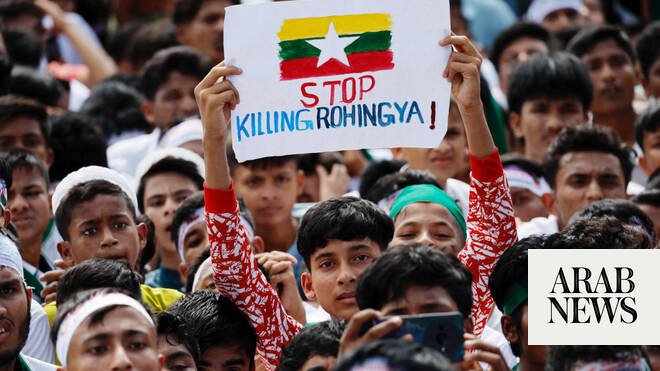
Monday marks the eighth anniversary of the mass displacement of the Rohingya from Myanmar’s Rakhine State, prompting the United Nations to urge renewed international solidarity with the predominantly Muslim minority community. In the wake of a military crackdown triggered by armed attacks on Myanmar security forces in August 2017, more than 700,000 Rohingya fled to neighbouring Bangladesh. They joined thousands who had previously escaped waves of violence and systemic discrimination, now residing in refugee camps across the Cox’s Bazar district.

In a statement commemorating the anniversary, UN Spokesman Stéphane Dujarric highlighted the worsening conditions faced by Rohingya both within Myanmar and in exile. “In Rakhine State, Rohingya and other civilians are caught in the crossfire between the Myanmar military and the Arakan Army and subjected to forced recruitment, human rights violations and other abuses,” he said.
Ongoing violence has forced further displacement, with Bangladesh now hosting more than one million Rohingya refugees. The situation has been compounded by Myanmar’s 2021 military coup, which ousted the democratically elected government and ignited widespread armed insurgencies, following harsh military crackdowns on civilian protests.
Mr. Dujarric further expressed concern over reports of pushbacks, removals, and deportations across the region, warning these actions may violate the principle of non-refoulement and reduce available asylum space. The crisis has been intensified by funding shortfalls, severely limiting access to education, food assistance, healthcare, livelihood opportunities, and protection services for affected populations.
UN Secretary-General António Guterres has repeatedly called for the protection of all civilians in accordance with international law. During a visit to Cox’s Bazar, he witnessed firsthand the resilience of Rohingya communities and underscored the urgent need for strengthened international support. He emphasized that such solidarity must go hand-in-hand with a comprehensive political solution that meaningfully includes the Rohingya and addresses the root causes of their protracted displacement.

Looking ahead, Mr. Dujarric expressed hope that the high-level conference on Rohingya and other minorities, scheduled for 30 September in New York under the mandate of the United Nations General Assembly, would renew global focus on achieving durable solutions. The UN Secretary-General’s Special Envoy on Myanmar continues to engage stakeholders with the goal of ending the civil conflict and supporting a viable, Myanmar-led political process. This, in turn, aims to facilitate the voluntary, safe, dignified, and sustainable return of the Rohingya to their homeland.
Related News:
 Ousted Bangladeshi Leader Sheikh Hasina Indicted for Crimes Against Humanity Amid High-Stakes Trial for 2024 Uprising
 Shadow Fortresses in the Sea: Satellite Revelations Expose China’s Expanding Military Stronghold in Disputed Waters
 Singapore Corruption Scandal: Details Emerge on Iswaran’s Luxury Flight and Ties to Tycoon Ong Beng Seng
 Tariff Tempest: India Rebukes Trump’s ‘Unfair’ Oil Sanctions as Diplomatic Tensions Mount
 Xi, Putin and Kim Display Unified Front at Massive Beijing Military Parade
 Deadly Bomb Blast Strikes Near Political Rally in Quetta
 India Triumph in Dubai Amid Unexpected Twists
 Pakistan-Saudi Arabia Defence Pact Raises Alarm in India
 Typhoon Ragasa Batters Taiwan, Hong Kong and China
 Gen Z Uprising in Asia: How Social Media and TikTok Fuel Anti-Corruption Movements
 Thai Court Sentences Assassin of Cambodian Opposition Politician to Life Imprisonment
 Taliban Diplomatic Breakthrough: Why Amir Khan Muttaqi’s Visit Marks a New Era in India-Afghanistan Relations
 Acclaimed South Korean Author Baek Se-hee Passes Away at 35, Leaves Legacy Through Writing and Organ Donation
 China’s Youth Save, Not Spend, Amid Job and Housing Worries
 British Doctors Arrested in India for Unauthorized Border Crossing
 Israeli Strike Kills 13 Near Palestinian Camp in Lebanon
 India’s COP30 Delay Raises Global Climate Concerns
 Night Bus Crash in Cambodia Kills 16
 Historic Floods Devastate Thailand and Southeast Asia
 Hong Kong Wang Fuk Court Fire Leaves Dozens Dead
 Singapore Women Acquitted After Pro-Palestine March
 Thousands Homeless After Massive Fire in Dhaka Shantytown
 Sri Lanka Floods Leave 56 Dead, Dozens Missing
 India’s Labour Law Overhaul Sparks Fierce Debate
 Video shows Israeli troops kill Palestinians after surrender
 Fury After Hong Kong’s Deadliest Fire in Decades
 ICC to Rule on Duterte’s Provisional Release
 Huawei, ZTE secure 5G deals in Vietnam amid US tensions
 Southeast Asia floods claim 241 lives, rescue efforts continue
 Chinese & Japanese Boats Clash Near Disputed Islands
 Hong Kong Orders Probe Into Deadly 151-Death Fire
 Putin Meets US Envoy Amid Key Ukraine Peace Talks
 Maxwell withdraws from IPL 2026 after 13 seasons
 Indonesia to Repatriate Two Dutch Drug Convicts
 Post Office Scandal Compensation Tops £1 Billion as Victims Finally See Justice
 Exclusive: Leaked Documents Reveal Khan’s Controversial Road Policy Overhaul – Drivers Warn of ‘Final Nail in Coffin’
 UK Banks Granted Reprieve as BoE Delays Basel III Capital Rules Until 2028
 England Grapples with Unprecedented Bluetongue Virus Outbreak: Entire Nation Declared Infected Zone
 Northern Ireland Family of Three Shot Dead in Maguiresbridge Home Incident
 West End Exposed as London’s Knife Crime Epicentre Amid Alarming Surge in Violence
 Mystery Wallaby Spotted on Norfolk-Suffolk Border Sparks Police Appeal
 Peter Andre Breaks 16-Year Silence with Scathing Statement Against Katie Price
 UK Weather: Heat Alerts Extended as Temperatures Set to Reach 30°C This Weekend
 Access to Iconic Cornish Beach Cut Off by National Trust Amid Safety Concerns
 Costa Blanca Holiday Horror as Food Poisoning Outbreak Hits Four-Star Hotel
 Hundreds of Swimming Pool Closures Leave Children ‘At Risk of Drowning’, Union Warns
 British Holidaymaker’s Tragic Death in Greece Confirmed as Drowning
 Denmark Investigates Professional Drone Incursions Across Multiple Airports, No Evidence of Russian Involvement
 Arsenal Showcase Depth and Flexibility as Arteta Eyes Title Challenge
 UK Affirms No Relaxation of Visa Rules for India Amid Trade Push
 Vice President Vance Warns of ‘Painful’ Job Cuts as U.S. Government Shutdown Deepens
 Japanese Court Sentences Man to Death for 2023 Quadruple Murder in Rare Gun and Knife Attack
 Zelensky to Urge Missile Aid as Trump and Putin Plan Summit
 Manchester United triumph as Mbeumo brace seals thrilling win
 Hospice Cuts Raise Alarm Across England Amid Funding Crisis
 Tragedy on Lizard Island: Cruise Passenger Dies
 Zarah Sultana Launches Party to Change Politics
 US Senate Passes Funding Bill to End Historic Shutdown
 Mary Earps’s Manchester United Return Faces Mixed Reception
 Son Reveals UK Couple in Iran Resort to Hunger Strike for Help
 Pressure Mounts on Starmer to Sack Chief of Staff Over Briefing Row
 Japan Deploys Police to Curb Deadly Bear Attacks
 US Justice Department Files Lawsuit Against California Over Partisan Voting Maps
 Former Lion Heskey Warns of Shortage of England Strikers
 Orban Says Ukraine Has ‘No Chance’ as EU Support Continues
 Mother Watches in Horror as Teen Daughter Dies on Tracks
 Seven Countries, One Winner: Europe’s Best Christmas Market
 Haiti Qualifies for World Cup Despite Coach Never Visiting Country
 Serial Rapist and Former Cop Found Guilty Again
 Pentagon Officials in Ukraine to Discuss War End
 Vietnam Battles Deadly Floods as Rains Continue
 Scottish Families Take Legal Action Over School CO Leak
 Venezuela Threatens Nobel Winner Machado with Fugitive Status
 Vicki Fears Losing Motability Car
 Millions Face Higher Taxes Under Reeves New Budget
 Two National Guard Soldiers Critically Injured Near White House
 Southern Lebanon reels as Israeli strikes shatter communities
 Jordan Bardella: France’s Young Presidential Contender
 Search underway for British man overboard off Tenerife
 Pavarotti statue frozen in Italian ice rink sparks backlash