Published: 12 November 2025. The English Chronicle Desk. The English Chronicle Online
Delhi has moved to impose tougher anti-pollution measures after mounting public anger over the city’s choking air prompted rare street protests in the heart of the Indian capital. The new restrictions, announced on Tuesday, come under stage three of the government’s Graded Response Action Plan (GRAP) — a tiered strategy that activates progressively stringent curbs depending on the severity of air pollution.
Under the new stage-three guidelines, all non-essential construction and demolition activities have been halted across Delhi and its adjoining regions. Industries that use polluting fuels have been ordered to suspend operations, and local authorities have been told to step up enforcement to prevent further deterioration of air quality. The Commission for Air Quality Management (CAQM), the federal body overseeing implementation of air quality policies in the National Capital Region, said the decision was made “keeping in view the prevailing trend of air quality and in an effort to prevent further deterioration.”
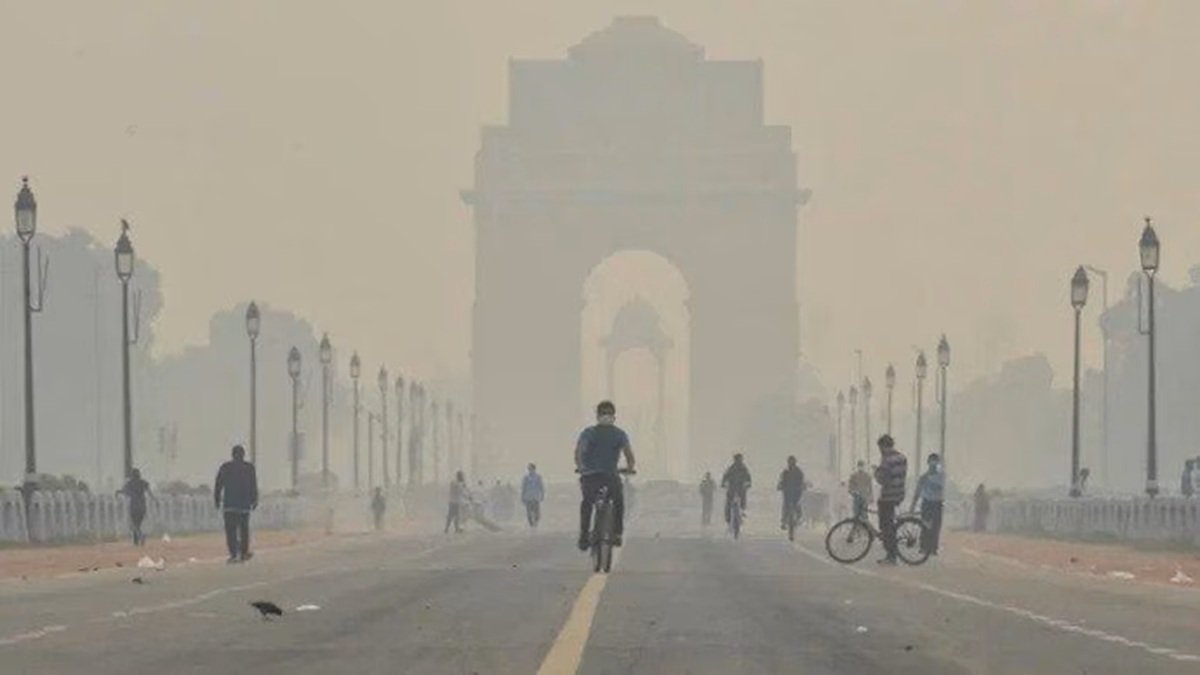
On Tuesday morning, data from the Central Pollution Control Board painted a grim picture. Delhi’s Air Quality Index (AQI) hovered above 400 at several monitoring stations — a level classified as “severe” and hazardous to human health. For comparison, “good” air quality readings fall below 50 on the same scale. The thick haze hanging over the city once again underscored the grim annual reality of Delhi’s winters, when millions of residents are forced to breathe toxic air that can be up to 20 times the World Health Organization’s safe limit.

The move followed a weekend of rare environmental protests at the India Gate monument, one of the capital’s most recognizable landmarks. Dozens of demonstrators, many of them young residents, gathered to demand urgent government action and the right to clean air. Police detained several participants, but the demonstrations drew wide attention on social media and were echoed by similar expressions of frustration across the region. Environmental campaigners say the protests mark a growing public awareness that India’s capital can no longer afford to treat pollution as an inevitable seasonal crisis.
Each year, as winter approaches, Delhi’s air turns increasingly noxious. Cooler temperatures cause a temperature inversion that traps pollutants close to the ground. Winds slow down, and humidity rises, creating a thick blanket of smog that covers the skyline. This natural phenomenon coincides with the burning of crop residue in neighbouring states such as Punjab and Haryana, where farmers set fire to leftover stubble to clear fields for the next planting season. The resulting smoke drifts into the capital, combining with vehicle emissions, industrial fumes, and construction dust to create a toxic cocktail.
While the central government has long blamed farm fires for the region’s poor air quality, it noted this year that the number of such incidents has fallen significantly. According to official data, the total number of farm fires between 15 September and 9 November was markedly lower compared with previous years. Yet the improvement on paper has not translated into cleaner air in Delhi. Experts say that even with fewer fires, the city’s air remains heavily polluted because other sources — such as traffic, small industries, and household emissions — continue to contribute significantly to particulate matter levels.
Toxic particles known as PM2.5 and PM10, which can penetrate deep into the lungs and bloodstream, are the most dangerous components of the smog. Long-term exposure to such pollutants has been linked to respiratory illnesses, cardiovascular diseases, and shortened life expectancy. A 2023 study by the Energy Policy Institute at the University of Chicago estimated that air pollution reduces the average life expectancy of Delhi residents by up to nine years. Doctors in the capital say hospital admissions for asthma, bronchitis, and other respiratory issues typically surge during the winter months.

In recent years, Delhi’s authorities have experimented with various methods to combat pollution — with mixed success. The city’s local government recently attempted an ambitious cloud-seeding project, hoping to induce artificial rainfall to wash away pollutants. However, the effort failed due to insufficient moisture in the atmosphere. Other measures, such as odd-even vehicle rationing schemes, temporary school closures, and bans on firecrackers, have had limited impact. Environmentalists argue that without long-term structural reforms — including cleaner public transport, stricter industrial regulations, and improved waste management — such short-term interventions will do little to address the crisis.
The handling of air quality data has also come under scrutiny. Critics accuse the Delhi government of manipulating pollution readings by spraying water near monitoring stations to temporarily reduce dust levels. Opposition leaders have condemned what they describe as a “cosmetic approach,” alleging that authorities are more concerned with optics than with genuine improvement. The ruling Bharatiya Janata Party (BJP), meanwhile, has faced its own criticism for reportedly spending large sums on air purifiers for party offices, prompting accusations of hypocrisy amid widespread public suffering.
For millions of ordinary residents, the crisis has become part of daily life. Many households now rely on expensive air purifiers, and schools often limit outdoor activities for children. Visibility on the city’s roads drops sharply during the worst periods, and flights are occasionally delayed or diverted. The city’s iconic monuments, from the Red Fort to Humayun’s Tomb, are often shrouded in a grey haze. “It feels like living inside a gas chamber,” said Rakesh Sharma, a shopkeeper in central Delhi. “Every year we are told things will get better, but nothing changes.”

Health experts continue to warn that prolonged exposure to current pollution levels could have devastating long-term consequences. The Indian Medical Association has called on the government to declare a public health emergency, urging the distribution of free N95 masks and the closure of schools until conditions improve. Environmental groups have also demanded that the government expand green cover across the capital, accelerate the transition to electric vehicles, and ensure strict enforcement against industries using banned fuels.
While the current measures under GRAP aim to provide immediate relief, many analysts argue that Delhi’s air pollution is symptomatic of deeper structural failures. Rapid urbanization, unplanned industrial expansion, and lax enforcement of environmental laws have all contributed to the crisis. With the city’s population exceeding 30 million, the pressure on infrastructure, transport, and waste systems continues to mount. The challenge, experts say, lies not only in emergency responses but in reshaping how the city grows and breathes in the decades to come.
For now, residents are bracing for another difficult winter. Meteorologists warn that weather conditions are unlikely to improve significantly in the coming weeks. Unless strong winds disperse the trapped pollutants, the smog may persist well into December. As the haze thickens and the city’s skyline fades from view, Delhi’s residents find themselves once again caught between frustration and fatigue — demanding cleaner air, but receiving little more than temporary fixes.
Related News:
 Delhi’s Toxic Air Crisis Leaves Children Sick and Vulnerable
 Delhi’s Toxic Air Drives Spike in Respiratory Illnesses
 Sri Lanka Floods Leave 56 Dead, Dozens Missing
 UK Water Firms Ordered to Act Over ‘Forever Chemicals’ Threat
 UK Faces Arctic Blast as Polar Vortex Disruption Brings Heavy Snow
 West Councils Falling Behind on Climate Goals
 Africa Demands Climate Justice Linked to Colonial Past
 Turkey to Host COP31 After Breakthrough Deal with Australia
 Australia Launches Major Environmental Law Reforms
 Families wait in agony for missing after Hong Kong tower blaze
 Southeast Asia floods claim 241 lives, rescue efforts continue
 Severe Thunderstorms Lash England and Scotland: Met Office Issues Amber and Yellow Warnings Amid Flooding Risks
 Chemical Pollution Poses Threat on Par with Climate Change, Scientists Warn
 England Braces for Prolonged Dry Spell as National Drought Group Urges Urgent Water-Saving Measures
 Millions in the UK at Higher Risk of Heart Failure and Stroke Due to Air Pollution, Study Warns
 Hospice Cuts Raise Alarm Across England Amid Funding Crisis
 US Super-Rich Are Draining Planet’s Safe Climate Space
 Five More Prisoners Freed by Mistake in Essex Week
 Celebrities and Charities Demand UK Government Act on Child Poverty
 UK Charters Emergency Flights to Evacuate Britons from Jamaica
 Experts Warn on Home Birth Risks, Call for Skilled Midwives
 Prince William Plants Trees with Brazil’s Nature Heroes
 Experts Urge Legal Right to Timely Cancer Care
 Patients to Test Health at Home to Ease NHS Winter Pressure
 London’s Childlessness Crisis: Schools Closing as Families Shrink
 Jailed UK climate protesters face extremist-style restrictions
 North Sea oil workers must lose weight or face job loss
 Crisis charity to become landlord amid UK housing emergency
 No link found between paracetamol in pregnancy and autism
 NHS frontline staff forced to cover gaps as managers remain scarce
 Suicide Bombing at Islamabad Court Kills 12, Injures Dozens
 China’s Youth Save, Not Spend, Amid Job and Housing Worries
 Northern Lights May Illuminate UK Skies Amid Strong Solar Storm
 Seven Conditions That Automatically Qualify You for a Free Bus Pass
 Understanding Missing Children: Facts vs. Myths
 Leading doctors issue warning amid ‘bad’ flu season
 Thai King Embarks on Historic China Visit After 50 Years
 Delhi Car Blast Kills Eight, Declared Terror Incident
 South Korea’s College Exam Tests Perseverance of Blind Students
 New weather warning issued with risk of flooding
 Working-Class Men with Prostate Cancer Left Behind by NHS
 Storm Claudia: Torrential Rain to Batter England and Wales
 Cold Snap Brings Snow Risk as Flood Recovery Continues
 Japan Tourism Stocks Slide Amid China-Taiwan Row
 South Korea Gains US Support for Nuclear Submarine Programme
 Tragedy Strikes Indian Pilgrims in Saudi Bus Accident
 From Baby Teeth to Bioengineering: The Future of Self-Healing Teeth
 107-Year-Old Veteran Credits Whiskey for Longevity
 Snow and Ice Warnings Affect Scotland and Northern England
 Why India is Unlikely to Return Sheikh Hasina to Face Execution
 Israeli Strike Kills 13 Near Palestinian Camp in Lebanon
 ‘Traumatic Wait’: Northern Ireland Women Face Breast Cancer Delays
 Commuters warned as yellow snow and ice alert hits Northern Ireland
 Arctic Blast Hits UK as Snow and Ice Warnings Trigger Travel Disruption
 Myanmar Military Busts Thai Border Scam Hub, 346 Arrested
 Healthy Habits in Your 30s That Boost Life in Your 70s
 Woman Meets Boy Whose Life She Saved with Kidney
 Vietnam Battles Deadly Floods as Rains Continue
 Scottish Families Take Legal Action Over School CO Leak
 Welsh Government Christmas 2020 Lockdown Criticised
 Night Bus Crash in Cambodia Kills 16
 Coffins Now Too Large to Cremate Amid Rising Obesity Crisis
 Clifftop Lodges Spark Fears Over Jurassic Coast Stability
 NHS paediatric leave parents waiting months for answers
 Catherine urges end to stigma around addiction
 Vicki Fears Losing Motability Car
 Historic Floods Devastate Thailand and Southeast Asia
 Southern Lebanon reels as Israeli strikes shatter communities
 Singapore Women Acquitted After Pro-Palestine March
 India’s Labour Law Overhaul Sparks Fierce Debate
 Video shows Israeli troops kill Palestinians after surrender
 Carney’s Alberta Pipeline Deal Sparks Immediate Pushback
 Fibromyalgia Patients Struggle as NHS Fails to Provide Care
 Rare shark attack kills woman, injures man at remote NSW beach
 UK MP Tulip Siddiq sentenced in Bangladesh land case
 Chinese & Japanese Boats Clash Near Disputed Islands
 Hong Kong Orders Probe Into Deadly 151-Death Fire
 Putin Meets US Envoy Amid Key Ukraine Peace Talks
 Maxwell withdraws from IPL 2026 after 13 seasons
 Indonesia to Repatriate Two Dutch Drug Convicts