Published: 23 September ‘2025. The English Chronicle Desk. The English Chronicle Online
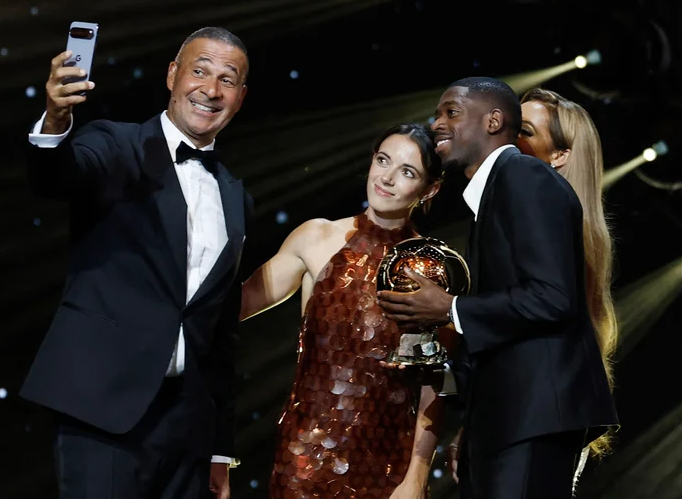
Paris once again became the epicentre of world football as the prestigious Ballon d’Or awards were handed out in a lavish ceremony at the Théâtre du Châtelet. On a night filled with glamour, emotion, and historic milestones, Paris Saint-Germain’s Ousmane Dembélé claimed the men’s Ballon d’Or, while Barcelona’s Aitana Bonmatí wrote her name even deeper into football history by winning the women’s award for the third consecutive year.
For the Parisian crowd, the evening was particularly special. Thousands of PSG fans lined the banks of the River Seine, igniting flares and waving flags as news filtered through that their star winger had been crowned the world’s best footballer. Inside the theatre, the atmosphere was equally electric, with Dembélé’s name met by thunderous applause and a standing ovation, marking not only a personal triumph but also a symbolic moment for French football.

Dembélé’s win was a culmination of one of the most remarkable comeback stories in recent football memory. Barely a year ago, the French forward had found himself at odds with his coach, Luis Enrique, after a heated exchange during a Ligue 1 fixture against Rennes. The fallout was significant enough to see him excluded from the PSG squad to face Arsenal in the Champions League group stage. For many observers, it seemed like another chapter in the turbulent career of a footballer often criticised for inconsistency, injury troubles, and difficulty adapting during his Barcelona years.
Yet the narrative shifted dramatically. Luis Enrique opted for a tactical reshuffle, moving Dembélé into a more central attacking role. The change unleashed a new dimension in his game, sparking a phenomenal run of form. Between December and March, Dembélé produced a staggering 25 goals in 20 matches, combining explosive pace with clinical finishing. His resurgence not only reignited PSG’s season but also became the cornerstone of their historic campaign.
That form peaked with the Champions League final in May, where PSG demolished Inter Milan in one of the most one-sided finals in recent memory. Dembélé’s relentless pressing and devastating runs tore through Inter’s defence, with one particular image—him crouching like a sprinter at the halfway line before bursting forward—becoming the defining snapshot of PSG’s triumph. It was this period of dazzling brilliance, coupled with consistency across domestic competitions, that convinced voters he was the deserving winner of football’s highest individual honour.
On stage, Dembélé was visibly overwhelmed by the moment. Fighting back tears, he thanked everyone from his childhood friends in his home suburb to his current teammates at PSG. He paid tribute to his agent for standing by him during difficult years, before inviting his mother to join him on stage. The sight of the two embracing under the golden glow of the Ballon d’Or trophy brought the audience to its feet once again.
“It’s difficult to describe what I feel right now,” Dembélé said, his voice trembling. “This is not only my achievement, it belongs to my team, my family, my community. PSG gave me a second chance when I needed it most. This is for them, and this is for Paris.”
For PSG president Nasser al-Khelaifi, also present in the audience, the award was more than an individual accolade. It was a validation of PSG’s long pursuit of Champions League glory and their strategy of assembling star power to elevate the club’s global brand. For French football, too, it marked a rare moment of triumph in a competition historically dominated by players in Spain, England, or Germany.
If Dembélé’s award represented a redemption story, Aitana Bonmatí’s third straight Ballon d’Or win underscored the dominance and consistency of one of the modern era’s greatest midfielders. The Barcelona and Spain star has long been regarded as the heartbeat of her team, orchestrating play with vision, intelligence, and technical mastery. Her victory, however, was not without intrigue. Many tipped England’s Alessia Russo to claim the crown after her decisive performances in both the European Championship and the Champions League, where her Arsenal side defeated Bonmatí’s Barcelona. Yet the voting panel placed Bonmatí at the top, making her the first woman to win the award three years in succession. Russo finished third, edged out by Bonmatí’s Barcelona teammate Mariona Caldentey.
Taking to the stage, Bonmatí dedicated the honour to her teammates, her family, and the young girls watching around the world. “This is about much more than individual awards,” she said. “It is about showing the next generation that dreams can be achieved. Women’s football is growing, and I am proud to play my part in its story.” Her words echoed the broader sentiment of the evening, which was as much about celebrating the progress of women’s football as it was about individual accolades.
English football also enjoyed its share of the spotlight. Sarina Wiegman, coach of the Lionesses, claimed the Johan Cruyff Award for top female coach, a recognition of her success at the summer’s European Championship. In her acceptance speech, she emphasised the responsibility that comes with the sport’s rapid growth. “With growth comes responsibility,” she said. “We must ensure our game remains inclusive, welcoming, and a place where everyone belongs.”
England goalkeeper Hannah Hampton, who plays for Chelsea, became the first-ever recipient of the women’s Yashin Trophy for best goalkeeper. Her victory was tinged with emotion as she dedicated the award to Matt Beard, the former Liverpool Women manager who passed away last week. Arsenal, meanwhile, were named Club of the Year, reflecting their strong performances in both domestic and European competitions. While the recognition was celebrated by English fans, it was met with scattered boos from sections of the Parisian crowd, a reminder of the fierce rivalries and passions that continue to define football culture.
The ceremony also highlighted the future of the game. Barcelona’s teenage sensation Lamine Yamal claimed the Kopa Trophy for the second consecutive year, cementing his status as the brightest young prospect in world football. Dressed in an immaculate blue suit, the 18-year-old appeared every bit the star of tomorrow, with his presence drawing as much attention as some of the established names. Among the other honours, Gianluigi Donnarumma of Manchester City collected the men’s Yashin Trophy for best goalkeeper, while Arsenal striker Viktor Gyökeres received the Gerd Müller Trophy as the season’s highest scorer, following in the footsteps of Erling Haaland, Harry Kane, and Kylian Mbappé.

Beyond the trophies, the Ballon d’Or ceremony once again proved itself a cultural spectacle. The Théâtre du Châtelet was filled with football stars, celebrities, influencers, and dignitaries, turning the night into a celebration of both sport and society. The red carpet sparkled with glamorous outfits, while the after-parties across Paris extended the celebrations into the early hours. For PSG and French football, Dembélé’s victory was a symbolic triumph, demonstrating that Paris is not only a stage for footballing extravagance but also a city capable of producing the world’s best players. For Bonmatí, her third consecutive crown solidified her legacy as one of the greatest to grace the women’s game.
As the night ended, one thing was clear: the Ballon d’Or remains not just an award, but a grand narrative of football’s evolving stories—of redemption, dominance, growth, and dreams realised on the brightest stage of all.
Related News:
 England’s Euro Odyssey: A Tale of Grit, Glory and the Lionesses’ Miraculous March to the Final
 Raducanu’s Resurgence and Venus’s Record-Breaking Feat Highlight Washington Showdowns
 Glory for the Lionesses: England Crowned Women’s Euros Champions Again Amid National Calls for Bank Holiday
 Tottenham Takes On Newcastle
 Manchester City Announce Their Return in Style with Haaland Double and Debut Goals at Wolves
 New Season, Same Strife Between the Sticks for Manchester United
 FIFA Eyes Biennial Club World Cup from 2029, Plans Possible Expansion
 Kylian Mbappé Fires Real Madrid to Winning Start for Alonso Against Osasuna
 One More Step for Cristiano Ronaldo! Al-Nassr Beat Al-Ittihad
 Brazil Dominate Chile 3-0 to Secure Second Place in World Cup Qualifiers
 Germany and Northern Ireland Set for Crucial World Cup Qualifier Clash in Cologne
 Merino Hat-Trick Inspires Spain to 6-0 Rout of Turkey in World Cup Qualifier
 Carlos Alcaraz Celebrates Second US Open Triumph, Calls It the Best Tournament of His Career
 Serbia Humiliated 0-5 by England in World Cup Qualifier
 Haaland Hits Five as Norway Crush Moldova 11-1 in World Cup Qualifier
 Gabriel Martinelli’s Spark Ignites Arsenal’s Champions League Campaign with Victory at Athletic Bilbao
 Man City 2-0 Napoli: Haaland Reaches 50 Champions League Goals After Red Card Turns Tide
 Rashford’s Brilliance Stuns Newcastle as Barcelona Claim Champions League Victory
 Tributes Pour In as Former Liverpool Women Manager Matt Beard Dies Aged 47
 Hannah Hampton Makes History as First Winner of Women’s Yashin Trophy at Ballon d’Or Awards
 Liverpool Vs outhampton Set for Carabao Cup Clash at Anfield
 Dramatic Derby: Sorloth Strikes as Atletico and Real Madrid Share the Spoils
 ICC Women’s World Cup 2025: India to Host as Pakistan Fixtures Moved to Neutral Venues
 Bournemouth Stun Fulham with Dramatic Comeback in Premier League Thriller
Guardiola Enters Elite Club with Record-Breaking 250th Premier League Win
Bournemouth Stun Fulham with Dramatic Comeback in Premier League Thriller
Guardiola Enters Elite Club with Record-Breaking 250th Premier League Win
 Chaos at Ibrox as Martin’s Rangers Era Comes to an End
 Arsenal Showcase Depth and Flexibility as Arteta Eyes Title Challenge
 Ferguson Fires Scotland to Dramatic Comeback Win Over Greece
 England Thrash Wales as Rogers, Watkins and Saka Shine Bright
 Ruben Neves Strikes Late as Portugal Beat Ireland
 Tuchel Criticises ‘Silent Wembley’ After England Win
 Clarke’s Anger Overshadows Scotland’s Historic Win
 Kane’s Double Seals England’s World Cup Qualification
 Barnes Inspires Newcastle to Champions League Triumph Over Benfica
City shine with PlayStation-style football to overwhelm Villarreal
Barnes Inspires Newcastle to Champions League Triumph Over Benfica
City shine with PlayStation-style football to overwhelm Villarreal
 Fabio Wardley stuns Joseph Parker to earn Usyk title shot
 Tension and Turmoil at Aston Villa v Maccabi Match
 Lando Norris Dominates Brazil GP to Strengthen F1 Title Bid
 Ronaldo Confirms Final World Cup and Plans Retirement
 England Maintain Perfect World Cup Qualifying Record with Win Over Serbia
 Osimhen doubles as Nigeria reach CAF World Cup final
 Tears of Joy as Ireland Stun Hungary to Stay in World Cup Race
 Australia Fast Bowler Aims to Silence Joe Root in Perth
 Haaland Heroics and Portuguese Rampage Seal World Cup Qualification
 Irish Hero Parrott Says Goal Brought First Tears in Years
 Scotland Fans Reflect on France ’98 as World Cup Looms
 Nigeria Misses World Cup Again After Play-Off Loss
 Mark Wood Bowls Rapid Nets Spell, Ashes Test Hopes Rise
 Cardiff Nights Could Propel Wales to World Cup Glory
 Spain Qualify for 2026 World Cup After Dramatic Draw
 Scotland End 28-Year Wait With Stunning World Cup Qualification
 Cristiano Ronaldo Joins Trump, Bin Salman at State Dinner
 Tiny Curacao Makes History as Smallest Nation to Reach World Cup
 Haiti Qualifies for World Cup Despite Coach Never Visiting Country
 Scotland Fans Celebrate Historic World Cup Qualification
 Barcelona Returns to Camp Nou vs Athletic Bilbao
 India, Pakistan to Clash in T20 World Cup 2026 Group Match
 Mbappe Scores 4 as Real Madrid Edge Olympiakos
 Man City Lose, Champions League Risk
 UK Must Act with Courage and Clarity on Israel-Palestine Conflict, Says Foreign Affairs Committee Report
 London Set to Honour Euro 2025 Champions as Lionesses Take Victory Parade Through the Capital
 Premier League Supercomputer Predicts Tough Season for Man Utd Amid Three-Team Title Battle
 Arsenal VS Newcastle Hearts with Dramatic Late Turnaround at St James’ Park
 Public Trust in SNP Hits Historic Low Amid NHS Concerns
 Johnson Suggests Mandelson Linked to China Spy Controversy
 Rachel Reeves signals welfare reform ahead of key budget
 Ireland Votes as Two Women Compete for Presidency
 WW2 Pilot’s Long-Lost Crash Site Unearthed in Essex
 Experts Warn Russia’s Burevestnik Missile Could Destabilise Arms Control
 Tragedy on Lizard Island: Cruise Passenger Dies
 Granit Xhaka Rescue Earns Everton Draw at Sunderland
 Just Stop Oil Protesters Convicted Amid Climate Defence Row
 Japan Deploys Police to Curb Deadly Bear Attacks
 Former Lion Heskey Warns of Shortage of England Strikers
 Pokémon to open world’s first theme park in Japan next year
 Trump Deploys DHS to Charlotte in Major Arrest Operation
 Orban Says Ukraine Has ‘No Chance’ as EU Support Continues
 Pentagon Officials in Ukraine to Discuss War End
 Venezuela Threatens Nobel Winner Machado with Fugitive Status
 Two National Guard Soldiers Critically Injured Near White House