Published: 01 October ‘2025. The English Chronicle Desk. The English Chronicle Online
A group of imprisoned opposition leaders in Georgia has written to the United Kingdom’s foreign secretary, Yvette Cooper, raising alarms over what they describe as a growing and unprecedented influence of Iran within the country’s ruling party, Georgian Dream. The letter, composed from prisons in Rustavi—a city situated approximately 20 kilometers southeast of the Georgian capital, Tbilisi—paints a concerning picture of foreign entanglements and domestic political repression in the South Caucasus nation.
The seven politicians, incarcerated under circumstances they claim are politically motivated, urged the UK government to impose sanctions on individuals who are allegedly facilitating closer ties between Georgian Dream and Tehran. They also called attention to the owners of media outlets in Georgia, some of whom they allege operate from London, accusing them of propagating government narratives that undermine democratic values.

Earlier this month, investigative reports in the Guardian highlighted Hunnewell Partners, a company based in London’s Knightsbridge, which owns Imedi TV—one of Georgia’s most widely viewed broadcasters. The European Union has accused Imedi TV of serving as a “megaphone” for government messaging, amplifying pro-ruling party narratives while marginalizing dissenting voices.
In their letter, the jailed opposition leaders stated: “We … respectfully urge you to consider extending sanctions to these individuals, their entities, and their family members, to ensure they can no longer enjoy the benefits of the UK’s democratic society while working to erode it.” The appeal underscores their belief that certain Georgian business and media figures are actively enabling governmental overreach while exploiting international systems for personal gain.
Responding to the allegations, a spokesperson for Imedi TV emphasized the outlet’s independence. “Imedi TV is an independent broadcaster that is broadly supportive of the government but which also favors vigorous political debate. Being sympathetic to Georgian Dream is not a crime. In Georgia, there are numerous channels expressing every political view. Attempts to suppress Imedi TV, and to invoke international support for that, are antidemocratic,” the spokesperson stated. The broadcaster also firmly rejected claims that it acts as a propaganda tool, asserting its commitment to truthful reporting.
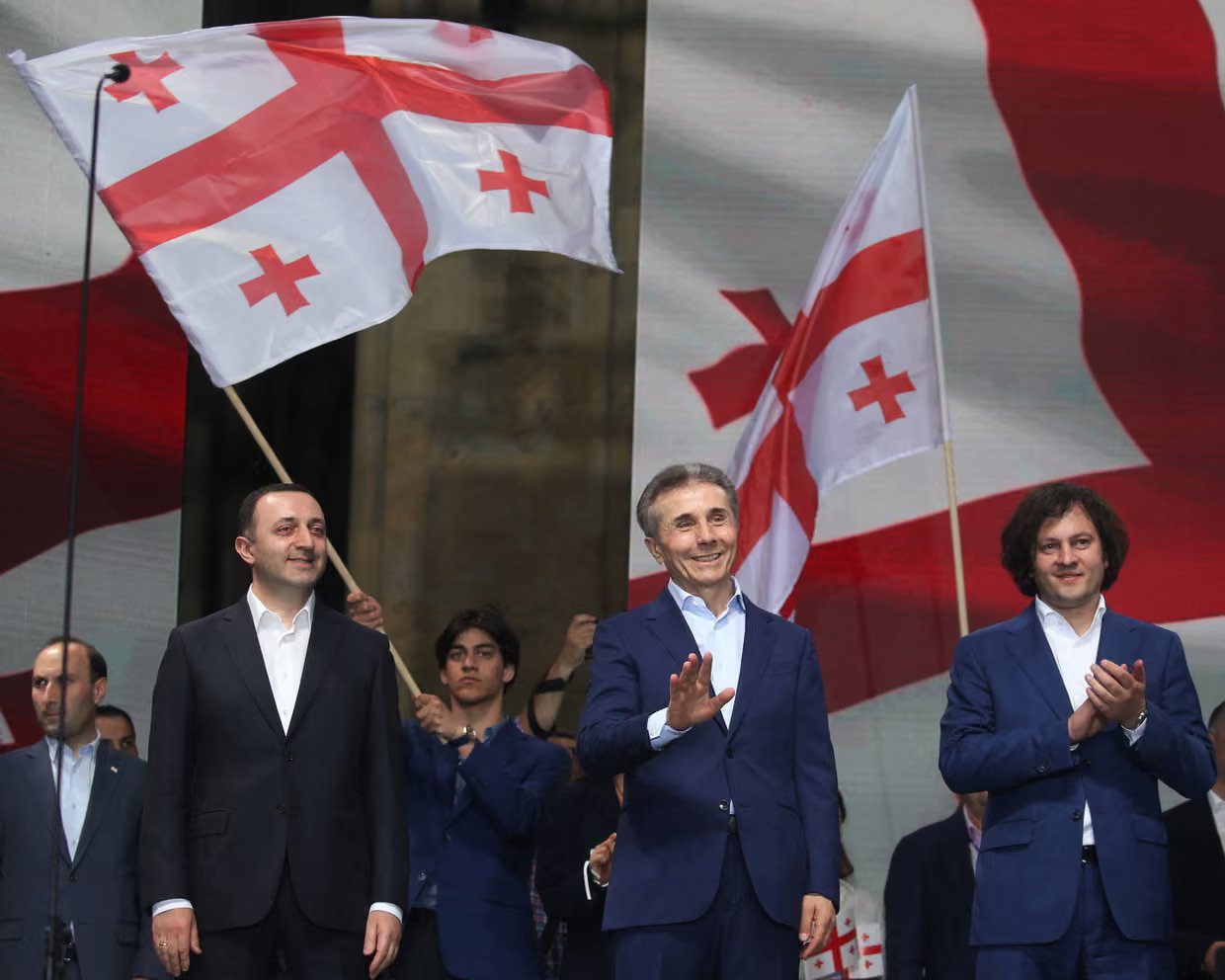
Georgian Dream, headed by oligarch Bidzina Ivanishvili, has faced repeated criticism for policies and actions critics say realign the country closer to Russia’s sphere of influence while undermining democratic institutions. Multiple opposition figures have been imprisoned in recent months ahead of local elections, including liberal politician Elene Khoshtaria, who was detained for posting campaign materials referencing “Russian Dream,” a critical term aimed at Georgian Dream mayoral candidate Kakha Kaladze.
The jailed leaders characterize their detention as part of a broader crackdown by what they describe as the “Russia-backed regime of Georgian Dream,” while warning that the party is simultaneously expanding ties with Iran. They point to specific incidents as evidence, including expressions of solidarity by Georgia’s deputy foreign minister, Aleksandre Khvtisiashvili, at the Iranian embassy following US military strikes on Iran’s nuclear infrastructure. Furthermore, the prime minister of Georgia, Irakli Kobakhidze, reportedly visited Tehran, appearing alongside figures linked to Hamas and Hezbollah while pro-Iranian chants, including “Death to America,” resonated during official events.
Among the signatories of the letter is Zurab Japaridze, leader of the libertarian Girchi–More Freedom party and a former member of the United National Movement. Japaridze was sentenced to seven months in prison in December for refusing to comply with a commission investigating alleged crimes by the UNM. The collective letter describes a systematic consolidation of power by Georgian Dream and Ivanishvili, alleging “full state capture” and the dismantling of democratic institutions.
The opposition leaders further state that Georgia now holds more political prisoners per capita than Russia, citing over 60 incarcerated activists. They describe brutal crackdowns on protests, noting that more than 500 peaceful demonstrators were beaten, with many sustaining broken facial bones. Civil society organizations, they contend, are under attack through restrictive laws that echo Russian-style repression, creating what they term a “frontal assault on democratic governance.”
The letter explicitly links these domestic developments to a perceived increase in Iranian influence, raising concerns about potential strategic realignments in the region. The opposition leaders’ appeal to the UK aligns with ongoing international efforts to monitor and respond to such developments, particularly given Georgia’s geopolitical importance as a bridge between Europe, Russia, and the Middle East.
The United Kingdom has already imposed sanctions targeting Georgian judges and politicians deemed complicit in repressive measures. Recent measures, announced this month, aimed at individuals supporting Russia’s military operations in Ukraine, included sanctions on media mogul Levan Vasadze for allegedly disseminating pro-Russian narratives.
In their letter, the jailed politicians expressed gratitude for these actions but emphasized the need for further measures. “The United Kingdom has already shown leadership by sanctioning members of Georgian Dream’s repressive apparatus – measures that had real impact and were deeply appreciated by our people. Yet we are concerned that key enablers of Georgian Dream – including business allies, family members of Mr. Ivanishvili, and owners of propaganda outlets that, according to credible reports, spread Russian-scripted disinformation even targeting the UK – still continue to benefit from the UK’s financial system, with some operations reportedly based in London,” the letter stated.
While Imedi TV has categorically denied spreading disinformation or promoting Russian interests, asserting that such accusations are “ridiculous and unsupported,” the Georgian foreign ministry has not provided comment on the matter. Georgian Dream maintains that its policies are pro-European and Atlanticist, while critics argue the party is pursuing a strategy that increasingly isolates Georgia from democratic norms. The party contends that Western governments, including the US and the EU, are seeking to draw Georgia into conflicts linked to Ukraine, a claim analysts view as part of broader government narratives.
The correspondence with Yvette Cooper underscores the intersection of domestic political strife and international diplomacy. The jailed leaders’ appeal highlights the role that foreign governments, particularly the UK, can play in influencing governance standards and holding political elites accountable, especially where domestic legal and democratic mechanisms appear compromised.
Observers note that the letter also reflects broader concerns about media independence and the potential use of international jurisdictions, such as London-based business entities, to shield actors implicated in political repression. The call for sanctions on individuals and media owners suggests a strategy aimed at cutting off resources and international legitimacy for those accused of undermining democracy, as well as signaling to other authoritarian-aligned actors that their actions are subject to scrutiny beyond Georgian borders.
The Georgian political landscape remains deeply polarized. The ruling party’s consolidation of state institutions, combined with high-profile detentions of opposition figures, has intensified scrutiny from international observers, human rights organizations, and foreign governments. The letter to the UK highlights how external actors are increasingly seen as pivotal in addressing what opposition figures characterize as the erosion of civil liberties and democratic governance.

As Georgia approaches local elections and faces ongoing geopolitical pressures, the situation presents a complex interplay between domestic political authority, international oversight, and emerging alliances with external powers, including Iran. The letter from the jailed opposition leaders underscores the potential implications for both domestic policy and foreign relations, emphasizing the necessity of vigilance, sanctions, and diplomatic engagement to support democratic processes and protect civil liberties in Georgia.
The UK government, having previously taken steps to sanction individuals within Georgia, is now faced with renewed appeals for further action, focusing on those alleged to facilitate foreign influence and political repression. How London responds may have significant ramifications not only for Georgia’s internal political dynamics but also for broader regional stability and the international community’s approach to safeguarding democratic principles in vulnerable states.
Related News:
 Charlie Kirk Killing Used to Mobilise UK’s Largest Far-Right Rally in Decades
 Tasers Introduced in UK Prisons to Combat Rising Violence and Protect Staff
 Ministers Accused of Defamation Over Palestine Action Ban and Mass Arrests
 Police Advised to Disclose Ethnicity of Suspects in High-Profile Cases
 UK Home Office to Launch French Beach Signage to Warn Asylum Seekers of Risks
 Father’s Tip Leads to Arrest in Charlie Kirk Murder Case
 UK and Ireland Set to Unveil New Proposals to Address Northern Ireland’s Troubles Legacy
 UK Recognises State of Palestine in Push to Preserve Hope for Peace
 UK Police to Gain New Powers to Manage Repeated Protests, Home Office Announces
 Boris Johnson Breached Rules on Post-Office Business Contacts
 China’s Mega Embassy in London Faces Further Delay
 Shabana Mahmood Warns Border Failings Are Eroding Trust in States
 Prince Andrew met alleged Chinese spies during Pitch@Palace China trips
 Kosovo agrees to host Britain’s refused asylum seekers
 UK Gamer Recruited by Wagner Group Found Guilty of Arson
 China Spy Case Hearing Reveals Key Gaps in Prosecution
 It’s time to come clean on the China spy case
Johnson Approved China’s London ‘Super-Embassy’ in 2018
It’s time to come clean on the China spy case
Johnson Approved China’s London ‘Super-Embassy’ in 2018
 Pregnant UK Teen to Be Freed from Georgian Jail
 French Taxi Driver Cleared in David Lammy Theft Case After Fare Dispute
 Just Stop Oil Protesters Convicted Amid Climate Defence Row
 Met Police Culture Makes Racial Harm ‘Inevitable’
 British Grandmother to Return Home After Death Sentence in Bali
 Remaining rebel Labour MPs have whip restored
 Second world war veterans honoured as King leads Remembrance Sunday
 New review urges UK to repatriate Shamima Begum, others from Syria
 Victims’ commissioner Baroness Newlove dies aged 63
 Trump Administration Dismisses 17 Immigration Judges, Sparking Debate Over Judicial Independence
 UK Must Act with Courage and Clarity on Israel-Palestine Conflict, Says Foreign Affairs Committee Report
 Northern Ireland Family of Three Shot Dead in Maguiresbridge Home Incident
 Targeted Attack in Bury Sparks Murder Investigation as Community Awaits Justice
 Man Remanded After Children Fall Ill at Leicestershire Summer Camp in Shocking Child Cruelty Case
 AI Revolutionises Grooming Gang Investigations as Police Target Cold Cases Across England and Wales
 Radioactive Leak at UK’s Nuclear Warhead Base Sparks Outcry Over Safety and Secrecy
 Mass Arrests in London as Protest Defies Ban on Palestine Action
 Mutual Inconvenience: Why Alaska Was Chosen for the Trump-Putin Summit on Ukraine
 Merseyside Police Helicopter Crew Cleared After Low-Altitude Pursuit of Suspect
 Is the UK Ready to Put Boots on the Ground in Ukraine? Assessing Military Capacity and Challenges
 Urgent Action Needed on Windrush Compensation as Survivors Speak of “Waiting to Die”
 Tanni Grey-Thompson Faces Abuse Over Opposition to Assisted Dying Bill
 Protests Expected as Israeli Arms Firms Join Global Defence Trade Fair in London
 UK Launches Major Crackdown on Networks Profiting from Online Child Sexual Abuse
 Thousands Gather in London to Protest Donald Trump’s Second UK State Visit
 Trump Urges UK to “Call Out the Military” to Secure Borders Amid State Visit
 Zarah Sultana Seeks Legal Action After Bitter Clash with Jeremy Corbyn Over Party Membership Funds
Channel Crossings Surge: Over 1,000 People Arrive in the UK in Small Boats in a Single Day
Zarah Sultana Seeks Legal Action After Bitter Clash with Jeremy Corbyn Over Party Membership Funds
Channel Crossings Surge: Over 1,000 People Arrive in the UK in Small Boats in a Single Day
 Mahmood Pledges Reform of Modern Slavery Laws After Court Blocks Deportation Appeal
 UK Fighter Jet Purchase Could Breach Nuclear Treaty, Warns CND
 Migrants in UK May Need to Contribute or Face Removal, Home Secretary Signals
 A Third of EU Citizens in UK Report Discrimination by Public Bodies Post-Brexit
 Stephen Lawrence’s Father Demands Justice Before Killer’s Parole
 Digital ID Plans Ignite Debate Over £600m Treasury Tax Boost and Privacy Concerns
 Public Trust in SNP Hits Historic Low Amid NHS Concerns
 Cooper Unveils £4m Cyber Plan Against Russian Hackers
 Johnson Suggests Mandelson Linked to China Spy Controversy
 Witness statements reveal the CPS China spy row collapse in the UK
 Rachel Reeves signals welfare reform ahead of key budget
 Sex offenders to lose parental rights for children born of rape
 British Woman in Iran ‘Losing Hope’ Amid Ongoing Detention
 BBC Journalist Held and Interrogated in Vietnam
 FBI Director Kash Patel Defends Girlfriend Amid Government Jet Claims
 UK University Faces Counter-Terror Probe Over China Pressure
Boris Johnson accused of undermining BBC leadership
UK University Faces Counter-Terror Probe Over China Pressure
Boris Johnson accused of undermining BBC leadership
 ‘Reckless’ cuts to victims’ services will cost more than they save
 Ukraine-Russia war latest: Putin’s troops exploit bad weather to force Kyiv withdrawal from multiple towns
 Peers Flood Assisted Dying Bill with 942 Amendments
 US Justice Department Files Lawsuit Against California Over Partisan Voting Maps
 Oklahoma Governor Grants Last-Minute Clemency to Death Row Inmate
 Navy cuts scrap key landing upgrade for UK F-35B jets
 Trump Deploys DHS to Charlotte in Major Arrest Operation
 UK Asylum Overhaul Sparks Debate Over Human Rights and Deportations
 UK Candidate Moved to Safe House After Election Threats
 South African Detained After Neo-Nazi Rally in Australia
 Rama Rebukes Mahmood for Targeting Albanian Families
 Serial Rapist and Former Cop Found Guilty Again
 Venezuela Threatens Nobel Winner Machado with Fugitive Status
 Most Tories Expect to Support a Farage-Led Government
 Trump Envoy to Discuss Ukraine Peace at Kremlin
 Peers Get Extra Time to Debate Assisted Dying Bill
 Video shows Israeli troops kill Palestinians after surrender