Published: 06 September 2025. The English Chronicle Desk
A sudden and powerful blizzard has left hundreds of trekkers stranded on the eastern slopes of Mount Everest, forcing emergency teams to launch one of the most challenging rescue operations in recent years. The storm, which struck during China’s eight-day Golden Week holiday, took both tourists and seasoned mountaineers by surprise, disrupting what is usually considered one of the safest hiking seasons in the Himalayas.
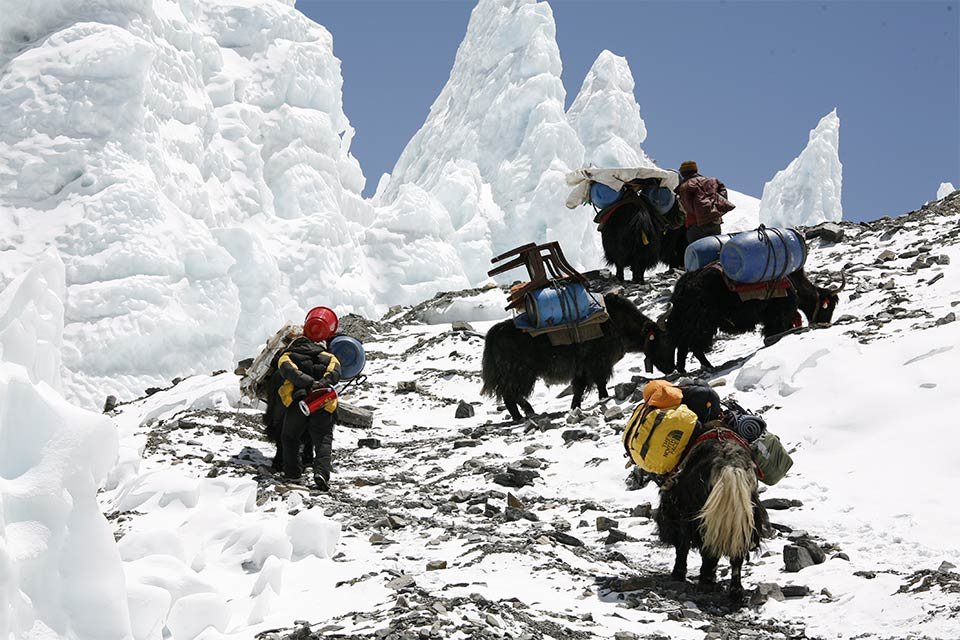
The snowstorm began on Friday evening and quickly intensified across Karma Valley in Tibet, a popular but lesser-known trail leading to the eastern face of Everest. According to Chinese state media, some 350 hikers have been rescued, while more than 200 remain stranded at various points along the route. Despite the treacherous conditions, authorities confirmed that contact has been made with those still trapped, and local police, fire brigades, villagers, and mountain guides have been mobilized to assist. In an extraordinary move, yaks are being used to carve paths through the heavy snow and to help locate hidden crevasses that could prove deadly for climbers attempting to descend.

For many of the trekkers, the ordeal has been a nightmare. Geshuang Chen, a 29-year-old outdoor enthusiast, described the storm as “extremely difficult,” noting how thunder, strong winds, and relentless snowfall turned their adventure into a fight for survival. “When we woke up the next morning, the snow was already about a metre deep. We had no choice but to turn back. I was so lucky to get out,” she said. Another hiker’s wife recounted her husband’s fear of being buried alive if he allowed himself to sleep in the heavy snow.
Seasoned climbers, too, have admitted the conditions were unlike anything they had faced before. Dong Shuchang, a 27-year-old photographer and frequent visitor to the Himalayas, said his group’s gear was useless against the storm. “Our windbreakers and raincoats were no match for the snow. I’ve come to the Himalayas around 20 times, but I’ve never experienced weather like this,” he said. Dong, who eventually made it to safety, recalled slipping repeatedly on ice as his group descended, while passing rescuers heading up to save others still trapped.
Medical experts are warning that hypothermia poses one of the gravest risks to those caught in the blizzard. Hypothermia occurs when the body temperature falls below 35 degrees Celsius, and can be fatal if untreated. Survivors have already reported exhaustion, uncontrollable shivering, and an inability to rest. One group of 18 hikers told reporters that they hardly slept, fearing their tents would collapse under the constant weight of accumulating snow. “We had to shake off the snow every 10 minutes,” said one member. Several trekkers developed early symptoms of hypothermia despite wearing appropriate clothing.
Adding to the gravity of the crisis, the same weather system has battered Nepal, unleashing floods and landslides that have killed at least 47 people since Friday. Entire villages in the eastern district of Ilam have reportedly been swept away, with roads destroyed and relief efforts hampered by continued heavy rain. Authorities in Nepal have warned that the death toll may rise as dozens of people remain missing. The timing of the disaster was particularly cruel, striking as hundreds of thousands of Nepalese were returning home from celebrating Dashain, the country’s biggest festival.
Rescue teams on the Tibetan side continue to face immense challenges. A woman from Shenzhen described how her husband, who had joined a 12-day trek in Karma Valley, contacted her via satellite phone to say his group was stranded in deep snow at Oga campsite. Despite calling in emergency services, she said the rescuers themselves were slowed by the sheer volume of snow and the dangerous conditions. Her husband’s team, aided by three yak handlers, was eventually forced to retreat to another camp, their progress slowed to a crawl as they carried heavy loads and cleared their own path.
Veteran climbers have emphasized how unusual this weather is for October. Rebecca Stephens, the first British woman to summit Everest, noted that while this is typically a dry and stable period on the Tibetan side of the mountain, climate shifts appear to be making the region increasingly unpredictable. “This unusually heavy snowfall carries avalanche risk, and the combination of cold and wet snow makes hypothermia a real danger,” she said. Meteorologists suggest that remnants of the South Asian monsoon, colliding with low-pressure systems drifting from the Bay of Bengal, may have triggered this unseasonal storm.

Although forecasts now indicate calmer weather in the days ahead, with sunshine expected to return to the Himalayan slopes, the scars of the disaster will remain. For the trekkers who have endured sleepless nights, freezing winds, and the looming threat of avalanches, the ordeal has been a sobering reminder of nature’s unpredictability—even on trails considered relatively safe. For those still waiting to be rescued, the coming hours remain critical as rescuers push through ice, snow, and exhaustion to bring them back alive.
Related News:
 Tsunami Panic Grips Pacific Rim After One of Century’s Strongest Quakes Shakes Russia, Sparks Global Evacuations
 Massive Earthquake Off Russia’s Kamchatka Coast Sparks Widespread Tsunami Alerts and Volcanic Eruption
 Wildfire Devastation in Southern France: Nation Mobilises Against Raging Inferno
 Europe Swelters Under Historic Heatwave as Wildfires Rage Across the Continent
 Search Underway for Missing After Pakistan Flash Floods Kill Over 330
 Thousands at Risk in Gaza Amid Winter Flooding
 Turkey to Host COP31 After Breakthrough Deal with Australia
 Trump EPA Moves to Roll Back Soot Pollution Limits
 Australia Launches Major Environmental Law Reforms
 Sri Lanka Floods Leave 56 Dead, Dozens Missing
 Families wait in agony for missing after Hong Kong tower blaze
 Rare shark attack kills woman, injures man at remote NSW beach
 Kinnock’s Rebuke Echoes Loudly as Corbyn Allies Launch Left-Wing Breakaway: “A Gift to Farage”
 UK and Norway Forge Stronger Ties Through Joint Sanctions and Enhanced Defence Cooperation
 Trump Administration Dismisses 17 Immigration Judges, Sparking Debate Over Judicial Independence
 England’s Euro Odyssey: A Tale of Grit, Glory and the Lionesses’ Miraculous March to the Final
 Scorching Skies: England Gripped by Record-Breaking Heatwave Amid National Alerts
 UK Must Act with Courage and Clarity on Israel-Palestine Conflict, Says Foreign Affairs Committee Report
 Northern Ireland Family of Three Shot Dead in Maguiresbridge Home Incident
 Seventeen Dead as Russia Targets Ukrainian Prison in Devastating Airstrike
 Tears in Tarragona: British Siblings Drown in Spanish Sea as Holiday Turns to Horror
 Tottenham Takes On Newcastle
 Gen Z Embraces the Big, Bold ‘Fake’ Indian Wedding Party Trend
 Trump Threatens 100% Tariff on Nations Importing Russian Oil Amid India Standoff Over Ukraine War
 Radioactive Leak at UK’s Nuclear Warhead Base Sparks Outcry Over Safety and Secrecy
 Mutual Inconvenience: Why Alaska Was Chosen for the Trump-Putin Summit on Ukraine
 Fire Contained at Edinburgh’s Arthur’s Seat After Overnight Battle by Firefighters
 China’s crackdown on civil servant perks sparks economic concerns
 UK Heatwave Continues with Temperatures Soaring, Thunderstorms Forecast Across the Country
 UK Weather: Heat Alerts Extended as Temperatures Set to Reach 30°C This Weekend
 Terence Stamp, ’60s British Film Legend and Star of Superman, Dies at 87
 Hong Kong Summons UK and Australian Envoys Following Asylum Grants to Democracy Activists
 Is the UK Ready to Put Boots on the Ground in Ukraine? Assessing Military Capacity and Challenges
 Costa Blanca Holiday Horror as Food Poisoning Outbreak Hits Four-Star Hotel
 Massive 641-Mile Storm Set to Batter UK with 15 Hours of Rain and Strong Winds
 Shein UK Faces Allegations of Shifting Majority of Profits to Singapore to Reduce UK Tax
 Conservative Influencer Charlie Kirk Fatally Shot During University Debate
 Channel Crossings Surge: Over 1,000 People Arrive in the UK in Small Boats in a Single Day
 Widow of Charlie Kirk Forgives Killer at Emotional Memorial Service
 Las Vegas Faces Decline as Rising Costs Drive Tourists Away
 Public Executions in Gaza City Captured on Video Amid Ongoing Conflict
 Macron Phones Trump Over Traffic Jam in New York
 Comey Indictment Deepens Fears of Political Retribution Under Trump
 Google at 27: The Untold Story of Ruth Kedar, the Woman Behind the Iconic Logo
 Yvette Cooper Signals Global Momentum Towards Gaza Peace Deal Amid Humanitarian Crisis
 “It Was Very Tough, But I Love Life”: Former Israeli Hostage Rebuilds Life After Family Killed by Hamas
 Chaos at Ibrox as Martin’s Rangers Era Comes to an End
 Arsenal Showcase Depth and Flexibility as Arteta Eyes Title Challenge
 Public Trust in SNP Hits Historic Low Amid NHS Concerns
 Cooper Unveils £4m Cyber Plan Against Russian Hackers
 Johnson Suggests Mandelson Linked to China Spy Controversy
 Zelensky to Urge Missile Aid as Trump and Putin Plan Summit
 Rachel Reeves signals welfare reform ahead of key budget
 Ireland Votes as Two Women Compete for Presidency
 WW2 Pilot’s Long-Lost Crash Site Unearthed in Essex
 Experts Warn Russia’s Burevestnik Missile Could Destabilise Arms Control
 Johnson Approved China’s London ‘Super-Embassy’ in 2018
 Tragedy on Lizard Island: Cruise Passenger Dies
 Top Christmas Books Reads: Classics to Cozy Romcoms
 Just Stop Oil Protesters Convicted Amid Climate Defence Row
 US Senate Passes Funding Bill to End Historic Shutdown
 UK Faces Arctic Blast as Polar Vortex Disruption Brings Heavy Snow
 Japan Deploys Police to Curb Deadly Bear Attacks
 US Justice Department Files Lawsuit Against California Over Partisan Voting Maps
 Pokémon to open world’s first theme park in Japan next year
 Trump Deploys DHS to Charlotte in Major Arrest Operation
 Orban Says Ukraine Has ‘No Chance’ as EU Support Continues
 Israeli Strike Kills 13 Near Palestinian Camp in Lebanon
 Commuters warned as yellow snow and ice alert hits Northern Ireland
 Haiti Qualifies for World Cup Despite Coach Never Visiting Country
 Pentagon Officials in Ukraine to Discuss War End
 Vietnam Battles Deadly Floods as Rains Continue
 Venezuela Threatens Nobel Winner Machado with Fugitive Status
 At Least Three Dead in Bangladesh Earthquake
 Israel Confirms Hamas Returned Dror Or’s Body
 Two National Guard Soldiers Critically Injured Near White House
 Delhi’s Toxic Air Crisis Leaves Children Sick and Vulnerable
 Southern Lebanon reels as Israeli strikes shatter communities
 Mbappe Scores 4 as Real Madrid Edge Olympiakos
 Global campaign launched to free Palestinian leader Barghouti