Published: 13 August. The English Chronicle Desk. English Chronicle Online.
Europe is grappling with an intense and unprecedented heatwave this summer, as temperatures soar to record-breaking levels across multiple countries, fueling devastating wildfires and exacerbating public health concerns. The sweltering conditions have shattered temperature records in regions such as south-west France, Croatia, Italy, and Spain, prompting warnings from climate scientists and authorities alike.
In France, the heatwave has set new highs in cities including Angoulême, Bergerac, Bordeaux, Saint-Émilion, and Saint-Girons, with temperatures soaring approximately 12 degrees Celsius above the regional average for recent decades, according to Météo France. This exceptional rise has pushed many weather stations in the south-west above 40 degrees Celsius, marking one of the most widespread heat events the country has seen. Scientists like Lauriane Batté from Météo France describe this pattern as a clear indication of ongoing climate warming, highlighting that more than half of France’s 51 recorded heatwaves since 1947 have occurred within the last 15 years.

Croatia has witnessed similarly alarming figures, with air temperature records broken in coastal cities such as Šibenik, registering 39.5 degrees Celsius, and Dubrovnik, reaching 38.9 degrees Celsius. These extreme temperatures have contributed to large-scale forest fires along Croatia’s coasts and neighboring Balkan nations, ravaging vast areas of natural vegetation and threatening communities.
Beyond Europe, the heatwave’s impacts extend globally, with Canada experiencing numerous broken temperature records and Iraq suffering a nationwide blackout triggered by record-breaking heat surpassing 50 degrees Celsius. The Nordic countries are also recovering from an unusual heat surge, where temperatures climbed above 30 degrees Celsius within the Arctic Circle — a phenomenon nearly unheard of until recently.
Experts emphasize that while some southern European nations have not seen the absolute highest temperatures ever recorded, the prolonged duration and vast geographical spread of this heatwave are cause for serious concern. José Camacho, climate scientist and spokesperson for Spain’s weather agency Aemet, notes that the heat’s length and extent amplify its impact, with cities across Italy and Spain under red heat alerts. The human toll has already begun to manifest tragically: in Italy, a four-year-old boy died from heatstroke, while in Spain, a man succumbed to burns sustained in a wildfire.
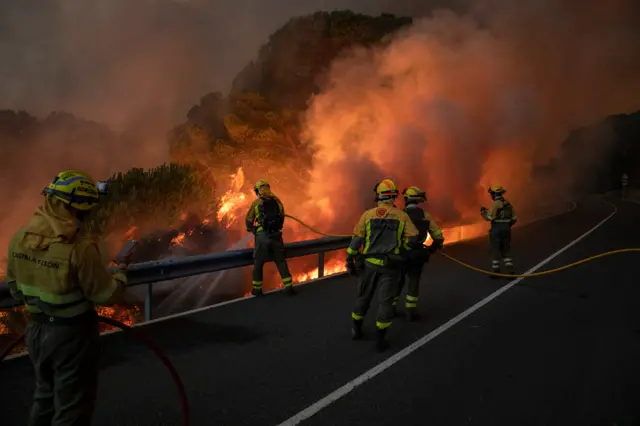
The extreme heat has desiccated vegetation across the continent, creating what scientists describe as a “molotov cocktail” of climatic conditions ideal for wildfires. This year alone, wildfires in Europe have consumed more than 400,000 hectares of land — an 87 percent increase over the average for this period during the past two decades. The European Union’s fire science experts warn that this week will see “extreme to very extreme” fire risks spanning much of southern Europe, with heightened anomalies even expected in parts of the Nordic region.
Public health experts are sounding alarms about the escalating dangers of these heatwaves, which kill tens of thousands annually in Europe. Research forecasts that by the end of the century, climate-induced heat could cause between 8,000 and 80,000 additional deaths per year across the continent, surpassing lives saved from milder winters. Antonio Gasparrini, an epidemiologist at the London School of Hygiene & Tropical Medicine, underscores the urgent need for diverse and effective health interventions as heatwaves become more frequent and deadly. He highlights the stark regional differences in excess mortality caused by extreme heat, cautioning that the burden will be unevenly shared among populations.

Compounding the health crisis are worsening air quality and the proliferation of wildfires, noted by the World Meteorological Organization last week. In addition to Europe, regions across west Asia, southern central Asia, northern Africa, southern Pakistan, and the southwestern United States have experienced temperatures exceeding 42 degrees Celsius, with local hotspots rising above 45 degrees Celsius.
Scientists and policymakers alike recognize that these extreme heat events are clear manifestations of climate change — a pattern expected to intensify unless global efforts to curb greenhouse gas emissions accelerate. Bob Ward, policy director at the Grantham Research Institute, bluntly states, “This is what climate change looks like. And it will only get worse.”
As Europe endures this historic summer heatwave, communities face an urgent need for preparedness and adaptation to safeguard lives and ecosystems from an increasingly volatile climate reality.
Related News:
 Search Underway for Missing After Pakistan Flash Floods Kill Over 330
 Turkey to Host COP31 After Breakthrough Deal with Australia
 Trump EPA Moves to Roll Back Soot Pollution Limits
 Australia Launches Major Environmental Law Reforms
 Sri Lanka Floods Leave 56 Dead, Dozens Missing
 Severe Thunderstorms Lash England and Scotland: Met Office Issues Amber and Yellow Warnings Amid Flooding Risks
 Tsunami Panic Grips Pacific Rim After One of Century’s Strongest Quakes Shakes Russia, Sparks Global Evacuations
 India and US Collaborate to Launch Groundbreaking Satellite for Earth Observation
 Massive Earthquake Off Russia’s Kamchatka Coast Sparks Widespread Tsunami Alerts and Volcanic Eruption
 Storm Floris Sparks Amber Alert in Scotland Amid ‘Danger to Life’ Wind Forecast
 One Dead and Hundreds Evacuated as Wildfires Ravage France and Spain Amid Southern Europe Heatwave
 Wildfire Devastation in Southern France: Nation Mobilises Against Raging Inferno
 England Braces for Prolonged Dry Spell as National Drought Group Urges Urgent Water-Saving Measures
 England Faces “Nationally Significant” Water Shortfall as Fourth Heatwave of 2025 Strikes
 UK Faces One of Its Warmest Summers on Record, Met Office Confirms
 UK Weather: Rain Expected Above Average This Autumn, but Drought Likely to Persist
 History Will Remember Who Showed Up: Pressure Mounts on Keir Starmer to Attend Cop30 Summit
 Everest Blizzard Chaos: Hundreds Stranded as Rescuers Battle Deadly Snowstorm
 Storm Benjamin Set to Lash UK with Heavy Rain and Strong Winds
 US Super-Rich Are Draining Planet’s Safe Climate Space
 “Hurricane Melissa Devastates Jamaica with Floods and Power Outages”
 UK Charters Emergency Flights to Evacuate Britons from Jamaica
 Hurricane Melissa Leaves Devastation Across Jamaica as Death Toll Rises
 Delhi Tightens Curbs as Citizens Protest Over Toxic Air
 UK Faces Arctic Blast as Polar Vortex Disruption Brings Heavy Snow
 New weather warning issued with risk of flooding
 Thousands at Risk in Gaza Amid Winter Flooding
 West Councils Falling Behind on Climate Goals
 Africa Demands Climate Justice Linked to Colonial Past
 Vietnam Battles Deadly Floods as Rains Continue
 Historic Floods Devastate Thailand and Southeast Asia
 Delhi’s Toxic Air Crisis Leaves Children Sick and Vulnerable
 Families wait in agony for missing after Hong Kong tower blaze
 Carney’s Alberta Pipeline Deal Sparks Immediate Pushback
 Rare shark attack kills woman, injures man at remote NSW beach
 Delhi’s Toxic Air Drives Spike in Respiratory Illnesses
 ‘Extinct’ Antelope Returns to Sahara, Bringing Hope
 Whether You Win or Lose, Some Fights Are Worth Fighting’: The Unlikely Origins of the Largest-Ever Climate Case
 UK Must Act with Courage and Clarity on Israel-Palestine Conflict, Says Foreign Affairs Committee Report
 Northern Ireland Family of Three Shot Dead in Maguiresbridge Home Incident
 Tottenham Takes On Newcastle
 Gen Z Embraces the Big, Bold ‘Fake’ Indian Wedding Party Trend
 Radioactive Leak at UK’s Nuclear Warhead Base Sparks Outcry Over Safety and Secrecy
 Mutual Inconvenience: Why Alaska Was Chosen for the Trump-Putin Summit on Ukraine
 Fire Contained at Edinburgh’s Arthur’s Seat After Overnight Battle by Firefighters
 UK Heatwave Continues with Temperatures Soaring, Thunderstorms Forecast Across the Country
 Where Is Prince William and Kate Middleton’s New House? Inside the Historic Lodge Set to Become Their ‘Forever Home’
 FIFA Eyes Biennial Club World Cup from 2029, Plans Possible Expansion
 Costa Blanca Holiday Horror as Food Poisoning Outbreak Hits Four-Star Hotel
 British Couple Among 16 Killed in Lisbon Funicular Tragedy
 Millions in the UK at Higher Risk of Heart Failure and Stroke Due to Air Pollution, Study Warns
 Conservative Influencer Charlie Kirk Fatally Shot During University Debate
 Thousands Gather in London to Protest Donald Trump’s Second UK State Visit
 Las Vegas Faces Decline as Rising Costs Drive Tourists Away
 Liverpool Vs outhampton Set for Carabao Cup Clash at Anfield
 Denmark Investigates Professional Drone Incursions Across Multiple Airports, No Evidence of Russian Involvement
 A Third of EU Citizens in UK Report Discrimination by Public Bodies Post-Brexit
 Arsenal Showcase Depth and Flexibility as Arteta Eyes Title Challenge
 Public Trust in SNP Hits Historic Low Amid NHS Concerns
 Johnson Suggests Mandelson Linked to China Spy Controversy
 Rachel Reeves signals welfare reform ahead of key budget
 King urges faster action on climate change initiatives
 Ireland Votes as Two Women Compete for Presidency
 WW2 Pilot’s Long-Lost Crash Site Unearthed in Essex
 Experts Warn Russia’s Burevestnik Missile Could Destabilise Arms Control
 Tragedy on Lizard Island: Cruise Passenger Dies
 Prince William Plants Trees with Brazil’s Nature Heroes
 Just Stop Oil Protesters Convicted Amid Climate Defence Row
 US Senate Passes Funding Bill to End Historic Shutdown
 Japan Deploys Police to Curb Deadly Bear Attacks
 US Justice Department Files Lawsuit Against California Over Partisan Voting Maps
 Pokémon to open world’s first theme park in Japan next year
 Trump Deploys DHS to Charlotte in Major Arrest Operation
 Orban Says Ukraine Has ‘No Chance’ as EU Support Continues
 Israeli Strike Kills 13 Near Palestinian Camp in Lebanon
 Haiti Qualifies for World Cup Despite Coach Never Visiting Country
 Pentagon Officials in Ukraine to Discuss War End
 Venezuela Threatens Nobel Winner Machado with Fugitive Status
 Two National Guard Soldiers Critically Injured Near White House
 Southern Lebanon reels as Israeli strikes shatter communities