Published: 12 October 2025. The English Chronicle Desk. The English Chronicle Online.
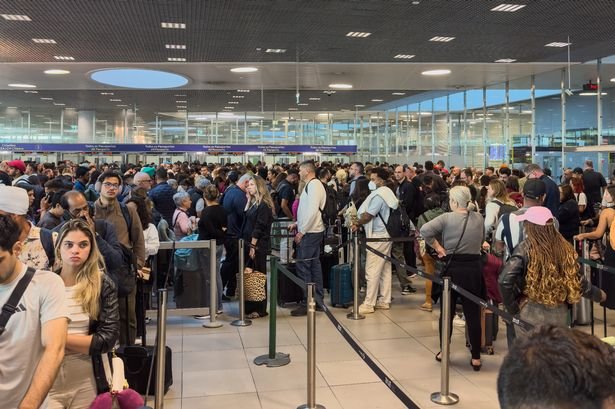
UK travellers heading to popular European destinations such as Spain, Portugal, and Italy are being urged to brace themselves for lengthy queues after the introduction of a new EU border system this Sunday. Industry experts have warned that the changes could lead to waiting times of up to four hours, potentially costing the UK economy as much as £400 million if delays extend to freight transport.
The Entry Exit System (EES), a new EU-wide initiative, requires UK nationals to have their fingerprints registered and a photograph taken each time they enter the Schengen Area, which encompasses 29 European countries. The EU maintains that the system is intended to enhance security and streamline border controls, but the initial rollout is expected to create bottlenecks at airports, ports, and train terminals.

The Home Office has suggested that completing the EES registration should only take “one to two minutes” per traveller. However, travel firms have cautioned that, during peak periods, the system could result in waiting times of several hours. Julia Lo Bue-Said, chief executive of Advantage Travel Partnership, a network representing independent travel agents, recommended that travellers allow up to four hours to navigate the new checks during the system’s initial phase.
“Delays should be anticipated, particularly at major airports in southern Europe when multiple flights arrive simultaneously,” she said. “We foresee potentially overwhelming volumes of travellers during the initial rollout, although we expect the process to settle as both staff and passengers become familiar with the new procedures.”
The implications of EES extend far beyond passenger inconvenience. Logistics UK, a leading industry body, warned that hauliers transporting goods across the Channel could face significant delays, with knock-on effects for the UK economy. Analysis conducted by Logistics UK, in collaboration with independent modelling experts MDS Transmodal, found that delays averaging 90 minutes for the 3.35 million HGVs that crossed the Short Straits in 2023 could cost the economy £400 million per year.
Josh Fenton, Policy Manager at Logistics UK, stressed the stakes. “This is a cost that the logistics industry cannot simply absorb. Our members operate on extremely narrow margins, and rising operating costs are already putting pressure on their ability to trade efficiently,” he said. “It is vital that the UK government maintains close communication with European counterparts to ensure that the test of Member State readiness prioritises the smooth flow of freight and trade across the Channel, a critical GB-EU supply chain route.”
The warnings have prompted calls from political quarters. The Liberal Democrats pointed to the £400 million projected loss as a sum that could fund over 16,000 new nurses for the NHS. Al Pinkerton, the party’s Europe spokesperson, described the situation as “utterly unacceptable,” accusing the government of failing to negotiate with the EU effectively.
“It is another barrier to growth,” Pinkerton said. “This money could have been reinvested into our economy to support struggling businesses and public services. Instead, it risks being lost in long queues as trade flow is hampered at the border. Ministers must secure immediate agreements to fast-track exporters and negotiate a professional drivers’ exemption for British hauliers to prevent undue hardship under the new system.”
The European Travel Operators Association (Etoa) has also expressed concerns about the rollout. Chief executive Tom Jenkins described the phased introduction of the EES as “a complete muddle,” highlighting a lack of clarity on implementation and enrolment procedures.
“The EU is rolling out the system gradually, with member states initially required to register only a portion of arrivals,” Jenkins explained. “There is little information on which countries will start full implementation on October 12, creating uncertainty for both travellers and operators. They are attempting a partial system that combines registration and passport stamping, which is confusing and potentially inefficient.”
For UK travellers, most EES checks will take place at foreign airports. However, for those travelling via the Port of Dover, Eurotunnel’s Folkestone terminal, or London’s St Pancras railway station, the process will be completed in the UK. New kiosks have been installed at these locations, but only a portion of passengers will be required to use them from Sunday, adding to initial uncertainty about how smoothly the system will operate.
EES registration will remain valid for three years, allowing travellers to avoid repeated full enrolments within that period, although identification checks will still occur on each trip. Ultimately, the system is intended to replace manual passport stamping, improving long-term efficiency and security. Mark Tanzer, chief executive of travel trade organisation Abta, emphasised the potential benefits once the system is fully operational.
“In the longer term, EES should make travel to Europe simpler and faster,” Tanzer said. “However, given the scale of the operation, delays are likely in the short term, particularly at peak travel periods. Countries will have the option to manage the system flexibly, stepping down or adjusting procedures to avoid extensive waiting times.”
The implications for the logistics sector are especially significant. Prolonged delays for HGVs at ports could disrupt supply chains, particularly for time-sensitive goods such as food, pharmaceuticals, and industrial components. Fenton urged government and EU officials to collaborate closely to mitigate these risks. “The smooth flow of freight is critical. Delays at the border have a direct economic impact, affecting not only transport companies but also businesses relying on timely delivery,” he said.
Travel companies are advising passengers to plan ahead, particularly during the initial days of the rollout. Many airlines and ferry operators have issued notices urging passengers to arrive well in advance of scheduled departure times. Staff training and system familiarisation are expected to reduce queues over time, but early adopters of EES should anticipate extra time for processing.
Political pressure is mounting for the UK government to negotiate exemptions or pre-clearance systems for freight. Failure to secure such agreements risks long-term disruption to the UK-EU supply chain, with potentially significant consequences for both trade and employment. Pinkerton’s comments highlight a wider concern that the economic impact of delays could extend beyond transport, affecting wider public services and government funding priorities.
While travellers will likely experience some initial frustration, industry leaders hope that clear communication and phased adaptation will ease the transition. The rollout of EES represents a significant shift in border management for UK nationals, combining biometric data collection with automated processes. It is a move that, if executed effectively, promises long-term benefits in terms of security and efficiency.

For the public, the advice is straightforward: allocate additional time for check-in and border procedures, remain patient, and follow guidance from airline and port staff. The Home Office has reiterated that the system is designed to function efficiently once staff and travellers adjust to the new protocols, but industry bodies warn that patience will be required in the early weeks of implementation.
In summary, the EES rollout marks a pivotal moment in UK-European travel relations. While the system offers enhanced security and long-term efficiency, the short-term impact is expected to be significant. Travellers, freight operators, and policymakers must all adapt to ensure smooth operations. With careful preparation and cooperation, the UK hopes to minimise disruption and safeguard both economic interests and passenger experience during this transition.
Related News:
 How to Exit Your Broadband Contract Without Paying Exit Fees
 Heathrow Unveils £21 Billion Third Runway Plan to Boost UK Connectivity Amid Environmental Concerns
 Supreme Court Ruling on Car Finance Scandal Poised to Impact Millions of Motorists and Banks
 ICG Set to Acquire Three Major UK Regional Airports in Landmark £200 Million Deal
 Stunning Welsh Island with Historic Fort and Modern Luxuries Hits Market for £3 Million
 UK Jobs Market Faces Strain as Employers Cut Bonuses and Hiring Amid Economic Slowdown
 David Lammy Faces Possible Legal Challenge Over Foreign Office Secondment Scheme
 Wage Rises Slow as Retail and Hospitality Jobs Continue to Fall
 Manchester Airport Faces Delays After EasyJet Planes’ Wings ‘Clip’ on Runway
 Access to Iconic Cornish Beach Cut Off by National Trust Amid Safety Concerns
 Chancellor Rachel Reeves Pushes for Sweeping Changes to Environmental Protections to Accelerate Development
 Bank Holiday Getaway: Drivers and Rail Passengers Warned of Major Delays Across Britain
 Inflation Latest: Cost of Living Expected to Rise Again in Key Figures Released Today
 Ed Davey Urges Government to Block Elon Musk’s Tesla from Supplying UK Home Energy
 Rachel Reeves to Deliver Autumn Budget on 26 November Amid Economic Challenges
 UK Court Freezes £150m of Assets Belonging to Owner of Collapsed Prax Lindsey Refinery
 Retail Sales See Uptick Amid Errors and Delays as ONS Faces Scrutiny
 UK House Prices Hit Record £299,331 as Market Shows Steady Growth
Shein UK Faces Allegations of Shifting Majority of Profits to Singapore to Reduce UK Tax
UK House Prices Hit Record £299,331 as Market Shows Steady Growth
Shein UK Faces Allegations of Shifting Majority of Profits to Singapore to Reduce UK Tax
 UK Mobile Retailers Lock Doors Amid Surge in Organised Phone Thefts
 Londoners Buying Lowest Share of Property Outside Capital Since 2013
 UK Retail Sales Rise in August, but Tax Concerns Loom Over Festive Period
 UK Could Generate Nearly £2bn Annually by Taxing SUVs, New Study Reveals
 Jaguar Land Rover Extends Production Halt Following Cyber-Attack
 UK Labour Market Shows Signs of Cooling as Wage Growth Slows and Redundancies Rise
 UK Wage Growth Remains High, But Cost of Living Pressures Bite
 Next Shares Slide Amid Warning on Weak UK Growth and Jobs
 British AI Startup Outshines Human Forecasters in Global Prediction Contest
 Dagenham Left in Limbo After Smithfield and Billingsgate Market Relocation Cancelled
 Vodafone Franchisees Sound Alarm: Mental Health Toll of Commission Cuts Revealed Years Before £120m Court Battle
 Great Britain’s Energy Operator Commits to Strengthening Grid to Prevent Blackouts
 UK Government Backs Return of International Rail Travel to Kent Stations
 AstraZeneca to List on New York Stock Exchange While Retaining London Ties
 Retailers Warn Tax Rises Could Prolong Inflation as Shop Prices Climb
 Royal Mail Owner Acquires Stake in Collect+ and Launches High Street Rebrand
 Marks & Spencer Staff to Work on Boxing Day for First Time in Five Years Amid Cost-Cutting Measures
UK Housing Market Returns to Growth Amid Signs of Stability and Regional Variation
Marks & Spencer Staff to Work on Boxing Day for First Time in Five Years Amid Cost-Cutting Measures
UK Housing Market Returns to Growth Amid Signs of Stability and Regional Variation
 Senior Tories Condemn Badenoch’s Vow to Repeal Climate Change Act as Catastrophic
 Wetherspoon vows to keep prices low amid soaring energy and tax costs
 Storm Amy set to disrupt travel across UK with winds reaching 95mph
 Millions of households in England face looming water bill hikes amid regulatory scrutiny
 He-Man Set for Big Comeback as UK Toy Industry Rides ‘Newstalgia’ Wave
 Delivery Apps Could Double the Cost of Your Groceries, Warns Consumer Watchdog
UK House Price Growth Slows as Buyers Exercise Caution Ahead of Autumn Budget
Delivery Apps Could Double the Cost of Your Groceries, Warns Consumer Watchdog
UK House Price Growth Slows as Buyers Exercise Caution Ahead of Autumn Budget
 Kemi Badenoch Unveils ‘Golden Rule’ to Halve Spending Cuts for Deficit Reduction at Tory Conference
 Massive Vodafone Outage Disrupts Internet and Mobile Services Across the UK
 Royal Mail Fined £21m for Delivery Failures
 Parents spending £5,000 on special school assessments in England
 China warns UK over delayed London mega embassy decision
 Pizza Hut to shut 68 sites after collapsing into administration
 Lucy Powell urged ministers to reconsider costly legal case for Labour donor’s firm
 Miliband Promises New Nuclear Stations if SNP Ousted
 Lotto result jackpot draw halted due to technical glitch
 Rachel Reeves to lead UK trade push in Saudi Arabia amid rights debate
 UK launches search for first-ever ‘town of culture’ to highlight overlooked areas
 UK Small Business Owner to Challenge L’Oréal in Tribunal
 Court Hears Challenge Over Water Bills Funding Sewage Fixes
 The Lowry Hotel: Manchester’s Iconic Five-Star Retreat
 ABF May Split Primark from Food Division Amid Tough Market
 Rachel Reeves Set to Break Labour Pledge and Raise Income Tax
 UPS Cargo Plane Crash in Kentucky Kills Seven
 Tony Blair think tank warns Rachel Reeves must cut taxes if manifesto broken
 Oprah enjoys Meghan’s jam on English muffins
 MPs Press Rachel Reeves to Hike Gambling Taxes
 North Sea oil workers must lose weight or face job loss
 Warning as Britons prepare to spend £4 billion this Black Friday
 Borough Market Clash Sparks Influencer Backlash
 UK toy market enjoys bumper year as ‘kidults’ fuel demand
 Global markets drop amid tech sell-off and China slowdown
 Chatsworth estate opens new family-friendly hotel
 PM Highlights UK Business at G20 in South Africa
 Mossmorran Plant Closure Hits Cowdenbeath Hard
 Clifftop Lodges Spark Fears Over Jurassic Coast Stability
 UK Taskforce Unveils Plan to Streamline Nuclear Reactor Rules
 Steel billionaire Lakshmi Mittal reportedly leaves UK
 The 20 best Christmas markets in the UK, from Bath to Edinburgh
 These are the best Airbnb cottages in the UK for getaway inspired by The Holiday
 Search underway for British man overboard off Tenerife
 Virgin Media Fined £23.8m Over Telecare Safety Failures
 Rising Water Bills Lift Troubled Thames Back to Profit