Published: 15 October 2025. The English Chronicle Desk. The English Chronicle Online.
On a cool autumn night in Riga, England officially secured their place at the 2026 FIFA World Cup, confirming a journey that felt inevitable long before kick-off. Thomas Tuchel’s men brushed aside Latvia with a resounding 5-0 victory, continuing their flawless record in Group K and sealing qualification with two matches to spare. It was another clinical display from a team that has grown increasingly composed, confident, and ruthless under their German manager.
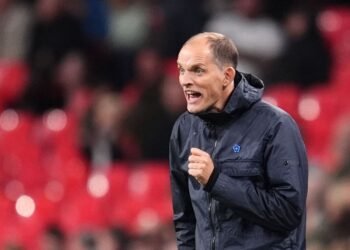
The match was never expected to pose much of a challenge for England, but it offered its share of subplots. After Tuchel’s recent criticism of the Wembley crowd for being “too quiet” during the friendly win over Wales, England’s travelling supporters arrived with something to prove. Their chants during the first half – alternately mocking and affectionate – were aimed squarely at their head coach. “Thomas Tuchel, we’ll sing when we want,” they belted out, followed by, “Are we loud enough for you?” Tuchel, amused, waved back, perhaps realising that English humour is as much a test of character as any high-pressure match.

Tuchel named a strong starting lineup, resting only Marc Guéhi due to recent workload concerns. Ezri Konsa joined John Stones at centre-back, while young Myles Lewis-Skelly reclaimed his spot at left-back. From the outset, England dominated possession, though Latvia, ranked 137th in the world, initially held firm in their deep 5-4-1 formation. For twenty minutes, the hosts absorbed pressure, hoping to frustrate their illustrious opponents. But when they dared to push forward, England struck with surgical precision.
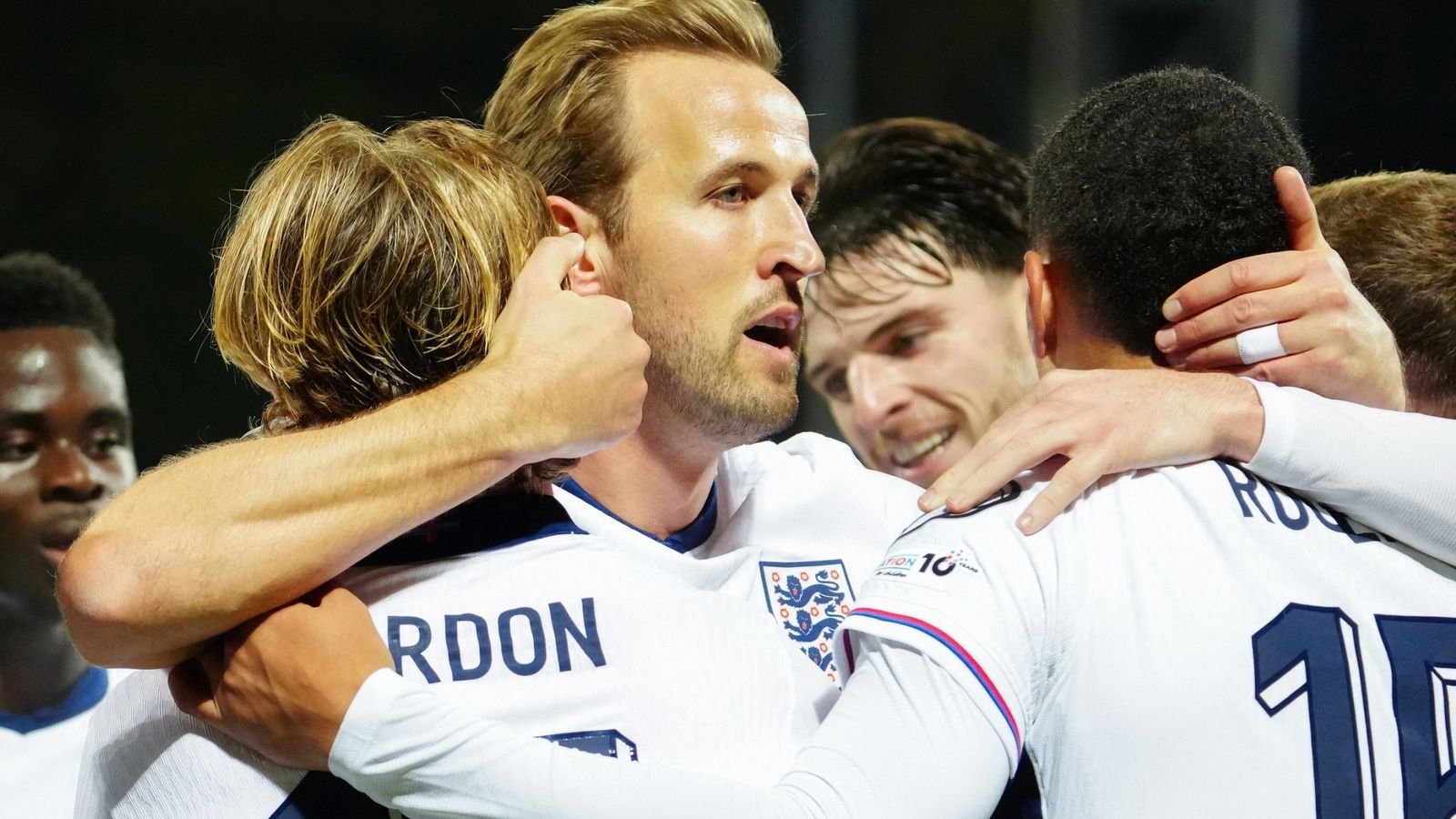
It was Anthony Gordon who broke the deadlock, cutting inside from the left to curl a delightful shot into the far corner after John Stones launched a pinpoint long ball. The goal opened the floodgates. Harry Kane, England’s talisman and captain, then took centre stage. His first goal came from a fierce low strike on the edge of the box, hit with such precision that the Latvian goalkeeper, Krisjanis Zviedris, could only watch as it zipped past him. Moments later, Kane doubled his tally from the penalty spot after Antonijs Cernomordijs was penalised for holding him during a corner – a decision confirmed by VAR.
By half-time, the scoreboard read 3-0, the contest effectively over. Kane’s brace lifted his England tally to an astonishing 76 goals, putting him further beyond reach as the nation’s all-time leading scorer. Around 2,400 England supporters had travelled to Riga, and while some sought shelter from the relentless rain in the second half, those who stayed were treated to a footballing exhibition.
Latvia, who had managed just one win in their last 14 qualifiers, struggled to string together more than a few passes at a time. They attempted a handful of counterattacks, but England’s backline, led by Konsa’s timely interceptions, remained impenetrable. Jordan Pickford, chasing his own record for consecutive clean sheets, was barely tested. His ninth in a row extended a remarkable personal run and reinforced England’s defensive steel.
The fourth goal arrived in rather comical fashion. Substitute Maksims Tonisevs accidentally turned Djed Spence’s cross into his own net after Zviedris failed to collect cleanly. Minutes later, Eberechi Eze – another of Tuchel’s second-half changes – added a fifth, slotting home with trademark calm after a slick move through midfield. England had, quite simply, outclassed their opponents in every department.
The setting added a nostalgic charm to the occasion. Latvia’s small stadium, with its open-air stands, sparse crowd, and tall trees flanking one touchline, felt like a throwback to football’s simpler days. Yet the professionalism and efficiency with which England operated reflected the modern, data-driven era they now inhabit. Tuchel’s influence was evident everywhere: controlled pressing, fluid transitions, and an unwavering insistence on maintaining shape.
Still, the human drama off the pitch carried its own intrigue. The fans’ playful rebellion against their manager underscored the fine balance of affection and scepticism that always accompanies England’s footballing fortunes. Tuchel, who has repeatedly spoken about embracing England’s unique football culture, smiled wryly when asked post-match about the chants. “That’s English passion,” he said. “I’ll take that any day.”

While the scoreline will grab headlines, the real significance lies in England’s growing maturity. Six matches, six wins, zero goals conceded – the statistics speak for themselves. This is a team that no longer loses focus against lesser opposition. The blend of established stars and emerging talents is beginning to look like the foundation of something formidable.
Tuchel himself admitted there is more to come. “We’ve done what we needed to do,” he told reporters. “Qualification was our minimum expectation. Now, we prepare to compete, not just to participate.” His tone was measured but confident – a reflection of a manager who understands the weight of expectation that comes with the England job.
As the final whistle blew and Tuchel applauded the drenched supporters who had stayed till the end, chants of “Give us a song, Tuchel!” filled the night air. He waved again, laughing, before disappearing down the tunnel. The scene encapsulated the mood perfectly: a night of triumph tinged with humour, resilience, and quiet satisfaction.
England has made qualification look effortless, but the real challenges lie ahead. In eight months, they will step onto football’s grandest stage, armed with belief, balance, and perhaps the best squad depth in decades. For now, though, the message is simple – England is ready for the world.
Related News:
 Glory for the Lionesses: England Crowned Women’s Euros Champions Again Amid National Calls for Bank Holiday
 Manchester City Announce Their Return in Style with Haaland Double and Debut Goals at Wolves
 New Season, Same Strife Between the Sticks for Manchester United
 FIFA Eyes Biennial Club World Cup from 2029, Plans Possible Expansion
 Germany and Northern Ireland Set for Crucial World Cup Qualifier Clash in Cologne
 Serbia Humiliated 0-5 by England in World Cup Qualifier
 Man City 2-0 Napoli: Haaland Reaches 50 Champions League Goals After Red Card Turns Tide
 Rashford’s Brilliance Stuns Newcastle as Barcelona Claim Champions League Victory
 Tributes Pour In as Former Liverpool Women Manager Matt Beard Dies Aged 47
 Liverpool Vs outhampton Set for Carabao Cup Clash at Anfield
 Ferguson Fires Scotland to Dramatic Comeback Win Over Greece
 England Thrash Wales as Rogers, Watkins and Saka Shine Bright
 Tuchel Criticises ‘Silent Wembley’ After England Win
 Clarke’s Anger Overshadows Scotland’s Historic Win
 Barnes Inspires Newcastle to Champions League Triumph Over Benfica
City shine with PlayStation-style football to overwhelm Villarreal
Barnes Inspires Newcastle to Champions League Triumph Over Benfica
City shine with PlayStation-style football to overwhelm Villarreal
 Fabio Wardley stuns Joseph Parker to earn Usyk title shot
 Tension and Turmoil at Aston Villa v Maccabi Match
 Lando Norris Dominates Brazil GP to Strengthen F1 Title Bid
 Ronaldo Confirms Final World Cup and Plans Retirement
 England’s Euro Odyssey: A Tale of Grit, Glory and the Lionesses’ Miraculous March to the Final
 UK Must Act with Courage and Clarity on Israel-Palestine Conflict, Says Foreign Affairs Committee Report
 Predicted Leicester Line-ups Reflect Cifuentes’ Tactical Plans Ahead of New Season
 Central London Gears Up for Lionesses’ Victory Parade as Thousands Prepare to Celebrate Historic Women’s Euros Win
 London Set to Honour Euro 2025 Champions as Lionesses Take Victory Parade Through the Capital
 Rangers Boss Russell Martin Launches Blistering Critique After Disappointing Draw with Motherwell
 Tottenham Takes On Newcastle
 Radioactive Leak at UK’s Nuclear Warhead Base Sparks Outcry Over Safety and Secrecy
 Mutual Inconvenience: Why Alaska Was Chosen for the Trump-Putin Summit on Ukraine
 Minute’s Silence for Diogo Jota Abruptly Ended After Wembley Tribute Disrupted
 Premier League Supercomputer Predicts Tough Season for Man Utd Amid Three-Team Title Battle
 Aston Villa Under Pressure as Newcastle Take on Hosts in Premier League Opener
 Terence Stamp, ’60s British Film Legend and Star of Superman, Dies at 87
 Where Is Prince William and Kate Middleton’s New House? Inside the Historic Lodge Set to Become Their ‘Forever Home’
 Is the UK Ready to Put Boots on the Ground in Ukraine? Assessing Military Capacity and Challenges
 Grimsby Stun Manchester United in Dramatic Penalty Shootout
 Guardiola Admits City ‘Forgot to Play’ After Shock Defeat to Brighton
 Shein UK Faces Allegations of Shifting Majority of Profits to Singapore to Reduce UK Tax
 British Couple Among 16 Killed in Lisbon Funicular Tragedy
 Protests Expected as Israeli Arms Firms Join Global Defence Trade Fair in London
 Thousands Gather in London to Protest Donald Trump’s Second UK State Visit
 British AI Startup Outshines Human Forecasters in Global Prediction Contest
 Dembélé and Bonmatí Shine as Ballon d’Or Winners in Glittering Paris Ceremony
 UK Fighter Jet Purchase Could Breach Nuclear Treaty, Warns CND
 Arsenal VS Newcastle Hearts with Dramatic Late Turnaround at St James’ Park
 Aston Villa Fight Back to End Winless Run with Convincing Victory over Fulham
 Everton Held by West Ham as Bowen Cancels Out Keane’s Header in Nuno’s First Game
 ICC Women’s World Cup 2025: India to Host as Pakistan Fixtures Moved to Neutral Venues
 A Third of EU Citizens in UK Report Discrimination by Public Bodies Post-Brexit
Monaco Hold Man City to Dramatic 2-2 Draw as Eric Dier Converts Late Penalty
A Third of EU Citizens in UK Report Discrimination by Public Bodies Post-Brexit
Monaco Hold Man City to Dramatic 2-2 Draw as Eric Dier Converts Late Penalty
 Arsenal Edge Past West Ham Amid Injury Concerns
 Chaos at Ibrox as Martin’s Rangers Era Comes to an End
 Arsenal Showcase Depth and Flexibility as Arteta Eyes Title Challenge
 Questions Remain as Rugby Legend Lewis Moody Faces Motor Neurone Disease Diagnosis
 Public Trust in SNP Hits Historic Low Amid NHS Concerns
 Cooper Unveils £4m Cyber Plan Against Russian Hackers
 Johnson Suggests Mandelson Linked to China Spy Controversy
 Witness statements reveal the CPS China spy row collapse in the UK
 China warns UK over delayed London mega embassy decision
 Rachel Reeves signals welfare reform ahead of key budget
 Fulham vs Arsenal Trossard Strike Sends Gunners Three Points Clear
 Kosovo agrees to host Britain’s refused asylum seekers
 Gibbs-White Inspires Forest to Thrilling Win Over Porto
 Manchester United triumph as Mbeumo brace seals thrilling win
 British Woman in Iran ‘Losing Hope’ Amid Ongoing Detention
 Johnson Approved China’s London ‘Super-Embassy’ in 2018
 BBC Journalist Held and Interrogated in Vietnam
 Salah & Gravenberch Lead Liverpool to Win Against Villa
 Granit Xhaka Rescue Earns Everton Draw at Sunderland
 Top Christmas Books Reads: Classics to Cozy Romcoms
 Just Stop Oil Protesters Convicted Amid Climate Defence Row
 Bellingham has ‘the edge’ among England No 10s
Man City Masterclass on Guardiola’s Milestone Day Exposes Liverpool Woes
Bellingham has ‘the edge’ among England No 10s
Man City Masterclass on Guardiola’s Milestone Day Exposes Liverpool Woes
 VAR Must Rein Its Neck In to Save Football’s Spirit
 Mary Earps’s Manchester United Return Faces Mixed Reception
 Sam Kerr Stars in Chelsea Return with Champions League Double
 Former Lion Heskey Warns of Shortage of England Strikers
 Haiti Qualifies for World Cup Despite Coach Never Visiting Country
 Moyes Defends Gueye After Dramatic Everton Bust-Up
 Mbappe Scores 4 as Real Madrid Edge Olympiakos