Published: 20 November 2025 Thursday . The English Chronicle Desk. The English Chronicle Online
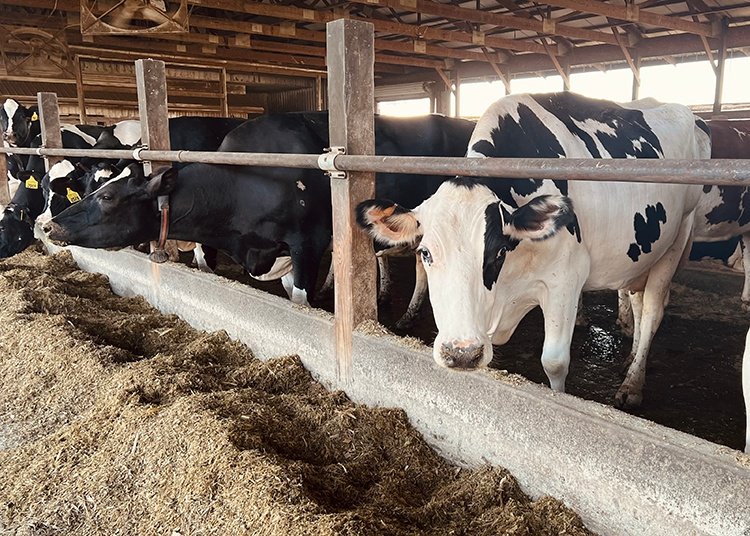
In a notable departure from traditional dairy farming practices, a farmer in the south of Scotland is pioneering a system that allows calves to remain with their mothers for up to six months, challenging longstanding industry norms and prompting discussion about animal welfare and commercial viability.
At conventional dairy farms, calves are typically separated from their mothers within 24 hours of birth. This practice allows farmers to collect the milk that would naturally feed the young calves and redirect it for commercial production, a system that has underpinned dairy economics for decades. However, David Finlay, who manages a herd of 130 dairy cows near Gatehouse of Fleet, has embraced an alternative approach, allowing cows and their calves to stay together for a significantly longer period.
Mr Finlay describes the system as not only enhancing animal welfare but also boosting farm productivity and profitability. “What we’ve found is we can carry 25% more cows on the farm, because the young stock are growing and maturing so much faster and the cows are yielding 25% more milk,” he explained. “So even with the calves drinking a third of their mother’s milk, the system is actually more efficient, more productive, and more profitable.”
The Finlays’ implementation of the cow-with-calf system was not without challenges. Initially, the business faced financial strain when a significant portion of milk was consumed by the calves, leaving less available for market. The couple overhauled their strategy, eventually finding a balance that allowed for both calf rearing and milk sales. Today, Rainton Farm, their property, is recognized as the largest commercial cow-with-calf dairy farm in Europe, drawing attention from policymakers and farmers alike.

One of the key arguments in favour of this approach is the benefit to animal welfare. By maintaining the maternal bond for several months, cows and calves exhibit less stress, better health outcomes, and potentially longer life expectancy. “Happier cows and staff, healthier animals—it’s a win-win situation,” Mr Finlay said. He believes that the approach has broader implications for sustainable and regenerative agriculture, advocating for a Scottish government-funded development programme to support research and adoption of the model.
Agriculture Minister Jim Fairlie expressed support for innovation in the sector, noting that the government has previously committed to funding cow-with-calf trial projects. “I will always encourage those in the sector to look for innovative approaches to farming that push Scotland to be a global leader in sustainable and regenerative agriculture,” he said. “For this reason, the adoption and use of sustainable and regenerative agricultural practices is one of the key objectives of the Agriculture and Rural Communities (Scotland) Act 2024, and it is great to see progressive businesses taking the initiative and adopting these practices already.”
Despite the potential advantages, the cow-with-calf system has its critics. Some farmers argue that the approach is unlikely to be widely adopted due to increased costs and logistical challenges. David McMiken, a third-generation dairy farmer managing a herd of 300 cows near Castle Douglas, voiced his concerns. “Ultimately, this system is a more expensive way to produce milk. It comes with increased labour costs, increased feed costs, and unfortunately that’s not viable on a lot of farms,” he said. He also emphasised the importance of independent disease control, which is easier to manage when mothers and calves are separated.

Nonetheless, some industry observers suggest that extending the period calves remain with their mothers could reduce stress associated with sudden separation. “It could be argued that separating cows and their calves after five to six months might actually be less stressful than the immediate separation used on conventional farms, as the maternal bond is allowed to develop more naturally,” noted critics and animal welfare advocates.
The debate highlights broader questions about the future of dairy farming in Scotland and across Europe. With Dumfries and Galloway home to nearly half of Scotland’s dairy herds, innovations such as the cow-with-calf system could have significant implications for sustainability, animal welfare, and farm economics. Proponents argue that adopting such systems could improve overall herd health, increase milk yields over time, and demonstrate leadership in ethical farming practices.
Mr Finlay is calling for a multi-million-pound funding commitment from the Scottish government, arguing that financial support is crucial to match EU-level research on the economic, environmental, and welfare impacts of cow-with-calf systems. He believes that with sufficient backing, more farmers could experiment with the approach, ultimately enhancing the reputation of Scotland’s dairy sector on the global stage.
For now, the Finlays continue to refine their model, balancing calf welfare with commercial productivity. By allowing calves to drink a portion of their mother’s milk while still providing marketable volumes, the farm has found a middle ground that demonstrates both compassion and commercial acumen.
As the debate continues, the Scottish government has signalled openness to innovation, highlighting the importance of research-backed practices that promote animal welfare, environmental sustainability, and economic viability. The Finlays’ pioneering approach may pave the way for a new era of dairy farming, where ethical considerations are harmonised with financial sustainability, offering a potential blueprint for farms across the UK and Europe.
Related News:
 150-Year-Old Arctic Beer to Be Reborn in Scotland
 World Whisky Tour: 9 Global Gems
 Oprah enjoys Meghan’s jam on English muffins
 Chef Skye Gyngell, Slow Food Pioneer, Dies Aged 62
 Farmer Survives Quad-Bike Accident “Bent in Half Like a Taco”
 A Colourful Cultural Escape in Mexico’s Querétaro
 Europe, North America face early wave of bird flu
 M&S and Morrisons Lead Christmas Supermarket Taste Test
 Peterborough Mosques Tighten Security After Attack
 Prunella Scales: From Fawlty Towers Icon to Beloved Canal Explorer
 Hospice Cuts Raise Alarm Across England Amid Funding Crisis
 UK Woman Loses Child Benefit After Booking Flight She Never Took
 UK launches search for first-ever ‘town of culture’ to highlight overlooked areas
 Army Officers Orders to Cut Ties with Men-Only Clubs
 Children to Learn Local History in Major Curriculum Overhaul
 Hollywood Is an Industry of Looney Tunes Pretending to Be Normal
 Experts Warn on Home Birth Risks, Call for Skilled Midwives
 Court Hears Challenge Over Water Bills Funding Sewage Fixes
 The Lowry Hotel: Manchester’s Iconic Five-Star Retreat
 Prince William Plants Trees with Brazil’s Nature Heroes
 Greta Thunberg Backs Student Facing UK Visa Revocation
 Kent village told to remove flags before Christmas lights go up
 Earl of Yarmouth Faces £1.3m Legal Bill Over Family Estate
 Newcastle United Lifts Ban on Fan Over Gender-Critical Views
 Jailed UK climate protesters face extremist-style restrictions
 Boris Johnson accused of undermining BBC leadership
 How to get help when a child goes missing – call 999 urgently
 ‘Reckless’ cuts to victims’ services will cost more than they save
 From Lego to Pokémon: How Adults Are Driving UK Toy Market Growth
 UK Faces Arctic Blast as Polar Vortex Disruption Brings Heavy Snow
 Seven Conditions That Automatically Qualify You for a Free Bus Pass
 Shouting Works Best to Deter Gulls, UK Study Finds
 Reeves rejects £1bn plea for NHS redundancy payouts
 UK toy market enjoys bumper year as ‘kidults’ fuel demand
 Politics latest: Starmer ‘will fight any leadership coup’ as Streeting denies attempt to oust Labour PM
 Leading doctors issue warning amid ‘bad’ flu season
 A Local Chef’s Guide to Iconic Boston Clam Chowder
 PM Condemns Leaks, Vows Loyalty to Ministers and Stability
 Son Reveals UK Couple in Iran Resort to Hunger Strike for Help
 South Korea’s Jeju Island Faces Rising Tide of Illicit Drugs
 Working-Class Men with Prostate Cancer Left Behind by NHS
 Pat Butcher Returns to EastEnders in Touching Dementia Storyline
 Senator John Fetterman Hospitalized After Fall from Heart Flare-Up, Keeps Sense of Humor
 Australia Mourns Paralympic Champion Paige Greco
 UK Asylum Overhaul Sparks Debate Over Human Rights and Deportations
 UK Asylum Reforms: Temporary Refugee Status and Faster Deportations
 Mum Calls for New Licence Rules After Teen Road Death
 £1 Breakfast Club Brings Parents Together in Sheffield
 Mother Watches in Horror as Teen Daughter Dies on Tracks
 Agency Workers Vote to Join Picket Lines Amid Dispute
 Irish Hero Parrott Says Goal Brought First Tears in Years
 What Now for the Queen’s Childhood Playhouse After Andrew’s Eviction?
 Seven Countries, One Winner: Europe’s Best Christmas Market
 Van Dwellers Face Eviction After Park Misuse Sparks Outcry
 ‘Traumatic Wait’: Northern Ireland Women Face Breast Cancer Delays
 Commuters warned as yellow snow and ice alert hits Northern Ireland
 Healthy Habits in Your 30s That Boost Life in Your 70s
 Snow and Ice Cause Travel Chaos in North Yorkshire
 Woman Meets Boy Whose Life She Saved with Kidney
 Raccoons Could Become America’s Next Pet
 Australia to Ban Social Media for Kids Under-16 Starting December
 Kate Forbes: Motherhood Harder Than Politics
 TikTok Star Jessie Yendle Mocked by KFC
 Coffins Now Too Large to Cremate Amid Rising Obesity Crisis
 Reeves to Crack Down on Benefit Fraud While Lifting Two-Child Limit
 Labour MP claims devolution bill is ‘blatant discrimination’ against Cornwall
 The 20 best Christmas markets in the UK, from Bath to Edinburgh
 Vicki Fears Losing Motability Car
 Planned Palestinian Flag Raising at Belfast City Hall Faces Delay Amid Legal Concerns
 Delhi’s Toxic Air Crisis Leaves Children Sick and Vulnerable
 Residents Face £3.6m Bill for Unsafe Kirkby Flats
 Families wait in agony for missing after Hong Kong tower blaze
 Fibromyalgia Patients Struggle as NHS Fails to Provide Care
 Scotland Gains 33 New Towns – Life in Growing Communities
 Machynlleth High Street Left Without Christmas Lights
 Second homes curbs quashed in Gwynedd legal ruling
 Search underway for British man overboard off Tenerife
 Virgin Media Fined £23.8m Over Telecare Safety Failures
 Hong Kong Orders Probe Into Deadly 151-Death Fire
 Pavarotti statue frozen in Italian ice rink sparks backlash