Published: 21 November 2025 Friday. The English Chronicle Desk. The English Chronicle Online
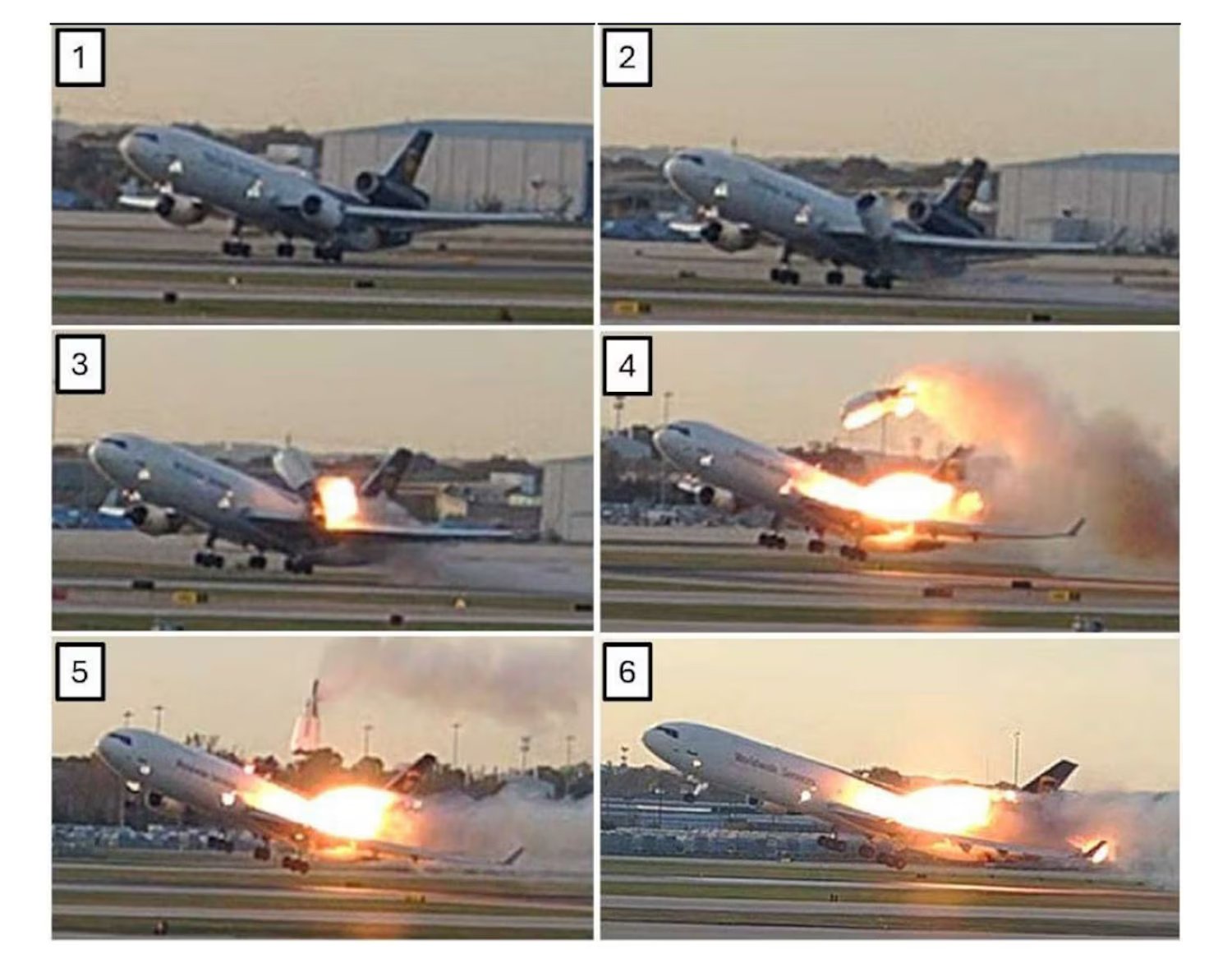
Newly released images and reports from the National Transportation Safety Board (NTSB) have revealed a dramatic and harrowing sequence of events leading up to the deadly UPS cargo plane crash in Louisville, Kentucky, on November 4, 2025. The investigation’s frame-by-frame photographs show one of the aircraft’s engines detaching from its left wing moments after the plane lifted off the runway, smashing against the fuselage and igniting a catastrophic fire. The UPS cargo plane, en route to Hawaii, never climbed higher than 30 feet (9.1 meters) above the ground before debris from the engine and fuselage struck nearby structures, including the roof of a UPS warehouse. The tragic accident claimed the lives of 14 people, including three crew members onboard and 11 individuals on the ground, and left 23 others injured. The images, released as part of the NTSB’s preliminary report, highlight the urgency of the ongoing federal investigation into the causes and safety oversights that contributed to the catastrophic crash.
According to the NTSB, initial findings point to fatigue cracks and areas of overstress failure in the engine mounts of the left wing as central factors in the accident. Investigators also discovered a fractured bearing that played a critical role in securing the engine to the aircraft. The plane itself had accumulated nearly 93,000 flight hours and over 21,000 cycles by the time of the crash, making it an aircraft with extensive operational history. A special detailed inspection, required at 29,200 cycles, had not been performed, according to maintenance records, raising serious questions about compliance with established safety protocols. The combination of structural fatigue, mechanical failure, and missed maintenance inspections appears to have created a perfect storm that culminated in one of the deadliest aviation accidents in recent U.S. history.
Eyewitnesses described a scene of sheer devastation as the plane lifted off, with flaming debris raining down and thick black smoke engulfing the surrounding area. Local officials reported that the fuselage and engine impacted the warehouse roof, resulting in additional fires and widespread property damage. Tens of thousands of gallons of aviation fuel onboard the cargo plane exacerbated the situation, with some officials likening it to a scene of “raining oil,” prompting immediate public safety measures, including a temporary shelter-in-place order within a five-mile radius of the airport. Emergency responders, including firefighters, law enforcement, and the Kentucky National Guard, were mobilized to contain the fire, evacuate residents, and provide urgent medical assistance to the injured. Kentucky Governor Andy Beshear declared a state of emergency in response to the disaster, emphasizing the severity of the crash and the scale of the emergency response required.

The NTSB report, while preliminary, provides a detailed account of the mechanical failures that contributed to the crash. Investigators highlighted that the engine mount on the left wing, a critical component that supports the massive weight and thrust of the jet engine, had suffered from fatigue cracks over time. The report further notes that some areas of the engine mount displayed overstress failure, indicating that the structural integrity of the aircraft had been compromised prior to the accident. The bearing responsible for securing the engine experienced a fracture, a failure that may have been a direct catalyst for the catastrophic detachment of the engine during takeoff. These findings have prompted renewed scrutiny of maintenance practices, inspection schedules, and compliance with aviation safety regulations for cargo aircraft operating in the United States.
The impact of the crash extended far beyond the immediate accident site. In addition to the tragic fatalities, the debris field caused significant property damage, including destroyed buildings and vehicles in the vicinity of the airport. Local authorities emphasized that the proximity of residential and commercial structures to the airport runway amplified the severity of the incident, raising questions about zoning and airport safety buffer zones. Investigators continue to analyze the sequence of events leading up to the engine detachment, including examining the cockpit flight recorder and flight data recorder, commonly referred to as the black box. These devices have been transported to a secure facility for detailed analysis, with investigators seeking to understand the final minutes of flight, crew responses, and any potential mechanical warnings that may have been recorded prior to the crash.
Public reaction to the crash has been one of shock and grief, as communities in Louisville and surrounding areas mourn the lives lost and grapple with the scale of destruction caused by the accident. Eyewitness footage circulated online shows the intensity of the explosion and the speed at which the fire consumed parts of the aircraft, underscoring the suddenness and severity of the disaster. Rescue teams faced challenging conditions, working through smoke, fire, and debris to locate survivors and recover bodies. The presence of large quantities of aviation fuel, combined with structural fires, complicated the emergency response and required careful coordination between multiple agencies to ensure the safety of first responders and the public. Authorities have praised the rapid deployment of emergency services while warning residents to avoid the crash site as investigations and recovery operations continue.
The UPS cargo plane involved in the crash had a long operational history, with nearly 93,000 hours of flight time and over 21,000 takeoff and landing cycles. These figures highlight the extensive wear and tear that cargo aircraft endure, particularly those used for high-frequency freight operations. While the aircraft’s maintenance schedule included inspections and special checks at predetermined intervals, records indicate that the special detailed inspection due at 29,200 cycles had not been carried out. This oversight has become a focal point of the investigation, as aviation safety experts emphasize that thorough and timely maintenance is critical for preventing catastrophic failures. The NTSB’s findings suggest that adherence to inspection schedules, along with ongoing structural monitoring, could play a decisive role in preventing similar accidents in the future.
As part of the federal investigation, engineers and aviation safety specialists are meticulously examining the wreckage to determine the precise causes of the engine detachment. Structural analysis of the engine mount, bearing components, and wing attachments is underway to assess whether material fatigue, design flaws, or procedural errors contributed to the accident. Investigators are also reviewing maintenance logs, operational histories, and repair records to understand if systemic issues within cargo aircraft operations could have played a role. These findings will inform recommendations for regulatory improvements, potential design modifications, and stricter enforcement of maintenance compliance, with the goal of enhancing safety standards across the aviation industry.
The human cost of the crash has been profound. Families of the three crew members aboard the plane are grappling with the sudden and tragic loss of loved ones, while residents on the ground face the aftermath of injury, property damage, and trauma. Local hospitals reported treating 23 injured individuals, ranging from minor to severe injuries, many of whom were first responders or bystanders caught in the debris field. Community organizations and support services have mobilized to provide assistance, counseling, and resources to affected families, highlighting the social and emotional dimensions of aviation disasters. The ongoing investigation and media coverage continue to focus public attention on the importance of safety protocols, aircraft maintenance, and emergency preparedness.

Government officials and aviation authorities have emphasized that investigations remain ongoing and that all possible causes are being explored. The NTSB is working alongside UPS, the Federal Aviation Administration (FAA), and other agencies to gather evidence, analyze flight data, and reconstruct the events leading up to the crash. The detailed sequence of engine detachment, structural failure, and subsequent fire will be critical in determining liability, identifying safety gaps, and issuing recommendations to prevent future tragedies. Federal regulators have also noted the importance of transparency in communicating findings to the public, ensuring that lessons learned from this accident contribute to broader aviation safety improvements across the cargo and commercial airline sectors.
In addition to technical investigations, officials are examining operational and logistical factors that may have contributed to the accident. The crash highlights the complex nature of cargo aviation, including high operational tempos, extensive flight hours, and rigorous schedules that can strain both aircraft and crew. Aviation experts stress the importance of balancing operational efficiency with safety compliance, especially in cargo operations that carry large quantities of fuel, heavy payloads, and sensitive freight. The NTSB’s ongoing review is expected to offer recommendations not only on mechanical and structural issues but also on operational practices, regulatory oversight, and safety culture within cargo airlines.
The UPS cargo plane crash serves as a sobering reminder of the critical importance of aviation safety, structural integrity, and rigorous maintenance protocols. The NTSB’s release of detailed images and preliminary findings provides an unprecedented look at the moments leading up to one of the deadliest cargo aviation accidents in recent history. While families, communities, and first responders continue to recover from the immediate impact of the crash, the federal investigation seeks to ensure that every lesson is learned and that aviation safety standards are strengthened to prevent future tragedies. As authorities continue to examine flight data, maintenance logs, and structural components, the aviation industry and public alike are awaiting answers that could shape the future of cargo airline safety for years to come.
Related News:
 US Super-Rich Are Draining Planet’s Safe Climate Space
 UK Charters Emergency Flights to Evacuate Britons from Jamaica
 Mikie Sherrill Elected New Jersey’s Governor in Key Win
 Britain deploys RAF specialists to assist Belgium with drone threats
 US Senate Passes Funding Bill to End Historic Shutdown
 BBC’s Tim Davie to Address Staff Amid Trump $1bn Threat
 Thailand Suspends Cambodia Border Peace Deal Amid Tensions
 Six Dead as Super Typhoon Fung-wong Hits the Philippines
 Fog Aids Russian Forces in Deep Push into Pokrovsk
 Hitler’s DNA Confirms He Truly Had Only One Testicle
 Meny Godard Identified as Israeli Hostage Body Returned by Hamas
 US Justice Department Files Lawsuit Against California Over Partisan Voting Maps
 Switzerland Rolls Out Charm Offensive to Cut Trump’s 39% Tariffs
 Bataclan Anniversary: France Remembers but Jihadist Danger Lingers
 Israel Confirms Returned Hostage as Meny Godard
 December Run-Off in Chile as Election Produces No Winner
 Zelenskyy Signs Fighter Jet Deal Amid Russian Drone Attacks
 Orban Says Ukraine Has ‘No Chance’ as EU Support Continues
 UN Security Council Approves Trump’s Gaza Peace Plan
 Cardiff Nights Could Propel Wales to World Cup Glory
 Israeli Strike Kills 13 Near Palestinian Camp in Lebanon
 Zelensky Meets US Envoy in Turkey to Push Ukraine Peace Talks
 Congress Approves Release of Epstein Files, Trump Expected to Sign
 Cristiano Ronaldo Joins Trump, Bin Salman at State Dinner
 Shadow Fleet at Sea: Europe’s Battle Against Illicit Oil Shipping
 Haiti Qualifies for World Cup Despite Coach Never Visiting Country
 Deadly Russian Strikes Hit Western Ukraine, 20 Killed in Ternopil
 Rama Rebukes Mahmood for Targeting Albanian Families
 Russian Vessel Used Lasers on RAF Pilots, UK Claims
 Scotland Fans Celebrate Historic World Cup Qualification
 Pentagon Officials in Ukraine to Discuss War End
 Ukraine Peace Plan: Zelensky Ready for Dialogue
 Vietnam Battles Deadly Floods as Rains Continue
 WhatsApp Messages Expose Nathan Gill’s Bribery
 South African Women Call Purple Protest Over Gender Violence
 Miss Mexico Wins Miss Universe After Walkout Drama
 Venezuela Threatens Nobel Winner Machado with Fugitive Status
 At Least Three Dead in Bangladesh Earthquake
 Texas Governor Faces Lawsuit From CAIR
 Israel Confirms Hamas Returned Dror Or’s Body
 Trump Envoy to Discuss Ukraine Peace at Kremlin
 Twenty-Four Nigerian Schoolgirls Freed After Abduction
 India, Pakistan to Clash in T20 World Cup 2026 Group Match
 US Suspends Afghan Immigration After White House Shooting
 Two National Guard Soldiers Critically Injured Near White House
 Pope Leo XIV Begins Historic Trip to Turkey and Lebanon
 Georgians Defy Government Crackdown After Year of Protests
 Mbappe Scores 4 as Real Madrid Edge Olympiakos
 Man City Lose, Champions League Risk
 Israel Expands Gaza Strikes Beyond Ceasefire Line
 Putin Intensifies Territorial Demands Before US Talks
 Sri Lanka Floods Leave 56 Dead, Dozens Missing
 India’s Labour Law Overhaul Sparks Fierce Debate
 Video shows Israeli troops kill Palestinians after surrender
 Trump to Recheck Green Cards from 19 Nations After DC Attack
 Chinese & Japanese Boats Clash Near Disputed Islands
 Putin Meets US Envoy Amid Key Ukraine Peace Talks
 UK Criticises Gaza Aid Delays as Tents Arrive After Year
 Kremlin Talks With US Yield No Ukraine Peace Breakthrough
 Indonesia to Repatriate Two Dutch Drug Convicts
 Public Executions in Gaza City Captured on Video Amid Ongoing Conflict
 Macron Phones Trump Over Traffic Jam in New York
 Comey Indictment Deepens Fears of Political Retribution Under Trump
 “It Was Very Tough, But I Love Life”: Former Israeli Hostage Rebuilds Life After Family Killed by Hamas
 Chaos at Ibrox as Martin’s Rangers Era Comes to an End
 Nobel Prize Honours Pioneers Behind Materials That Could Heal the Planet
 Trump Claims Modi Has Agreed to Halt Russian Oil Imports Amid Heightened US Pressure
 BBC to Apologise Over Edited Trump Speech Amid Backlash
 From Lego to Pokémon: How Adults Are Driving UK Toy Market Growth
 PM Condemns Leaks, Vows Loyalty to Ministers and Stability
 Saka Solidifies Role as Tuchel’s Key England Lieutenant
 Greene Pushes Epstein Files Amid Trump Fallout
 Stroke Patient Mistaken for Drunk, Care Delayed
 Tiny Curacao Makes History as Smallest Nation to Reach World Cup
 Snow and Ice Cause Travel Chaos in North Yorkshire
 Scottish Families Take Legal Action Over School CO Leak
 Vicki Fears Losing Motability Car
 Southern Lebanon reels as Israeli strikes shatter communities
 Jordan Bardella: France’s Young Presidential Contender
 Pavarotti statue frozen in Italian ice rink sparks backlash