Published: 19 January 2026. The English Chronicle Desk. The English Chronicle Online.
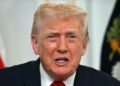
European leaders entered urgent discussions this week as tensions deepened over the Greenland tariff crisis involving former United States president Donald Trump. The dispute emerged after Trump threatened sweeping import taxes against European allies resisting his push to assert control over Greenland. Within the first hours of the warning, governments across Europe framed the move as coercive, destabilising, and unprecedented between Nato partners. Officials described the moment as a serious test of transatlantic trust, demanding calm judgment alongside visible resolve from European institutions.
At the heart of the Greenland tariff crisis lies Trump’s assertion that Greenland holds strategic importance requiring American oversight. He coupled this claim with proposed tariffs targeting eight nations, including several European Union members and the United Kingdom. The threatened measures, beginning at ten percent and rising sharply by midyear, were framed as leverage to force negotiations. European capitals responded swiftly, arguing that trade penalties linked to territorial pressure undermined international law and alliance principles.

Senior diplomats gathered in Brussels for emergency consultations, weighing legal and economic tools available to the bloc. Among the options discussed was the revival of suspended counter-tariffs on American goods, previously negotiated during last summer’s trade settlement. These measures, covering a wide range of products, remain legally prepared but politically sensitive. Officials stressed that Europe’s priority remained dialogue, yet many acknowledged that restraint could be mistaken for weakness.
France’s president Emmanuel Macron emerged as a leading voice urging firmness. Speaking to close advisers, he reportedly encouraged consideration of the European Union’s anti-coercion instrument, legislation designed to deter economic intimidation. Though never activated before, the mechanism allows broad retaliatory steps if a partner attempts to force policy change through trade threats. Macron’s position resonated in several capitals, particularly among leaders concerned about precedent.
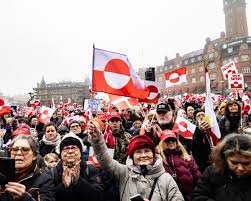
Germany and the Nordic countries echoed similar concerns, emphasising sovereignty and territorial integrity. In a joint statement, leaders from Denmark, Sweden, Finland, and others warned that tariff threats risked a downward spiral damaging global stability. They underscored that Greenland’s security arrangements fell within Nato cooperation, not unilateral action. For Denmark, which administers the autonomous territory, the rhetoric struck a deeply personal chord.
The Greenland tariff crisis also prompted renewed debate about Europe’s economic defences. Trade ministers acknowledged that the EU possesses substantial leverage, given the scale of transatlantic commerce. Yet divisions persist over when and how to deploy it. Southern European states urged caution, fearing escalation could harm fragile growth. Eastern members, mindful of Russian aggression, argued that clarity and firmness were essential to deter future coercion.
European Council president António Costa announced plans for an extraordinary summit, signalling the seriousness of the moment. He stated that Europe stood ready to defend itself against coercion while remaining open to negotiation. The announcement aimed to reassure markets and citizens that institutions were functioning decisively. Behind closed doors, however, officials conceded that unity would be tested in the days ahead.
Trump, for his part, intensified the rhetoric through social media. He accused European allies of neglecting Arctic security while benefiting from American protection. He claimed that Greenland faced threats from Russia and China, asserting that existing arrangements were inadequate. His language, punctuated with emphatic declarations, drew sharp rebukes from European leaders who rejected both the assessment and the tone.
Italy’s prime minister Giorgia Meloni, often seen as sympathetic to Trump, broke ranks by calling the tariff threat a mistake. She confirmed that she had conveyed her concerns directly, warning of unnecessary confrontation. Similarly, Dutch foreign minister David van Weel described the approach as blackmail, arguing it damaged trust among long-standing allies. Such comments reflected a rare breadth of consensus across political divides.
In London, the British government criticised the proposed tariffs while avoiding explicit commitments to retaliation. Ministers emphasised the importance of maintaining open channels with Washington, given broader security cooperation. Nonetheless, officials privately acknowledged that Britain could be affected economically and politically if the dispute escalated. The situation underscored the UK’s delicate balancing act outside the EU framework.
Spain’s prime minister Pedro Sánchez offered one of the starkest warnings, suggesting that any move against Greenland would embolden authoritarian leaders elsewhere. He argued that undermining territorial norms could legitimise aggression, weakening Nato’s moral authority. His remarks highlighted the broader geopolitical implications extending beyond trade figures and tariff schedules.
Within European institutions, concern grew that the Greenland tariff crisis threatened the recently signed EU-US trade agreement. Ratification, once expected within weeks, now appeared uncertain. Parliamentary leaders signalled reluctance to proceed while threats persisted, reflecting mounting scepticism about American reliability. Business groups warned that prolonged uncertainty could disrupt investment decisions on both sides of the Atlantic.
Denmark increased its military presence in Greenland, coordinating with allied forces for exercises framed as defensive. Officials stressed that these deployments aimed to enhance Arctic security collectively, not provoke confrontation. Trump, however, criticised the moves, accusing European states of playing a dangerous game. The contrasting narratives illustrated widening perception gaps between partners.

Analysts described the moment as a potential turning point for Nato cohesion. Former alliance officials warned that using economic pressure against allies violated foundational principles. They argued that disputes should be resolved through consultation, not intimidation. Such assessments added intellectual weight to calls for a measured yet firm European response.
Despite the sharp exchanges, diplomatic channels remained open. EU diplomats reiterated their preference for negotiation, noting that counter-tariffs remained suspended for now. They stressed that escalation was not inevitable, provided Washington reconsidered its approach. Still, contingency planning continued, reflecting uncertainty about Trump’s next move.
As Europe prepares for its emergency summit, the Greenland tariff crisis continues to dominate political discourse. The episode has forced European leaders to confront questions about economic sovereignty, alliance solidarity, and strategic autonomy. Whether the dispute cools through dialogue or hardens into confrontation may shape transatlantic relations for years to come. For now, Europe walks a careful line between defending principles and preserving partnership.
Related News:
 British Woman in Iran ‘Losing Hope’ Amid Ongoing Detention
 BBC Journalist Held and Interrogated in Vietnam
 UK University Suspends Human Rights Research Following Pressure from China
 UK University Faces Counter-Terror Probe Over China Pressure
 Abigail Spanberger Elected Virginia’s First Female Governor
 Mikie Sherrill Elected New Jersey’s Governor in Key Win
China-critical UK academics face ‘extremely heavy’ pressure from Beijing
Mikie Sherrill Elected New Jersey’s Governor in Key Win
China-critical UK academics face ‘extremely heavy’ pressure from Beijing
 British military receives first Ajax armoured vehicles – eight years late
 BBC to Apologise Over Edited Trump Speech Amid Backlash
 Britain deploys RAF specialists to assist Belgium with drone threats
 BBC director-general and news chief resign amid bias row
 Night after night, Belgium is on high alert.
 Ukraine-Russia war latest: Putin’s troops exploit bad weather to force Kyiv withdrawal from multiple towns
 Trump Claims Victory as Longest Shutdown Ends
 New Epstein Files Spark Political Clash in Washington
 Trump Ends Record Shutdown by Signing Temporary Funding Bill
 Hamas Fighters in Gaza Tunnels Stall Ceasefire Progress
 Ukraine Energy Corruption Scandal Hits Zelensky’s Inner Circle
 Early Trends Suggest Modi’s Alliance Leading in Key Bihar Election
 US Justice Department Files Lawsuit Against California Over Partisan Voting Maps
 South Sudan President Removes Vice-President Amid Political Uncertainty
 Berlin Reintroduces Military Service Amid Rising Security Concerns
 Greene Pushes Epstein Files Amid Trump Fallout
 Trump Deploys DHS to Charlotte in Major Arrest Operation
 Former President Backs Public Release of Epstein Records
 December Run-Off in Chile as Election Produces No Winner
 UN Security Council Approves Trump’s Gaza Peace Plan
 Canada Passes Carney’s First Budget in Tight Parliamentary Vote
 Why Russian Liberals Push Strongly Pro-Israel Narratives
 Congress Approves Release of Epstein Files, Trump Expected to Sign
 Shadow Fleet at Sea: Europe’s Battle Against Illicit Oil Shipping
 Rama Rebukes Mahmood for Targeting Albanian Families
 Russian Vessel Used Lasers on RAF Pilots, UK Claims
 Pentagon Officials in Ukraine to Discuss War End
 Turkey to Host COP31 After Breakthrough Deal with Australia
 US Military Team Visits Kyiv Amid War Talks
 WhatsApp Messages Expose Nathan Gill’s Bribery
 Venezuela Threatens Nobel Winner Machado with Fugitive Status
 Texas Governor Faces Lawsuit From CAIR
 Mamdani’s Vision: Affordable, Democratic Socialism
 Trump Envoy to Discuss Ukraine Peace at Kremlin
 Pope Leo XIV Begins Historic Trip to Turkey and Lebanon
 Zambia’s President Faces Stone-Throwing Anger Amid Challenges
 Georgians Defy Government Crackdown After Year of Protests
 India’s Labour Law Overhaul Sparks Fierce Debate
 Video shows Israeli troops kill Palestinians after surrender
 Trump to Recheck Green Cards from 19 Nations After DC Attack
 Carney’s Alberta Pipeline Deal Sparks Immediate Pushback
 Guinea-Bissau President Flees After Military Coup
 Chinese & Japanese Boats Clash Near Disputed Islands
 Putin Meets US Envoy Amid Key Ukraine Peace Talks
 Kremlin Talks With US Yield No Ukraine Peace Breakthrough
 Putin visits India as Ukraine peace, trade push intensifies
 EU plans $105bn Ukraine aid using frozen Russian assets
 Global campaign launched to free Palestinian leader Barghouti
 UK Aid Cuts Could Undermine Global Influence, Experts Warn
 Picardo Faces Harsh Criticism in Gibraltar Police Interference Inquiry
 Thailand and Cambodia Agree Ceasefire After Weeks of Deadly Clashes
 Myanmar’s Military Election: Fear and Intimidation Surround Vote
 Zelensky to Meet Trump in Florida for Talks on Ending War
 Russia losses Ukraine war peace talks intensify amid rising deaths
 Zelenskyy Accuses Russia of Sabotaging Peace Talks
 Trump ‘Not Worried’ as China Conducts Massive Taiwan Wargame
 Khaleda Zia Laid to Rest with State Honour in Dhaka
 Maduro Faces Court in New York Over Drugs and Weapons Case
 Albanese Opens Door to Bondi Royal Commission Amid Rising Pressure
 Shock US Raid: Maduro Pleads Not Guilty in Manhattan Court
 Trump Escalates Minnesota Immigration Surge Amid Rising Tensions
 Herzog Visit Sparks Labor Protest in Australia
 Venezuela Frees Political Prisoners in Major Peace Move
 Austrian Airlines Halts Tehran Flights Amid Political Unrest
 Iran Protesters Defy Crackdown as Violent Clashes Intensify
 Iran Leader Blames Protesters, Says They Serve Trump
 Trump Eyes Strong Military Options Amid Iran Protest Crackdown
 Greenland Faces Pivotal Summit Over Arctic Power Struggle
 Trump Threatens Strong Action If Iran Executes Protesters
 Trump Policies Boost China’s Global Rise, Survey Finds
 Machado Trump medal gesture reshapes Venezuela power struggle
 Trump Receives Machado’s Nobel Medal in White House Meeting
 Iran unrest slows under brutal crackdown and global tensions