Published: 19 January 2026. The English Chronicle Desk. The English Chronicle Online.
The sight of ICE street raids unfolding across American cities has unsettled audiences far beyond the United States. Within the first moments of recent footage shared online, armed officers confront civilians during routine journeys. These scenes appear sudden, yet they reflect a long institutional journey rather than a single political moment. ICE street raids have become the most visible symbol of a deeper erosion affecting civil life. The shock lies not only in the violence but in its growing normality. Observers are forced to confront how quickly democratic safeguards can thin.
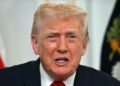
There is little left that surprises seasoned watchers of Donald Trump’s second administration. Yet the killing of Renee Good earlier this month by an Immigration and Customs Enforcement officer pierced public complacency. That tragedy joined a pattern of aggressive encounters played out on ordinary streets. Videos show shouting officers, unmarked vehicles, and citizens unsure of their rights. For many Americans, the assumption of safety while walking or driving has quietly dissolved. The sense of lawful order appears replaced by arbitrary force.
What unsettles analysts most is the speed of this transformation. Authoritarian systems rarely announce themselves with a single decree. They assemble gradually, normalised through bureaucratic expansion and political rhetoric. ICE did not emerge fully formed as a paramilitary presence. Its origins trace back to institutional decisions made after the September 2001 attacks. Fear, once embedded into policy, became a renewable resource.

Following 9/11, the United States merged immigration control with national security. ICE was created under President George W Bush as part of a sweeping federal reorganisation. The agency received substantial funding and broad investigative authority. Partnerships with the FBI’s joint terrorism taskforce blurred operational boundaries. Immigration enforcement became synonymous with protecting the homeland. That framing proved politically durable and difficult to reverse.
Under President Barack Obama, enforcement priorities widened further. While official language emphasised serious offenders, the net expanded steadily. Border apprehensions increased and interior enforcement intensified. Budget growth followed operational ambition, while due process protections weakened incrementally. Each adjustment appeared technical, even reasonable, when viewed alone. Together, they reshaped the balance between state power and individual liberty.
Donald Trump accelerated this trajectory dramatically. He elevated ICE into the largest federal law enforcement body in the country. Its budget began to rival those of many national militaries worldwide. Trump’s rhetoric transformed the agency’s mission into an existential defence of the nation. Officers were cast as guardians against invasion rather than civil servants. That framing granted moral permission for increasingly forceful tactics.
Media ecosystems played a decisive role in sustaining this shift. Rightwing outlets amplified narratives of crisis and demographic threat. Immigration was portrayed as an immediate danger to safety and cultural identity. These messages primed audiences to accept extreme measures as necessary protection. Racism, often denied, operated beneath the surface of security language. Fear became socially acceptable when dressed as concern.
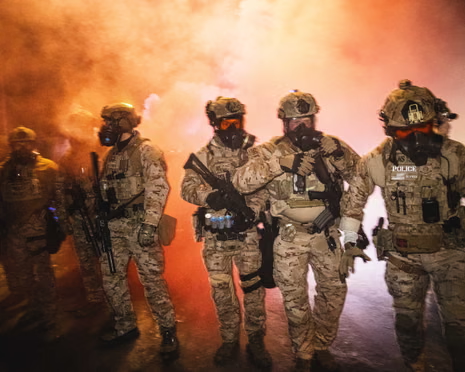
Another enabling factor lies in America’s deep-rooted militarism. The visual resemblance between ICE operations and overseas deployments is striking. Officers appear in combat gear more suited to war zones. Armoured vehicles and military-grade weapons have become routine equipment. This blurring reflects decades of police militarisation across the country. Veterans move seamlessly between foreign battlefields and domestic enforcement roles.
The New York Times recently reported that Jonathan Ross, the officer who shot Good, previously served in Iraq. That detail resonated widely because it felt symbolically heavy. Techniques developed for occupied territories now appear in residential neighbourhoods. The mythology of the soldier defending freedom abroad has been repurposed at home. Violence becomes framed as patriotic duty rather than state failure.
For those who have lived under repressive regimes, something about these developments feels painfully familiar. It is not simply the presence of force that chills the spirit. It is the unpredictability that erodes daily confidence. Authoritarianism thrives on uncertainty rather than constant repression. Citizens learn to self-censor and self-police to avoid unseen lines.
In such systems, trouble can arise anywhere. A traffic stop becomes a test of tone and obedience. A peaceful gathering risks being reclassified as unlawful assembly. Online expression may quietly affect travel rights or employment prospects. The law exists, but its application feels arbitrary. Power resides in the discretion of the individual enforcer encountered.
Many observers argue that the United States has crossed an invisible threshold. The veil separating democratic norms from coercive governance appears thinner. Yet this is not an exclusively American story. Warning signs are visible closer to home, including within the United Kingdom. The conditions enabling ICE street raids are not culturally unique.
British political discourse has increasingly framed immigration as a threat to social cohesion. Tabloid headlines and ministerial speeches reinforce a narrative of emergency. Images of enforcement have entered official communication strategies. Home Office raids are photographed and circulated with theatrical flair. Crackdown aesthetics have become a form of reassurance messaging.
Legal changes have also expanded police discretion in the UK. Public order definitions now incorporate concepts like cumulative impact. This allows authorities to restrict protests based on perceived future disruption. Pro-Palestine demonstrations have faced heightened scrutiny under these frameworks. Peaceful assembly risks being reinterpreted as disorder.
The transformation of protest into dissidence marks a critical shift. Once that boundary blurs, exceptional measures become easier to justify. Border Force powers have expanded alongside policing authority. Officers can now seize mobile phones without arrest under certain conditions. Such tools, though limited on paper, alter psychological relationships with the state.
Underlying these developments is a resurgence of nativist sentiment. Economic frustration and cultural anxiety seek visible targets. Migrants become symbols rather than individuals. Political leaders, if sufficiently charismatic and unscrupulous, can harness this energy rapidly. A compliant or sensationalist press accelerates the process.

The lesson from America’s experience is not inevitability but vulnerability. Democratic institutions require constant reinforcement to function. Rights erode quietly when framed as technical adjustments. By the time consequences become visible, reversal proves difficult. ICE street raids illustrate how quickly extraordinary power can feel ordinary.
Britain differs in scale and weaponry, yet the underlying dynamics resonate. Fewer guns do not guarantee greater freedom. Authoritarian practices adapt to local conditions. The essential warning is about trajectory rather than replication. Public vigilance remains the most reliable safeguard.
History shows that repression rarely announces its arrival with clarity. It advances through language, budgets, and imagery before laws catch up. Citizens accustomed to stability may dismiss early signs as overreaction. That complacency becomes fertile ground for expansion. The American streets now offer a stark case study.
ICE street raids may feel distant to British audiences today. Yet their logic is transferable across borders. When fear replaces trust as governance currency, freedom contracts everywhere. The challenge lies in recognising the pattern before it hardens. Once normalised, the cost of resistance rises sharply.
Related News:
 British Woman in Iran ‘Losing Hope’ Amid Ongoing Detention
 BBC Journalist Held and Interrogated in Vietnam
 UK University Suspends Human Rights Research Following Pressure from China
 UK University Faces Counter-Terror Probe Over China Pressure
 Abigail Spanberger Elected Virginia’s First Female Governor
 Mikie Sherrill Elected New Jersey’s Governor in Key Win
China-critical UK academics face ‘extremely heavy’ pressure from Beijing
Mikie Sherrill Elected New Jersey’s Governor in Key Win
China-critical UK academics face ‘extremely heavy’ pressure from Beijing
 British military receives first Ajax armoured vehicles – eight years late
 BBC to Apologise Over Edited Trump Speech Amid Backlash
 Britain deploys RAF specialists to assist Belgium with drone threats
 BBC director-general and news chief resign amid bias row
 Night after night, Belgium is on high alert.
 Ukraine-Russia war latest: Putin’s troops exploit bad weather to force Kyiv withdrawal from multiple towns
 Trump Claims Victory as Longest Shutdown Ends
 New Epstein Files Spark Political Clash in Washington
 Hamas Fighters in Gaza Tunnels Stall Ceasefire Progress
 Ukraine Energy Corruption Scandal Hits Zelensky’s Inner Circle
 Early Trends Suggest Modi’s Alliance Leading in Key Bihar Election
 US Justice Department Files Lawsuit Against California Over Partisan Voting Maps
 South Sudan President Removes Vice-President Amid Political Uncertainty
 Berlin Reintroduces Military Service Amid Rising Security Concerns
 Greene Pushes Epstein Files Amid Trump Fallout
 Trump Deploys DHS to Charlotte in Major Arrest Operation
 Former President Backs Public Release of Epstein Records
 December Run-Off in Chile as Election Produces No Winner
 UN Security Council Approves Trump’s Gaza Peace Plan
 Canada Passes Carney’s First Budget in Tight Parliamentary Vote
 Why Russian Liberals Push Strongly Pro-Israel Narratives
 Congress Approves Release of Epstein Files, Trump Expected to Sign
 Shadow Fleet at Sea: Europe’s Battle Against Illicit Oil Shipping
 Rama Rebukes Mahmood for Targeting Albanian Families
 Russian Vessel Used Lasers on RAF Pilots, UK Claims
 Pentagon Officials in Ukraine to Discuss War End
 Turkey to Host COP31 After Breakthrough Deal with Australia
 US Military Team Visits Kyiv Amid War Talks
 WhatsApp Messages Expose Nathan Gill’s Bribery
 Venezuela Threatens Nobel Winner Machado with Fugitive Status
 Texas Governor Faces Lawsuit From CAIR
 Mamdani’s Vision: Affordable, Democratic Socialism
 Trump Envoy to Discuss Ukraine Peace at Kremlin
 Pope Leo XIV Begins Historic Trip to Turkey and Lebanon
 Zambia’s President Faces Stone-Throwing Anger Amid Challenges
 Georgians Defy Government Crackdown After Year of Protests
 India’s Labour Law Overhaul Sparks Fierce Debate
 Video shows Israeli troops kill Palestinians after surrender
 Trump to Recheck Green Cards from 19 Nations After DC Attack
 Carney’s Alberta Pipeline Deal Sparks Immediate Pushback
 Guinea-Bissau President Flees After Military Coup
 Chinese & Japanese Boats Clash Near Disputed Islands
 Putin Meets US Envoy Amid Key Ukraine Peace Talks
 Kremlin Talks With US Yield No Ukraine Peace Breakthrough
 Putin visits India as Ukraine peace, trade push intensifies
 EU plans $105bn Ukraine aid using frozen Russian assets
 Global campaign launched to free Palestinian leader Barghouti
 UK Aid Cuts Could Undermine Global Influence, Experts Warn
 Picardo Faces Harsh Criticism in Gibraltar Police Interference Inquiry
 Thailand and Cambodia Agree Ceasefire After Weeks of Deadly Clashes
 Myanmar’s Military Election: Fear and Intimidation Surround Vote
 Zelensky to Meet Trump in Florida for Talks on Ending War
 Russia losses Ukraine war peace talks intensify amid rising deaths
 Zelenskyy Accuses Russia of Sabotaging Peace Talks
 Trump ‘Not Worried’ as China Conducts Massive Taiwan Wargame
 Khaleda Zia Laid to Rest with State Honour in Dhaka
 Maduro Faces Court in New York Over Drugs and Weapons Case
 Albanese Opens Door to Bondi Royal Commission Amid Rising Pressure
 Shock US Raid: Maduro Pleads Not Guilty in Manhattan Court
 Trump Escalates Minnesota Immigration Surge Amid Rising Tensions
 Herzog Visit Sparks Labor Protest in Australia
 Venezuela Frees Political Prisoners in Major Peace Move
 Austrian Airlines Halts Tehran Flights Amid Political Unrest
 Iran Protesters Defy Crackdown as Violent Clashes Intensify
 Iran Leader Blames Protesters, Says They Serve Trump
 Trump Eyes Strong Military Options Amid Iran Protest Crackdown
 Trump Threatens Strong Action If Iran Executes Protesters
 Trump Policies Boost China’s Global Rise, Survey Finds
 Machado Trump medal gesture reshapes Venezuela power struggle
 Trump Receives Machado’s Nobel Medal in White House Meeting
 Iran unrest slows under brutal crackdown and global tensions
 EU weighs response amid Greenland tariff crisis with Trump
 US Considers Asylum for British Jews Amid Rising Antisemitism