Published: 20 January 2026. The English Chronicle Desk. The English Chronicle Online.
The UK labour market has seen job numbers fall once again, as wage growth slows to a five-year low. Payroll figures revealed a decline of 184,000 employees over the past year, dropping the total to 30.2 million, while private sector wage growth weakened considerably. The latest report from the Office for National Statistics (ONS) shows that sectors such as retail, hospitality, and restaurants have experienced the sharpest reductions, highlighting an increasingly cautious hiring environment among employers.
The focus keyword “wage growth” is central to this economic slowdown narrative, appearing throughout analyses of employment patterns and earnings trends. Excluding bonuses, wage growth slowed to 4.5%, compared with 4.6% previously, while including bonuses, it slipped to 4.7% from 4.8%. These figures mark the slowest increase in private sector pay since 2021. Liz McKeown, director of economic statistics at the ONS, explained that the continued reductions reflect ongoing weak hiring activity, with payroll declines concentrated in retail and hospitality.

Despite these challenges, the unemployment rate held steady at 5.1% in the three months to November, reflecting a stable, if subdued, labour market. Economists had anticipated this figure, as rising costs and regulatory changes have dampened hiring enthusiasm. Many employers report heightened uncertainty following chancellor Rachel Reeves’ late November budget, which introduced £26 billion in tax measures aimed at addressing living costs and public finance gaps. Analysts suggest these fiscal changes may have discouraged some businesses from expanding payrolls during this period.
The broader economic context also includes global pressures. Last April, Donald Trump’s “liberation day” tariffs added uncertainty to international trade, influencing investment decisions among multinational corporations. In parallel, the rise of artificial intelligence has generated growth in tech sector jobs, but some employers have become more cautious about hiring for entry-level positions, delaying recruitment for school leavers and recent graduates. As a result, the labour market faces a dual challenge: stabilising payrolls in traditional sectors while adapting to rapid technological change.
Vacancies have dropped to below pre-pandemic averages, signalling a less buoyant job market. Public sector pay remains elevated due to early-awarded pay rises, while private sector wage growth continues to moderate. Economists warn that employers’ reluctance to hire may further depress overall wage growth if uncertainty persists. In addition, increases to national insurance and the minimum wage in 2025 have contributed to cautious staffing strategies, with some businesses holding off on recruitment and investment plans.
Financial forecasts suggest the Bank of England could cut interest rates twice this year, reducing them from 3.75% to 3.25% to address weaker economic and employment outlooks. Analysts argue that these monetary adjustments aim to encourage spending and investment, ultimately supporting the labour market. Nevertheless, wage growth remains a critical factor influencing household spending, business decisions, and broader economic confidence.
The slowdown in wage growth affects both employers and workers. Families relying on rising salaries to meet living costs may face financial pressures, while companies need to balance labour costs with sustainable operations. Retailers and hospitality firms, which historically rely on high turnover, are particularly impacted, as fewer vacancies and cautious hiring limit their ability to expand services and maintain productivity.

In response, economists are monitoring both private and public sector wage trends closely. Private sector wage growth has shown the sharpest slowdown, contrasting with public sector stability. This divergence highlights how policy decisions, such as early pay rises and regulatory changes, influence different parts of the economy. Experts warn that persistent wage stagnation could curb consumption growth, while targeted fiscal measures may be required to stabilise employment levels and maintain consumer confidence.
The current labour market scenario underscores the need for strategic planning by both policymakers and business leaders. Wage growth, unemployment trends, and sector-specific payroll patterns are likely to shape fiscal and monetary policy decisions in 2026. Employers must adapt to evolving economic conditions, considering technological changes, global trade uncertainties, and domestic wage pressures.
As the UK navigates these challenges, the interplay between wage growth, employment, and business confidence will remain a key focus for economists, investors, and policymakers. While technological innovations create new opportunities, traditional sectors face an ongoing struggle to attract and retain staff. Analysts emphasise the importance of balancing economic growth with sustainable labour market policies to support both workers and businesses.
With unemployment remaining steady but job numbers declining, the focus on wage growth is vital to understanding the evolving dynamics of the UK labour market. Stakeholders across public and private sectors will continue monitoring trends closely, with the outlook for hiring, salaries, and economic confidence shaping decisions throughout the year.
Related News:
 Reeves Faces Setback as Labour May Miss Homes Target
 Virgin Trains Moves Closer to Challenging Eurostar Monopoly
 Trump’s UK Ambassador Urges North Sea Drilling to Strengthen US Ties
 Ryanair Chief UK Economy ‘Doomed’ Under Labour
 M&S Profits More Than Halve After Cyber-Attack
 Earl of Yarmouth Faces £1.3m Legal Bill Over Family Estate
 Millionaires group urge Reeves to introduce wealth tax to ‘lift kids out of poverty’
 From Lego to Pokémon: How Adults Are Driving UK Toy Market Growth
 New laws to bolster UK’s defences against cyber attacks on NHS, transport and energy
 Canada Passes Carney’s First Budget in Tight Parliamentary Vote
 Starmer Says Labour’s Economic Plan Needs Years to Deliver
 Virgin Media Fined £23.8m Over Telecare Safety Failures
 Starmer Faces Parliamentary Battles Over UK-EU ‘Reset’ Plan
 Reeves Pub Business Rates U-Turn Calms Labour Revolt
 ScottishPower Tops List of Worst UK Energy Suppliers
 Markets Slide As Gold Rally Signals Risk From Trump Greenland Tariff Plan
 UK Eyes Global Investment with Visa Fee Refunds
 UK Inflation Hits 3.4% in December, Ending Five-Month Decline
 Starmer Plans UK-China Visit Amid Business and Diplomatic Goals
 UK Government Borrowing Drops to £11.6bn in December
 ‘Black Tax’: Burden, Pride and Survival for African Workers
 AI job losses UK: Britain faces sharper employment shock
 India-EU Free Trade Deal Marks Historic Economic Shift
 Gold price crash shakes global markets and investors
 EU Signals Open Mind on UK Customs Union Talks
 Telstra AI jobs cuts as automation drive expands
 UK shelves £110m border project amid trade strain
 Aston Martin Cuts 20% Jobs Amid £363m Loss
 Reeves Must Back Defence Plan or Face Dismissal, Says Unite Chief
 Switching Energy Deal Can Save £200 as Price Cap Falls
 Grocery Inflation Rises Amid War Fears
 Peak Greggs fears as profits tumble sharply
 BrewDog sold Highland estate for knockdown price after abandoning reforestation plans
 Abramovich Chelsea Sale Cash Faces Jersey Probe
 The Truth Behind Rising Energy Costs and Fossil Fuel Myths
 UK Energy Reform Could Cut Bills by £200
 Oil Slides, Stocks Jump on Trump Peace Signals
 Trump to Deploy “God Squad” Over Gulf Wildlife Protections
 Iran Drone Strike Hits Kuwaiti Oil Tanker in Dubai Port
 Trump Slams Europe as Transatlantic Tensions Boil Over
 UK Small Firms Face Crisis as Energy Bills Double Amid War
 Oil Prices Surge as Trump Issues New Deadline to Iran
 City Firms See Sharpest Fortune Reversal in Thirty Years
 Markets Surge as Trump Agrees to Iran Ceasefire Terms
 Stefano Gabbana Resigns as Chair of Italian Luxury Giant
 Rolls-Royce SMR Secures £600m Boost for Nuclear Future
 IMF Warns Iran War Could Spark Deep Global Recession
 Trump Rate Cuts Risk ‘Banana Republic’ Status, Says Yellen
 Primark Set for Independence from ABF Food Giant
 Australia’s Economic Anxiety: Is a Recession Looming?
 Lords Demand Larger Fiscal Buffers for UK
 $13bn World Cup Set to Break All Revenue Records
 Trump approval plunges amid Iran war fears
 Heathrow Chair Seeks Peace to Save Third Runway
 Tough Fiscal Realities Await Next Scottish Government
 US Awaits Iran Reply on New Ceasefire Proposal
 Aramco Surges as East-West Pipeline Counters Gulf Tensions
 Big Tobacco Under Fire Over Controversial New Ad Campaign
 High Street Crisis: Fears Grow Over Post Office Closures
 UK Firms Freeze Spending as Iran Conflict Bites
 Summer Shock: British Energy Bills Set for Grim July Hike
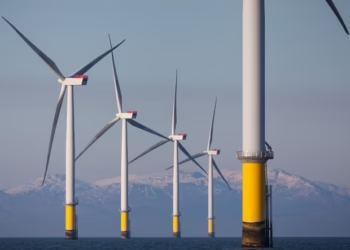 Reeves to Fast-Track Clean Energy Amid Iran Crisis
 Oil Markets Face ‘Red Zone’ Threat Amid Iran Crisis
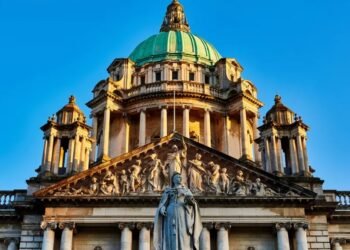 Belfast Approves Pilot Extension of Sunday Trading Hours
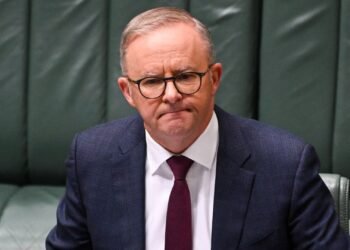 Albanese Defends Tax Reforms Amid Emotional Speech
 Tube Strike Brings Capital to a Standstill Over Shift Disputes
 BP Stands Firm on Amanda Blanc Amid Boardroom Storm
 UK House Prices Drop For Third Month Due To War Fears
 Top Chefs Back Andy Burnham to Save UK Hospitality Sector
 GSK Secures Landmark $10.6bn Deal for Nuvalent
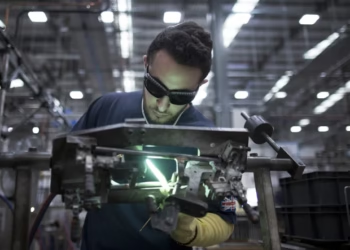 UK Economy Suffers a Sharp Downturn as Iran Conflict Bites
 AI Scams Push UK Investment Fraud Past £220m
 Rethinking the Blueprint for Youth Employment in Britain
 Sainsbury’s Boss Optimistic As Grocery Inflation Eases
 UK Households Suffer Squeeze As Disposable Incomes Drop
 Creditors Eye Thames Water Even Under Nationalisation
 Record £28m Fine for Virgin Media Over Cancellation Woes
 Ukraine Creates Long-Range Strike Command
 BBC Faces Real Jeopardy as Licence Fee Income Declines
 Thames Water Future Remains Uncertain Amid Funding Crunch