Published: 23 January 2026. The English Chronicle Desk. The English Chronicle Online
Relations between the European Union and the United States have taken a significant hit after a week of escalating tensions triggered by Donald Trump’s threats over Greenland, the EU’s foreign policy chief has said, as European leaders gathered for an emergency summit aimed at containing the fallout and reassessing the future of the transatlantic partnership.
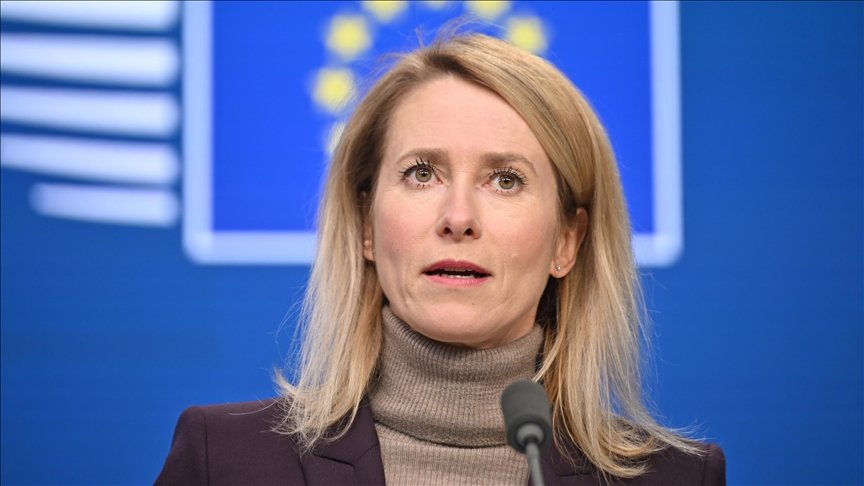
Kaja Kallas, the EU’s high representative for foreign affairs and security policy, said the past week had underscored just how unpredictable relations with Washington had become under Trump’s leadership. Speaking after the hastily convened summit, she told reporters that Europe was being forced to navigate an era of sudden shifts and uncertainty. “One day, one way; the other day, again, everything could change,” she said, summing up the mood among EU leaders.
Kallas acknowledged openly that relations with the United States had “definitely taken a big blow over the last week,” following Trump’s threat to impose sweeping tariffs on European countries that resisted a proposed US takeover of Greenland. However, she stressed that the EU was not prepared to abandon the foundations of the transatlantic alliance. “We are not willing to junk 80 years of good relations,” she said, signalling that despite the shock, Europe still saw value in maintaining close ties with Washington.

The emergency summit was called after Trump announced earlier this week that he would impose 10% tariffs on eight European nations unless they supported a US takeover of Greenland, an autonomous territory within the Kingdom of Denmark. The move stunned European capitals and raised fears of a direct challenge to Danish sovereignty, Nato unity and the postwar international order. Although Trump abruptly abandoned the tariff threat on Wednesday, following what officials described as a vague understanding on Arctic security cooperation, EU leaders decided the meeting was still necessary to confront deeper concerns about the trajectory of US-EU relations.
European Commission president Ursula von der Leyen sought to strike a measured tone after the meeting, saying that EU unity and a strategy of firm but non-escalatory engagement with Washington had paid off. She suggested that Europe’s collective stance had helped persuade Trump to step back from his most aggressive proposals, while underlining that the bloc needed to remain vigilant.
Arriving at the summit, Denmark’s prime minister, Mette Frederiksen, praised the show of unity among EU member states and Nato allies. She said the crisis had demonstrated Europe’s willingness to stand up for itself when core principles were challenged. Frederiksen reiterated that Danish sovereignty over Greenland was not open to negotiation and said relations between Denmark and the US must be conducted “respectfully and without threats”.
She also noted that Nato states broadly supported the idea of maintaining a permanent allied presence in the Arctic, including around Greenland, reflecting growing strategic concern over the region as climate change opens new shipping routes and access to natural resources.
French president Emmanuel Macron, still drawing attention after his high-profile appearance at the World Economic Forum in Davos, adopted a sterner tone. He warned that Europe must be ready to respond decisively if similar threats were repeated in the future. “We need to remain extremely vigilant and ready to use the instruments at our disposal should we find ourselves the target of threats again,” Macron said, a clear reference to the EU’s economic and trade defence tools.
Germany’s new chancellor, Friedrich Merz, welcomed Trump’s apparent change of heart, expressing relief that the US president had distanced himself from the idea of taking over Greenland and refrained from imposing tariffs due to come into force on 1 February. But behind the expressions of gratitude lay widespread unease about how quickly the situation had escalated.
Several EU leaders emphasised their determination to preserve the US as a strategic ally, even as trust was strained. Lithuanian president Gitanas Nausėda said he continued to regard the United States as Europe’s closest friend, pointing to the presence of US battalions stationed in his country as a tangible symbol of American commitment to European security.
Poland’s prime minister, Donald Tusk, echoed those sentiments, saying Europe needed to remain united to protect its relationships across the Atlantic, even if doing so had become more difficult than at any point in recent decades. However, he added a pointed caveat, arguing that international politics depended on “trust and respect”, not domination or coercion.
Greenland itself also weighed in on the controversy. Speaking in Nuuk, Greenland’s prime minister, Jens-Frederik Nielsen, said he did not know the precise details of the arrangement Trump claimed to have reached on Arctic security, but insisted that the territory’s sovereignty was non-negotiable. Greenland, which left the EU in 1985 but remains closely linked to Denmark, wanted peaceful dialogue with the United States, he said.
“If we have to choose,” Nielsen added, “we choose the Kingdom of Denmark, we choose the EU, we choose Nato,” a clear rejection of any suggestion that Greenland might align itself directly with Washington outside existing frameworks.
The summit took place against the backdrop of sharp criticism from Ukraine’s president, Volodymyr Zelenskyy, who earlier this week delivered a blistering assessment of Europe’s geopolitical posture. Zelenskyy accused European leaders of being slow and hesitant compared with what he described as bold US actions elsewhere in the world, warning that Europe needed to take greater responsibility for its own defence.
“Right now, Nato exists thanks to the belief that the United States will act,” Zelenskyy said. “But what if it doesn’t?” He argued that Europe should move towards a more unified military capability, a message that resonated with leaders increasingly concerned about Washington’s reliability.
Despite those criticisms, EU officials were quick to highlight the scale of Europe’s support for Ukraine. According to the Kiel Institute for the World Economy, EU countries had allocated €188.6bn to Ukraine by the end of October 2025, including military, financial and humanitarian aid. Von der Leyen pointed to the EU’s €90bn loan package pledged last month as evidence that Europe’s actions matched its rhetoric, even if decision-making had sometimes been slow.
Beyond security, the crisis has also reignited tensions over trade. The European parliament signalled on Thursday that it was prepared to reconsider its decision to freeze ratification of a major EU-US trade deal, one of the bloc’s strongest responses to Trump’s tariff threats. Lawmakers had paused the process earlier this week, delaying a planned vote on eliminating tariffs on many US goods, after Trump announced his intention to punish Europe economically.
Following the reversal of the tariff threat, European parliament president Roberta Metsola said discussions on the trade agreement could now resume. However, Bernd Lange, chair of the parliament’s trade committee, warned against complacency. Writing on social media, he said there was “no room for false security” and cautioned that new threats from Washington were likely to emerge.
During internal discussions, EU officials had explored the possibility of imposing duties on up to €93bn worth of US goods and even deploying the bloc’s powerful anti-coercion instrument, which would allow sweeping economic penalties against American companies. Even governments traditionally most committed to transatlantic ties had conceded that such measures might be necessary if Trump followed through on his threats.

European leaders were particularly alarmed by the implications of Trump’s rhetoric on Greenland for the wider global order. Many feared that acquiescing to a US takeover of the territory would undermine the principle of sovereignty and embolden other powers, potentially lending legitimacy to a Chinese move on Taiwan or a Russian escalation against the Baltic states.
Although the immediate Greenland crisis has eased, attention has now turned to Trump’s proposed “board of peace”, an initiative unveiled in Davos that European leaders worry could rival or undermine the United Nations. António Costa, the president of the European Council, said the EU had “serious doubts” about the board’s scope, governance and compatibility with existing international institutions.
While the EU said it was willing to work with the US on elements of Trump’s Gaza peace plan, under which the board of peace was initially envisaged as a transitional authority for the territory, there was growing unease about its evolution into a body with broad geopolitical ambitions under Trump’s direct control. So far, only Hungary and Bulgaria among EU member states have accepted invitations to join, while France, Sweden, the UK and Norway have declined.
As leaders departed Brussels, the message was one of cautious resolve. The transatlantic relationship, they insisted, remained vital, but the events of the past week had exposed deep vulnerabilities. For Europe, the Greenland crisis has become more than a diplomatic scare; it is a warning that the old assumptions underpinning its alliance with Washington can no longer be taken for granted.
Related News:
 Putin Intensifies Territorial Demands Before US Talks
 Trump to Recheck Green Cards from 19 Nations After DC Attack
 Russia losses Ukraine war peace talks intensify amid rising deaths
 Trump Escalates Minnesota Immigration Surge Amid Rising Tensions
 Greenland Faces Pivotal Summit Over Arctic Power Struggle
 Trump Threatens Strong Action If Iran Executes Protesters
 Trump Receives Machado’s Nobel Medal in White House Meeting
 EU weighs response amid Greenland tariff crisis with Trump
 British Woman in Iran ‘Losing Hope’ Amid Ongoing Detention
 BBC Journalist Held and Interrogated in Vietnam
 UK University Suspends Human Rights Research Following Pressure from China
 UK University Faces Counter-Terror Probe Over China Pressure
 Abigail Spanberger Elected Virginia’s First Female Governor
 Mikie Sherrill Elected New Jersey’s Governor in Key Win
China-critical UK academics face ‘extremely heavy’ pressure from Beijing
Mikie Sherrill Elected New Jersey’s Governor in Key Win
China-critical UK academics face ‘extremely heavy’ pressure from Beijing
 British military receives first Ajax armoured vehicles – eight years late
 BBC to Apologise Over Edited Trump Speech Amid Backlash
 Britain deploys RAF specialists to assist Belgium with drone threats
 BBC director-general and news chief resign amid bias row
 Ukraine-Russia war latest: Putin’s troops exploit bad weather to force Kyiv withdrawal from multiple towns
 Trump Claims Victory as Longest Shutdown Ends
 New Epstein Files Spark Political Clash in Washington
 Hamas Fighters in Gaza Tunnels Stall Ceasefire Progress
 US Justice Department Files Lawsuit Against California Over Partisan Voting Maps
 South Sudan President Removes Vice-President Amid Political Uncertainty
 Greene Pushes Epstein Files Amid Trump Fallout
 Trump Deploys DHS to Charlotte in Major Arrest Operation
 December Run-Off in Chile as Election Produces No Winner
 Canada Passes Carney’s First Budget in Tight Parliamentary Vote
 Why Russian Liberals Push Strongly Pro-Israel Narratives
 Congress Approves Release of Epstein Files, Trump Expected to Sign
 Shadow Fleet at Sea: Europe’s Battle Against Illicit Oil Shipping
 Rama Rebukes Mahmood for Targeting Albanian Families
 Russian Vessel Used Lasers on RAF Pilots, UK Claims
 Pentagon Officials in Ukraine to Discuss War End
 US Military Team Visits Kyiv Amid War Talks
 WhatsApp Messages Expose Nathan Gill’s Bribery
 Venezuela Threatens Nobel Winner Machado with Fugitive Status
 Texas Governor Faces Lawsuit From CAIR
 Trump Envoy to Discuss Ukraine Peace at Kremlin
 Two National Guard Soldiers Critically Injured Near White House
 Pope Leo XIV Begins Historic Trip to Turkey and Lebanon
 Zambia’s President Faces Stone-Throwing Anger Amid Challenges
 Georgians Defy Government Crackdown After Year of Protests
 US National Guard Member Killed in DC Shooting
 India’s Labour Law Overhaul Sparks Fierce Debate
 Video shows Israeli troops kill Palestinians after surrender
 Chinese & Japanese Boats Clash Near Disputed Islands
 Putin Meets US Envoy Amid Key Ukraine Peace Talks
 EU plans $105bn Ukraine aid using frozen Russian assets
 Global campaign launched to free Palestinian leader Barghouti
 UK Aid Cuts Could Undermine Global Influence, Experts Warn
 American Mother Extradited From UK to U.S. on Murder Charges
 Thailand and Cambodia Agree Ceasefire After Weeks of Deadly Clashes
 Zelenskyy Accuses Russia of Sabotaging Peace Talks
 Trump ‘Not Worried’ as China Conducts Massive Taiwan Wargame
 Khaleda Zia Laid to Rest with State Honour in Dhaka
 US Cities Erupt in Protests Against Trump’s Venezuela Military Action
 Maduro Faces Court in New York Over Drugs and Weapons Case
 Albanese Opens Door to Bondi Royal Commission Amid Rising Pressure
 Shock US Raid: Maduro Pleads Not Guilty in Manhattan Court
 Venezuela Frees Political Prisoners in Major Peace Move
 Iran Protesters Defy Crackdown as Violent Clashes Intensify
 Trump Says US Must ‘Own’ Greenland to Block Russia, China
 Iran Leader Blames Protesters, Says They Serve Trump
 Homeland security agents deployed amid Minneapolis protests
 Trump Eyes Strong Military Options Amid Iran Protest Crackdown
 US Clears Nvidia AI Chip Sales to China in Policy Shift
 Trump Policies Boost China’s Global Rise, Survey Finds
 Machado Trump medal gesture reshapes Venezuela power struggle
 Trump press secretary attacks reporter over ICE question
 Kyrsten Sinema Faces High-Profile Lawsuit Over Marriage Interference
 Greenland Crisis Forces Europe to Draw a Line With Trump
 Iran Cannot Be Bombed Into Democracy, Only Helped There
 US Considers Asylum for British Jews Amid Rising Antisemitism
 ICE street raids expose a chilling future for public freedoms
 Trump Aide Sparks Fury as Greenland Dispute Intensifies
 US Africa aid remarks spark anger after leaked State email
 Trump Fed bid heads to Supreme Court
 Trump Launches “Board of Peace” Amid Global Diplomacy Push