Published: 28 January 2026. The English Chronicle Desk. The English Chronicle Online.
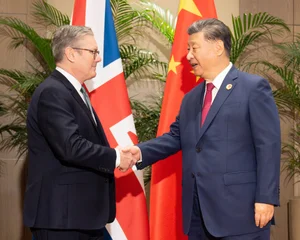
Keir Starmer began a high-profile diplomatic journey this week as his Starmer China visit placed national security alongside economic engagement at its centre. Arriving in Beijing, the prime minister sought to reset relations with the world’s second largest economy while emphasising realism about strategic risks. Downing Street stressed that Britain would pursue stability abroad only where it clearly served domestic interests. The visit comes amid global uncertainty, fraying alliances, and questions about future international leadership.
Starmer described his approach as “clear-eyed and realistic,” a phrase intended to signal caution without confrontation. He argued that recent years were marked by inconsistency, leaving British businesses and allies uncertain. By contrast, his government wants predictability, steady dialogue, and firm boundaries. Officials insisted engagement with Beijing would never dilute security priorities or democratic values.
The Starmer China visit unfolds during a delicate period for Western diplomacy. Relations with Washington have grown strained following renewed rhetoric from Donald Trump regarding territorial ambitions and alliance burdens. European leaders are reassessing strategic autonomy, while economic pressures continue to ripple across energy, technology, and supply chains. Within this shifting landscape, London is seeking balanced partnerships rather than rigid blocs.

Downing Street sources said Starmer would meet President Xi Jinping and Premier Li Qiang to discuss trade, security, and global cooperation. Talks are expected to cover climate change, financial services, and scientific exchange, areas where mutual benefit remains possible. At the same time, the prime minister plans to raise concerns over human rights and regional stability directly. Officials framed this dual approach as principled engagement rather than accommodation.
Criticism at home has been immediate and vocal. Opposition figures argue that Beijing remains a significant national security threat requiring distance, not dialogue. They point to allegations of cyber activity, political interference, and intimidation of dissidents within the UK. The recent approval of a large Chinese embassy development in London intensified those concerns. For critics, the timing of the visit appeared provocative rather than pragmatic.
Starmer has countered by emphasising that disengagement carries its own risks. China is Britain’s third largest trading partner, supporting hundreds of thousands of jobs across manufacturing, finance, and services. Ignoring that reality, he argued, would undermine growth and reduce influence over global challenges. Engagement, in his view, provides leverage rather than surrender.
The Starmer China visit also reflects lessons drawn from European counterparts. French and German leaders have maintained regular contact with Beijing, even amid disputes. Their governments argue that dialogue enables crisis management and economic resilience. British officials privately acknowledge that prolonged absence from high-level talks weakened London’s voice. This trip marks the first visit by a UK prime minister in eight years.
Security remains the central tension threading through every meeting. Intelligence agencies continue to warn about espionage, cyber threats, and influence operations. Downing Street has insisted on firm “guardrails,” ensuring cooperation never compromises defence or democratic institutions. Officials said those guardrails would be explained clearly to Chinese counterparts, avoiding ambiguity. The message, they argue, is consistency rather than softness.
Economic considerations nevertheless loom large. Starmer is accompanied by senior business leaders from banking, pharmaceuticals, automotive manufacturing, and the arts. Companies including HSBC, GSK, and Jaguar Land Rover are seeking clearer frameworks for investment and market access. Cultural institutions hope to rebuild exchanges disrupted by pandemic closures and political tensions. Government figures believe economic diplomacy can coexist with strategic caution.
Peter Kyle, the business secretary, said Britain’s strengths align with China’s evolving economy. Financial expertise, advanced manufacturing, and green technology were highlighted as complementary sectors. He argued that prosperity and security reinforce each other when managed responsibly. Closing doors entirely, he warned, would limit Britain’s ability to shape global standards.
Opposition voices remain unconvinced. Conservative figures accuse Starmer of travelling without sufficient leverage, suggesting concessions may follow. They cite concerns over dissidents such as Jimmy Lai and the situation in Hong Kong. Critics also link the visit to wider geopolitical anxieties, including alliances in the Indo-Pacific. For them, symbolism matters as much as substance.
Government aides reject claims of naivety. They note that American and European leaders continue to engage Beijing while maintaining sanctions and restrictions. Refusing contact, they argue, would isolate Britain rather than China. One senior source described disengagement as a “dereliction of duty” in an interconnected world. Dialogue, they insist, remains a tool, not an endorsement.

Beyond Beijing, the prime minister’s itinerary includes Shanghai and Tokyo. After concluding meetings in China, Starmer will travel to Japan to reinforce ties with a key regional ally. That sequence is intended to underline balance, showing Britain’s commitment to democratic partners alongside pragmatic engagement. Officials believe the broader tour demonstrates strategic coherence rather than drift.
Public opinion remains divided, reflecting wider uncertainty about Britain’s place in a changing world. Some voters prioritise economic stability amid rising costs and fragile growth. Others emphasise security and values, urging tougher stances against authoritarian governments. Starmer’s challenge lies in addressing both without appearing contradictory. His advisers say clarity, not rhetoric, will determine success.
As the Starmer China visit continues, its outcomes will be measured less by headlines than by long-term consistency. Agreements reached, concerns raised, and boundaries enforced will shape perceptions at home and abroad. For now, the prime minister appears determined to replace oscillation with steadiness. Whether that approach satisfies critics or reassures allies remains to be seen.
Related News:
 British Woman in Iran ‘Losing Hope’ Amid Ongoing Detention
 BBC Journalist Held and Interrogated in Vietnam
 UK University Suspends Human Rights Research Following Pressure from China
 UK University Faces Counter-Terror Probe Over China Pressure
 Abigail Spanberger Elected Virginia’s First Female Governor
 Mikie Sherrill Elected New Jersey’s Governor in Key Win
China-critical UK academics face ‘extremely heavy’ pressure from Beijing
Mikie Sherrill Elected New Jersey’s Governor in Key Win
China-critical UK academics face ‘extremely heavy’ pressure from Beijing
 British military receives first Ajax armoured vehicles – eight years late
 BBC to Apologise Over Edited Trump Speech Amid Backlash
 Britain deploys RAF specialists to assist Belgium with drone threats
 BBC director-general and news chief resign amid bias row
 Night after night, Belgium is on high alert.
 Ukraine-Russia war latest: Putin’s troops exploit bad weather to force Kyiv withdrawal from multiple towns
 Trump Claims Victory as Longest Shutdown Ends
 New Epstein Files Spark Political Clash in Washington
 Hamas Fighters in Gaza Tunnels Stall Ceasefire Progress
 Ukraine Energy Corruption Scandal Hits Zelensky’s Inner Circle
 US Justice Department Files Lawsuit Against California Over Partisan Voting Maps
 South Sudan President Removes Vice-President Amid Political Uncertainty
 Berlin Reintroduces Military Service Amid Rising Security Concerns
 Greene Pushes Epstein Files Amid Trump Fallout
 Trump Deploys DHS to Charlotte in Major Arrest Operation
 December Run-Off in Chile as Election Produces No Winner
 Canada Passes Carney’s First Budget in Tight Parliamentary Vote
 Why Russian Liberals Push Strongly Pro-Israel Narratives
 Congress Approves Release of Epstein Files, Trump Expected to Sign
 Shadow Fleet at Sea: Europe’s Battle Against Illicit Oil Shipping
 Rama Rebukes Mahmood for Targeting Albanian Families
 Russian Vessel Used Lasers on RAF Pilots, UK Claims
 Pentagon Officials in Ukraine to Discuss War End
 US Military Team Visits Kyiv Amid War Talks
 WhatsApp Messages Expose Nathan Gill’s Bribery
 Venezuela Threatens Nobel Winner Machado with Fugitive Status
 Texas Governor Faces Lawsuit From CAIR
 Mamdani’s Vision: Affordable, Democratic Socialism
 Trump Envoy to Discuss Ukraine Peace at Kremlin
 Pope Leo XIV Begins Historic Trip to Turkey and Lebanon
 Zambia’s President Faces Stone-Throwing Anger Amid Challenges
 Georgians Defy Government Crackdown After Year of Protests
 India’s Labour Law Overhaul Sparks Fierce Debate
 Video shows Israeli troops kill Palestinians after surrender
 Trump to Recheck Green Cards from 19 Nations After DC Attack
 Carney’s Alberta Pipeline Deal Sparks Immediate Pushback
 Guinea-Bissau President Flees After Military Coup
 Chinese & Japanese Boats Clash Near Disputed Islands
 Putin Meets US Envoy Amid Key Ukraine Peace Talks
 EU plans $105bn Ukraine aid using frozen Russian assets
 Global campaign launched to free Palestinian leader Barghouti
 UK Aid Cuts Could Undermine Global Influence, Experts Warn
 Picardo Faces Harsh Criticism in Gibraltar Police Interference Inquiry
 Thailand and Cambodia Agree Ceasefire After Weeks of Deadly Clashes
 Myanmar’s Military Election: Fear and Intimidation Surround Vote
 Russia losses Ukraine war peace talks intensify amid rising deaths
 Zelenskyy Accuses Russia of Sabotaging Peace Talks
 Trump ‘Not Worried’ as China Conducts Massive Taiwan Wargame
 Khaleda Zia Laid to Rest with State Honour in Dhaka
 Maduro Faces Court in New York Over Drugs and Weapons Case
 Albanese Opens Door to Bondi Royal Commission Amid Rising Pressure
 Shock US Raid: Maduro Pleads Not Guilty in Manhattan Court
 Trump Escalates Minnesota Immigration Surge Amid Rising Tensions
 Herzog Visit Sparks Labor Protest in Australia
 Venezuela Frees Political Prisoners in Major Peace Move
 Austrian Airlines Halts Tehran Flights Amid Political Unrest
 Iran Protesters Defy Crackdown as Violent Clashes Intensify
 Iran Leader Blames Protesters, Says They Serve Trump
 Trump Eyes Strong Military Options Amid Iran Protest Crackdown
 Trump Threatens Strong Action If Iran Executes Protesters
 Trump Policies Boost China’s Global Rise, Survey Finds
 Machado Trump medal gesture reshapes Venezuela power struggle
 Trump Receives Machado’s Nobel Medal in White House Meeting
 Iran unrest slows under brutal crackdown and global tensions
 EU weighs response amid Greenland tariff crisis with Trump
 US Considers Asylum for British Jews Amid Rising Antisemitism
 ICE street raids expose a chilling future for public freedoms
 US Africa aid remarks spark anger after leaked State email
 Trump Launches “Board of Peace” Amid Global Diplomacy Push
 EU Says US Ties Have Suffered ‘Big Blow’ After Greenland Crisis
 Andrew Hastie Emerges as Leadership Rival to Ley
 Russia Strikes Kyiv and Kharkiv as Peace Talks Enter Day Two
 Pentagon Signals Reduced Role in Deterring North Korea