Published: 09 February 2026. The English Chronicle Desk. The English Chronicle Online.
The Christchurch guilty plea of Australian shooter Brenton Tarrant is now under intense legal scrutiny. Tarrant, who killed 51 Muslim worshippers at two mosques in New Zealand in 2019, has requested the courts to withdraw his guilty plea, arguing that harsh prison conditions caused mental health deterioration and forced his admission. His request has drawn attention from victims’ families and legal experts, as it raises questions about the limits of plea validity under extreme incarceration circumstances. Court proceedings this week aim to examine the Christchurch guilty plea issue in detail.
Tarrant pleaded guilty in March 2020 to 51 counts of murder, 40 counts of attempted murder, and one terrorism charge. His admission came months before trial and made him the first person in New Zealand to receive a life sentence without parole under current laws. Despite this, he now claims that solitary confinement, limited reading materials, and lack of contact with other prisoners drove him to a state of “nervous exhaustion,” undermining his capacity to decide rationally at the time.

During the hearing in Wellington on 9 February, Tarrant appeared via video link before a panel of three judges. He said the mental strain he endured in prison, coupled with pressure from his self-declared political movement, compelled him to enter guilty pleas prematurely. Crown lawyer Barnaby Hawes challenged these claims, arguing that Tarrant had other options, including requesting a trial delay on mental health grounds or mounting a defense. Hawes emphasized that evidence of severe mental crisis remained limited.
Court documents reveal that the primary issue will be whether the conditions of Tarrant’s imprisonment left him incapable of rational decision-making when entering his guilty pleas. The judges will determine if these claims meet the legal threshold to vacate the pleas. Any decision could dramatically alter the course of Tarrant’s case, potentially reopening one of New Zealand’s most harrowing criminal trials.
If the court approves Tarrant’s application to vacate his guilty plea, the case would return to the high court, where he would face trial for his crimes. Conversely, if the request is denied, a separate hearing later this year will consider his sentence appeal. Legal analysts warn that either outcome carries profound implications for New Zealand’s justice system, particularly regarding the treatment of prisoners in solitary confinement.
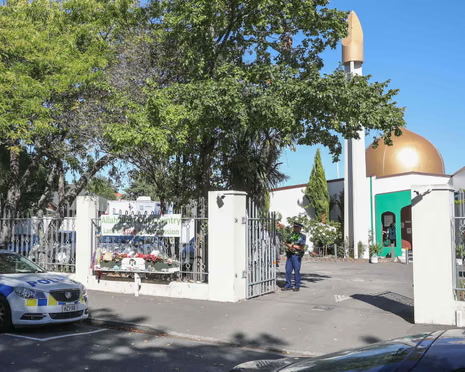
Security measures at the Wellington court were heightened during the proceedings. Access was strictly limited to media, counsel, and authorised personnel, while victims’ families could watch a delayed broadcast from Christchurch. Tarrant’s legal team was granted permanent name suppression to protect their identities. Survivors and families of the victims expressed unease at hearing Tarrant speak for the first time. Aya Al-Umari, who lost her brother Hussein al-Umari in the attack, said the hearing forced her to confront painful memories. She added that she must mentally distance herself from Tarrant’s words to preserve her sanity.
Tarrant, who moved to New Zealand in 2017, meticulously planned the mosque attacks, conducted reconnaissance, published a manifesto promoting white supremacist ideology, and livestreamed parts of the assault. His actions prompted sweeping reforms, including a ban on military-style semi-automatic rifles and the introduction of a national firearms registry. The ongoing coronial inquiry remains New Zealand’s largest, exploring the sequence of events and broader systemic failings. In October 2025, the high court allowed Tarrant to potentially testify at the inquest, despite opposition from survivors and families.
Legal commentators note that Tarrant’s appeal highlights complex intersections between prisoner rights, mental health considerations, and accountability for acts of extreme violence. The Christchurch guilty plea case is thus being closely monitored internationally for precedent-setting implications. Observers emphasize that solitary confinement, particularly in cases of high-profile offenders, can trigger claims of compromised mental capacity, which courts must weigh against public interest and victims’ rights.

Human rights advocates and psychologists have contributed to discussions on the psychological impact of isolation, stressing that extreme conditions may impair judgment and decision-making. Tarrant’s claim draws attention to these issues, raising difficult questions about whether certain prison environments may inadvertently affect the legal validity of confessions. Meanwhile, the families of victims continue to call for closure, stressing that any perceived leniency could reopen emotional wounds.
The court’s eventual ruling will be closely scrutinized, not only for its legal implications but also for its societal resonance in New Zealand and abroad. The Christchurch guilty plea controversy serves as a stark reminder of the lasting consequences of extremist violence and the challenges faced by justice systems in balancing offender rights with victim protection. Analysts suggest that the decision may shape future legal interpretations regarding mental health, incarceration conditions, and plea validity in cases of extraordinary criminal acts.
The hearings are expected to conclude in the coming days, with judges reserving the right to issue their ruling at a later date. Should the plea remain vacated, Tarrant could face the high court once again, bringing renewed attention to the events of 2019. For victims, families, and the wider public, the Christchurch guilty plea proceedings remain an emotionally charged and legally significant chapter in New Zealand’s history.
Related News:
 UK Targets in New York Bomb Threat Hoax: Man Jailed
 Files Link Andrew to Epstein Dinner After Prison Release
 Peterborough Mosques Tighten Security After Attack
 Badenoch Warns Farage’s Grooming Gangs Plan Could Backfire
 FBI Director Kash Patel Defends Girlfriend Amid Government Jet Claims
 Police Probe Four Knife Incidents Linked to Cambridgeshire Train Attack
 Experts Warn on Home Birth Risks, Call for Skilled Midwives
 French Taxi Driver Cleared in David Lammy Theft Case After Fare Dispute
 UK University Faces Counter-Terror Probe Over China Pressure
 UK Bans Fake Numbers: Scammers Lose Their Trick
 Just Stop Oil Protesters Convicted Amid Climate Defence Row
 Jailed UK climate protesters face extremist-style restrictions
 Boris Johnson accused of undermining BBC leadership
 How to get help when a child goes missing – call 999 urgently
 ‘Reckless’ cuts to victims’ services will cost more than they save
 BBC’s Tim Davie to Address Staff Amid Trump $1bn Threat
 Ukraine-Russia war latest: Putin’s troops exploit bad weather to force Kyiv withdrawal from multiple towns
 Met Police Clarifies Scale of Grooming Gang Cases
 Oklahoma Governor Grants Last-Minute Clemency to Death Row Inmate
 Rio Raid’s Death Toll Raises Questions About Gang Impact
 Israel Confirms Returned Hostage as Meny Godard
 Greene Pushes Epstein Files Amid Trump Fallout
 New Evidence Emerges in Haditha Family Killings
 Criminal Gangs Pose as Truckers to Hijack UK Supply Chains
 Mum Calls for New Licence Rules After Teen Road Death
 Mother Watches in Horror as Teen Daughter Dies on Tracks
 Agency Workers Vote to Join Picket Lines Amid Dispute
 Charlotte Raids: 130 Arrested in Major Immigration Sweep
 The Lasting Legacy of Seven: Crime, Morality, and Urban Decay
 Deadly Russian Strikes Hit Western Ukraine, 20 Killed in Ternopil
 Serial Rapist and Former Cop Found Guilty Again
 Man Charged Over Attempted Murder of Senior Officer
 Man Denies Stealing Bronze Age Gold from Museum
 Ex-Harvard President Pauses Teaching Over Epstein Emails
 Ex-Olympian Snowboarder Now Drug Kingpin Charged with Murder
 Venezuela Threatens Nobel Winner Machado with Fugitive Status
 Inside the Helpline Protecting Missing Children in the UK
 Most Tories Expect to Support a Farage-Led Government
 Runaway Driver Caught by DNA Evidence
 Trump Envoy to Discuss Ukraine Peace at Kremlin
 Two National Guard Soldiers Critically Injured Near White House
 Southern Lebanon reels as Israeli strikes shatter communities
 Jordan Bardella: France’s Young Presidential Contender
 American Mother Extradited From UK to U.S. on Murder Charges
 George Clooney and Amal Clooney Receive French Citizenship
 Capitol Attack Anniversary Sparks Deep Political Divide
 Saudi Officials Report Zubaidi Flee Before Yemen Peace Talks
 Gambia Supreme Court Hears Case to Overturn FGM Ban
 Trump targets Iran trade with 25% tariff warning
 Rudd successor: Defence chief and former ministers considered
 India’s Failing Juvenile Justice System Denies Minors Reform
 New Documentary Examines Teen’s Zombie Knife Murder
 US Senate rejects resolution limiting Trump military powers
 Portland man pleads not guilty after Border Patrol shooting
 Venezuela regime claims release of political prisoners signals new era
 Gulf states warn Trump Iran strikes risk wider Middle East war
 Machado Trump medal gesture reshapes Venezuela power struggle
 Greenland defence seen as shared Nato duty amid troop arrivals
 Geopolitical football: Iran, Trump and the World Cup clash
 Canada-China trade gains momentum in new strategic partnership
 Trump Receives Machado’s Nobel Medal in White House Meeting
 Woman Jailed for Life After Killing E-Bike Rider in Tragic Mistaken Identity Case
 Syria President Declares Victory as Ceasefire Reached with SDF
 US Considers Asylum for British Jews Amid Rising Antisemitism
 Melbourne Antisemitic Attack Targets Young Boys
 Trump slams UK ‘stupidity’ over Chagos Islands, eyes Greenland takeover
 Trump Tightens Grip on EU and UK Energy Supply
 Shinzo Abe’s killer receives life sentence in Japan
 Thousands Flee Cambodia Scam Centres Amid Global Pressure
 Deadly NSW Shooting Leaves Three Dead, Gunman Escapes
 Police response times face strict new national limits
 China General Under Investigation Amid Leadership Purge
 Philippines ferry disaster leaves 15 dead, dozens missing
 Salford Attempted Robbery Sees 95-Year-Old Woman Tied Up
 Cambridge Faces Scrutiny Over Arms Investment Transparency
 Police Doubt Fugitive Dezi Freeman Survived Bushland
 Epstein UAE Emails Shake British Royal Andrew’s Legacy
 Gus Lamont Case: Grandmothers ‘Devastated’ by Major Crime Status
 Teen Girl Chased in Broad Daylight in Ipswich
 Man Arrested After University of Lancashire Student Found Dead