Published: 30 April 2026. The English Chronicle Desk. The English Chronicle Online
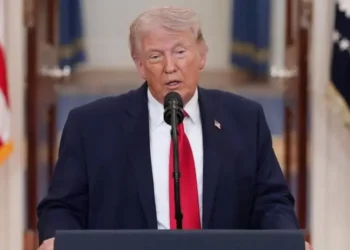
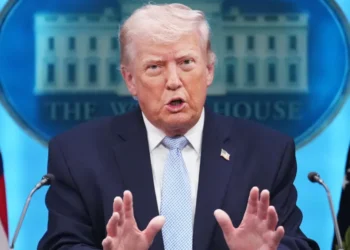
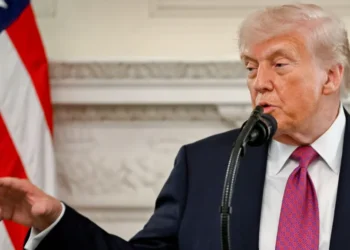
In a move that has sent shockwaves through the NATO alliance, President Donald Trump announced today that the United States is “studying and reviewing” a major reduction of its military presence in Germany. The threat, issued via social media, comes as a direct retaliation to Chancellor Friedrich Merz’s scathing critique of the ongoing U.S.-Israel war in Iran. The diplomatic spat marks a significant fracture in the “special relationship” between Washington and Berlin, with Trump accusing the German leader of being “humiliated” by Tehran’s negotiators.

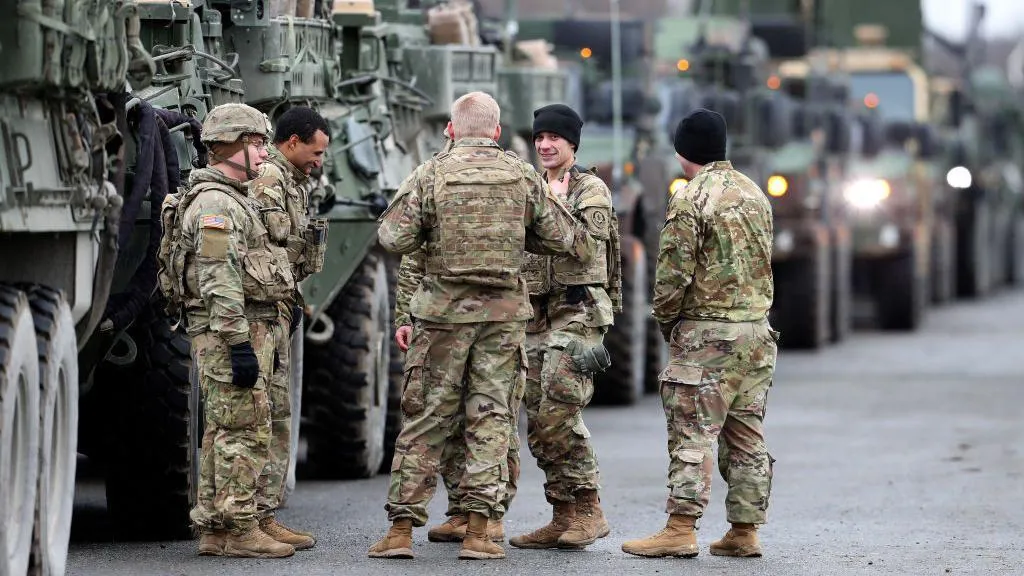
The U.S. currently stations approximately 39,000 troops in Germany, which serves as the logistical heart of American operations in Europe. However, Trump signaled that the “determination will be made over the next short period of time,” echoing his 2020 attempt to pull 9,500 personnel out of the country—a move that was famously frozen by the Biden administration but is now back on the table with renewed vigor.
The firestorm began on Monday when Chancellor Merz, speaking to students in Marsberg, delivered a blunt assessment of the Middle Eastern conflict.
“No Exit Strategy”: Merz asserted that the U.S. “clearly has no strategy” for ending the two-month-old war with Iran, characterizing the engagement as a “planless” venture.
National Humiliation: The Chancellor claimed that the Iranian leadership was “humiliating” the U.S. by leading negotiators on a fruitless chase through Islamabad and Doha without conceding to a ceasefire.
The Economic Toll: Merz’s frustration is fueled by a domestic crisis; the war has shuttered the Strait of Hormuz, halving Germany’s growth forecast to a stagnant 0.5% and forcing a €1.6 billion emergency fuel subsidy for German households.
True to form, the President-elect fired back with a series of late-night posts, accusing Merz of being soft on nuclear proliferation.
“No wonder Germany is doing so poorly, both Economically, and otherwise!” Trump wrote. “Merz thinks it’s OK for Iran to have a Nuclear Weapon… he doesn’t know what he’s talking about.”
White House insiders suggest the troop cut is not just a rhetorical threat. The Pentagon is reportedly reviewing the Global Posture Review, which could see thousands of personnel moved from German bases like Ramstein to more “aligned” partners like Poland or Italy, who have been more supportive of the U.S. naval mission to reopen the Strait of Hormuz.
The fallout has placed the NATO alliance in an unprecedented “stress test.”
The Legislative Shield: Any withdrawal faces a hurdle in the National Defense Authorization Act, which prevents the Pentagon from dropping below 76,000 troops in Europe for more than 45 days without Congressional approval.
The “Not Our War” Stance: German Defense Minister Boris Pistorius has doubled down on the Chancellor’s caution, explicitly stating that the Iran conflict is “not our war,” further infuriating Washington.
The Merz Defense: Despite the public row, Merz insisted today that his personal relationship with Trump remains “just as good as before,” framing his criticism as a necessary “Atlanticist” duty to ensure a stable exit strategy.

As the King continues his visit to Washington, the oil markets remain on a knife-edge. With Brent Crude at $118 a barrel and the U.S. and Germany at loggerheads, the prospect of a coordinated mission to break the Iranian blockade seems more distant than ever. For the soldiers stationed in the forests of Bavaria, the “Art of the Deal” has suddenly become an uncertain game of “Stay or Go.”
While the “Charles Charm” offensive has smoothed feathers in D.C., the Berlin-Washington axis is currently undergoing its most brutal realignment since the Cold War. As Trump “studies” the maps of Germany, the message to Europe is clear: support the strategy, or lose the shield.
Related News:
 Gulf Oil Shock Sends Global Economic Ripples
 Iran Rejects Ceasefire, Warns Trump With Chilling Message
 Crude Surge: Oil Hits Four-Year High as Trump Weighs “New Options” for Iran
 Modi’s London Visit Seals Historic UK-India Trade Pact Amid Global Tensions
 Rachel Reeves to lead UK trade push in Saudi Arabia amid rights debate
 Canada Passes Carney’s First Budget in Tight Parliamentary Vote
 India’s Labour Law Overhaul Sparks Fierce Debate
 Carney’s Alberta Pipeline Deal Sparks Immediate Pushback
 Austrian Airlines Halts Tehran Flights Amid Political Unrest
 Trump Administration Probe of Fed’s Powell Draws Pushback
 Mark Carney Walks Diplomatic Tightrope on China Visit
 ‘Repatriate the Gold’: Germany Debates Bringing Reserves Home
 Japan Braces as Takaichi Begins New Term with Huge Mandate for Low‑Tax, Ultra‑Conservative Agenda
 US Trade Deficit Hits Fresh High Despite Trump’s Tariffs
 What Now for Asia After Trump’s Tariffs Were Struck Down?
 Energy Firms Keep Fuel Price Hike ‘Under Scrutiny’
 US Eases Sanctions on Russian Oil Sales to India During Iran Conflict
 G7 to Hold Emergency Oil Talks as Markets Plunge
 Cost of Living Crisis Returns to Centre Stage
 US Says 16 Iranian Mine Ships Destroyed in Hormuz
 Russia Seeks Gains as Iran War Reshapes Global Politics
 Labour Plans Nuclear Investment Summit Days After Holyrood Election
 UK Fuel Tax Hike Plan to Be Kept Under Review Over Iran Conflict
 The Situation Is Dire: War on Iran Squeezes India’s Cooking‑Gas Supplies
 Oil Price Jumps Despite Deal to Release Record Amount of Reserves
 Sri Lanka Sets Weekly Shutdown to Save Fuel
 Philippines energy emergency sparks coal power surge
 Trump Faces New Warning Signs as Iran War Hits Home
 PM Seeks to Reassure Australians Over Fuel Supply
 Reeves to Join Emergency G7 Meeting as Oil Hits $116
 Zelensky Looks to Gulf to Protect Him from Putin
 Iran Strikes Kuwaiti Desalination Plant, Killing Worker as ‘Water War’ Escalates
 Trump to Deploy “God Squad” Over Gulf Wildlife Protections
 The ‘Islamabad Initiative’: How Pakistan Won Over Trump as a Key Mediator
 Epic Fury: The Strategic Logic and Uncertain Horizon of the 2026 Iran War
 ‘Strategic Reserve’: Italy Defers Coal Phase-Out to 2038 Amid Energy Crisis
 British Businesses Braced as National Living Wage Hits £12.71 Published: 1 April 2026
 UK-Led 35-Nation Summit Seeks to Break the Hormuz Deadlock
 “Region Will Burn”: Iran Issues Defiant Retaliation Warning After Trump’s Expletive-Laced Deadline
 Hungary Claims Plot to Target Gas Pipeline Pre-Vote
 The “Citrus” Shift: Marmalade to be Legally Rebranded in Post-Brexit Food Realignment
 Oil and Diplomacy: Russian Refineries Burn as Zelenskyy Secures Middle East Shield
 “A Perfect Storm”: UK Small Businesses Face Doubling Energy Bills as Iran War Rattles Markets
 India’s High-Growth Economy Braces for a Middle East Oil Shock
 The $100 Billion Peace: Trump’s ‘Grand Bargain’ Ends Iran Conflict at a Staggering Cost
 ‘A Double-Sided Ceasefire’: Inside the 14-Day Truce Between the US and Iran
 Diplomatic Sprint: Starmer Heads to the Gulf as 14-Day Truce Holds
 The Horns of Dilemma: Why the 2026 Iran War Ignited and Where It Goes Next
 The Great Chokehold: Why the Strait of Hormuz is the Epicenter of the 2026 Crisis
 Tectonic Tension: Trump Blasts NATO Costs as Rutte Admits to ‘Very Frank’ Exchange
 Global Commerce Crisis: Cooper Demands Immediate, Toll-Free Access to Hormuz
 Midnight Fire: Israel and Hezbollah Exchange Strikes as Trump Lashes Out at Tehran
 The Prediction Prohibition: White House Staff Barred from Betting on Political Markets
 Market Shock: Oil Surges Past $100 as US Initiates Naval Blockade
 The Vance Verdict: How the Vice President Navigated the Islamabad “Pressure Cooker”
 Relief at the Pump: Irish PM Unveils €505m Package to Stem Fuel Crisis
 The Liberal Gamble: Carney’s Majority Quest Hits the ‘Poilievre Wall’
 The Atlantic Rift: Starmer Pledges UK Neutrality in Iran Port Blockade
 The Budapest Ripple: Katya Adler on Hungary’s ‘Jubilation’ and the Cold Shoulder from Moscow
 Diplomatic Deadlock: Lebanon Enters High-Stakes Border Talks with ‘No Cards to Play’
 Trump Slams UK Ties and Threatens To Rewrite Trade Deal
 ‘Never’: Senior Lawmaker Vows Tehran Will Maintain Grip on Strait of Hormuz
 The Fog of War and the Ticker Tape: Suspicious Trades Rile Washington
 High-Seas Seizure: US Navy Intercepts Iranian Cargo Ship in Gulf of Oman
 ‘Table of Surrender’: Tehran Vows ‘New Cards’ as Islamabad Peace Talks Teeter on Brink
 Brinkmanship in Islamabad: Tehran Vows ‘New Battlefield Cards’ as Ceasefire Wanes
 ‘I Get it in Writing’: Trump Extends Iran Ceasefire Amid Frantic Islamabad Push
 Resilience and Rupture: Why the Middle East Crisis is Succeeding Where Trade Wars Failed
 Standoff at the Strait: Iran Rejects Reopening Amid “Flagrant” Ceasefire Breaches
 Red Lines in Ottawa: PM Carney Insists US “Won’t Dictate Terms” of Trade Review
 The Digital Iron Curtain: Steve Rosenberg on the Kremlin’s Battle for the Russian Web
 “Industrial-Scale Extraction”: White House Memo Accuses China of Mass AI Theft
 Athens Mayor Moves to Tackle Overtourism Crisis
 The “King of Drones”: Ukraine’s Unmanned Commander Targets the Arteries of the Russian War Machine
 Return of the “Skiffs”: Threat Level Raised as Somali Pirates Seize Second Vessel in a Week
 The “Long Tail” of War: Minister Warns Economic Scarring Could Last Eight Months Post-Conflict
 Market Deadlock: Oil Prices Surge as US-Iran Peace Talks Unravel in Pakistan
 Southeast Asia Turns to Russia Amid Energy Crisis
 US Calls Australia Media Law “Foreign Extortion”
 Capitalism ‘Suicidal’, Warns Petro at Climate Summit