Published: 04 September 2025 | The English Chronicle Desk
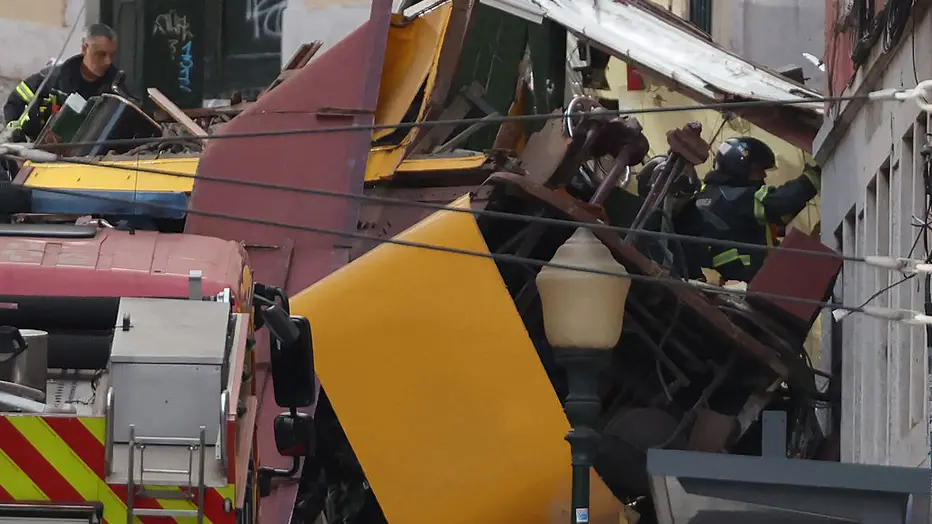
Lisbon, a city renowned for its charm, history, and breathtaking hillside views, is reeling from tragedy after a catastrophic accident on one of its most iconic landmarks. At least fifteen people were killed on Wednesday evening when the Elevador da Glória, a funicular railway that has carried millions of passengers since the 19th century, derailed during its downhill journey and crashed into a building near the curve of a steep street. The accident occurred shortly after 6pm, during the bustling rush-hour period when both tourists and residents frequently rely on the line.
The Elevador da Glória, a yellow-and-white cable-driven streetcar, has long been celebrated as one of Lisbon’s most recognizable attractions. Beyond its postcard beauty and nostalgic charm, the funicular has also served a vital purpose for locals who use it daily to navigate the capital’s steep hills. Opened in 1885 and later electrified in 1915, the railway forms part of the city’s transport network operated by Carris, the Lisbon municipal transport company. Its unique mechanism relies on two parallel streetcars connected by steel cables: as one car climbs uphill, the other descends, the weight of each balancing the system in motion.

Witnesses to Wednesday’s disaster described a horrifying scene as one of the cars appeared to lose control, accelerating rapidly down the incline. Bystanders reported the driver’s apparent struggle before the vehicle careened out of control and slammed into a building at the bend of the road. The impact was devastating, leaving wreckage scattered across cobbled streets that usually echo with the sound of tourists taking photographs and locals hurrying home. Emergency services rushed to the site, cordoning off the area and working into the night to retrieve victims and treat the injured. While authorities confirmed that some foreign nationals were among the dead, the identities and nationalities of the victims have not yet been disclosed.
The Elevador da Glória has always been more than just a transport link. Connecting Lisbon’s downtown Restauradores Square with the Bairro Alto, or Upper Quarter, the funicular provides not only a practical route but also a cultural experience. Its short, steep ride of around 260 metres has long attracted visitors eager for sweeping views of Lisbon’s terracotta rooftops and narrow streets. For locals, it remains a dependable way of traversing the city’s challenging terrain. Designated as a national monument, the railway has carried around 3 million passengers annually, cementing its place in both the practical and symbolic life of the Portuguese capital.
The sense of loss following the derailment has been profound. Portugal’s President, Marcelo Rebelo de Sousa, expressed deep sorrow and offered his condolences to the families of the victims, calling the event a moment of national mourning. Lisbon’s mayor, Carlos Moedas, echoed the sentiment, describing the accident as “a tragedy of the like we’ve never seen.” Flags across municipal buildings were lowered to half-mast, and vigils were expected to be held in the coming days as the city attempts to come to terms with a disaster that has shaken its identity.

Investigations into the cause of the derailment are now underway. While the funicular has undergone regular maintenance and modernisation over the years, authorities are under increasing pressure to explain how a system with more than a century of safe operation could suddenly fail so catastrophically. Safety inspectors and engineers will be tasked with uncovering whether mechanical failure, cable malfunction, or operational error played a role. For Lisbon, the answers will be crucial—not only to restore public trust but also to ensure that such a calamity can never happen again.
For now, the streets of Lisbon’s Bairro Alto, usually filled with music and laughter spilling from cafés and bars, are silent with grief. The Elevador da Glória, once a symbol of Lisbon’s enduring charm and ingenuity, has become the centre of one of Portugal’s darkest transport tragedies in modern history.
Related News:
 “I Feel English”: Young Migrant’s Dream of Britain Amid Political Pressure Over Channel Crossings
 Sycamore Gap Tree Confirmed to Be Over a Century Old, Scientists Reveal
 Tragedy on Lizard Island: Cruise Passenger Dies
 UK Charters Emergency Flights to Evacuate Britons from Jamaica
 World Whisky Tour: 9 Global Gems
 Shouting Works Best to Deter Gulls, UK Study Finds
 Deadly Peru Bus Crash Kills 37 on Pan-American Highway
 Bataclan Anniversary: France Remembers but Jihadist Danger Lingers
 Seven Countries, One Winner: Europe’s Best Christmas Market
 South African Women Call Purple Protest Over Gender Violence
 Scotland Gains 33 New Towns – Life in Growing Communities
 A Colourful Cultural Escape in Mexico’s Querétaro
 Search underway for British man overboard off Tenerife
 UK Criticises Gaza Aid Delays as Tents Arrive After Year
 Kinnock’s Rebuke Echoes Loudly as Corbyn Allies Launch Left-Wing Breakaway: “A Gift to Farage”
 Post Office Scandal Compensation Tops £1 Billion as Victims Finally See Justice
 UK and Norway Forge Stronger Ties Through Joint Sanctions and Enhanced Defence Cooperation
 Trump Administration Dismisses 17 Immigration Judges, Sparking Debate Over Judicial Independence
 Northern Ireland Family of Three Shot Dead in Maguiresbridge Home Incident
 Epic Journeys Through Time and Terrain: Holidays That Inspire, Dazzle and Excite
 Beyond the Veil: Woman Who ‘Died’ for Eight Minutes Says Death is an Illusion
 Netanyahu Announces Plan to Take Over Gaza City, Escalating Conflict Further
 Manchester Airport Faces Delays After EasyJet Planes’ Wings ‘Clip’ on Runway
 Access to Iconic Cornish Beach Cut Off by National Trust Amid Safety Concerns
 Where Is Prince William and Kate Middleton’s New House? Inside the Historic Lodge Set to Become Their ‘Forever Home’
 EuroMillions Record-Breaking £210m Jackpot Won by Lucky Lottery Ticket Holder
 Costa Blanca Holiday Horror as Food Poisoning Outbreak Hits Four-Star Hotel
 Denmark Investigates Professional Drone Incursions Across Multiple Airports, No Evidence of Russian Involvement
 Nicolas Sarkozy Sentenced to Five Years in Jail in Libya Campaign Financing Case
 Trump Imposes Sweeping Tariffs on Pharmaceuticals, Trucks and Furniture Imports
 A Third of EU Citizens in UK Report Discrimination by Public Bodies Post-Brexit
 Bournemouth Stun Fulham with Dramatic Comeback in Premier League Thriller
 Misinformation and Political Pressure Force Weston-super-Mare to Abandon Refugee Sanctuary Plan
 Arsenal Showcase Depth and Flexibility as Arteta Eyes Title Challenge
 Trump Presses for Urgent Progress as Cairo Talks Aim to Halt Gaza War
 Nobel Peace Prize Officials Probe Suspicious Online Bets
 Women Challenge Meta Over Targeted Ads After Miscarriage
 Hope Amid Heartbreak: The Stories Behind the Freed Israeli Hostages
 Zelensky to Urge Missile Aid as Trump and Putin Plan Summit
 Fabio Wardley stuns Joseph Parker to earn Usyk title shot
 Lotto result jackpot draw halted due to technical glitch
 WW2 Pilot’s Long-Lost Crash Site Unearthed in Essex
 Prince Andrew May Leave Royal Lodge for Frogmore Cottage
 Hospice Cuts Raise Alarm Across England Amid Funding Crisis
 Fed Cuts US Interest Rates Again Amid Labour Market Uncertainty
 UK launches search for first-ever ‘town of culture’ to highlight overlooked areas
 Hurricane Melissa Leaves Devastation Across Jamaica as Death Toll Rises
 The Lowry Hotel: Manchester’s Iconic Five-Star Retreat
 US Senate Passes Funding Bill to End Historic Shutdown
 BBC’s Tim Davie to Address Staff Amid Trump $1bn Threat
 Seven Conditions That Automatically Qualify You for a Free Bus Pass
 A Local Chef’s Guide to Iconic Boston Clam Chowder
 Son Reveals UK Couple in Iran Resort to Hunger Strike for Help
 Hitler’s DNA Confirms He Truly Had Only One Testicle
 Victoria Signs Historic Treaty with Indigenous Peoples
 US Justice Department Files Lawsuit Against California Over Partisan Voting Maps
 Israel Confirms Returned Hostage as Meny Godard
 Orban Says Ukraine Has ‘No Chance’ as EU Support Continues
 Mother Watches in Horror as Teen Daughter Dies on Tracks
 Irish Hero Parrott Says Goal Brought First Tears in Years
 Israeli Strike Kills 13 Near Palestinian Camp in Lebanon
 Zelensky Meets US Envoy in Turkey to Push Ukraine Peace Talks
 Commuters warned as yellow snow and ice alert hits Northern Ireland
 Haiti Qualifies for World Cup Despite Coach Never Visiting Country
 Rama Rebukes Mahmood for Targeting Albanian Families
 Woman Meets Boy Whose Life She Saved with Kidney
 Pentagon Officials in Ukraine to Discuss War End
 Vietnam Battles Deadly Floods as Rains Continue
 Venezuela Threatens Nobel Winner Machado with Fugitive Status
 At Least Three Dead in Bangladesh Earthquake
 Vicki Fears Losing Motability Car
 Israel Confirms Hamas Returned Dror Or’s Body
 Trump Envoy to Discuss Ukraine Peace at Kremlin
 Two National Guard Soldiers Critically Injured Near White House
 Mbappe Scores 4 as Real Madrid Edge Olympiakos
 Man City Lose, Champions League Risk
 Sri Lanka Floods Leave 56 Dead, Dozens Missing
 India’s Labour Law Overhaul Sparks Fierce Debate
 Machynlleth High Street Left Without Christmas Lights
 Pavarotti statue frozen in Italian ice rink sparks backlash