Published: 06 September 2025. The English Chronicle Desk. The English Chronicle Online
The war in Gaza, which has claimed tens of thousands of lives and displaced millions over nearly two years, is approaching what many observers believe could be a critical turning point. International mediators are gathering in Cairo this week for indirect peace talks between Hamas and Israel, amid mounting pressure from Washington. US President Donald Trump has called on all sides to “move fast,” warning that failure to make swift progress could lead to further mass bloodshed.
The urgency stems from a 20-point American peace plan that Hamas has partially accepted. The proposal, shaped by weeks of back-channel negotiations, calls for an immediate cessation of hostilities, the release of dozens of hostages, and a transitional arrangement placing Gaza’s governance in the hands of nonpartisan Palestinian technocrats. While Hamas has shown rare flexibility by agreeing to some terms, the group has conspicuously left out responses on two of the most contentious issues—its disarmament and its long-term role in Gaza’s political structure.

President Trump, writing on social media, declared the talks “very successful” even before they began. “I am told the first phase should be completed this week, and I am asking everyone to move fast,” he said, stressing that “time is of the essence or massive bloodshed will follow.” Speaking to reporters, Trump expressed confidence that hostages would begin to be freed “very soon,” and dismissed the notion that his plan required much revision. “Everybody has pretty much agreed to it,” he said, though he acknowledged minor changes might occur.
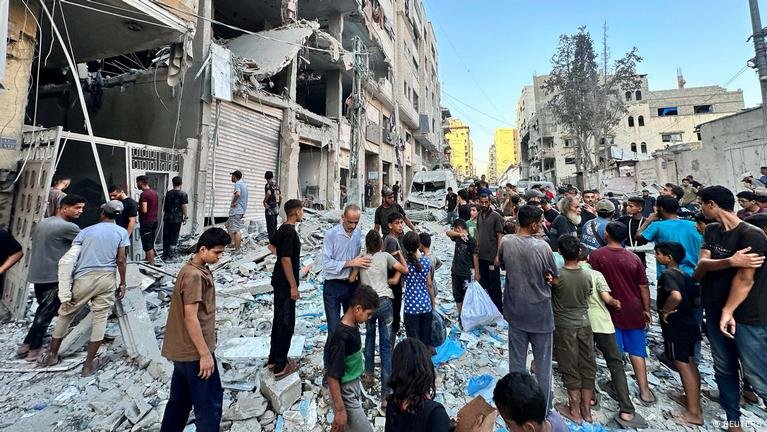
Despite these optimistic pronouncements, the battlefield tells a different story. Israeli air strikes continued across Gaza through the weekend, destroying homes and claiming more lives. A BBC correspondent reported hearing fresh explosions in Gaza City and seeing plumes of smoke from the Israeli border. Gaza’s Hamas-run health ministry said another 65 people were killed in just 24 hours, adding to the staggering toll of over 67,000 since the conflict erupted in October 2023 following Hamas’ deadly cross-border assault that killed 1,200 Israelis and led to hundreds of hostages being taken.
Israel, while facing pressure from Trump to halt the bombing, has so far resisted calls for a ceasefire. Government spokesperson Shosh Bedrosian confirmed that Prime Minister Benjamin Netanyahu had ordered forces to continue defensive operations. “There is no ceasefire in place,” she said, emphasizing that Israeli troops would fire back if threatened. Yet Netanyahu also indicated in a televised address that the release of hostages could be announced “in the coming days,” a sign that diplomacy and military pressure are being pursued in tandem.
The Cairo talks are expected to draw an unusually powerful roster of mediators. Alongside the Hamas delegation, led by negotiator Khalil al-Hayya, the US will be represented by Trump’s envoy Steve Witkoff and his son-in-law Jared Kushner. Qatar’s foreign minister Sheikh Mohammed bin Abdulrahman Al Thani will also be present, alongside Egyptian and Turkish officials who played crucial roles in persuading Hamas to soften its stance. Al-Hayya himself narrowly survived an Israeli assassination attempt in Doha last month, underscoring the high stakes surrounding his participation.
Diplomatic insiders say Hamas’ relatively muted response to Trump’s plan came after sustained pressure from Qatar, Egypt, and Turkey, which urged the group to set aside its traditional “red lines” for the sake of keeping negotiations alive. Many Palestinians were surprised that Hamas refrained from explicitly rejecting disarmament or the prospect of sidelining itself from Gaza’s governance—issues that have previously been non-negotiable. Analysts caution, however, that this tactical flexibility may prove risky. Each day without a ceasefire continues to cost civilian lives and deepen humanitarian suffering in Gaza.
The American plan also includes a phased Israeli withdrawal, beginning with specific sectors of the Gaza Strip. Maps published by Trump outline pull-backs from Rafah, Beit Hanoun, Beit Lahia, parts of Gaza City, and large sections of Khan Younis and Deir al-Balah. Yet the proposal would still prevent nearly 900,000 displaced Palestinians from immediately returning home, according to population data. Hamas had rejected similar maps in earlier rounds of talks in March and May, making it uncertain whether this iteration will win acceptance.
For its part, Washington is framing the proposal as a breakthrough not only for Israel and Palestine but for the broader Middle East. “It’s a great deal for Israel, it’s a great deal for the entire Arab world, Muslim world, and world,” Trump said. Secretary of State Marco Rubio added that bombing must stop to allow any hostage release to move forward, noting that “you can’t release hostages while there’s still bombardments going on.”
Yet skepticism abounds. Critics argue that Trump’s celebratory tone is premature, pointing to the deep mistrust between the parties and the history of previous failed talks. Human rights organizations also highlight the continuing ban on international journalists entering Gaza independently, which makes verifying claims on casualties and destruction nearly impossible.

Still, with Netanyahu ordering his delegation to Cairo and Hamas arriving Sunday night, the talks are poised to be the most consequential diplomatic effort since the war began nearly two years ago. Whether they will deliver even a limited ceasefire, or collapse under the weight of irreconcilable demands, will likely become clear within days.
For now, Gaza’s battered population waits anxiously, hoping that this round of negotiations—despite the uncertainties—might finally open a path to relief.
Related News:
 Kinnock’s Rebuke Echoes Loudly as Corbyn Allies Launch Left-Wing Breakaway: “A Gift to Farage”
 Tories in Turmoil as Sir Jake Berry’s Defection to Reform Sparks Fears of Further Exodus
 UK and Norway Forge Stronger Ties Through Joint Sanctions and Enhanced Defence Cooperation
 Trump Administration Dismisses 17 Immigration Judges, Sparking Debate Over Judicial Independence
 Lammy Condemns Israel’s Targeting of Starving Palestinians: Sanctions Threatened Amid Global Outrage
 Northern Ireland Family of Three Shot Dead in Maguiresbridge Home Incident
 Netanyahu Announces Plan to Take Over Gaza City, Escalating Conflict Further
 Prominent Al Jazeera Journalist Anas al-Sharif Among Five Reporters Killed in Israeli Airstrike on Gaza
 High-Stakes Diplomacy: Trump and Putin Head to Alaska for Historic Peace Talks
 Manchester City Announce Their Return in Style with Haaland Double and Debut Goals at Wolves
 Where Is Prince William and Kate Middleton’s New House? Inside the Historic Lodge Set to Become Their ‘Forever Home’
 Los Angeles’ Alleged ‘Ketamine Queen’ Agrees to Plead Guilty in Connection with Matthew Perry’s Death
 Costa Blanca Holiday Horror as Food Poisoning Outbreak Hits Four-Star Hotel
 Lisbon’s Historic Funicular Turns to Tragedy: The Elevador da Glória Derailment
 Lisbon Funicular Disaster Claims 17 Lives in Shocking Crash
 France Recognises Palestinian State as Trump Prepares to Address UN General Assembly
 Public Executions in Gaza City Captured on Video Amid Ongoing Conflict
 Macron Phones Trump Over Traffic Jam in New York
 Denmark Investigates Professional Drone Incursions Across Multiple Airports, No Evidence of Russian Involvement
 Nicolas Sarkozy Sentenced to Five Years in Jail in Libya Campaign Financing Case
 Sir Sadiq Khan Accuses Trump of Racism and Islamophobia Following UN Remarks
 Comey Indictment Deepens Fears of Political Retribution Under Trump
 Trump Imposes Sweeping Tariffs on Pharmaceuticals, Trucks and Furniture Imports
 Assumption Island Dispute Dominates Seychelles Election as Environment, Economy and Geopolitics Collide
 Trump Unveils Gaza Peace Plan Amidst Deep-Seated Challenges
 “It Was Very Tough, But I Love Life”: Former Israeli Hostage Rebuilds Life After Family Killed by Hamas
 Bournemouth Stun Fulham with Dramatic Comeback in Premier League Thriller
 Misinformation and Political Pressure Force Weston-super-Mare to Abandon Refugee Sanctuary Plan
 Chaos at Ibrox as Martin’s Rangers Era Comes to an End
 Arsenal Showcase Depth and Flexibility as Arteta Eyes Title Challenge
 French Prime Minister Lecornu Resigns After Just 26 Days in Office, Deepening Political Crisis
 Nobel Peace Prize Officials Probe Suspicious Online Bets
 Hope Amid Heartbreak: The Stories Behind the Freed Israeli Hostages
 Zelensky to Urge Missile Aid as Trump and Putin Plan Summit
 Barnes Inspires Newcastle to Champions League Triumph Over Benfica
City shine with PlayStation-style football to overwhelm Villarreal
Barnes Inspires Newcastle to Champions League Triumph Over Benfica
City shine with PlayStation-style football to overwhelm Villarreal
 Fabio Wardley stuns Joseph Parker to earn Usyk title shot
 US Super-Rich Are Draining Planet’s Safe Climate Space
 Tragedy on Lizard Island: Cruise Passenger Dies
 Fed Cuts US Interest Rates Again Amid Labour Market Uncertainty
 UK Charters Emergency Flights to Evacuate Britons from Jamaica
 Hurricane Melissa Leaves Devastation Across Jamaica as Death Toll Rises
 Mikie Sherrill Elected New Jersey’s Governor in Key Win
 US Senate Passes Funding Bill to End Historic Shutdown
 BBC’s Tim Davie to Address Staff Amid Trump $1bn Threat
 Thailand Suspends Cambodia Border Peace Deal Amid Tensions
 Hannibal Gaddafi Freed After Nearly a Decade in Lebanon
 Fog Aids Russian Forces in Deep Push into Pokrovsk
 Hitler’s DNA Confirms He Truly Had Only One Testicle
 Victoria Signs Historic Treaty with Indigenous Peoples
 US Justice Department Files Lawsuit Against California Over Partisan Voting Maps
 Israel Confirms Returned Hostage as Meny Godard
 Orban Says Ukraine Has ‘No Chance’ as EU Support Continues
 Israeli Strike Kills 13 Near Palestinian Camp in Lebanon
 Zelensky Meets US Envoy in Turkey to Push Ukraine Peace Talks
 Congress Approves Release of Epstein Files, Trump Expected to Sign
 Haiti Qualifies for World Cup Despite Coach Never Visiting Country
 Rama Rebukes Mahmood for Targeting Albanian Families
 Russian Vessel Used Lasers on RAF Pilots, UK Claims
 Scotland Fans Celebrate Historic World Cup Qualification
 Pentagon Officials in Ukraine to Discuss War End
 Vietnam Battles Deadly Floods as Rains Continue
 WhatsApp Messages Expose Nathan Gill’s Bribery
 Venezuela Threatens Nobel Winner Machado with Fugitive Status
 At Least Three Dead in Bangladesh Earthquake
 Texas Governor Faces Lawsuit From CAIR
 Israel Confirms Hamas Returned Dror Or’s Body
 Trump Envoy to Discuss Ukraine Peace at Kremlin
 Twenty-Four Nigerian Schoolgirls Freed After Abduction
 Two National Guard Soldiers Critically Injured Near White House
 Pope Leo XIV Begins Historic Trip to Turkey and Lebanon
 Mbappe Scores 4 as Real Madrid Edge Olympiakos
 Man City Lose, Champions League Risk
 Sri Lanka Floods Leave 56 Dead, Dozens Missing
 India’s Labour Law Overhaul Sparks Fierce Debate
 Video shows Israeli troops kill Palestinians after surrender
 Trump to Recheck Green Cards from 19 Nations After DC Attack
 Chinese & Japanese Boats Clash Near Disputed Islands
 Putin Meets US Envoy Amid Key Ukraine Peace Talks
 Indonesia to Repatriate Two Dutch Drug Convicts