Published: 23 September 2025. The English Chronicle Desk. The English Chronicle Online
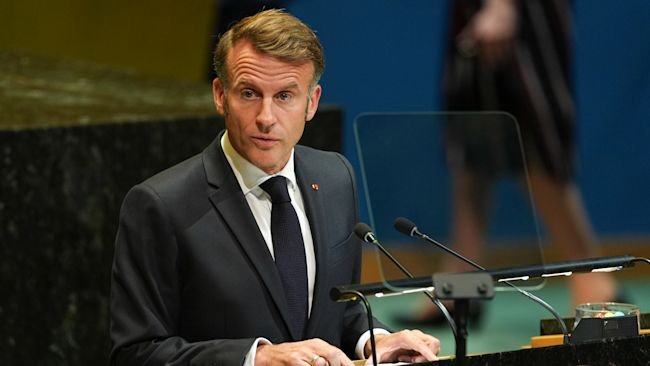
The decades-long Israeli-Palestinian conflict entered a new and highly significant chapter this week as France became the latest major country to formally recognise a Palestinian state. French President Emmanuel Macron, speaking at the United Nations in New York, declared that “the time for peace has come,” urging the world to end the ongoing war in Gaza and embrace the possibility of a two-state solution. The announcement places France at the forefront of a growing international wave pressing for Palestinian statehood, at a moment when Israel continues a deadly ground offensive in Gaza and international pressure intensifies over the worsening humanitarian crisis.
The move comes ahead of US President Donald Trump’s highly anticipated address to the UN General Assembly on Tuesday, where he is expected to present Washington’s position following mounting divisions among world powers over how to resolve the conflict. Trump’s remarks will be closely scrutinised not only by Israel and Palestine but also by influential regional powers such as Jordan, Qatar, and Saudi Arabia, whose leaders are also attending the New York gathering.

France’s recognition, Macron explained, is intended to underscore the urgent need for a political pathway to end what he called “the peril of endless wars.” He stressed that the Israeli hostages still held by Hamas must be released and that peace must prevail over what he described as “the logic of might.” The French leader added that the failure of the international community to deliver a just and lasting peace in the Middle East had left the two-state solution in jeopardy and that urgent action was now essential.
This recognition did not occur in isolation. A number of European states, including Belgium, Luxembourg, Malta, Andorra and San Marino, are preparing to follow suit. The step also comes just a day after the United Kingdom, Canada, Australia, and Portugal jointly recognised a Palestinian state, further isolating Israel diplomatically. International commentators suggest that this rapidly expanding list of recognisers could fundamentally reshape the diplomatic dynamics around the Israeli-Palestinian question.
Israel, however, has reacted with anger. Its government denounced the move as an undeserved reward for Hamas, the Palestinian armed group behind the 7 October 2023 attack in southern Israel that killed about 1,200 people and resulted in 251 hostages. Since then, according to figures from Gaza’s Hamas-run health ministry, more than 65,000 Palestinians have been killed in Israel’s relentless air and ground campaigns. The humanitarian catastrophe has reached such proportions that the UN recently confirmed a famine in Gaza City, where nearly one million people had been living before the offensive.
Speaking to reporters, Israel’s ambassador to the UN, Danny Dannon, declared that a two-state solution was no longer on the table after the October attacks, dismissing the ongoing discussions as a “charade.” Prime Minister Benjamin Netanyahu has reiterated that no Palestinian state will be permitted to the west of the River Jordan, while President Isaac Herzog warned that recognising Palestinian statehood would “embolden the forces of darkness.”
Despite Israel’s objections, momentum behind the recognition effort continues to build. Pro-Palestinian demonstrations have erupted across Europe, including in some 80 towns and cities in Italy, where public opinion appears increasingly at odds with the government’s cautious position. On Sunday night, both Palestinian and Israeli flags were projected on the Eiffel Tower in Paris, symbolising the gravity of France’s recognition and its hope for peace. In several French municipalities, Palestinian flags were flown from town halls, even in defiance of official instructions from the national government to maintain neutrality.
At the UN, Saudi Arabia’s foreign minister, Prince Faisal bin Farhan Al Saud, speaking on behalf of Crown Prince Mohammed bin Salman, reiterated Riyadh’s long-held stance that only a two-state solution can deliver lasting peace. Meanwhile, European Commission President Ursula von der Leyen announced the creation of a new financial mechanism, the “Palestine Donor Group,” aimed at reconstructing Gaza and supporting Palestinian governance structures.
UN Secretary-General Antonio Guterres adopted a similarly forceful tone, describing the crisis in Gaza as “morally, legally and politically intolerable.” He insisted that a two-state solution remains “the only credible path” to achieve peace between Israelis and Palestinians, stressing that the UN would continue to advocate for negotiations despite the deepening conflict.
Palestinian Authority President Mahmoud Abbas, whose participation was restricted after the United States revoked his visa, addressed the assembly via videolink. Abbas demanded a permanent ceasefire and insisted that Hamas could not have a role in Gaza’s governance, calling for the group to surrender its weapons to the Palestinian Authority. He underlined his rejection of Hamas’s October 2023 attack and extended a rare appeal directly to Israelis: “Our future and yours depends on peace. Enough violence and war.”
Macron echoed Abbas’s remarks, saying that France was prepared to contribute to a transitional administration in Gaza under the oversight of the Palestinian Authority, which would ensure Hamas’s disarmament. He added, however, that France would not open a Palestinian embassy until all hostages held by Hamas were released and a ceasefire was in place.

The US position remains pivotal. Washington’s absence from a one-day summit in Paris on Monday, hosted jointly by France and Saudi Arabia, raised questions about its willingness to engage with international partners on a two-state roadmap. Other G7 members, including Germany and Italy, also did not attend the summit, though Germany’s foreign minister Johann Wadephul acknowledged that while Berlin sees recognition of Palestine as a step at the “end of the process,” the process itself “must begin now.”
For President Trump, who is scheduled to deliver his address to the General Assembly in the coming hours, the stakes could not be higher. His words will be weighed against the growing consensus in Europe and beyond that Palestinian statehood is both inevitable and necessary. How he frames America’s role will influence not only the trajectory of US-Israel relations but also Washington’s standing in a world where its closest allies are beginning to diverge on one of the most consequential issues of our time.
As Gaza remains engulfed in violence and the death toll continues to rise, France’s recognition has added urgency to an already critical diplomatic moment. Whether it marks the beginning of a global shift toward a two-state solution or sparks further division among international stakeholders will depend greatly on what follows at the UN this week.
Related News:
 Kinnock’s Rebuke Echoes Loudly as Corbyn Allies Launch Left-Wing Breakaway: “A Gift to Farage”
 Tories in Turmoil as Sir Jake Berry’s Defection to Reform Sparks Fears of Further Exodus
 UK and Norway Forge Stronger Ties Through Joint Sanctions and Enhanced Defence Cooperation
 Trump Administration Dismisses 17 Immigration Judges, Sparking Debate Over Judicial Independence
 Lammy Condemns Israel’s Targeting of Starving Palestinians: Sanctions Threatened Amid Global Outrage
 Northern Ireland Family of Three Shot Dead in Maguiresbridge Home Incident
 Netanyahu Announces Plan to Take Over Gaza City, Escalating Conflict Further
 Prominent Al Jazeera Journalist Anas al-Sharif Among Five Reporters Killed in Israeli Airstrike on Gaza
 High-Stakes Diplomacy: Trump and Putin Head to Alaska for Historic Peace Talks
 Manchester City Announce Their Return in Style with Haaland Double and Debut Goals at Wolves
 Where Is Prince William and Kate Middleton’s New House? Inside the Historic Lodge Set to Become Their ‘Forever Home’
 Los Angeles’ Alleged ‘Ketamine Queen’ Agrees to Plead Guilty in Connection with Matthew Perry’s Death
 Costa Blanca Holiday Horror as Food Poisoning Outbreak Hits Four-Star Hotel
 Manhunt Under Way After Two Police Officers Shot Dead in Rural Victoria
 Lisbon’s Historic Funicular Turns to Tragedy: The Elevador da Glória Derailment
 Lisbon Funicular Disaster Claims 17 Lives in Shocking Crash
 Trump Sparks Controversy with Unproven Link Between Autism and Tylenol
 Denmark Investigates Professional Drone Incursions Across Multiple Airports, No Evidence of Russian Involvement
 Nicolas Sarkozy Sentenced to Five Years in Jail in Libya Campaign Financing Case
 Sir Sadiq Khan Accuses Trump of Racism and Islamophobia Following UN Remarks
 Trump Imposes Sweeping Tariffs on Pharmaceuticals, Trucks and Furniture Imports
 Assumption Island Dispute Dominates Seychelles Election as Environment, Economy and Geopolitics Collide
 Tony Blair Considered for Leadership Role in Transitional Gaza Authority
 Trump Unveils Gaza Peace Plan Amidst Deep-Seated Challenges
 Bournemouth Stun Fulham with Dramatic Comeback in Premier League Thriller
 Japan’s First Female Governing-Party Leader Emerges Amid Ultra-Conservative Politics
 Misinformation and Political Pressure Force Weston-super-Mare to Abandon Refugee Sanctuary Plan
 Arsenal Showcase Depth and Flexibility as Arteta Eyes Title Challenge
 Trump Presses for Urgent Progress as Cairo Talks Aim to Halt Gaza War
 French Prime Minister Lecornu Resigns After Just 26 Days in Office, Deepening Political Crisis
 Nobel Peace Prize Officials Probe Suspicious Online Bets
 Hope Amid Heartbreak: The Stories Behind the Freed Israeli Hostages
 Zelensky to Urge Missile Aid as Trump and Putin Plan Summit
 Barnes Inspires Newcastle to Champions League Triumph Over Benfica
City shine with PlayStation-style football to overwhelm Villarreal
Barnes Inspires Newcastle to Champions League Triumph Over Benfica
City shine with PlayStation-style football to overwhelm Villarreal
 Fabio Wardley stuns Joseph Parker to earn Usyk title shot
 US Super-Rich Are Draining Planet’s Safe Climate Space
 Tragedy on Lizard Island: Cruise Passenger Dies
 Fed Cuts US Interest Rates Again Amid Labour Market Uncertainty
 UK Charters Emergency Flights to Evacuate Britons from Jamaica
 Hurricane Melissa Leaves Devastation Across Jamaica as Death Toll Rises
 Mikie Sherrill Elected New Jersey’s Governor in Key Win
 US Senate Passes Funding Bill to End Historic Shutdown
 BBC’s Tim Davie to Address Staff Amid Trump $1bn Threat
 Thailand Suspends Cambodia Border Peace Deal Amid Tensions
 Hannibal Gaddafi Freed After Nearly a Decade in Lebanon
 Fog Aids Russian Forces in Deep Push into Pokrovsk
 Hitler’s DNA Confirms He Truly Had Only One Testicle
 Victoria Signs Historic Treaty with Indigenous Peoples
 US Justice Department Files Lawsuit Against California Over Partisan Voting Maps
 Israel Confirms Returned Hostage as Meny Godard
 Orban Says Ukraine Has ‘No Chance’ as EU Support Continues
 Israeli Strike Kills 13 Near Palestinian Camp in Lebanon
 Zelensky Meets US Envoy in Turkey to Push Ukraine Peace Talks
 Congress Approves Release of Epstein Files, Trump Expected to Sign
 Haiti Qualifies for World Cup Despite Coach Never Visiting Country
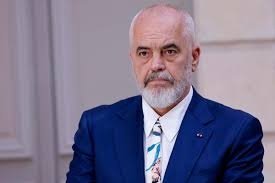 Rama Rebukes Mahmood for Targeting Albanian Families
 Russian Vessel Used Lasers on RAF Pilots, UK Claims
 Scotland Fans Celebrate Historic World Cup Qualification
 Pentagon Officials in Ukraine to Discuss War End
 Vietnam Battles Deadly Floods as Rains Continue
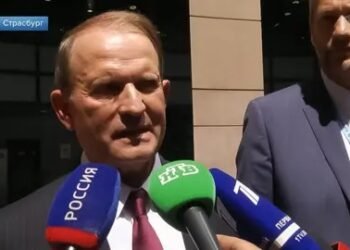 WhatsApp Messages Expose Nathan Gill’s Bribery
 Venezuela Threatens Nobel Winner Machado with Fugitive Status
 At Least Three Dead in Bangladesh Earthquake
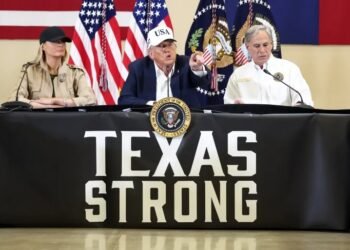 Texas Governor Faces Lawsuit From CAIR
 Israel Confirms Hamas Returned Dror Or’s Body
 Trump Envoy to Discuss Ukraine Peace at Kremlin
 Twenty-Four Nigerian Schoolgirls Freed After Abduction
 Two National Guard Soldiers Critically Injured Near White House
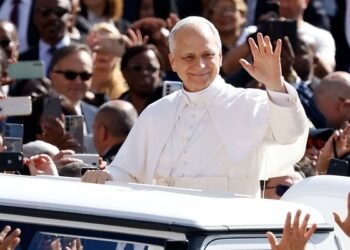 Pope Leo XIV Begins Historic Trip to Turkey and Lebanon
 Mbappe Scores 4 as Real Madrid Edge Olympiakos
 Man City Lose, Champions League Risk
 Sri Lanka Floods Leave 56 Dead, Dozens Missing
 India’s Labour Law Overhaul Sparks Fierce Debate
 Video shows Israeli troops kill Palestinians after surrender
 Trump to Recheck Green Cards from 19 Nations After DC Attack
 Chinese & Japanese Boats Clash Near Disputed Islands
 Putin Meets US Envoy Amid Key Ukraine Peace Talks
 Indonesia to Repatriate Two Dutch Drug Convicts
 Global campaign launched to free Palestinian leader Barghouti