Published: 04 September 2025 | The English Chronicle Desk
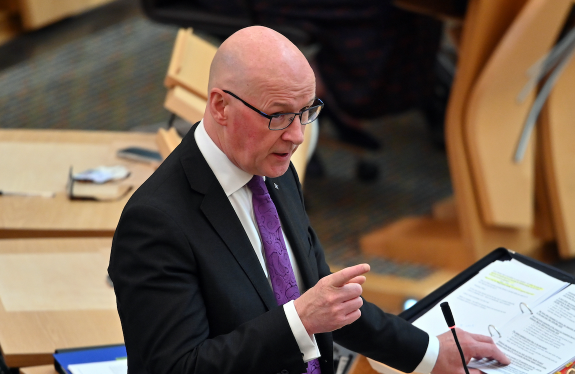
The Scottish government has announced a ban on arms companies that supply the Israel Defense Forces (IDF) from receiving financial aid, marking one of the most significant policy shifts in the devolved administration’s trade and investment strategy. The move comes against the backdrop of mounting international concern over the humanitarian crisis in Gaza, with First Minister John Swinney describing the situation as a “catastrophe” and calling for urgent global action.
Addressing the Scottish parliament, Swinney said that defence contractors seeking grants, loans, or investment from public funds would now be required to prove that their products would not be used by the IDF. “The scale of suffering [in Gaza] is unimaginable,” he said. “Nobody can ignore it. We must confront this crisis with urgency, compassion and an unwavering commitment to accountability.”

The decision also includes a freeze on support for non-military trade with Israel. Swinney confirmed that he had instructed government agencies, including Scottish Enterprise and the Scottish National Investment Bank, to halt any new financial support for companies whose products were linked to the IDF. The policy shift follows his appeal for the UK government to back the genocide case against Israel at the International Court of Justice, a call that has stirred debate across Westminster.
Investigations by the Ferret website revealed that since January 2022, Scottish Enterprise has awarded at least £2.75 million to defence companies such as Raytheon, Thales, and Leonardo—all of which manufacture equipment used by the IDF, including guided missiles, drones, and parts for the F-35 fighter jet. Swinney’s intervention is designed to bring an end to such funding.
Critics of Israel’s military actions welcomed the announcement. Jamie Livingston, head of Oxfam in Scotland, urged Westminster to follow suit, warning that “Gaza is being turned into a graveyard before our eyes. History will ask if leaders did everything they could to stop it. The first minister has committed to act; Westminster must do the same.”
However, the policy has already attracted criticism and accusations of inconsistency. While the ban targets companies supplying Israel, Swinney also announced the lifting of restrictions on financing firms that provide munitions to Ukraine. UK government sources argued that this dual approach risked confusion, given that some companies supply both Ukraine and Israel. A Whitehall official described the policy as “all over the place,” highlighting firms such as BAE Systems, which supplies equipment across multiple defence programmes and employs thousands of workers in Scotland.
The tension is further underscored by Scotland’s economic reliance on defence contracts. Earlier this year, BAE Systems secured a central role in a record £10 billion deal with Norway to build at least five new Type 26 frigates, safeguarding 2,000 jobs at shipyards along the River Clyde. In June, Scottish Enterprise committed £9.22 million to fund a new BAE training academy, which will create hundreds of jobs. Swinney acknowledged the delicate balance, confirming that apprenticeship programmes at defence firms would remain unaffected by the new restrictions.

The UK government, for its part, insisted it had already tightened controls on military exports to Israel. A spokesperson said: “We have suspended licences for exports of military equipment to the IDF that might be used in operations in Gaza, subject to the special measures in place for exports to the global F-35 programme, based on our assessment that these could be used to commit or facilitate serious violations of international humanitarian law. We will work with our allies and those in the region on a meaningful process towards a two-state solution and continue to do what we can to support the foundations of Palestinian statehood.”
Swinney’s announcement signals Scotland’s growing willingness to assert an independent stance on international issues, even as critics question the practical implications for its economy and defence industry. With pressure mounting across Europe and beyond for governments to reassess their role in conflicts abroad, Scotland’s policy shift may become a touchstone in the wider debate over ethics, trade, and the arms industry.
Related News:
 George Osborne Warns UK Is Falling Behind in Global Cryptocurrency Race
 David Lammy Faces Possible Legal Challenge Over Foreign Office Secondment Scheme
 Grant Shapps Cleared to Join Defence Startup Despite Ethical Concerns
 Chancellor Rachel Reeves Pushes for Sweeping Changes to Environmental Protections to Accelerate Development
 Government Launches £338m Scheme to Support Sick and Disabled People Back into Work
 Starmer Urged to Champion Workers’ Rights Amid Low Public Awareness
 Rachel Reeves Hosts Top UK and US Financial Executives as Trump’s State Visit Begins
 Donald Trump’s UK State Visit Kicks Off Amid Major Tech Investments and Business Engagements
 Farage’s Reform UK Receives £100,000 from Design Firm with Past Tax Issues
 Rachel Reeves Faces Criticism Over Appearance at Gambling Industry Event Amid Tax Review
 King Charles Earns Over £1 Million from Duchy Land Linked to Scrapped HS2 Project
 Gatwick Secures Approval for £2.2bn Second Runway Expansion
 Labour to Unveil Ambitious Plan for 12 New Towns to Tackle England’s Housing Crisis
 Senior Tories Condemn Badenoch’s Vow to Repeal Climate Change Act as Catastrophic
 Labour Faces Budget Dilemma as Reeves Urged to Break Manifesto Promises
 Kemi Badenoch Unveils ‘Golden Rule’ to Halve Spending Cuts for Deficit Reduction at Tory Conference
 Richard Tice’s Business Record Contrasts with His ‘Net Stupid Zero’ Criticism
 UK Labour Market Shows Signs of Stabilising After Job Losses
Rachel Reeves urged to consider welfare cuts to boost fiscal credibility
UK Labour Market Shows Signs of Stabilising After Job Losses
Rachel Reeves urged to consider welfare cuts to boost fiscal credibility
 Lucy Powell urged ministers to reconsider costly legal case for Labour donor’s firm
 Miliband Promises New Nuclear Stations if SNP Ousted
 Tories Push to Dilute Labour’s Workers’ Rights Bill
 Rachel Reeves to lead UK trade push in Saudi Arabia amid rights debate
 Trump’s UK Ambassador Urges North Sea Drilling to Strengthen US Ties
 Rachel Reeves Set to Break Labour Pledge and Raise Income Tax
 Thinktanks Urge Rachel Reeves to Reform UK Tax System
 Company linked to Michelle Mone owes £39m in tax
MPs Press Rachel Reeves to Hike Gambling Taxes
Company linked to Michelle Mone owes £39m in tax
MPs Press Rachel Reeves to Hike Gambling Taxes
 Cuts to home insulation funding threaten UK climate goals
 Millionaires group urge Reeves to introduce wealth tax to ‘lift kids out of poverty’
 PM Highlights UK Business at G20 in South Africa
 English Mayors Set to Introduce Tourist Taxes
 Starmer Says Labour’s Economic Plan Needs Years to Deliver
 UK Must Act with Courage and Clarity on Israel-Palestine Conflict, Says Foreign Affairs Committee Report
 Chancellor Faces Mounting Pressure Amid “Impossible Trilemma” Over Tax Rises
 Radioactive Leak at UK’s Nuclear Warhead Base Sparks Outcry Over Safety and Secrecy
 Mutual Inconvenience: Why Alaska Was Chosen for the Trump-Putin Summit on Ukraine
 UK Government Expands ‘Deport Now, Appeal Later’ Policy to 23 Countries
 Larger Families Could Gain Thousands if Labour Ends Two-Child Benefit Cap
 Inflation Latest: Cost of Living Expected to Rise Again in Key Figures Released Today
 Is the UK Ready to Put Boots on the Ground in Ukraine? Assessing Military Capacity and Challenges
 Palestine Action Ban Protesters Plan Tactic to Overwhelm Police at Next London Demonstration
 Police Scotland Spends £500,000 Compensating Officers Over Trump Visit
 Britain’s Migration Challenge: Rising Asylum Numbers and Hotel Pressures
 Elon Musk Sparks New Controversy by Backing Tommy Robinson Amid Farage Feud
 Retail Sales See Uptick Amid Errors and Delays as ONS Faces Scrutiny
 Protests Expected as Israeli Arms Firms Join Global Defence Trade Fair in London
 UK Retail Sales Rise in August, but Tax Concerns Loom Over Festive Period
 UK Rejoining EU ‘Unlikely in My Lifetime,’ Says Starmer’s Europe Reset Negotiator
 ‘Unite the Kingdom’ Rally Sparks Fears of Far-Right Normalisation Among Minority Britons
 UK Labour Market Shows Signs of Cooling as Wage Growth Slows and Redundancies Rise
 Thousands Gather in London to Protest Donald Trump’s Second UK State Visit
 Zarah Sultana Seeks Legal Action After Bitter Clash with Jeremy Corbyn Over Party Membership Funds
 Top Andy Burnham Ally Launches Fierce Critique of Starmer Ahead of Labour Conference
 Mahmood Pledges Reform of Modern Slavery Laws After Court Blocks Deportation Appeal
 UK Government Backs Return of International Rail Travel to Kent Stations
 Ed Miliband Urges Labour to Confront Billionaire-Backed Opposition to Net Zero Goals
 A Third of EU Citizens in UK Report Discrimination by Public Bodies Post-Brexit
 Wetherspoon vows to keep prices low amid soaring energy and tax costs
 Digital ID Plans Ignite Debate Over £600m Treasury Tax Boost and Privacy Concerns
 Public Trust in SNP Hits Historic Low Amid NHS Concerns
 Yvette Cooper Backs Digital ID Plan for UK Teens
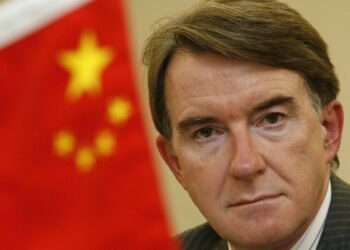 Johnson Suggests Mandelson Linked to China Spy Controversy
 Ministry of Justice fails to file £11bn in spending receipts
Rachel Reeves signals welfare reform ahead of key budget
Ministry of Justice fails to file £11bn in spending receipts
Rachel Reeves signals welfare reform ahead of key budget
 Pizza Hut to shut 68 sites after collapsing into administration
 Reform UK candidate fined £19,000 after using AI-generated cases to challenge election
 William Steps Up Over Prince Andrew Palace Response
 Green Party Surges Past Labour in Latest UK Poll
 Zarah Sultana Launches Party to Change Politics
 Tony Blair think tank warns Rachel Reeves must cut taxes if manifesto broken
 Starmer Faces Growing Dissent as Labour MPs Weigh Leadership Challenge
 Pressure Mounts on Starmer to Sack Chief of Staff Over Briefing Row
 Peers Flood Assisted Dying Bill with 942 Amendments
 Global markets drop amid tech sell-off and China slowdown
 Most Tories Expect to Support a Farage-Led Government
 Labour MP claims devolution bill is ‘blatant discrimination’ against Cornwall
 Millions Face Higher Taxes Under Reeves New Budget
 Virgin Media Fined £23.8m Over Telecare Safety Failures
 Rising Water Bills Lift Troubled Thames Back to Profit