Published: 03 September 2025. The English Chronicle Desk. The English Chronicle Online
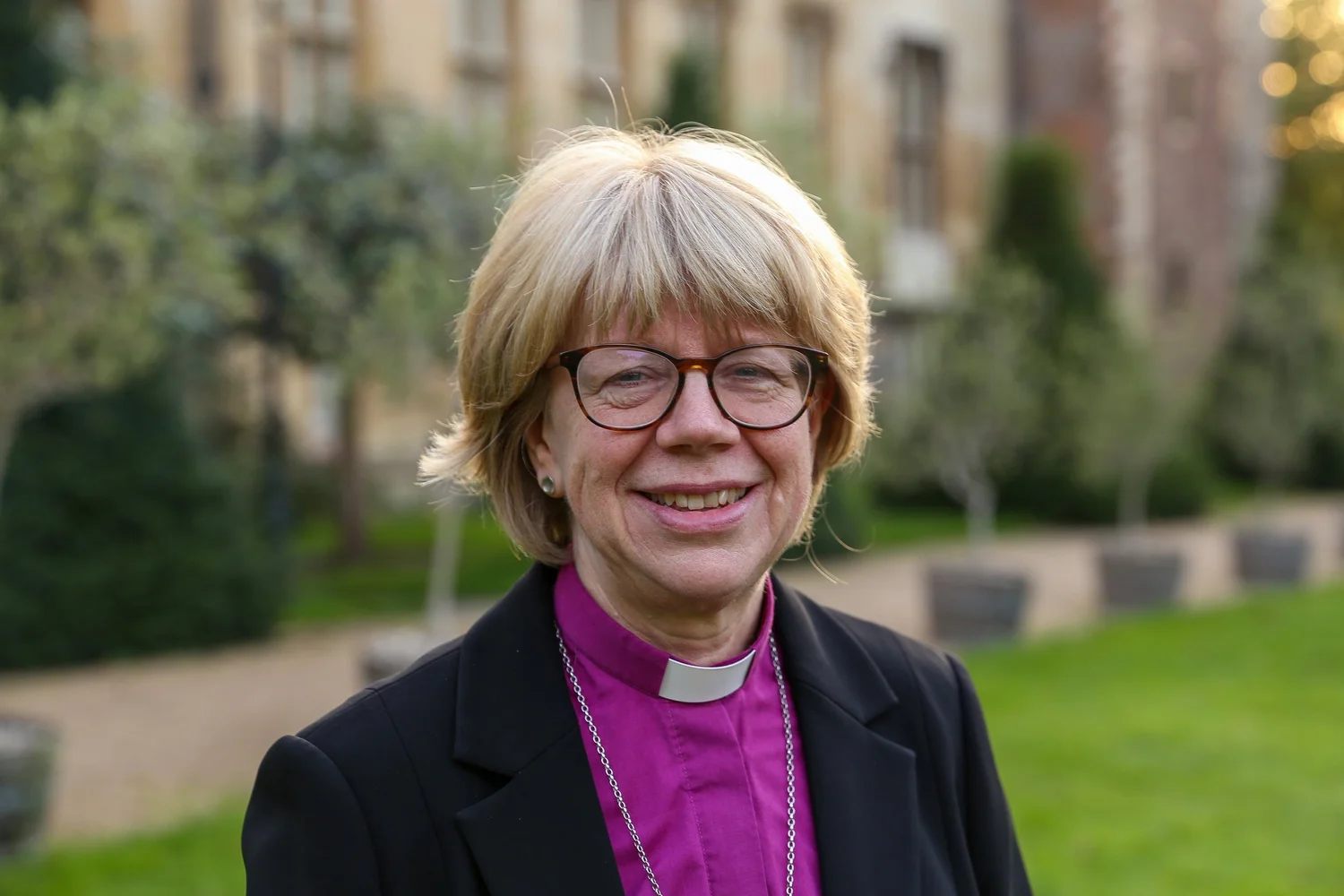
In a historic appointment marking nearly five centuries of ecclesiastical tradition, Dame Sarah Mullally has been named as the new Archbishop of Canterbury, becoming the first woman to hold the prestigious position. At 63, Mullally brings a unique blend of spiritual leadership and public service experience, having previously served as England’s Chief Nursing Officer and as the first female Bishop of London. Her appointment signals a transformative moment for the Church of England, reflecting ongoing efforts to modernize its leadership while responding to contemporary societal challenges.
Dame Sarah’s journey to Canterbury has been characterized by a lifelong commitment to service, both in healthcare and the Church. She began her career in the National Health Service (NHS), eventually becoming the youngest-ever Chief Nursing Officer in 1999. Her extensive experience managing large organizations and navigating complex policy frameworks provided her with unique administrative skills, which later informed her ministry. Ordained as a priest in 2006, she quickly distinguished herself for her practical and compassionate approach, rising to the episcopate with her appointment as Bishop of Crediton in 2015 and later as the Bishop of London in 2018.
Her appointment comes nearly a year after Justin Welby resigned as Archbishop following a damning report into the Church’s handling of a prolific child abuser, John Smyth. The report concluded that Welby “could and should” have reported the abuse to the authorities in 2013. During the interim, Archbishop of York Stephen Cottrell assumed most of Welby’s responsibilities, though he, too, faced scrutiny over the handling of abuse cases. The Church, therefore, enters a new chapter under Mullally’s leadership at a time when public confidence in its safeguarding practices and broader moral authority has been tested.
Dame Sarah has already made her priorities clear. In her first public statement following the announcement, she condemned the horrific attack on a synagogue in Manchester, calling it a manifestation of hatred and racism that threatens community cohesion. She emphasized the Church’s responsibility to stand in solidarity with the Jewish community and to resist all forms of antisemitism. Her remarks underline a broader commitment to social justice, interfaith dialogue, and the moral role of the Church in contemporary society.

Her appointment is a culmination of decades of progressive milestones for women in the Church of England. Women were first ordained as priests in 1994, and the first female bishops were appointed in 2014. Mullally’s elevation to the most senior clerical role in the Church underscores the slow but steady shift towards inclusivity in a religious institution historically dominated by men. Nevertheless, the appointment has drawn criticism from conservative Anglican factions, including the Global Fellowship of Confessing Anglicans, who maintain that biblical principles require male-only episcopacy. Despite dissenting voices, the overwhelming consensus within the Church hierarchy and among progressive members of the Anglican Communion has welcomed this historic step.
Her formal accession will occur after a confirmation of election in January, followed by an enthronement service once she pays homage to King Charles III, the formal head of the Church of England. King Charles and Prime Minister Sir Keir Starmer have both extended their congratulations, emphasizing the significance of her role in the spiritual life of the nation and the global Anglican community. The King described her appointment as “of such importance in the UK and across the global Anglican Communion,” while Starmer highlighted her potential to shape national life positively.
Throughout her career in the Church, Mullally has consistently integrated her NHS experience into her ministry, emphasizing compassion, administrative efficiency, and pastoral care. As Bishop of London, she was instrumental in modernizing diocesan practices, especially in addressing abuse and ensuring that victims received care and recognition. She has also been outspoken on ethical issues, notably opposing assisted dying legislation on grounds of potential risk to vulnerable populations. Moreover, she played a key role in guiding the Church’s decision on blessing same-sex marriages, describing the 2023 decision as “a moment of hope for the Church,” reflecting her measured approach to reconciling tradition with contemporary social concerns.
Dame Sarah’s leadership style has been described as pragmatic, compassionate, and deeply rooted in service. Former Archbishop Rowan Williams noted that her new role requires balancing moral authority with engagement in a fast-moving, media-saturated society, summarizing it as “a newspaper in one hand and a Bible in the other.” Her ability to navigate complex social issues, coupled with a grounding in pastoral care, positions her to address both internal Church challenges and wider societal expectations.
In her statement from Canterbury Cathedral, Mullally emphasized the enduring relevance of Anglicanism in an age marked by uncertainty and tribalism. She spoke of the Church offering “something quieter but stronger,” highlighting its potential to foster moral clarity, community cohesion, and compassionate leadership. Her reference to the Manchester synagogue attack illustrated her commitment to confronting hate and promoting inclusivity, setting the tone for the social and moral priorities she intends to pursue.
Married with two children, Mullally has maintained a lifelong commitment to serving others, whether as a nurse, priest, or bishop. She has frequently reflected on her dual career trajectory as a single vocation: to follow Christ and serve humanity. Her ethos emphasizes that leadership in the Church is not only about theological expertise but also about practical engagement with the world’s social and ethical challenges.
As the Church of England prepares to welcome its first female Archbishop of Canterbury, the expectations are high. Mullally faces the task of leading a global communion of Anglicans through a period of social change, ethical debate, and declining attendance in many regions. At the same time, she will continue the Church’s work on safeguarding, pastoral care, and interfaith engagement, carrying forward the momentum of reform and inclusion.

Dame Sarah Mullally’s appointment marks a watershed moment in the history of the Church of England, symbolizing both progress and continuity. Her extensive experience in healthcare administration, coupled with her pastoral sensitivity and commitment to justice, equips her to navigate the complex demands of spiritual leadership in the 21st century. The global Anglican community will now watch closely as she shapes the Church’s moral and spiritual direction, while guiding it through contemporary challenges with the steady hand of a leader seasoned in both faith and service.
Related News:
 Kinnock’s Rebuke Echoes Loudly as Corbyn Allies Launch Left-Wing Breakaway: “A Gift to Farage”
 Post Office Scandal Compensation Tops £1 Billion as Victims Finally See Justice
 UK and Norway Forge Stronger Ties Through Joint Sanctions and Enhanced Defence Cooperation
 Exclusive: Leaked Documents Reveal Khan’s Controversial Road Policy Overhaul – Drivers Warn of ‘Final Nail in Coffin’
 UK Banks Granted Reprieve as BoE Delays Basel III Capital Rules Until 2028
 Trump Administration Dismisses 17 Immigration Judges, Sparking Debate Over Judicial Independence
 England Grapples with Unprecedented Bluetongue Virus Outbreak: Entire Nation Declared Infected Zone
 Justice Deferred, Not Denied: Government Orders Full Statutory Inquiry into Orgreave Clash Four Decades On
 Northern Ireland Family of Three Shot Dead in Maguiresbridge Home Incident
 West End Exposed as London’s Knife Crime Epicentre Amid Alarming Surge in Violence
 Singapore Corruption Scandal: Details Emerge on Iswaran’s Luxury Flight and Ties to Tycoon Ong Beng Seng
 Mystery Wallaby Spotted on Norfolk-Suffolk Border Sparks Police Appeal
 Manchester Airport Faces Delays After EasyJet Planes’ Wings ‘Clip’ on Runway
 Peter Andre Breaks 16-Year Silence with Scathing Statement Against Katie Price
 UK Weather: Heat Alerts Extended as Temperatures Set to Reach 30°C This Weekend
 Access to Iconic Cornish Beach Cut Off by National Trust Amid Safety Concerns
 Where Is Prince William and Kate Middleton’s New House? Inside the Historic Lodge Set to Become Their ‘Forever Home’
 Costa Blanca Holiday Horror as Food Poisoning Outbreak Hits Four-Star Hotel
 Hundreds of Swimming Pool Closures Leave Children ‘At Risk of Drowning’, Union Warns
 Xi, Putin and Kim Display Unified Front at Massive Beijing Military Parade
 British Holidaymaker’s Tragic Death in Greece Confirmed as Drowning
 India Triumph in Dubai Amid Unexpected Twists
 Public Executions in Gaza City Captured on Video Amid Ongoing Conflict
 Macron Phones Trump Over Traffic Jam in New York
 Comey Indictment Deepens Fears of Political Retribution Under Trump
 Bournemouth Stun Fulham with Dramatic Comeback in Premier League Thriller
 Arsenal Showcase Depth and Flexibility as Arteta Eyes Title Challenge
 UK Affirms No Relaxation of Visa Rules for India Amid Trade Push
 Nobel Peace Prize Officials Probe Suspicious Online Bets
 Women Challenge Meta Over Targeted Ads After Miscarriage
 Vice President Vance Warns of ‘Painful’ Job Cuts as U.S. Government Shutdown Deepens
 Hope Amid Heartbreak: The Stories Behind the Freed Israeli Hostages
 Japanese Court Sentences Man to Death for 2023 Quadruple Murder in Rare Gun and Knife Attack
 Zelensky to Urge Missile Aid as Trump and Putin Plan Summit
 Gibbs-White Inspires Forest to Thrilling Win Over Porto
 Manchester United triumph as Mbeumo brace seals thrilling win
 Fabio Wardley stuns Joseph Parker to earn Usyk title shot
 Hospice Cuts Raise Alarm Across England Amid Funding Crisis
 Tragedy on Lizard Island: Cruise Passenger Dies
 Fed Cuts US Interest Rates Again Amid Labour Market Uncertainty
 Zarah Sultana Launches Party to Change Politics
 Ex-Army Sergeant Jailed for Assault on Soldier Who Later Died
 US Senate Passes Funding Bill to End Historic Shutdown
 Mary Earps’s Manchester United Return Faces Mixed Reception
 Sam Kerr Stars in Chelsea Return with Champions League Double
 Son Reveals UK Couple in Iran Resort to Hunger Strike for Help
 Pressure Mounts on Starmer to Sack Chief of Staff Over Briefing Row
 Hitler’s DNA Confirms He Truly Had Only One Testicle
 US Justice Department Files Lawsuit Against California Over Partisan Voting Maps
 Former Lion Heskey Warns of Shortage of England Strikers
 How Cultures Interpreted the Aurora Through History
 Orban Says Ukraine Has ‘No Chance’ as EU Support Continues
 Mother Watches in Horror as Teen Daughter Dies on Tracks
 Seven Countries, One Winner: Europe’s Best Christmas Market
 Israeli Strike Kills 13 Near Palestinian Camp in Lebanon
 Commuters warned as yellow snow and ice alert hits Northern Ireland
 Haiti Qualifies for World Cup Despite Coach Never Visiting Country
 US Judge Says Meta Did Not Hold Illegal Social Media Monopoly
 Serial Rapist and Former Cop Found Guilty Again
 Pentagon Officials in Ukraine to Discuss War End
 Ex-Harvard President Pauses Teaching Over Epstein Emails
 Vietnam Battles Deadly Floods as Rains Continue
 Scottish Families Take Legal Action Over School CO Leak
 Venezuela Threatens Nobel Winner Machado with Fugitive Status
 At Least Three Dead in Bangladesh Earthquake
 Vicki Fears Losing Motability Car
 Israel Confirms Hamas Returned Dror Or’s Body
 Millions Face Higher Taxes Under Reeves New Budget
 Two National Guard Soldiers Critically Injured Near White House
 Mbappe Scores 4 as Real Madrid Edge Olympiakos
 Sri Lanka Floods Leave 56 Dead, Dozens Missing
 Scotland Gains 33 New Towns – Life in Growing Communities
 Jordan Bardella: France’s Young Presidential Contender
 AI Actress Creator Says Tilly Norwood Won’t Replace Actors
 Search underway for British man overboard off Tenerife
 Pavarotti statue frozen in Italian ice rink sparks backlash
 Barcelona, Atletico set for decisive La Liga showdown
 EU plans $105bn Ukraine aid using frozen Russian assets
 Global campaign launched to free Palestinian leader Barghouti
 Kenya Signs $2.5bn Health Deal with US Amid Data Concerns