Published: 28 October 2025. The English Chronicle Desk. The English Chronicle Online.
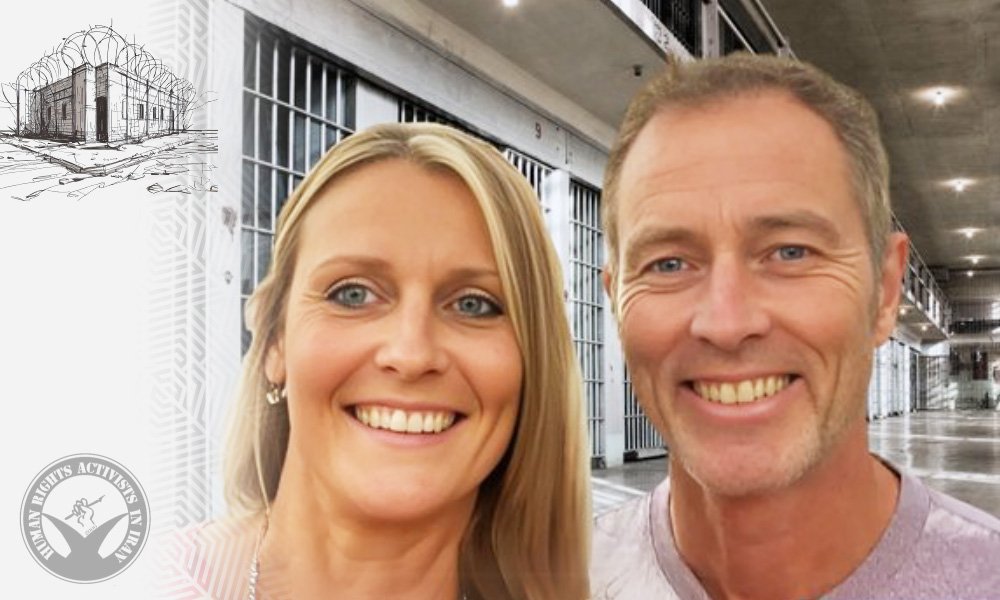
A British woman detained in Iran has told her family she is “losing hope” as her ordeal drags on, following a court appearance that reportedly went badly. Lindsay Foreman, from East Sussex, has been imprisoned in Iran since January alongside her husband, Craig Foreman, both accused of espionage—charges they firmly deny.
Her son, Joe Bennett, said that he spoke to his mother last Thursday during only the second phone call they have been allowed since her arrest. The 20-minute conversation was arranged by the couple’s lawyer, offering a rare chance for contact between the family and Ms Foreman. “There was very little my mother could say,” Bennett told reporters. “Her spirits were low.”
Mr. Bennett said his mother had seemed particularly disheartened after a recent court appearance a week earlier, which, according to him, “had not gone well.” Friends and relatives of the detained couple had initially believed that the court session would deliver a verdict, but were instead informed that the process would drag on further.

The couple were detained in January while on a global motorcycle tour. Iranian authorities alleged that they were involved in espionage activities—a claim the family strongly rejects. “My parents are innocent people caught between two governments,” Bennett said, describing the situation as a “diplomatic stalemate” that has left the couple stranded.
According to family sources, the UK government’s response so far has been minimal. Following a recent meeting with Foreign Secretary Yvette Cooper, the family said they were left frustrated by the lack of progress. “We were told to wait for more information before any next steps are taken,” Bennett said, calling the response “deeply concerning.” He continued, “The British are waiting for a sentence before acting, the Iranians are deciding what sentence to hand down. And in the middle of all this are my parents, trapped and suffering.”
The Foreign, Commonwealth and Development Office (FCDO) has not provided an update on the case but reiterated its advice against all travel to Iran due to “a significant risk of arbitrary arrest and detention.” The FCDO warns that even minimal connections to the UK, such as dual nationality or residency, can be “reason enough” for the Iranian authorities to detain individuals.
Ms. Foreman’s family and supporters have voiced concerns over her worsening conditions. She was recently transferred to a new prison facility—an initial move that was viewed as positive but soon raised fears for her safety and well-being. “She’s now isolated among non-English-speaking inmates,” a supporter said. “We had hoped this meant an improvement, but it’s left her feeling more alone than ever.”
Meanwhile, reports from inside Iran suggest that Mr Foreman’s health is deteriorating. He is said to be suffering from untreated dental problems and other ailments exacerbated by poor prison conditions. Human rights advocates have called on the UK government to intervene more forcefully, warning that delays could have “irreversible humanitarian consequences.”
Joe Bennett, who lives in Folkestone, Kent, has been leading a campaign for his parents’ release, urging British diplomats to take firmer action. “The diplomatic waiting game isn’t working,” he said. “We cannot carry on like this. My parents have already spent nearly a year behind bars for a crime they didn’t commit. The horizon for their freedom feels hard to see, but with public support, I still believe we can get there.”
The case has drawn parallels to previous incidents of British nationals detained in Iran, including Nazanin Zaghari-Ratcliffe and Anoosheh Ashoori, whose imprisonments became symbols of Tehran’s fraught relations with the West. Analysts have noted that dual nationals or those with Western ties are often detained as leverage in diplomatic negotiations or as a show of defiance against Western governments.

Human rights organizations continue to press both governments to find a resolution. Amnesty International and Human Rights Watch have repeatedly called on Iran to release detainees accused under politically motivated charges and have urged the UK to prioritize the safety and welfare of its citizens abroad.
For Bennett and his family, however, every day of waiting brings renewed anguish. “We’re clinging to hope, but it’s fading,” he said. “My mother’s voice on the phone sounded tired and defeated. It’s unbearable to know she’s still there, alone, and we can’t help her. We need action—not just words—from our government.”
As diplomatic talks stall and the Foremans remain behind bars, campaigners are calling for greater public attention to the case. They fear that, without sustained pressure, the couple could languish in detention indefinitely, trapped in a system where political strategy outweighs human compassion.
Related News:
 BBC Journalist Held and Interrogated in Vietnam
 Zohran Mamdani becomes New York City’s first Muslim mayor
Zohran Mamdani names all-female transition team for NYC mayoralty
Zohran Mamdani becomes New York City’s first Muslim mayor
Zohran Mamdani names all-female transition team for NYC mayoralty
 Second world war veterans honoured as King leads Remembrance Sunday
 BBC director-general and news chief resign amid bias row
 Rama Rebukes Mahmood for Targeting Albanian Families
 Russian Vessel Used Lasers on RAF Pilots, UK Claims
 Ireland Boosts Ukraine Aid as Zelensky Visits Dublin
 UK Must Act with Courage and Clarity on Israel-Palestine Conflict, Says Foreign Affairs Committee Report
 MPs Call on UK Government to Delay Biometric Visa Checks for Gaza Students Amid Humanitarian Crisis
 Radioactive Leak at UK’s Nuclear Warhead Base Sparks Outcry Over Safety and Secrecy
 Mutual Inconvenience: Why Alaska Was Chosen for the Trump-Putin Summit on Ukraine
 Is the UK Ready to Put Boots on the Ground in Ukraine? Assessing Military Capacity and Challenges
 Protests Expected as Israeli Arms Firms Join Global Defence Trade Fair in London
 Thousands Gather in London to Protest Donald Trump’s Second UK State Visit
 Trump Urges UK to “Call Out the Military” to Secure Borders Amid State Visit
Trump’s UN Speech Criticises London and UK Policies, Draws Far-Right Attention
Trump Urges UK to “Call Out the Military” to Secure Borders Amid State Visit
Trump’s UN Speech Criticises London and UK Policies, Draws Far-Right Attention
 UK Fighter Jet Purchase Could Breach Nuclear Treaty, Warns CND
 A Third of EU Citizens in UK Report Discrimination by Public Bodies Post-Brexit
 Jailed Georgian Opposition Leaders Warn UK of Iranian Links to Ruling Party
 Russia repeatedly targets UK military satellites, warns Space Command chief
 Public Trust in SNP Hits Historic Low Amid NHS Concerns
 Johnson Suggests Mandelson Linked to China Spy Controversy
 Witness statements reveal the CPS China spy row collapse in the UK
 Rachel Reeves signals welfare reform ahead of key budget
 Kosovo agrees to host Britain’s refused asylum seekers
 Johnson Approved China’s London ‘Super-Embassy’ in 2018
 Green Party Surges Past Labour in Latest UK Poll
 Celebrities and Charities Demand UK Government Act on Child Poverty
 FBI Director Kash Patel Defends Girlfriend Amid Government Jet Claims
 UK University Suspends Human Rights Research Following Pressure from China
 UK University Faces Counter-Terror Probe Over China Pressure
 Rachel Reeves Set to Break Labour Pledge and Raise Income Tax
 Top Christmas Books Reads: Classics to Cozy Romcoms
 UPS Cargo Plane Crash in Kentucky Kills Seven
 Just Stop Oil Protesters Convicted Amid Climate Defence Row
China-critical UK academics face ‘extremely heavy’ pressure from Beijing
Just Stop Oil Protesters Convicted Amid Climate Defence Row
China-critical UK academics face ‘extremely heavy’ pressure from Beijing
 Tension and Turmoil at Aston Villa v Maccabi Match
 MPs Press Rachel Reeves to Hike Gambling Taxes
Boris Johnson accused of undermining BBC leadership
MPs Press Rachel Reeves to Hike Gambling Taxes
Boris Johnson accused of undermining BBC leadership
 Lando Norris Dominates Brazil GP to Strengthen F1 Title Bid
 ‘Reckless’ cuts to victims’ services will cost more than they save
 Starmer Faces Growing Dissent as Labour MPs Weigh Leadership Challenge
 Ronaldo Confirms Final World Cup and Plans Retirement
 Farage appointee to lead Reform youth accused of anti-British views
 Politics latest: Starmer ‘will fight any leadership coup’ as Streeting denies attempt to oust Labour PM
 Ukraine-Russia war latest: Putin’s troops exploit bad weather to force Kyiv withdrawal from multiple towns
 Hamas Fighters in Gaza Tunnels Stall Ceasefire Progress
 New review urges UK to repatriate Shamima Begum, others from Syria
 Peers Flood Assisted Dying Bill with 942 Amendments
 England’s Special Needs Support Faces Breaking Point
 US Justice Department Files Lawsuit Against California Over Partisan Voting Maps
 MoD warned over Excel risks before Afghan data breach
 UK Unveils Fast-Track Deportation and Asylum Overhaul
 Trump Deploys DHS to Charlotte in Major Arrest Operation
 UK Asylum Overhaul Sparks Debate Over Human Rights and Deportations
 UK Asylum Reforms: Temporary Refugee Status and Faster Deportations
 UK Candidate Moved to Safe House After Election Threats
 Mahmood Defends Tough Overhaul of UK Asylum System
 UK Warns China After MI5 Issues Espionage Alert
 Westminster Advances Legacy Bill Amid Criticism
 UK Vulnerable to Attack, Defence Committee Finds
 Labour Faces Historic Decline in Wales
 Pentagon Officials in Ukraine to Discuss War End
 PM Highlights UK Business at G20 in South Africa
 Kate Forbes: Motherhood Harder Than Politics
 Welsh Government Christmas 2020 Lockdown Criticised
 Venezuela Threatens Nobel Winner Machado with Fugitive Status
Reeves to Crack Down on Benefit Fraud While Lifting Two-Child Limit
Venezuela Threatens Nobel Winner Machado with Fugitive Status
Reeves to Crack Down on Benefit Fraud While Lifting Two-Child Limit
 Most Tories Expect to Support a Farage-Led Government
 Labour MP claims devolution bill is ‘blatant discrimination’ against Cornwall
 Trump Envoy to Discuss Ukraine Peace at Kremlin
 Millions Face Higher Taxes Under Reeves New Budget
 Peers Get Extra Time to Debate Assisted Dying Bill
 Planned Palestinian Flag Raising at Belfast City Hall Faces Delay Amid Legal Concerns
 India’s Labour Law Overhaul Sparks Fierce Debate
 Video shows Israeli troops kill Palestinians after surrender
 Government righting decades-old injustice for miners
 Chinese & Japanese Boats Clash Near Disputed Islands
 UK delays ruling on China embassy plan until January