Published: 11 November 2025 । The English Chronicle Desk । The English Chronicle Online ।
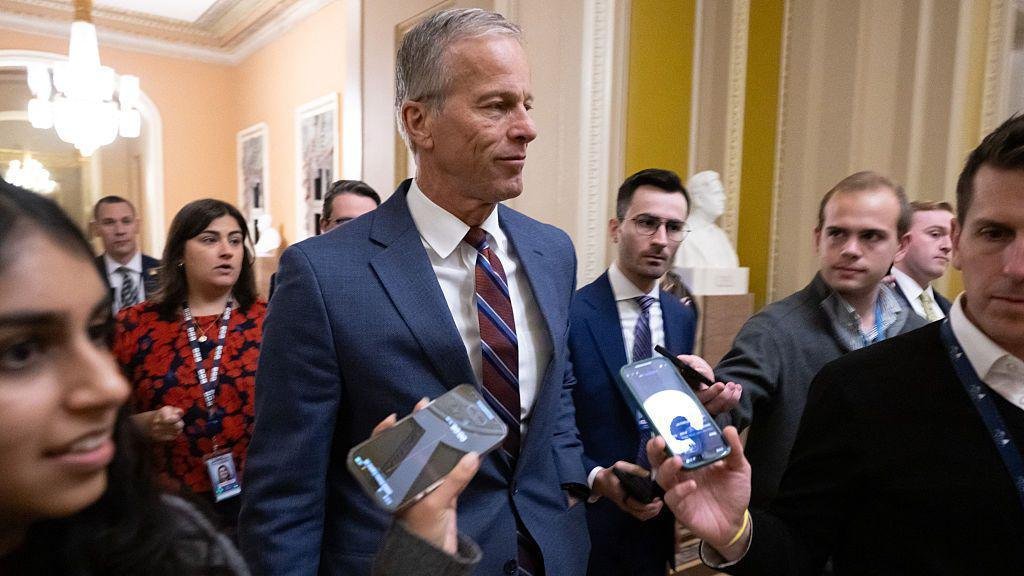
In a significant turn of events that may finally end the longest government shutdown in United States history, the Senate late Monday night approved a crucial funding bill by a 60–40 vote. The measure, which came after weeks of deadlock and political division, has brought cautious optimism to millions of Americans affected by the paralysis of federal operations.
The bill, passed with the support of nearly all Senate Republicans and eight Democrats who broke with their party line, will fund the government until the end of January. It now heads to the House of Representatives for final approval before President Donald Trump can sign it into law. Early indications from the White House suggest the President is prepared to give his assent, signaling a long-awaited end to the standoff that has strained the nation’s political and economic stability.
The breakthrough followed an intense weekend of negotiations between key Republican leaders and a handful of moderate Democrats, who worked tirelessly behind closed doors to craft a deal capable of securing bipartisan support. Senate Majority Leader Mitch McConnell described the agreement as “a responsible and necessary step toward reopening our government and restoring faith in our institutions.”

For the hundreds of thousands of federal workers who have gone weeks without pay, the vote brought a sigh of relief. Government offices across the country have remained shuttered for more than a month, marking the longest shutdown in U.S. history. Essential services, from airport security operations to national park maintenance, have been crippled, while countless contractors and small businesses dependent on federal operations have faced severe financial distress.
Speaking after the vote, Senator Susan Collins of Maine, one of the Republican lawmakers who helped broker the compromise, said the deal represents “a moment of pragmatic cooperation in a deeply divided Washington.” She added, “No one wins in a shutdown. The American people deserve a government that functions, and this agreement is a step in that direction.”
The political impasse that led to the shutdown began over disputes surrounding budget priorities and federal spending levels, with partisan disagreements deepening over issues ranging from infrastructure funding to immigration enforcement. While the final bill reportedly omits several contentious policy riders that had stalled earlier negotiations, it provides short-term funding to all federal agencies, ensuring that government operations can resume while lawmakers continue to debate a longer-term fiscal plan.
President Trump, who has faced mounting pressure from both business leaders and public opinion polls, signaled on Monday afternoon that he would likely approve the Senate-passed bill if it reaches his desk. “I want to get the government back open,” he said during a brief exchange with reporters. “This bill isn’t perfect, but it’s a start.”
Democratic leaders, meanwhile, have expressed cautious acceptance of the compromise. Senate Minority Leader Chuck Schumer acknowledged that while the deal fell short of several Democratic policy goals, “it represents a necessary step to bring relief to millions of Americans affected by this senseless shutdown.” He also emphasized the importance of continuing negotiations in good faith to prevent another crisis when the current funding expires at the end of January.
Political analysts see the Senate’s action as a pivotal moment not only for the immediate crisis but also for the broader question of governance in an increasingly polarized America. “This vote demonstrates that bipartisanship is still possible, even in an era defined by division,” said Dr. Melissa Crane, a political scientist at Georgetown University. “The challenge now is whether Congress can transform this temporary agreement into a sustainable path forward.”
The shutdown, now entering its record-setting length, has had far-reaching consequences. Beyond the hundreds of thousands of furloughed federal employees, the halt in government activity has delayed economic data releases, slowed regulatory approvals, and disrupted social services. Families dependent on federal food assistance programs and housing vouchers have faced growing uncertainty, while key research projects and public health initiatives have been put on hold.
Public frustration has intensified as the shutdown dragged on. Polls in recent weeks have shown a dramatic decline in confidence in Washington’s leadership, with majorities of both Republican and Democratic voters expressing disapproval of how their elected officials have handled the situation. The crisis has also taken a toll on the nation’s economy, with analysts estimating that the shutdown has cost billions in lost productivity and reduced consumer spending.
While Monday’s vote offers a path toward reopening the government, it also underscores the fragility of the current political landscape. The agreement only funds operations for a limited period, effectively setting the stage for another potential showdown early next year unless lawmakers can reach a more comprehensive budget arrangement. Still, for now, the focus remains on relief and recovery.

Federal agencies are expected to begin resuming operations within days of the bill’s enactment, with back pay for furloughed employees likely to be processed shortly thereafter. Many workers have already expressed a mix of relief and frustration, noting that the temporary fix, while welcome, does not erase the financial and emotional hardship caused by weeks of uncertainty.
For the White House, the challenge will be to rebuild public trust and ensure that the temporary reopening of government is seen as the beginning of a more stable governing period rather than a brief pause in political hostilities. A senior administration official told The English Chronicle that the President intends to frame the passage of the bill as “a bipartisan victory for the American people” while emphasizing his commitment to future fiscal negotiations.
As Washington braces for the next phase of political debate, the sense of urgency among lawmakers is unmistakable. “The shutdown has shown us what happens when politics takes precedence over people,” said Senator Lisa Murkowski of Alaska. “It’s time we start governing again.”
For now, Americans can look forward to seeing their government reopen and essential services restored, marking what could be the beginning of an uneasy but necessary return to normalcy. Whether this temporary peace will endure beyond January remains uncertain, but for millions affected by the shutdown’s toll, Monday night’s vote represents a long-awaited glimmer of hope.
Related News:
 US Super-Rich Are Draining Planet’s Safe Climate Space
 UK Charters Emergency Flights to Evacuate Britons from Jamaica
 Mikie Sherrill Elected New Jersey’s Governor in Key Win
 Britain deploys RAF specialists to assist Belgium with drone threats
 BBC’s Tim Davie to Address Staff Amid Trump $1bn Threat
 Thailand Suspends Cambodia Border Peace Deal Amid Tensions
 Six Dead as Super Typhoon Fung-wong Hits the Philippines
 Fog Aids Russian Forces in Deep Push into Pokrovsk
 Hitler’s DNA Confirms He Truly Had Only One Testicle
 Meny Godard Identified as Israeli Hostage Body Returned by Hamas
 US Justice Department Files Lawsuit Against California Over Partisan Voting Maps
 Switzerland Rolls Out Charm Offensive to Cut Trump’s 39% Tariffs
 Bataclan Anniversary: France Remembers but Jihadist Danger Lingers
 Israel Confirms Returned Hostage as Meny Godard
 December Run-Off in Chile as Election Produces No Winner
 Zelenskyy Signs Fighter Jet Deal Amid Russian Drone Attacks
 Orban Says Ukraine Has ‘No Chance’ as EU Support Continues
 UN Security Council Approves Trump’s Gaza Peace Plan
 Cardiff Nights Could Propel Wales to World Cup Glory
 Israeli Strike Kills 13 Near Palestinian Camp in Lebanon
 Zelensky Meets US Envoy in Turkey to Push Ukraine Peace Talks
 Congress Approves Release of Epstein Files, Trump Expected to Sign
 Cristiano Ronaldo Joins Trump, Bin Salman at State Dinner
 Shadow Fleet at Sea: Europe’s Battle Against Illicit Oil Shipping
 Haiti Qualifies for World Cup Despite Coach Never Visiting Country
 Deadly Russian Strikes Hit Western Ukraine, 20 Killed in Ternopil
 Rama Rebukes Mahmood for Targeting Albanian Families
 Russian Vessel Used Lasers on RAF Pilots, UK Claims
 Scotland Fans Celebrate Historic World Cup Qualification
 Pentagon Officials in Ukraine to Discuss War End
 Ukraine Peace Plan: Zelensky Ready for Dialogue
 Vietnam Battles Deadly Floods as Rains Continue
 UPS Plane Engine Detaches Before Deadly Crash
 WhatsApp Messages Expose Nathan Gill’s Bribery
 South African Women Call Purple Protest Over Gender Violence
 Miss Mexico Wins Miss Universe After Walkout Drama
 Venezuela Threatens Nobel Winner Machado with Fugitive Status
 At Least Three Dead in Bangladesh Earthquake
 Texas Governor Faces Lawsuit From CAIR
 Israel Confirms Hamas Returned Dror Or’s Body
 Trump Envoy to Discuss Ukraine Peace at Kremlin
 Twenty-Four Nigerian Schoolgirls Freed After Abduction
 India, Pakistan to Clash in T20 World Cup 2026 Group Match
 US Suspends Afghan Immigration After White House Shooting
 Two National Guard Soldiers Critically Injured Near White House
 Pope Leo XIV Begins Historic Trip to Turkey and Lebanon
 Georgians Defy Government Crackdown After Year of Protests
 Mbappe Scores 4 as Real Madrid Edge Olympiakos
 Man City Lose, Champions League Risk
 Israel Expands Gaza Strikes Beyond Ceasefire Line
 Putin Intensifies Territorial Demands Before US Talks
 Sri Lanka Floods Leave 56 Dead, Dozens Missing
 India’s Labour Law Overhaul Sparks Fierce Debate
 Video shows Israeli troops kill Palestinians after surrender
 Trump to Recheck Green Cards from 19 Nations After DC Attack
 Chinese & Japanese Boats Clash Near Disputed Islands
 Putin Meets US Envoy Amid Key Ukraine Peace Talks
 UK Criticises Gaza Aid Delays as Tents Arrive After Year
 Kremlin Talks With US Yield No Ukraine Peace Breakthrough
 Indonesia to Repatriate Two Dutch Drug Convicts
 Macron Phones Trump Over Traffic Jam in New York
 Comey Indictment Deepens Fears of Political Retribution Under Trump
 “It Was Very Tough, But I Love Life”: Former Israeli Hostage Rebuilds Life After Family Killed by Hamas
 Chaos at Ibrox as Martin’s Rangers Era Comes to an End
 Nobel Prize Honours Pioneers Behind Materials That Could Heal the Planet
 Trump Claims Modi Has Agreed to Halt Russian Oil Imports Amid Heightened US Pressure
 BBC to Apologise Over Edited Trump Speech Amid Backlash
 Palace May Restore Hyphen to Andrew Mountbatten-Windsor’s Name
 Mary Earps’s Manchester United Return Faces Mixed Reception
 Son Reveals UK Couple in Iran Resort to Hunger Strike for Help
 Former Lion Heskey Warns of Shortage of England Strikers
 Trump Deploys DHS to Charlotte in Major Arrest Operation
 Mother Watches in Horror as Teen Daughter Dies on Tracks
 Seven Countries, One Winner: Europe’s Best Christmas Market
 Serial Rapist and Former Cop Found Guilty Again
 Scottish Families Take Legal Action Over School CO Leak
 Vicki Fears Losing Motability Car
 Southern Lebanon reels as Israeli strikes shatter communities
 Jordan Bardella: France’s Young Presidential Contender
 Pavarotti statue frozen in Italian ice rink sparks backlash