Published: 11 November 2025. The English Chronicle Desk. The English Chronicle Online.
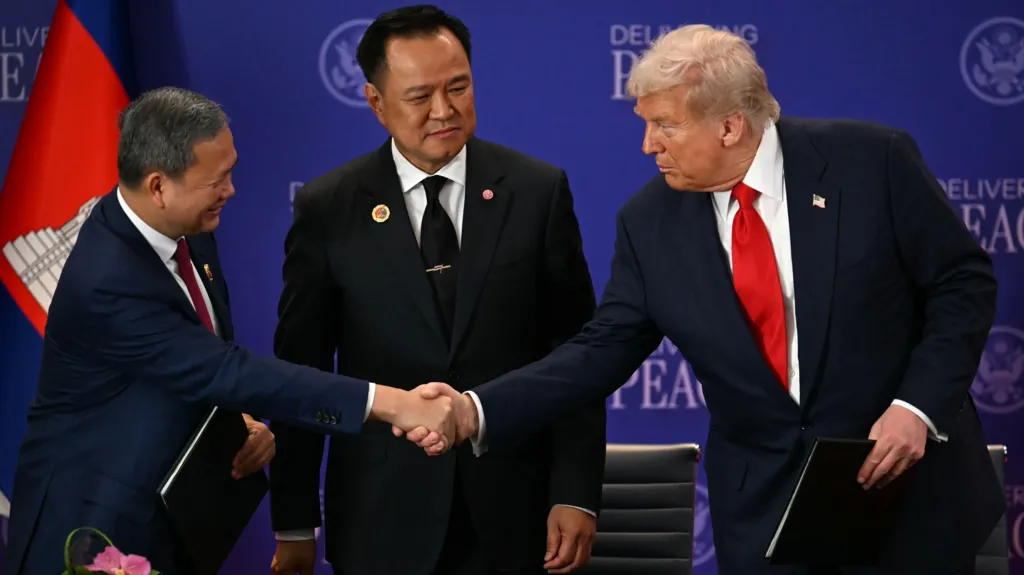
Thailand has announced the suspension of its implementation of the “peace deal” with neighbouring Cambodia, just two weeks after the agreement was signed under the supervision of former U.S. President Donald Trump in Malaysia. The decision comes amid renewed security concerns following a landmine explosion near the disputed border in Sisaket province, which left several Thai soldiers injured, including one who reportedly lost a foot.
The announcement, made on Monday by Thai Prime Minister Anutin Charnvirakul, underscores the fragility of the recent diplomatic efforts intended to bring stability to a historically volatile border region. The prime minister stated at a news conference that he concurred with the decision taken by Thailand’s defence chiefs, noting that “the security threat along the border has not actually decreased.” He also confirmed his intention to visit the injured soldiers on Tuesday to assess their condition and express support for the armed forces.
The border between Thailand and Cambodia has been a flashpoint for decades, with territorial disputes flaring into violent clashes periodically. In July, fighting in the region resulted in more than 40 deaths, highlighting the enduring risks for both military personnel and local civilians. The recent agreement, often referred to as a “peace deal,” was seen as a crucial step toward ending hostilities and establishing protocols for preventing further conflict. However, the deal has always been contentious, with Thailand refusing to officially label it as a formal peace treaty, reflecting lingering suspicions and strategic caution.

Cambodia has reiterated its commitment to the agreement, emphasizing the importance of maintaining peace and stability along the border. Cambodian officials have urged Thailand to continue implementing the protocols outlined in the deal, while expressing regret over the recent suspension. Observers note that while both sides publicly advocate for calm and dialogue, the border region remains highly sensitive, with sporadic incidents capable of undermining months of diplomatic effort.
The landmine incident that precipitated Thailand’s decision occurred while soldiers were on routine patrol in Sisaket province, a district bordering Cambodia. According to reports, the explosion injured multiple personnel, with at least one soldier sustaining life-altering injuries. The incident has heightened concerns within the Thai military about the effectiveness of current security measures and the challenges of enforcing peace in areas with a history of armed confrontations.
Analysts suggest that the suspension of the agreement reflects both immediate security concerns and broader political considerations. While the deal’s signing was a symbolic milestone attended by an international figure such as Donald Trump, the realities on the ground have underscored the difficulty of translating diplomatic gestures into sustained peace. The Thai government, facing pressure to safeguard its troops and maintain domestic credibility, has opted to prioritize security measures over the strict enforcement of the deal in the short term.
Prime Minister Anutin’s statement emphasized that the decision was not taken lightly. He stressed the government’s responsibility to protect Thai soldiers and civilians in the border region and acknowledged the challenges posed by ongoing security threats. “We will continue to monitor the situation closely,” Anutin said, “and we remain committed to dialogue with Cambodia to ensure that peace and stability can ultimately be achieved.”
The recent suspension has prompted concern from the international community, which had welcomed the October agreement as a positive step toward reducing regional tensions. Observers note that the fragile nature of border agreements often requires sustained monitoring, cooperation, and confidence-building measures to be effective. Without these safeguards, even symbolic accords risk being undermined by localised incidents or miscommunications between military units on both sides.
The human cost of border tensions remains a central concern. The soldiers injured in Sisaket are representative of the risks faced by personnel tasked with patrolling disputed areas, while civilians living in nearby villages often experience disruptions to their daily lives and livelihoods. Landmines, unexploded ordnance, and sporadic clashes have long posed serious threats to local communities, making the need for sustainable peace measures urgent.
Thailand’s decision to suspend the agreement has also sparked discussions about regional security dynamics and the role of international actors in mediating disputes. The involvement of Donald Trump at the signing ceremony in Malaysia was intended to provide international legitimacy and support for the agreement, highlighting the strategic importance of the border region to global observers. Yet, the rapid suspension demonstrates the limitations of high-profile diplomatic interventions when underlying security issues remain unresolved.
Experts argue that for peace initiatives to succeed, both sides must not only commit to formal agreements but also establish practical mechanisms for enforcement, communication, and conflict resolution. This includes regular patrol coordination, joint investigations of incidents, and transparent reporting to prevent misunderstandings that could escalate into violence. The recent landmine explosion illustrates the immediate need for such mechanisms, as well as the challenges in implementing them in a contested border area.

Prime Minister Anutin’s planned visit to the injured soldiers in Sisaket is expected to underscore the government’s commitment to the welfare of its armed forces while reaffirming that Thailand remains engaged in dialogue with Cambodia. The visit is likely to serve both as a morale booster for troops stationed in the border region and as a signal to the Cambodian government of Thailand’s ongoing willingness to pursue a negotiated solution despite temporary setbacks.
Observers note that the long-term resolution of the Thailand-Cambodia border dispute will require sustained effort, trust-building measures, and regional cooperation. While the October agreement represented a symbolic step forward, incidents such as the recent landmine explosion demonstrate that the road to lasting peace is complex and fraught with challenges. Both governments face the dual task of addressing immediate security concerns while maintaining a commitment to dialogue and reconciliation.
As tensions simmer, local populations, military personnel, and international stakeholders alike will be closely monitoring developments along the Thailand-Cambodia border. The suspension of the agreement underscores the delicate balance between diplomacy and security, highlighting the ongoing struggle to ensure peace in regions historically prone to conflict.
For now, Thailand’s announcement serves as a reminder that while symbolic agreements are important, the realities on the ground — from landmine hazards to patrol safety — remain critical factors in shaping policy decisions. Both Bangkok and Phnom Penh must navigate these challenges carefully to prevent further casualties and to sustain momentum toward a more enduring and stable peace.
Related News:
 US Super-Rich Are Draining Planet’s Safe Climate Space
 UK Charters Emergency Flights to Evacuate Britons from Jamaica
 Mikie Sherrill Elected New Jersey’s Governor in Key Win
 Britain deploys RAF specialists to assist Belgium with drone threats
 US Senate Passes Funding Bill to End Historic Shutdown
 BBC’s Tim Davie to Address Staff Amid Trump $1bn Threat
 Six Dead as Super Typhoon Fung-wong Hits the Philippines
 Fog Aids Russian Forces in Deep Push into Pokrovsk
 Hitler’s DNA Confirms He Truly Had Only One Testicle
 Meny Godard Identified as Israeli Hostage Body Returned by Hamas
 US Justice Department Files Lawsuit Against California Over Partisan Voting Maps
 Switzerland Rolls Out Charm Offensive to Cut Trump’s 39% Tariffs
 Bataclan Anniversary: France Remembers but Jihadist Danger Lingers
 Israel Confirms Returned Hostage as Meny Godard
 December Run-Off in Chile as Election Produces No Winner
 Zelenskyy Signs Fighter Jet Deal Amid Russian Drone Attacks
 Orban Says Ukraine Has ‘No Chance’ as EU Support Continues
 UN Security Council Approves Trump’s Gaza Peace Plan
 Cardiff Nights Could Propel Wales to World Cup Glory
 Israeli Strike Kills 13 Near Palestinian Camp in Lebanon
 Zelensky Meets US Envoy in Turkey to Push Ukraine Peace Talks
 Congress Approves Release of Epstein Files, Trump Expected to Sign
 Cristiano Ronaldo Joins Trump, Bin Salman at State Dinner
 Shadow Fleet at Sea: Europe’s Battle Against Illicit Oil Shipping
 Haiti Qualifies for World Cup Despite Coach Never Visiting Country
 Deadly Russian Strikes Hit Western Ukraine, 20 Killed in Ternopil
 Rama Rebukes Mahmood for Targeting Albanian Families
 Russian Vessel Used Lasers on RAF Pilots, UK Claims
 Scotland Fans Celebrate Historic World Cup Qualification
 Pentagon Officials in Ukraine to Discuss War End
 Ukraine Peace Plan: Zelensky Ready for Dialogue
 Vietnam Battles Deadly Floods as Rains Continue
 UPS Plane Engine Detaches Before Deadly Crash
 WhatsApp Messages Expose Nathan Gill’s Bribery
 South African Women Call Purple Protest Over Gender Violence
 Miss Mexico Wins Miss Universe After Walkout Drama
 Venezuela Threatens Nobel Winner Machado with Fugitive Status
 At Least Three Dead in Bangladesh Earthquake
 Texas Governor Faces Lawsuit From CAIR
 Israel Confirms Hamas Returned Dror Or’s Body
 Trump Envoy to Discuss Ukraine Peace at Kremlin
 Twenty-Four Nigerian Schoolgirls Freed After Abduction
 India, Pakistan to Clash in T20 World Cup 2026 Group Match
 US Suspends Afghan Immigration After White House Shooting
 Two National Guard Soldiers Critically Injured Near White House
 Pope Leo XIV Begins Historic Trip to Turkey and Lebanon
 Georgians Defy Government Crackdown After Year of Protests
 Mbappe Scores 4 as Real Madrid Edge Olympiakos
 Man City Lose, Champions League Risk
 Israel Expands Gaza Strikes Beyond Ceasefire Line
 Putin Intensifies Territorial Demands Before US Talks
 Sri Lanka Floods Leave 56 Dead, Dozens Missing
 India’s Labour Law Overhaul Sparks Fierce Debate
 Video shows Israeli troops kill Palestinians after surrender
 Trump to Recheck Green Cards from 19 Nations After DC Attack
 Chinese & Japanese Boats Clash Near Disputed Islands
 Putin Meets US Envoy Amid Key Ukraine Peace Talks
 UK Criticises Gaza Aid Delays as Tents Arrive After Year
 Kremlin Talks With US Yield No Ukraine Peace Breakthrough
 Indonesia to Repatriate Two Dutch Drug Convicts
 Public Executions in Gaza City Captured on Video Amid Ongoing Conflict
 Macron Phones Trump Over Traffic Jam in New York
 Comey Indictment Deepens Fears of Political Retribution Under Trump
 “It Was Very Tough, But I Love Life”: Former Israeli Hostage Rebuilds Life After Family Killed by Hamas
 Chaos at Ibrox as Martin’s Rangers Era Comes to an End
 Nobel Prize Honours Pioneers Behind Materials That Could Heal the Planet
 Trump Claims Modi Has Agreed to Halt Russian Oil Imports Amid Heightened US Pressure
 BBC to Apologise Over Edited Trump Speech Amid Backlash
 Palace May Restore Hyphen to Andrew Mountbatten-Windsor’s Name
 Son Reveals UK Couple in Iran Resort to Hunger Strike for Help
 Former Lion Heskey Warns of Shortage of England Strikers
 Trump Deploys DHS to Charlotte in Major Arrest Operation
 Mother Watches in Horror as Teen Daughter Dies on Tracks
 Seven Countries, One Winner: Europe’s Best Christmas Market
 Serial Rapist and Former Cop Found Guilty Again
 Scottish Families Take Legal Action Over School CO Leak
 Vicki Fears Losing Motability Car
 Southern Lebanon reels as Israeli strikes shatter communities
 Jordan Bardella: France’s Young Presidential Contender
 Pavarotti statue frozen in Italian ice rink sparks backlash