Published: 19 November 2025 Wednesday . The English Chronicle Desk. The English Chronicle Online
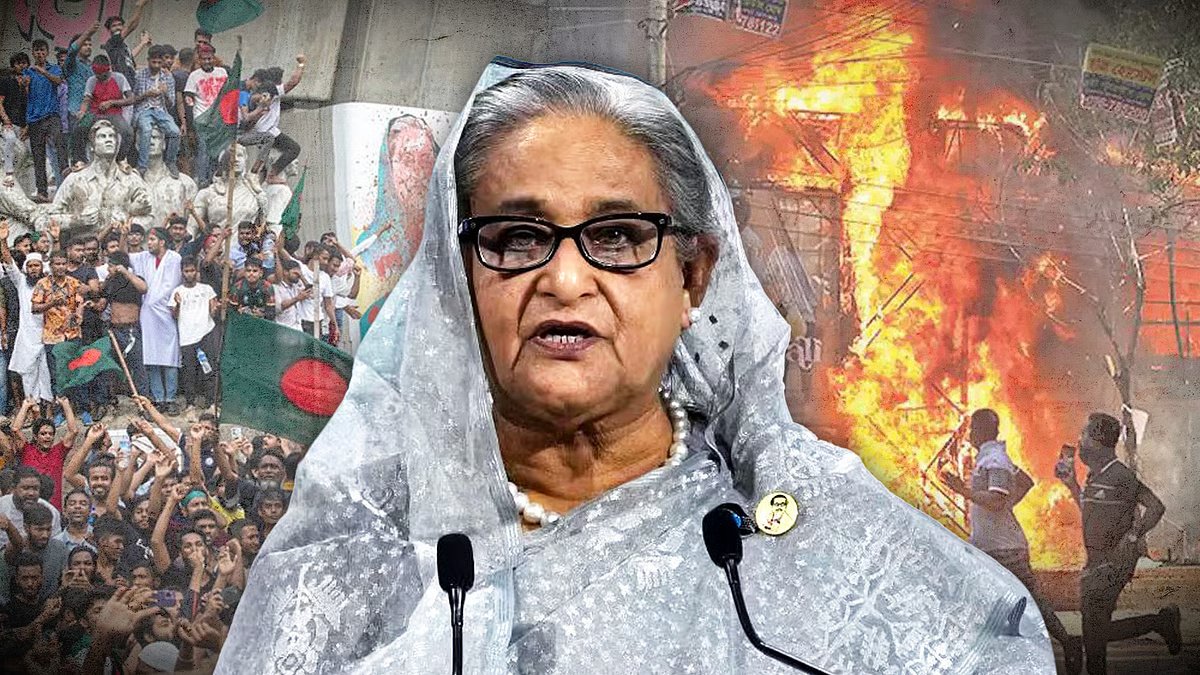
Bangladesh is at a political crossroads following the unprecedented conviction of Sheikh Hasina, the country’s longest-serving prime minister, who has been sentenced to death in absentia for her role in the brutal crackdown on last year’s student-led protests. At 78, Hasina, once the most powerful leader in Bangladesh’s history, fled to neighbouring India after being ousted, leaving a legacy marked by both rapid development and ruthless suppression of dissent.
The International Crimes Tribunal (ICT) handed down the verdict on Monday, holding Hasina accountable for a crackdown that left more than 1,400 people dead, many of them in execution-style killings. The ruling marks the first time a former head of government has faced such a severe sentence from Bangladesh’s judicial system, signaling a dramatic shift in the country’s political landscape.
Hasina’s response to the verdict was combative yet deflective. In a statement issued from India, she acknowledged the deaths but refused to accept personal responsibility. “I mourn all of the deaths that occurred in July and August of last year, on both sides of the political divide,” she said. “But neither I nor other political leaders ordered the killing of protesters.” She also called the tribunal’s ruling “biased and politically motivated.”
For many Bangladeshis, the conviction represents a long-delayed measure of justice, particularly for families who lost loved ones during the violent suppression of dissent. However, with India unlikely to extradite Hasina, the ruling may provide symbolic justice more than immediate legal closure for victims’ families.

Beyond individual accountability, the Hasina verdict raises critical questions about Bangladesh’s institutions and governance. The country now faces a chance to confront a deeper truth: the systematic abuse of state mechanisms, including security forces, courts, and government institutions, to silence political opponents. These practices, which became hallmarks of Hasina’s administration over 15 years, have left a lasting imprint on the nation’s democratic fabric.
The ICT itself was originally established by Hasina in 2010 to prosecute Bangladeshis accused of collaborating with Pakistan during the 1971 liberation war. The irony of the tribunal convicting its own founder underscores the political and institutional transformations taking place in Bangladesh. Critics have long accused Hasina of weaponizing the ICT and other state institutions to neutralize opposition figures.
Her main rival, Khaleda Zia, Bangladesh’s first female prime minister, was jailed on corruption charges during Hasina’s rule, while the country’s largest Islamist party, Jamaat-e-Islami, was barred from elections and later banned under an “anti-terror” law. Zia was only released after the interim government led by Nobel laureate Muhammad Yunus took office following Hasina’s ouster.
Yunus himself faced politically motivated legal challenges during Hasina’s tenure. In January 2024, he was convicted on charges related to labour law violations and sentenced to six years in prison, although he secured bail. The founder of Grameen Bank, Yunus had become a target after exploring the possibility of entering politics. His pioneering work in microloans had empowered millions of rural women, highlighting a stark contrast between Hasina’s political priorities and initiatives that fostered grassroots empowerment.

Hasina and her Awami League party have historically positioned themselves as champions of secularism. However, between 2009 and 2024, the party was accused of instrumentalizing secularism as a tool for political control. Opposition parties and dissenting voices were targeted under the guise of maintaining secular principles. Entire generations of Jamaat leaders were executed under the ICT, and opposition activity was systematically curtailed.
Writing in The Daily Star, analyst Arman Ahmed described this era as one in which “the Awami League transformed secularism from an ideal of freedom into a rhetoric of control.” Ahmed argued that “it came to be associated with censorship, patronage, and the systematic weakening of any political opposition. When power became synonymous with a single party, the moral authority of its secular project collapsed.”
The consequences of these policies extend beyond political rivalry. By centralizing power and undermining institutional independence, Hasina’s administration created structural vulnerabilities that persist today. These include weakened checks and balances, a politicized judiciary, and a security apparatus accustomed to using force against citizens rather than protecting them. The country now faces the challenge of reforming these institutions while navigating a politically charged environment.
The death sentence, even if unlikely to be executed, symbolizes the potential for accountability in Bangladesh’s political system. It serves as a warning to current and future leaders that abuse of power carries consequences, and it provides an opportunity for the country to learn from past mistakes. Analysts suggest that the government and civil society must work together to ensure that the rule of law is upheld and that political space is protected for dissenting voices.
As Bangladesh reflects on Hasina’s legacy, the nation faces broader questions about governance, democracy, and the role of political leadership. Will the country repeat the mistakes of the past by allowing a single party or individual to dominate political life? Or will it seize this moment to reinforce institutional independence, uphold human rights, and foster genuine political pluralism?

For ordinary Bangladeshis, the stakes are deeply personal. Families affected by the crackdown on student protests continue to seek justice and closure, while the wider population watches closely to see whether accountability will extend beyond symbolic verdicts. The international community, too, is paying attention, assessing Bangladesh’s commitment to democratic principles and human rights as it navigates this unprecedented political moment.
Ultimately, the conviction of Sheikh Hasina is not just about one individual; it is about Bangladesh confronting a history of concentrated power, institutional abuse, and political suppression. How the country responds now will shape its democratic trajectory for years to come. The lessons learned—or ignored—will determine whether Bangladesh can build a political culture that respects accountability, protects dissent, and strengthens the rule of law.
In the months ahead, observers will be watching how the interim government and political actors navigate this delicate period. Reforms to security forces, courts, and administrative institutions will be critical to preventing a recurrence of past abuses. Similarly, the protection of opposition parties, journalists, and civil society groups will be a key indicator of whether Bangladesh has truly absorbed the lessons of Hasina’s rule or risks repeating them.
As the nation stands at this crossroads, the Hasina verdict represents both a reckoning and an opportunity. The challenge for Bangladesh is clear: to confront its history, strengthen democratic institutions, and ensure that the excesses of the past never return. The eyes of its citizens—and the world—are watching closely.
Related News:
 It’s time to come clean on the China spy case
 Reform Councillor Defects to Tories Over ‘Uncomfortable’ Policies
 FBI Director Kash Patel Defends Girlfriend Amid Government Jet Claims
 French Taxi Driver Cleared in David Lammy Theft Case After Fare Dispute
 UK University Faces Counter-Terror Probe Over China Pressure
 Company linked to Michelle Mone owes £39m in tax
 Met Police Culture Makes Racial Harm ‘Inevitable’
 Eleven Arrested After Pro-Palestine Protest at Villa Match
 Boris Johnson accused of undermining BBC leadership
 Remaining rebel Labour MPs have whip restored
 Second world war veterans honoured as King leads Remembrance Sunday
 ‘Reckless’ cuts to victims’ services will cost more than they save
 BBC Faces Backlash as Reform UK Withdraws from Film
 Wes Streeting Denies Leadership Plot Against Starmer
 British state supplied victims to ‘worst sex offender in history’
 Ukraine-Russia war latest: Putin’s troops exploit bad weather to force Kyiv withdrawal from multiple towns
 New Epstein Files Spark Political Clash in Washington
 Ukraine Energy Corruption Scandal Hits Zelensky’s Inner Circle
 Greene Pushes Epstein Files Amid Trump Fallout
 UK Candidate Moved to Safe House After Election Threats
 Ex-PM Hasina Gets Death Penalty for Crimes Against Humanity
 UN Security Council Approves Trump’s Gaza Peace Plan
 South African Detained After Neo-Nazi Rally in Australia
 Sheikh Hasina Sentenced to Death Over Protest Crackdown
 Trump Signs Bill Releasing Justice Department Files on Epstein
 Trump Slams Democrats With ‘Seditious’ Death Claim
 WhatsApp Messages Expose Nathan Gill’s Bribery
 Venezuela Threatens Nobel Winner Machado with Fugitive Status
 Most Tories Expect to Support a Farage-Led Government
 BBC Chairman Faces Scrutiny Over Bias Claims
 Ex-Classmate Accuses Farage of Dishonesty on Racism Claims
 Trump Envoy to Discuss Ukraine Peace at Kremlin
 Video shows Israeli troops kill Palestinians after surrender
 Ex-Brexit MEP Rejects Claim of Pro-Russia Payments
 Guinea-Bissau President Flees After Military Coup
 Ukraine Anti-Corruption Agents Search Zelensky Adviser
 Jordan Bardella: France’s Young Presidential Contender
 Kent Reform Councillors Criticised Over Political Staff Spending
 Mass Arrests in London as Protest Defies Ban on Palestine Action
 Urgent Action Needed on Windrush Compensation as Survivors Speak of “Waiting to Die”
 Zarah Sultana Seeks Legal Action After Bitter Clash with Jeremy Corbyn Over Party Membership Funds
 Channel Crossings Surge: Over 1,000 People Arrive in the UK in Small Boats in a Single Day
 Peterborough Mosques Tighten Security After Attack
 Green Party Surges Past Labour in Latest UK Poll
 Army Officers Orders to Cut Ties with Men-Only Clubs
 Trump’s UK Ambassador Urges North Sea Drilling to Strengthen US Ties
 UK Bans Fake Numbers: Scammers Lose Their Trick
 Just Stop Oil Protesters Convicted Amid Climate Defence Row
 Labour immigration crackdown could cost UK £4.4bn
BBC to Apologise Over Edited Trump Speech Amid Backlash
Labour immigration crackdown could cost UK £4.4bn
BBC to Apologise Over Edited Trump Speech Amid Backlash
 Britain deploys RAF specialists to assist Belgium with drone threats
 How to get help when a child goes missing – call 999 urgently
 Millionaires group urge Reeves to introduce wealth tax to ‘lift kids out of poverty’
 Starmer Faces Growing Dissent as Labour MPs Weigh Leadership Challenge
 Reeves rejects £1bn plea for NHS redundancy payouts
 PM Condemns Leaks, Vows Loyalty to Ministers and Stability
 Major Rent Reform Ends No-Fault Evictions in England
 Peers Flood Assisted Dying Bill with 942 Amendments
 Senator John Fetterman Hospitalized After Fall from Heart Flare-Up, Keeps Sense of Humor
 Indian authorities demolish Kashmir home linked to Red Fort blast
 Trump Deploys DHS to Charlotte in Major Arrest Operation
 December Run-Off in Chile as Election Produces No Winner
 New Evidence Emerges in Haditha Family Killings
 Criminal Gangs Pose as Truckers to Hijack UK Supply Chains
 Mother Watches in Horror as Teen Daughter Dies on Tracks
 Canada Passes Carney’s First Budget in Tight Parliamentary Vote
 Shadow Fleet at Sea: Europe’s Battle Against Illicit Oil Shipping
 Serial Rapist and Former Cop Found Guilty Again
 Man Charged Over Attempted Murder of Senior Officer
 Pentagon Officials in Ukraine to Discuss War End
 Ex-Harvard President Pauses Teaching Over Epstein Emails
 Labour MP claims devolution bill is ‘blatant discrimination’ against Cornwall
 Millions Face Higher Taxes Under Reeves New Budget
 Two National Guard Soldiers Critically Injured Near White House
 Southern Lebanon reels as Israeli strikes shatter communities
 EU plans $105bn Ukraine aid using frozen Russian assets
 Global campaign launched to free Palestinian leader Barghouti
 Culture secretary to review Telegraph takeover by Daily Mail owner
 Russia losses Ukraine war peace talks intensify amid rising deaths
 Zelenskyy Accuses Russia of Sabotaging Peace Talks