Published: 28 November 2025 Friday. The English Chronicle Desk. The English Chronicle Online
India is facing one of its most intense national debates in years after the government moved to implement what many are calling the country’s biggest labour reform since independence. By consolidating 29 federal labour laws into four simplified codes, the government has dramatically reshaped the rules that govern the country’s vast workforce. Supporters say the reforms modernise outdated regulations and make India more globally competitive, while critics insist they strip away vital worker protections and pave the way for large-scale exploitation.
The reforms slash the number of labour-related rules from around 1,400 to approximately 350 and reduce the number of required forms from 180 to 73. Business groups, who have long argued that India’s restrictive labour system held back manufacturing growth, have praised the move as a long-overdue step toward economic transformation. Analysts say the reform aligns with the government’s broader push to accelerate economic changes, especially after the shock of the new US tariff regime introduced under President Trump.
“This is part of a broader trend by the government to hasten reforms and signal its commitment to easing business, attracting FDI, and integrating into global value chains,” brokerage firm Nomura said.

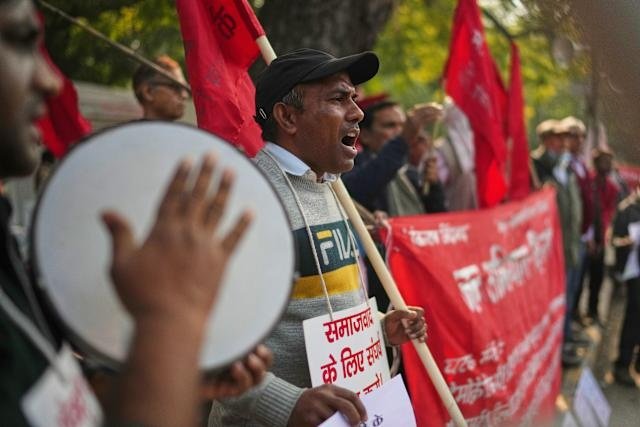
But the reaction from India’s major trade unions has been swift and fierce. They have labelled the overhaul the most sweeping rollback of worker rights since independence. Demonstrations have erupted across the country, including organised protests in Delhi, where hundreds gathered to voice their opposition. Left-leaning unions, many not aligned with the ruling Bharatiya Janata Party, led the demonstrations.
For workers like 33-year-old Akashdeep Singh, employed at an international beverage company on Delhi’s outskirts, the reforms offer no comfort. “These laws will help employers, not workers like us,” he said at the protest site, echoing the fears of many others.
The government, however, insists that the reforms are designed to modernise an outdated system, create a more uniform regulatory structure, and extend protections to India’s growing gig economy. For the first time, gig and platform workers will be recognised as part of the labour force, granting them access to certain social security benefits. Other new provisions include mandatory appointment letters, uniform minimum wages, annual health check-ups for workers over 40, and gender-neutral pay.
Economists argue that many of these steps could help formalise India’s largely informal labour market, where the majority of workers lack contracts, security, or benefits. The reforms also eliminate conflicting definitions and overlapping rules that experts say made compliance almost impossible. As economist Arvind Panagariya notes, “You could not implement 100% of India’s labour laws without violating 20% of them.”
But two provisions have proven especially controversial: rules that make it easier for companies to fire workers and stricter rules governing strikes. Previously, firms with 100 or more employees needed government approval to lay off workers; the new threshold has been raised to 300. Workers will also now be required to give a 14-day notice before striking—a rule that previously applied only to public-sector workers.
“Why is the government trying to exclude a massive section of the workforce?” asked Sudeep Dutta of the CITU, arguing that the new codes reduce access to legal recourse even as millions of grievances remain unresolved. He says the notice period for strikes further weakens workers’ already fragile bargaining power.
Supporters of the reform, including Prof Panagariya, argue that earlier restrictions severely undermined India’s competitiveness. They point out that other manufacturing-heavy economies such as Bangladesh, Vietnam, and China have far more flexible labour markets. Nomura analysts say the higher threshold for layoffs could encourage companies to build larger factories, ultimately boosting employment and manufacturing output.

But not all economists are convinced. Professor Arun Kumar argues that India’s core economic challenge is not rigid labour laws but weak domestic demand. Low wages, he says, have kept mass consumption suppressed, undermining incentives for private investment. “The new labour code will not address these issues,” he cautioned, warning that further weakening workers’ rights at a time of technological disruption could prove harmful in the long run.
Despite ideological differences, most experts agree that the previous system of overlapping and contradictory rules was failing. With more than half of India’s working-age population outside the labour force and nearly 60% self-employed, the older laws neither protected workers nor encouraged large-scale manufacturing.
The transition to the new codes, however, will not be smooth. Staffing agency BDO India warns that companies will need to overhaul wage structures, HR systems, social-security planning, and compliance frameworks. And because labour is regulated jointly by state and central governments, firms may temporarily face dual compliance requirements as states update their systems.
As unions continue to resist and businesses race to adapt, India stands at a crossroads. Supporters see the reforms as a necessary step toward economic modernisation, while critics fear they mark the beginning of a deeper erosion of worker rights. The true impact of the overhaul—on investment, employment, and social protections—may take years to fully unfold.
Related News:
 Video shows Israeli troops kill Palestinians after surrender
 Carney’s Alberta Pipeline Deal Sparks Immediate Pushback
 Chinese & Japanese Boats Clash Near Disputed Islands
 Putin Meets US Envoy Amid Key Ukraine Peace Talks
 Modi’s London Visit Seals Historic UK-India Trade Pact Amid Global Tensions
 Rachel Reeves to lead UK trade push in Saudi Arabia amid rights debate
 US Super-Rich Are Draining Planet’s Safe Climate Space
 Wales May Introduce Four-Day Work Week After Elections
 Trump’s UK Ambassador Urges North Sea Drilling to Strengthen US Ties
 Rachel Reeves Set to Break Labour Pledge and Raise Income Tax
 Mikie Sherrill Elected New Jersey’s Governor in Key Win
 Thinktanks Urge Rachel Reeves to Reform UK Tax System
MPs Press Rachel Reeves to Hike Gambling Taxes
Thinktanks Urge Rachel Reeves to Reform UK Tax System
MPs Press Rachel Reeves to Hike Gambling Taxes
 Cuts to home insulation funding threaten UK climate goals
 Britain deploys RAF specialists to assist Belgium with drone threats
 China’s Youth Save, Not Spend, Amid Job and Housing Worries
 Early Trends Suggest Modi’s Alliance Leading in Key Bihar Election
 US Justice Department Files Lawsuit Against California Over Partisan Voting Maps
 Switzerland Rolls Out Charm Offensive to Cut Trump’s 39% Tariffs
 China Gained Military-Tech Access Through UK Investments
 December Run-Off in Chile as Election Produces No Winner
 UN Security Council Approves Trump’s Gaza Peace Plan
 Canada Passes Carney’s First Budget in Tight Parliamentary Vote
 Israeli Strike Kills 13 Near Palestinian Camp in Lebanon
 Congress Approves Release of Epstein Files, Trump Expected to Sign
 Trump Says Crown Prince Knew Nothing About Khashoggi Death
 Shadow Fleet at Sea: Europe’s Battle Against Illicit Oil Shipping
 Rama Rebukes Mahmood for Targeting Albanian Families
 Russian Vessel Used Lasers on RAF Pilots, UK Claims
 Pentagon Officials in Ukraine to Discuss War End
 PM Highlights UK Business at G20 in South Africa
 WhatsApp Messages Expose Nathan Gill’s Bribery
 UK Government Borrowing Higher Than Expected
 India’s COP30 Delay Raises Global Climate Concerns
 Venezuela Threatens Nobel Winner Machado with Fugitive Status
 Texas Governor Faces Lawsuit From CAIR
 English Mayors Set to Introduce Tourist Taxes
 Trump Envoy to Discuss Ukraine Peace at Kremlin
 Pope Leo XIV Begins Historic Trip to Turkey and Lebanon
 Georgians Defy Government Crackdown After Year of Protests
 Putin Intensifies Territorial Demands Before US Talks
 Sri Lanka Floods Leave 56 Dead, Dozens Missing
 Trump to Recheck Green Cards from 19 Nations After DC Attack
 ICC to Rule on Duterte’s Provisional Release
 Huawei, ZTE secure 5G deals in Vietnam amid US tensions
 Starmer Says Labour’s Economic Plan Needs Years to Deliver
 Kremlin Talks With US Yield No Ukraine Peace Breakthrough
 Indonesia to Repatriate Two Dutch Drug Convicts
 Kinnock’s Rebuke Echoes Loudly as Corbyn Allies Launch Left-Wing Breakaway: “A Gift to Farage”
 UK and Norway Forge Stronger Ties Through Joint Sanctions and Enhanced Defence Cooperation
 Trump Administration Dismisses 17 Immigration Judges, Sparking Debate Over Judicial Independence
 China’s crackdown on civil servant perks sparks economic concerns
 Shein UK Faces Allegations of Shifting Majority of Profits to Singapore to Reduce UK Tax
 Denmark Investigates Professional Drone Incursions Across Multiple Airports, No Evidence of Russian Involvement
 Kemi Badenoch Unveils ‘Golden Rule’ to Halve Spending Cuts for Deficit Reduction at Tory Conference
 Virgin Trains Moves Closer to Challenging Eurostar Monopoly
 Green Party Surges Past Labour in Latest UK Poll
 Ryanair Chief UK Economy ‘Doomed’ Under Labour
 Tony Blair think tank warns Rachel Reeves must cut taxes if manifesto broken
BBC to Apologise Over Edited Trump Speech Amid Backlash
Tony Blair think tank warns Rachel Reeves must cut taxes if manifesto broken
BBC to Apologise Over Edited Trump Speech Amid Backlash
 US Senate Passes Funding Bill to End Historic Shutdown
 Millionaires group urge Reeves to introduce wealth tax to ‘lift kids out of poverty’
 From Lego to Pokémon: How Adults Are Driving UK Toy Market Growth
 Skims Eyes Global Expansion After Reaching $5 Billion Value
 PM Condemns Leaks, Vows Loyalty to Ministers and Stability
 Global markets drop amid tech sell-off and China slowdown
 Greene Pushes Epstein Files Amid Trump Fallout
 Trump Deploys DHS to Charlotte in Major Arrest Operation
 Zelenskyy Signs Fighter Jet Deal Amid Russian Drone Attacks
 Orban Says Ukraine Has ‘No Chance’ as EU Support Continues
 Haiti Qualifies for World Cup Despite Coach Never Visiting Country
 Deadly Russian Strikes Hit Western Ukraine, 20 Killed in Ternopil
 Ukraine Peace Plan: Zelensky Ready for Dialogue
 Vietnam Battles Deadly Floods as Rains Continue
 US Suspends Afghan Immigration After White House Shooting
 Two National Guard Soldiers Critically Injured Near White House
 Southern Lebanon reels as Israeli strikes shatter communities
 US National Guard Member Killed in DC Shooting
 Jordan Bardella: France’s Young Presidential Contender
 Rising Water Bills Lift Troubled Thames Back to Profit