Published: 24 December 2025. The English Chronicle Desk. The English Chronicle Online.
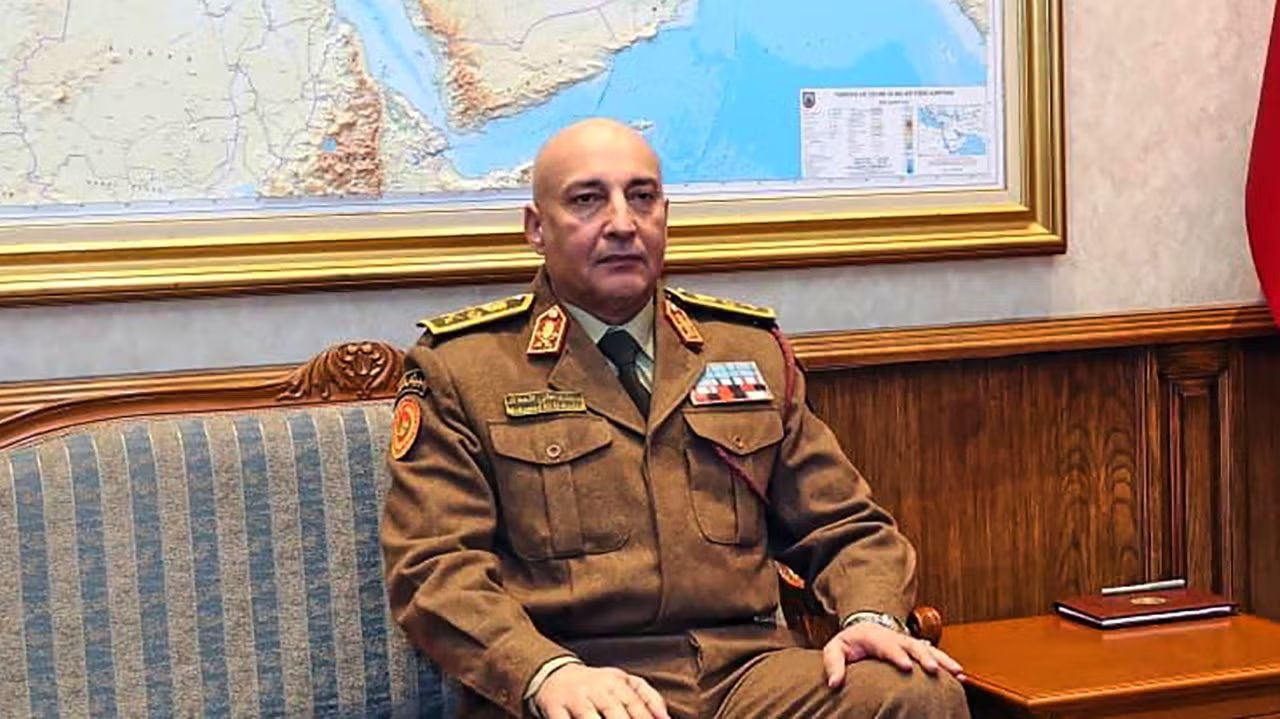
The Libyan army has suffered a severe blow following the sudden death of its chief of staff, Mohammed Ali Ahmed al-Haddad, in a plane crash shortly after departing from Turkey’s capital, Ankara. Prime Minister Abdul Hamid Dbeibah confirmed on Tuesday evening that al-Haddad had perished in the accident, which also claimed the lives of four other individuals who were aboard the aircraft.
“This followed a tragic and painful incident while they were returning from an official trip from the Turkish city of Ankara. This grave loss is a great loss for the nation, for the military institution, and for all the people,” Prime Minister Dbeibah stated, emphasising the profound impact of the tragedy on the Libyan nation. Among those killed were the commander of Libya’s ground forces, the director of its military manufacturing authority, a senior adviser to the chief of staff, and a photographer attached to the chief’s office.
According to Turkish authorities, the jet, identified as a Dassault Falcon 50, took off from Ankara’s Esenboğa Airport at 17:10 GMT, bound for Tripoli. The Turkish interior minister, Ali Yerlikaya, reported on X that radio contact was lost at 17:52 GMT, prompting search and rescue operations. Authorities later located the wreckage of the aircraft near Kesikkavak village in Ankara’s Haymana district.

Yerlikaya noted that the jet had made a request for an emergency landing over Haymana, though no further communication could be established. Burhanettin Duran, head of Turkey’s presidency communications directorate, later explained that the emergency landing request had been triggered by “an electrical failure,” adding that the private jet carried three crew members alongside the Libyan delegation.
The visit had been officially announced by Turkey’s defence ministry, highlighting meetings between al-Haddad and senior Turkish military officials, including Defence Minister Yaşar Güler and Chief of General Staff Selçuk Bayraktaroğlu. The crash, occurring a day after the Turkish parliament extended its soldiers’ deployment mandate in Libya by two years, underscores the strategic military ties between Ankara and Libya’s Tripoli-based internationally recognised government.
Turkey, a NATO member, has long been a key supporter of Tripoli’s government, providing military training, personnel, and assistance since 2020. Ankara’s involvement also included a maritime demarcation accord with Libya, which has faced opposition from Egypt and Greece. Additionally, in 2022, the two nations signed a preliminary energy exploration agreement that similarly drew objections from regional powers.
Despite Turkey’s long-standing alignment with Libya’s western faction, recent developments suggest a policy shift under Ankara’s “One Libya” initiative, aimed at strengthening ties with Libya’s eastern faction. Analysts indicate that this strategy seeks to balance Ankara’s influence across the divided nation, particularly amid ongoing disputes over territorial waters and energy rights.
The untimely death of al-Haddad is expected to have far-reaching consequences for Libya’s military and political landscape, raising questions over the future leadership of the army and the stability of military operations. Observers note that his loss comes at a critical moment as Libya continues to navigate fragile governance structures, persistent internal conflicts, and external pressures from regional powers seeking influence.
The Libyan chief of staff’s death has triggered expressions of grief from both domestic and international quarters. Officials emphasised that al-Haddad played a crucial role in maintaining the operational capacity and organisational cohesion of Libya’s armed forces. Analysts suggest that replacing a figure of his stature will present a significant challenge for Tripoli’s government, particularly as tensions persist with rival factions and ongoing negotiations for national reconciliation continue.
The crash also prompts scrutiny of aviation safety for high-ranking officials travelling internationally. Aviation experts note that electrical failures, while rare, are among the most critical emergencies that can arise mid-flight, requiring immediate responses to prevent catastrophe. In this case, the jet’s emergency landing request illustrates an urgent attempt to avert disaster, tragically unsuccessful.
Beyond Libya’s immediate military context, the incident carries potential diplomatic ramifications. Turkey’s involvement in Libya has always been a sensitive subject regionally, especially concerning Egypt and Greece, who have previously objected to Turkish maritime agreements. Analysts anticipate that discussions over military support, air travel protocols, and bilateral engagements may intensify following this accident.
International news agencies have highlighted the symbolic significance of al-Haddad’s death, noting that military leadership in Libya remains intertwined with broader political developments. His passing underscores the fragility of governance and security arrangements in a nation still emerging from years of conflict. It also reflects the inherent risks faced by officials travelling in complex regional environments, where both political and technical factors can converge with devastating consequences.

The tragic loss of Libya’s army chief has catalysed calls for unity and resilience among Libyan officials and the public. Leaders are expected to work swiftly to appoint a successor while continuing efforts to stabilise the military institution. For a country grappling with decades of conflict and division, the plane crash serves as a stark reminder of the fragility of both leadership and national security structures.
As Libya mourns al-Haddad and his colleagues, the broader international community remains attentive to how Tripoli navigates its next steps. Strategic partnerships, ongoing military collaborations, and regional diplomacy are all likely to influence the trajectory of Libya’s future, particularly in the context of Turkey’s evolving role under the “One Libya” policy.
While investigations into the crash continue, authorities and analysts alike stress the importance of transparent reporting and adherence to international aviation safety standards. The incident has also reignited discussions on the protection of high-ranking officials during international travel, highlighting that even modern aircraft are vulnerable to sudden technical failures.
Ultimately, the death of Mohammed Ali Ahmed al-Haddad marks a pivotal moment for Libya, combining elements of national grief, strategic uncertainty, and urgent calls for cohesive leadership. As Tripoli prepares for the next phase of military and political planning, the memory of the fallen chief of staff is likely to influence decisions and priorities in both the short and long term.
Related News:
 Kinnock’s Rebuke Echoes Loudly as Corbyn Allies Launch Left-Wing Breakaway: “A Gift to Farage”
 UK and Norway Forge Stronger Ties Through Joint Sanctions and Enhanced Defence Cooperation
 Trump Administration Dismisses 17 Immigration Judges, Sparking Debate Over Judicial Independence
 Lammy Condemns Israel’s Targeting of Starving Palestinians: Sanctions Threatened Amid Global Outrage
 Tony Blair Pressured to Repay Thousands for Designer Clothing Discounts, Reveals Newly Declassified Records
 Modi’s London Visit Seals Historic UK-India Trade Pact Amid Global Tensions
 UK Must Act with Courage and Clarity on Israel-Palestine Conflict, Says Foreign Affairs Committee Report
 Philippine Supreme Court Halts Impeachment of Sara Duterte, Fuelling 2028 Election Speculation
 New Missile, New Balance: US Precision Strike Weapons Redefine Taiwan’s Defence Horizon
 Trump Threatens 100% Tariff on Nations Importing Russian Oil Amid India Standoff Over Ukraine War
 MPs Call on UK Government to Delay Biometric Visa Checks for Gaza Students Amid Humanitarian Crisis
 Netanyahu Announces Plan to Take Over Gaza City, Escalating Conflict Further
 Radioactive Leak at UK’s Nuclear Warhead Base Sparks Outcry Over Safety and Secrecy
 Lammy and Vance Meet in Britain to Advance US-Brokered Ukraine Peace Talks
 Mutual Inconvenience: Why Alaska Was Chosen for the Trump-Putin Summit on Ukraine
 Prominent Al Jazeera Journalist Anas al-Sharif Among Five Reporters Killed in Israeli Airstrike on Gaza
 Hong Kong Summons UK and Australian Envoys Following Asylum Grants to Democracy Activists
 Is the UK Ready to Put Boots on the Ground in Ukraine? Assessing Military Capacity and Challenges
 Ukraine-Russia War Latest: Trump Suggests Putin Avoiding Zelensky Summit Due to ‘Personal Dislike’
 Protests Expected as Israeli Arms Firms Join Global Defence Trade Fair in London
 Trump Appears Sidelined as Israel’s Unprecedented Strikes Hit Qatar
 Meeting Between Keir Starmer and Israeli President Marked by Tense Exchanges Over Gaza Aid
 Conservative Influencer Charlie Kirk Fatally Shot During University Debate
 UK Imposes 100 New Sanctions Targeting Russia’s Revenues and Military Supplies
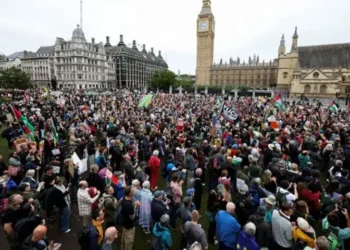 Thousands Gather in London to Protest Donald Trump’s Second UK State Visit
Trump Urges UK to “Call Out the Military” to Secure Borders Amid State Visit
Thousands Gather in London to Protest Donald Trump’s Second UK State Visit
Trump Urges UK to “Call Out the Military” to Secure Borders Amid State Visit
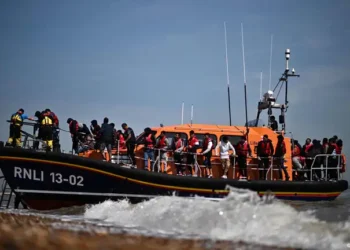 Channel Crossings Surge: Over 1,000 People Arrive in the UK in Small Boats in a Single Day
 Widow of Charlie Kirk Forgives Killer at Emotional Memorial Service
Trump’s UN Speech Criticises London and UK Policies, Draws Far-Right Attention
Widow of Charlie Kirk Forgives Killer at Emotional Memorial Service
Trump’s UN Speech Criticises London and UK Policies, Draws Far-Right Attention
 Denmark Investigates Professional Drone Incursions Across Multiple Airports, No Evidence of Russian Involvement
 Sir Sadiq Khan Accuses Trump of Racism and Islamophobia Following UN Remarks
 UK Fighter Jet Purchase Could Breach Nuclear Treaty, Warns CND
 Yvette Cooper Signals Global Momentum Towards Gaza Peace Deal Amid Humanitarian Crisis
 A Third of EU Citizens in UK Report Discrimination by Public Bodies Post-Brexit
 Jailed Georgian Opposition Leaders Warn UK of Iranian Links to Ruling Party
 Russia repeatedly targets UK military satellites, warns Space Command chief
 Pro-Palestine March to Proceed in London Despite Calls to Cancel After Manchester Attack
 Misinformation and Political Pressure Force Weston-super-Mare to Abandon Refugee Sanctuary Plan
 UK Universities Warn Students Ahead of 7 October Pro-Palestine Protests
 Public Trust in SNP Hits Historic Low Amid NHS Concerns
 Johnson Suggests Mandelson Linked to China Spy Controversy
 Witness statements reveal the CPS China spy row collapse in the UK
 Nigel Farage Calls Vladimir Putin ‘A Very Bad Dude’
 Rachel Reeves signals welfare reform ahead of key budget
 Kosovo agrees to host Britain’s refused asylum seekers
 Ireland Votes as Two Women Compete for Presidency
 Russia’s Latest Push to Win US Favors Shows Deep Desperation
 Experts Warn Russia’s Burevestnik Missile Could Destabilise Arms Control
 British Woman in Iran ‘Losing Hope’ Amid Ongoing Detention
 Johnson Approved China’s London ‘Super-Embassy’ in 2018
 BBC Journalist Held and Interrogated in Vietnam
 UK University Suspends Human Rights Research Following Pressure from China
 UK University Faces Counter-Terror Probe Over China Pressure
China-critical UK academics face ‘extremely heavy’ pressure from Beijing
UK University Faces Counter-Terror Probe Over China Pressure
China-critical UK academics face ‘extremely heavy’ pressure from Beijing
 BBC to Apologise Over Edited Trump Speech Amid Backlash
 Britain deploys RAF specialists to assist Belgium with drone threats
 Ukraine-Russia war latest: Putin’s troops exploit bad weather to force Kyiv withdrawal from multiple towns
 Hamas Fighters in Gaza Tunnels Stall Ceasefire Progress
 Trump Urges Herzog to Grant Netanyahu Full Pardon
 New review urges UK to repatriate Shamima Begum, others from Syria
 US Justice Department Files Lawsuit Against California Over Partisan Voting Maps
 Indian authorities demolish Kashmir home linked to Red Fort blast
 Greene Pushes Epstein Files Amid Trump Fallout
 Trump Deploys DHS to Charlotte in Major Arrest Operation
 December Run-Off in Chile as Election Produces No Winner
 Canada Passes Carney’s First Budget in Tight Parliamentary Vote
 Why Russian Liberals Push Strongly Pro-Israel Narratives
 Shadow Fleet at Sea: Europe’s Battle Against Illicit Oil Shipping
 Rama Rebukes Mahmood for Targeting Albanian Families
 Russian Vessel Used Lasers on RAF Pilots, UK Claims
 Pentagon Officials in Ukraine to Discuss War End
 India’s COP30 Delay Raises Global Climate Concerns
 Venezuela Threatens Nobel Winner Machado with Fugitive Status
 Trump Envoy to Discuss Ukraine Peace at Kremlin
 Georgians Defy Government Crackdown After Year of Protests
 India’s Labour Law Overhaul Sparks Fierce Debate
 Video shows Israeli troops kill Palestinians after surrender
 Chinese & Japanese Boats Clash Near Disputed Islands
 EU plans $105bn Ukraine aid using frozen Russian assets
 Global campaign launched to free Palestinian leader Barghouti