Published: 29 December 2025. The English Chronicle Desk. The English Chronicle Online.
Air passengers across the United Kingdom are being cautioned to expect higher ticket prices as regional airports confront sharply rising tax pressures. A major overhaul of commercial property valuations has placed airports among the hardest-hit sectors, creating financial strain that industry leaders warn will ripple directly through airline costs and consumer fares. While aviation has faced repeated challenges since the pandemic, the scale of this tax increase is being described as unprecedented for many regional hubs.
New analysis based on Valuation Office Agency data indicates that several regional airports will see their rateable values multiply dramatically. In some cases, assessed values have increased more than sixfold, leading to steep rises in business rates liabilities. Even with transitional relief mechanisms limiting immediate annual increases, airports remain exposed to sustained cost escalation over coming years. For facilities operating on tight margins, these changes arrive at a particularly sensitive moment.

Large London airports are not exempt from the revaluation process, and Heathrow and Gatwick also face significant increases. However, the most severe proportional impacts are concentrated outside the capital. Regional airports, which play a critical role in connecting communities, supporting local employment, and enabling trade, are now grappling with tax bills that many argue bear little relation to current financial realities.
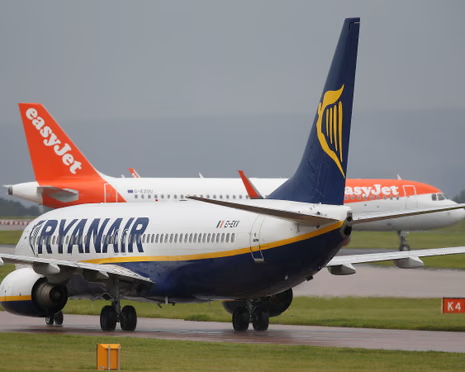
Manchester Airport illustrates the scale of the issue facing major regional hubs. According to industry calculations, its business rates bill is expected to rise by more than four million pounds next year, taking total liabilities above eighteen million pounds. Bristol Airport is forecast to see its annual bill climb to over five million pounds, while Birmingham International Airport faces a substantial rise to more than seven million pounds. Smaller regional airports, including Newcastle, Liverpool, East Midlands, and Bournemouth, are also experiencing notable increases that threaten operational stability.
Tax specialists have warned that the sector lacks the capacity to absorb such dramatic cost shocks. With an estimated sector-wide uplift approaching three hundred percent, the financial burden is considered unsustainable without consequences for passengers. Industry analysts explain that airports will be forced to adjust landing fees and service charges, which airlines will ultimately pass on through higher ticket prices.
This process, while gradual, is viewed as inevitable. Airlines already face elevated fuel costs, staffing pressures, and environmental compliance expenses. Adding higher airport charges risks compounding these pressures, particularly on domestic and short-haul routes that rely heavily on regional infrastructure. For passengers, this could translate into reduced affordability and fewer route options over time.
Airport operators have also raised concerns about the impact on long-term investment plans. Many regional airports had committed to significant capital programmes aimed at improving terminals, enhancing security systems, and reducing carbon emissions. With business rates absorbing a larger share of revenue, executives warn that some of these projects may be delayed or scaled back.
A spokesperson for Manchester Airports Group has stated that while higher contributions were anticipated, the scale of the increases has forced a reassessment of planned investments. The group had outlined intentions to invest more than two billion pounds across its UK airports over the next five years. Executives now acknowledge that such commitments must be reconsidered in light of sharply rising fixed costs.
The implications extend beyond airport balance sheets. Regional airports are often anchor institutions within their local economies, supporting thousands of jobs directly and indirectly. They enable tourism, facilitate exports, and provide essential connectivity for businesses outside London. Industry representatives argue that higher operating costs risk undermining these benefits, particularly in areas seeking to attract investment and boost regional growth.
AirportsUK, the trade body representing the sector, has described the proposed business rates framework as short-sighted. The organisation is preparing a formal response to the Treasury consultation, emphasising the wider economic consequences of the policy. According to the group, increased airport charges could discourage airlines from maintaining regional routes, weakening connectivity and limiting economic opportunities.
The government has acknowledged concerns by announcing a longer-term review of how airport business rates are calculated. This review is intended to assess whether current valuation methods accurately reflect the unique operational characteristics of airports. Industry leaders have welcomed the review but stress that immediate pressures remain unresolved.
Economists note that business rates are based on estimated rental values, which may not fully capture the volatility of aviation revenues. Passenger numbers fluctuate with economic conditions, geopolitical events, and public health developments. Fixed tax obligations, when disconnected from these realities, can create disproportionate strain during periods of uncertainty.
Passenger groups have also expressed concern about the potential impact on affordability. Domestic air travel, often used for business and family connections, may become less accessible if fares continue rising. While some travellers may shift to rail alternatives, this is not always feasible for remote regions or time-sensitive journeys.
Environmental considerations add another layer of complexity. Airports and airlines are under pressure to invest in greener technologies and sustainable fuels. Higher tax burdens may divert resources away from these initiatives, slowing progress toward climate targets. Industry figures argue that a balanced approach is needed to support both fiscal objectives and environmental commitments.

Supporters of the revaluation process argue that business rates must reflect property values accurately and contribute fairly to public finances. They contend that relief schemes and phased increases provide adequate protection. However, critics counter that the pace and scale of change risk unintended consequences for regional development.
As the consultation process continues, airports, airlines, and local authorities are urging policymakers to consider adjustments that recognise the sector’s strategic importance. Proposals include sector-specific relief, revised valuation methodologies, or enhanced transitional support to smooth the impact over a longer period.
For now, passengers are being advised to prepare for gradual fare increases as the new tax regime takes effect. While changes may not be immediate, the direction of travel appears clear. Regional airports, already navigating a complex post-pandemic landscape, face a future shaped by higher costs and difficult choices.
The outcome of ongoing discussions between government and industry will be closely watched. The balance struck will determine not only ticket prices, but also the resilience of regional aviation and its contribution to the wider UK economy.
Related News:
 New EU Border System Could Cause 4-Hour Delays
 Travel Chiefs Warn Budget May Price Out Holidaymakers
 Post Office Scandal Compensation Tops £1 Billion as Victims Finally See Justice
 Tensions Unfold in Market Harborough as Asylum Seeker Hotel Sparks Divisive Protests
 Modi’s London Visit Seals Historic UK-India Trade Pact Amid Global Tensions
 Epic Journeys Through Time and Terrain: Holidays That Inspire, Dazzle and Excite
 How to Exit Your Broadband Contract Without Paying Exit Fees
 Supreme Court Ruling on Car Finance Scandal Poised to Impact Millions of Motorists and Banks
 Diageo Faces Profit Slump and Tariff Blow Amid Leadership Crisis
 China’s crackdown on civil servant perks sparks economic concerns
 Manchester Airport Faces Delays After EasyJet Planes’ Wings ‘Clip’ on Runway
 Access to Iconic Cornish Beach Cut Off by National Trust Amid Safety Concerns
 Chancellor Rachel Reeves Pushes for Sweeping Changes to Environmental Protections to Accelerate Development
 Corfu Beyond the Crowds: Discovering Serenity in Southern Villages and Hidden Taverns
 Inflation Latest: Cost of Living Expected to Rise Again in Key Figures Released Today
 Vietnam Unveils £9.5 Billion Mega Airport, Set to Rival Global Hubs
 Retail Sales See Uptick Amid Errors and Delays as ONS Faces Scrutiny
 UK House Prices Hit Record £299,331 as Market Shows Steady Growth
Shein UK Faces Allegations of Shifting Majority of Profits to Singapore to Reduce UK Tax
UK House Prices Hit Record £299,331 as Market Shows Steady Growth
Shein UK Faces Allegations of Shifting Majority of Profits to Singapore to Reduce UK Tax
 UK Mobile Retailers Lock Doors Amid Surge in Organised Phone Thefts
 UK Retail Sales Rise in August, but Tax Concerns Loom Over Festive Period
 UK and US Forge Landmark Deals to Build Modular Nuclear Reactors Across Britain
 Big Pharma Investment Freeze Puts UK Life Sciences Sector Under Strain
 Jaguar Land Rover Extends Production Halt Following Cyber-Attack
 UK Labour Market Shows Signs of Cooling as Wage Growth Slows and Redundancies Rise
 UK Wage Growth Remains High, But Cost of Living Pressures Bite
 British AI Startup Outshines Human Forecasters in Global Prediction Contest
 Vodafone Franchisees Sound Alarm: Mental Health Toll of Commission Cuts Revealed Years Before £120m Court Battle
 Great Britain’s Energy Operator Commits to Strengthening Grid to Prevent Blackouts
 UK Government Backs Return of International Rail Travel to Kent Stations
 GSK Chief Executive Emma Walmsley to Step Down After Eight Years at the Helm
 Marks & Spencer Staff to Work on Boxing Day for First Time in Five Years Amid Cost-Cutting Measures
 Senior Tories Condemn Badenoch’s Vow to Repeal Climate Change Act as Catastrophic
 Wetherspoon vows to keep prices low amid soaring energy and tax costs
 He-Man Set for Big Comeback as UK Toy Industry Rides ‘Newstalgia’ Wave
 Delivery Apps Could Double the Cost of Your Groceries, Warns Consumer Watchdog
 UK House Price Growth Slows as Buyers Exercise Caution Ahead of Autumn Budget
 Kemi Badenoch Unveils ‘Golden Rule’ to Halve Spending Cuts for Deficit Reduction at Tory Conference
 Capita Fined £14m for 2023 Cybersecurity Failures
 Royal Mail Fined £21m for Delivery Failures
 Parents spending £5,000 on special school assessments in England
 China warns UK over delayed London mega embassy decision
 New V-Level qualification to transform post-16 education
 Pizza Hut to shut 68 sites after collapsing into administration
 Real living wage set to rise nearly 7% for UK workers in 2026
 Reeves Faces Setback as Labour May Miss Homes Target
 Tragedy on Lizard Island: Cruise Passenger Dies
 Virgin Trains Moves Closer to Challenging Eurostar Monopoly
 UK launches search for first-ever ‘town of culture’ to highlight overlooked areas
 Trump’s UK Ambassador Urges North Sea Drilling to Strengthen US Ties
 Ryanair Chief UK Economy ‘Doomed’ Under Labour
 The Lowry Hotel: Manchester’s Iconic Five-Star Retreat
 ABF May Split Primark from Food Division Amid Tough Market
 M&S Profits More Than Halve After Cyber-Attack
 Tony Blair think tank warns Rachel Reeves must cut taxes if manifesto broken
 Earl of Yarmouth Faces £1.3m Legal Bill Over Family Estate
 Millionaires group urge Reeves to introduce wealth tax to ‘lift kids out of poverty’
 From Lego to Pokémon: How Adults Are Driving UK Toy Market Growth
 Shouting Works Best to Deter Gulls, UK Study Finds
 New laws to bolster UK’s defences against cyber attacks on NHS, transport and energy
 Skims Eyes Global Expansion After Reaching $5 Billion Value
 Global markets drop amid tech sell-off and China slowdown
 Chatsworth estate opens new family-friendly hotel
 Canada Passes Carney’s First Budget in Tight Parliamentary Vote
 Seven Countries, One Winner: Europe’s Best Christmas Market
 PM Highlights UK Business at G20 in South Africa
 Mossmorran Plant Closure Hits Cowdenbeath Hard
 Clifftop Lodges Spark Fears Over Jurassic Coast Stability
 The 20 best Christmas markets in the UK, from Bath to Edinburgh
 India’s Labour Law Overhaul Sparks Fierce Debate
 Scotland Gains 33 New Towns – Life in Growing Communities
 Search underway for British man overboard off Tenerife
 Starmer Says Labour’s Economic Plan Needs Years to Deliver
 Virgin Media Fined £23.8m Over Telecare Safety Failures
 Top Hotels in Edinburgh for an Unforgettable Stay
 Rising Water Bills Lift Troubled Thames Back to Profit
 Tesla Warns UK That Weak EV Rules Could Threaten Sales
 IndiGo Cancels Hundreds of Flights Amid Pilot Shortages
 Anglo American Scraps Bosses’ £8.5m Bonus Plan After Investor Fury
 Historic £100-Weekly Pension Boost Brings Relief for UK Mineworkers