Published: 01 January 2026. The English Chronicle Desk. The English Chronicle Online.
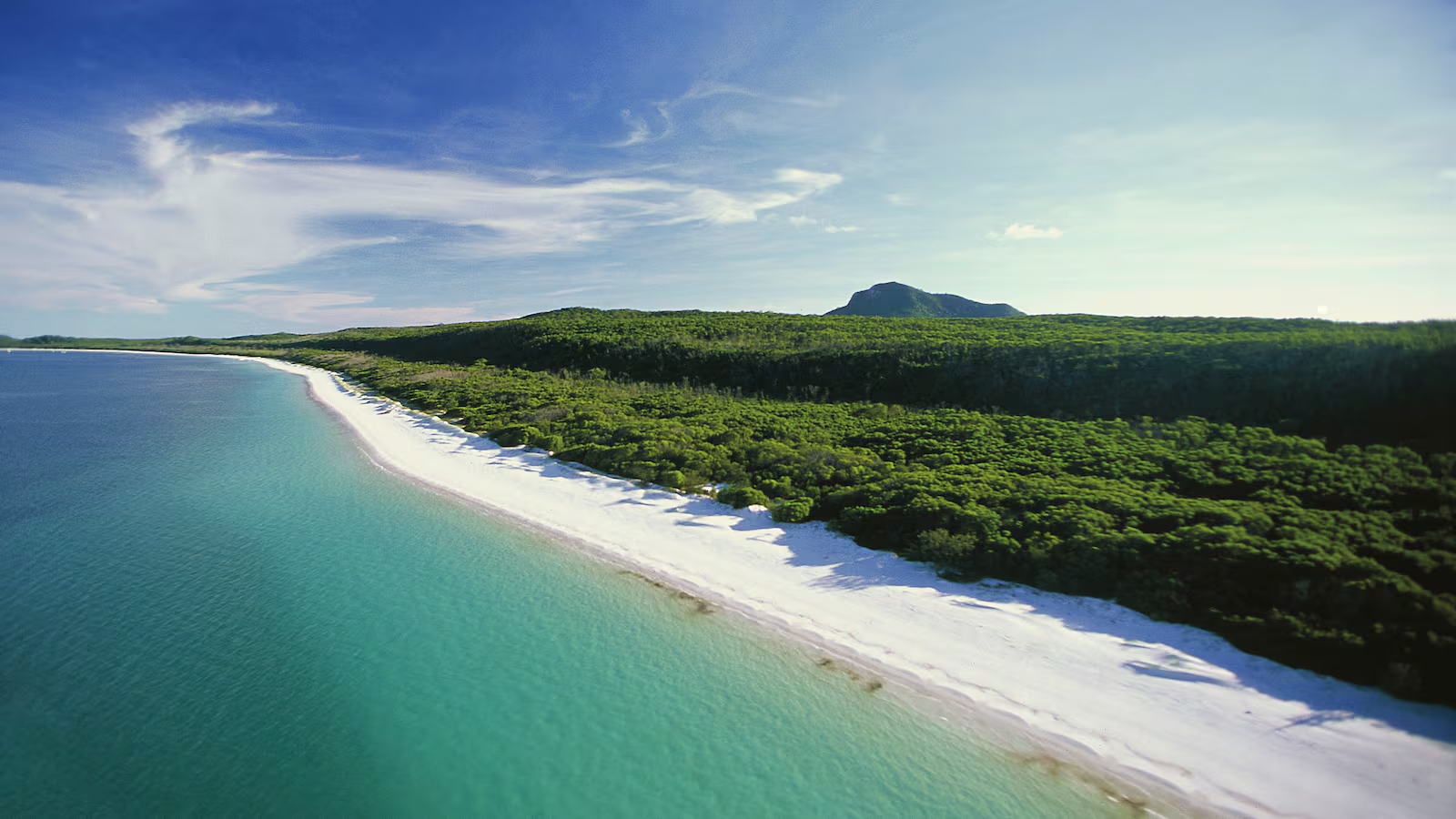
The shocking Irish beach tragedy at Whitehaven Beach has cast a dark cloud over Australia’s east coast early in 2026, as a beloved Irish man tragically drowned while visiting one of the nation’s iconic shores. The Irish beach tragedy first emerged when emergency services discovered the body of a 35‑year‑old Irish man in the water at Whitehaven Beach in Queensland on New Year’s Eve. The sandy expanse, known for its dazzling white shores and allure to holidaymakers, became the scene of sorrow when authorities confirmed the man had drowned. Australian police confirmed that the discovery occurred around 11am on December 31, and a formal report is being prepared for the coroner to determine the full circumstances surrounding his death.
In the midst of festive celebrations that typically greet the new year, the Irish beach tragedy stands out amid a series of deadly incidents on Australia’s east coast that have left communities reeling. Dangerous surf conditions and unpredictable ocean currents have been blamed by experts for the dangers that swimmers and beachgoers faced over the holiday period. Just hours after the Irish man’s body was recovered, another beach tragedy unfolded further south in New South Wales, where a young woman was swept into the ocean from Maroubra Beach and later pronounced dead despite the urgent efforts of rescue crews.

As the new year dawned, the sense of grief deepened when other coastal emergencies were reported. At Dunbogan Beach near Port Macquarie, a 45‑year‑old woman lost her life after being caught in tumultuous surf, and at Coogee Beach in Sydney a man in his twenties was reported missing after being swept away by strong rip currents during an early morning swim with friends. Search teams comprised of police, surf lifesavers, and aerial support were deployed in a frantic effort to locate him.
The Irish beach tragedy at Whitehaven Beach and other devastating incidents have sparked urgent warnings from authorities about the dangers of entering the ocean, particularly when large surf and hazardous conditions are present. Lifeguard organisations and emergency services emphasised that many of the beaches affected during the New Year’s period lacked consistent patrols, urging holidaymakers and locals alike to heed posted safety advice and avoid unnecessary risks.
Australia’s coastal communities are no strangers to the powerful forces of nature, but the cluster of fatalities so early in the year has heightened public concern. Emergency services from multiple states have issued statements emphasising water safety and the need for respect towards ocean conditions that can change unexpectedly and with devastating consequences.

Queensland officials preparing the coroner’s report have opted not to release further details while investigations continue, demonstrating the solemn nature of the Irish beach tragedy amid the complex task of understanding how such incidents can be prevented. Families of the victims are being supported by local authorities, with tributes pouring in for those lost during what should have been a joyful holiday period.
International visitor numbers to Whitehaven Beach and other popular Australian destinations normally surge during the summer months, driven by enticing weather and a thirst for adventure. Yet this year the awe‑inspiring beauty of sandy shores and rhythmic waves is overshadowed by sorrow and reflection as the community mourns the loss of life.
As 2026 begins, emergency services and water safety experts hope that the devastating toll along Australia’s coastline will prompt renewed awareness of the risks posed by the sea, especially during extreme conditions. The Irish beach tragedy at Whitehaven Beach stands as a poignant reminder of the ocean’s power and the fragility of life in its embrace.
Related News:
 British Woman in Iran ‘Losing Hope’ Amid Ongoing Detention
 BBC Journalist Held and Interrogated in Vietnam
 US Super-Rich Are Draining Planet’s Safe Climate Space
 UK University Suspends Human Rights Research Following Pressure from China
 UK University Faces Counter-Terror Probe Over China Pressure
 Top Christmas Books Reads: Classics to Cozy Romcoms
 World Whisky Tour: 9 Global Gems
 UPS Cargo Plane Crash in Kentucky Kills Seven
 Just Stop Oil Protesters Convicted Amid Climate Defence Row
China-critical UK academics face ‘extremely heavy’ pressure from Beijing
Just Stop Oil Protesters Convicted Amid Climate Defence Row
China-critical UK academics face ‘extremely heavy’ pressure from Beijing
 Tension and Turmoil at Aston Villa v Maccabi Match
 BBC to Apologise Over Edited Trump Speech Amid Backlash
 Lando Norris Dominates Brazil GP to Strengthen F1 Title Bid
 Britain deploys RAF specialists to assist Belgium with drone threats
 Palace May Restore Hyphen to Andrew Mountbatten-Windsor’s Name
 US Senate Passes Funding Bill to End Historic Shutdown
 Suicide Bombing at Islamabad Court Kills 12, Injures Dozens
 BBC’s Tim Davie to Address Staff Amid Trump $1bn Threat
 Thailand Suspends Cambodia Border Peace Deal Amid Tensions
 Ronaldo Confirms Final World Cup and Plans Retirement
 Ukraine-Russia war latest: Putin’s troops exploit bad weather to force Kyiv withdrawal from multiple towns
 Hamas Fighters in Gaza Tunnels Stall Ceasefire Progress
 Algeria Pardons French-Algerian Novelist Sansal After Year in Jail
 Hitler’s DNA Confirms He Truly Had Only One Testicle
 US Justice Department Files Lawsuit Against California Over Partisan Voting Maps
 Oklahoma Governor Grants Last-Minute Clemency to Death Row Inmate
 US Pushes Global Effort to Stop Arms Flow to Sudan RSF Forces
 Nigerian Education Reversal: Mother-Tongue Teaching Scrapped
 Israel Confirms Returned Hostage as Meny Godard
 Greene Pushes Epstein Files Amid Trump Fallout
 Trump Deploys DHS to Charlotte in Major Arrest Operation
 December Run-Off in Chile as Election Produces No Winner
 Zelenskyy Signs Fighter Jet Deal Amid Russian Drone Attacks
 Orban Says Ukraine Has ‘No Chance’ as EU Support Continues
 Irish Hero Parrott Says Goal Brought First Tears in Years
 Canada Passes Carney’s First Budget in Tight Parliamentary Vote
 Nigeria Misses World Cup Again After Play-Off Loss
 Israeli Strike Kills 13 Near Palestinian Camp in Lebanon
 Zelensky Meets US Envoy in Turkey to Push Ukraine Peace Talks
 Shadow Fleet at Sea: Europe’s Battle Against Illicit Oil Shipping
 Tiny Curacao Makes History as Smallest Nation to Reach World Cup
 Haiti Qualifies for World Cup Despite Coach Never Visiting Country
 Deadly Russian Strikes Hit Western Ukraine, 20 Killed in Ternopil
 Rama Rebukes Mahmood for Targeting Albanian Families
 Russian Vessel Used Lasers on RAF Pilots, UK Claims
 Pentagon Officials in Ukraine to Discuss War End
 Ukraine Peace Plan: Zelensky Ready for Dialogue
 Vietnam Battles Deadly Floods as Rains Continue
 Venezuela Threatens Nobel Winner Machado with Fugitive Status
 At Least Three Dead in Bangladesh Earthquake
 Barcelona Returns to Camp Nou vs Athletic Bilbao
 Royal Navy Shadows Russian Warships Entering the Channel
 Israel Confirms Hamas Returned Dror Or’s Body
 Trump Envoy to Discuss Ukraine Peace at Kremlin
 Twenty-Four Nigerian Schoolgirls Freed After Abduction
 US Suspends Afghan Immigration After White House Shooting
 Two National Guard Soldiers Critically Injured Near White House
 Georgians Defy Government Crackdown After Year of Protests
 Southern Lebanon reels as Israeli strikes shatter communities
 Mbappe Scores 4 as Real Madrid Edge Olympiakos
 Man City Lose, Champions League Risk
 Sri Lanka Floods Leave 56 Dead, Dozens Missing
 India’s Labour Law Overhaul Sparks Fierce Debate
 Video shows Israeli troops kill Palestinians after surrender
 Families wait in agony for missing after Hong Kong tower blaze
 A Colourful Cultural Escape in Mexico’s Querétaro
 Tokyo court rules Japan’s same-sex marriage ban constitutional
 Chinese & Japanese Boats Clash Near Disputed Islands
 Indonesia to Repatriate Two Dutch Drug Convicts
 ‘Extinct’ Antelope Returns to Sahara, Bringing Hope
 EU plans $105bn Ukraine aid using frozen Russian assets
 Global campaign launched to free Palestinian leader Barghouti
 American Mother Extradited From UK to U.S. on Murder Charges
 Khaleda Zia, Bangladesh’s First Female Prime Minister, Dies at 80
 Russia losses Ukraine war peace talks intensify amid rising deaths
 Facebook Slow to Remove Bondi Attack Praise, Anti-Hate Group Claims
 Australian Cruise Ship Freed After Reef Grounding in Papua New Guinea
 Zelenskyy Accuses Russia of Sabotaging Peace Talks
 Trump ‘Not Worried’ as China Conducts Massive Taiwan Wargame
 Khaleda Zia Laid to Rest with State Honour in Dhaka