Published: 9 March 2026
The English Chronicle Desk
The English Chronicle Online — UK News
The head of Scotland’s national football supporters’ body has expressed deep anger and disappointment after violent scenes erupted during and after the Rangers–Celtic Scottish Cup quarter‑final at Ibrox, calling the disorder “utterly unacceptable” and warning that the reputation of Scottish football is being dragged backwards by a minority of supporters.
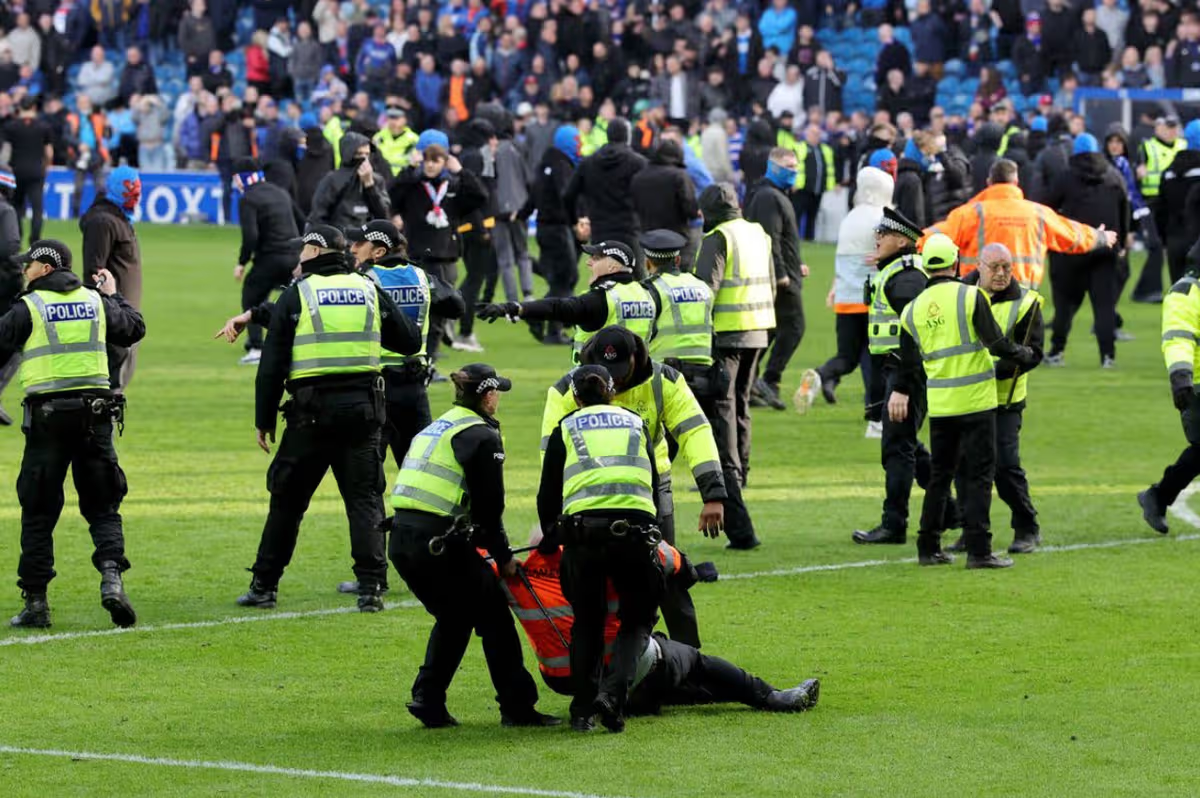
The Old Firm clash — already one of the most emotionally charged fixtures in world football — descended into chaos on Sunday evening after Celtic defeated Rangers 4–2 on penalties to reach the semi‑finals. What should have been a moment of sporting celebration quickly turned into a security crisis as hundreds of fans from both clubs stormed the pitch, hurled flares and bottles, and clashed with police and stewards attempting to restore order.

The scenes, captured in photographs and videos across multiple news outlets, showed supporters spilling over advertising boards, missiles flying between rival groups, and officers forming human barricades to prevent further escalation. Police Scotland later confirmed that several arrests had been made and described the behaviour as “despicable,” “shameful,” and “a disgrace to the national game.”
For the head of Scotland’s leading football fan organisation — who represents supporters across all divisions — the events at Ibrox were not only alarming but infuriating. Speaking after reviewing footage and receiving reports from fans in attendance, he said the violence had “crossed every line of decency” and warned that the sport risks losing the trust of ordinary supporters and families who simply want to enjoy football without fear.
“This is not passion. This is not rivalry. This is violence, and it has no place in Scottish football,” he said. “The vast majority of fans behave impeccably, but a small number are poisoning the atmosphere and putting people at risk. We cannot allow this to become normalised.”
The match itself had been tense but largely controlled until the final whistle. After a goalless 120 minutes, Celtic edged the penalty shoot‑out, prompting an initial surge of Hoops supporters onto the pitch in celebration. Rangers fans soon followed, and within moments the situation spiralled. Flares were ignited, objects were thrown, and police officers were forced to intervene as rival groups confronted one another.
Sky Sports footage showed Celtic players being escorted off the pitch by security as missiles landed nearby. The Telegraph reported that officers made “a number of arrests” as they attempted to disperse the crowds, while The Herald published images of fans climbing barriers and confronting stewards. Yahoo Sports confirmed that both police and supporters suffered injuries during the clashes.
The head of the supporters’ body said he had been inundated with messages from fans who felt unsafe, including families who had attended with children. One Celtic supporter told the Express he had “never felt so unsafe” at a match, describing the atmosphere as “terrifying” and blaming the rise of ultra‑style fan groups for escalating tensions.
The fan chief echoed those concerns, warning that the growing influence of ultra culture — with its choreographed displays, pyrotechnics, and confrontational behaviour — is changing the tone of Scottish football in ways that authorities have not fully addressed. “There is a difference between passionate support and organised aggression,” he said. “We need to be honest about what we’re seeing.”
Police Scotland’s Chief Superintendent Kate Stephen condemned the disorder in strong terms, saying the behaviour “must be condemned by everyone involved in football and wider society.” She confirmed that investigations are ongoing and that further arrests are likely as officers review CCTV and broadcast footage.
The Scottish Football Association (SFA) is also expected to launch a formal inquiry, with potential sanctions for both clubs. While neither Rangers nor Celtic have issued full statements, both are understood to be cooperating with authorities and reviewing their own security protocols.
The head of the supporters’ body said the SFA must take decisive action. “We cannot keep having the same conversations after every Old Firm match,” he said. “There needs to be a serious, coordinated response — from clubs, police, governing bodies, and fan groups — to stop this cycle of violence.”
He also warned that the disorder risks damaging Scotland’s reputation internationally, particularly at a time when the country is bidding to host major tournaments and promote itself as a welcoming footballing nation. “Incidents like this undermine everything we’re trying to build,” he said. “Families will stop coming. Sponsors will think twice. This is bigger than one match.”
The violence has reignited long‑standing debates about Old Firm fixtures, including whether away fans should be allowed at derby matches, whether kick‑off times should be moved earlier, and whether alcohol restrictions should be tightened. Some have even suggested that neutral venues or closed‑door matches could be considered if the situation continues to deteriorate.
But the supporters’ chief cautioned against knee‑jerk reactions, arguing instead for a holistic approach that addresses root causes. “Punishing all fans for the actions of a few is not the answer,” he said. “We need better crowd management, better communication, and a commitment from both clubs to work with fan groups to reduce tensions.”
He also emphasised the need for education and community engagement, particularly among younger supporters who may be drawn to the more extreme elements of fan culture. “We need to show them that football is about joy, identity, and community — not violence,” he said.

As investigations continue, both clubs face mounting pressure to condemn the violence unequivocally and take visible steps to prevent a repeat. The SFA, too, will be expected to demonstrate leadership in addressing what has become a recurring problem in Scottish football.
For now, the images from Ibrox — flares burning on the pitch, police struggling to hold back rival fans, players fleeing for safety — serve as a stark reminder of the volatility of the Old Firm rivalry and the urgent need for action.
Related News:
 Bodies of Man and Boy Found in Burnt‑Out Car After Horror Crash in the Highlands
 Woman dies after horror two-vehicle crash in Scots town
 Tasers Introduced in UK Prisons to Combat Rising Violence and Protect Staff
 Targeted Attack in Bury Sparks Murder Investigation as Community Awaits Justice
 Man Remanded After Children Fall Ill at Leicestershire Summer Camp in Shocking Child Cruelty Case
 Mass Arrests in London as Protest Defies Ban on Palestine Action
 Alarming rise in abusive teen relationships in the UK sparks urgent warnings
 Mother of Olivia Pratt-Korbel Issues Powerful Gun Crime Plea
 Merseyside Police Helicopter Crew Cleared After Low-Altitude Pursuit of Suspect
 Akinwale Arobieke Found Dead at Liverpool Home
 Urgent Action Needed on Windrush Compensation as Survivors Speak of “Waiting to Die”
 UK Launches Major Crackdown on Networks Profiting from Online Child Sexual Abuse
 Prime Suspect in Madeleine McCann Case Declines Metropolitan Police Interview Ahead of German Prison Release
 Rivers in English and Welsh National Parks Suffer Sewage Pollution at Twice the National Rate
 Systemic Racism in Maternity Care Continues to Endanger Black Women in England, MPs Warn
 UK Doctors Guilty of Sexual Misconduct Continue Practising Amid Weak Sanctions, Research Finds
 Northern Ireland Faces Fears of Prolonged Race Riot “Permacrisis”
 Zarah Sultana Seeks Legal Action After Bitter Clash with Jeremy Corbyn Over Party Membership Funds
 No Evidence Found to Substantiate Alleged Rape in Oxfordshire Churchyard, Police Confirm
 Massive London Poundland Fire Engulfs High Street
 Cooper Unveils £4m Cyber Plan Against Russian Hackers
 Paedophile Singer Ian Watkins Dies After Prison Attack
 Ian Watkins Killed in Prison; Ex-Girlfriend Speaks Out
 DNA Test Confirms Alleged Stalker Is Not Madeleine McCann
 Kosovo agrees to host Britain’s refused asylum seekers
 Peterborough Mosques Tighten Security After Attack
 Ex-Army Sergeant Jailed for Assault on Soldier Who Later Died
 Mass Stabbing on Doncaster to London Train Leaves Ten Injured
 FBI Director Kash Patel Defends Girlfriend Amid Government Jet Claims
 French Taxi Driver Cleared in David Lammy Theft Case After Fare Dispute
 UK Bans Fake Numbers: Scammers Lose Their Trick
 Just Stop Oil Protesters Convicted Amid Climate Defence Row
 How to get help when a child goes missing – call 999 urgently
 ‘Reckless’ cuts to victims’ services will cost more than they save
 Criminal Gangs Pose as Truckers to Hijack UK Supply Chains
 Mum Calls for New Licence Rules After Teen Road Death
 Mother Watches in Horror as Teen Daughter Dies on Tracks
 Serial Rapist and Former Cop Found Guilty Again
 Inside the Helpline Protecting Missing Children in the UK
 Most Tories Expect to Support a Farage-Led Government
 Online Child Sexual Abuse Soars 26% as Police Demand Tech Action
 Strangulation Charges Surge in England and Wales Amid Domestic Abuse Concerns
 Tory Councillor Faces Court Over Shocking Sexual Assault Allegations
 Family Tribute After Fatal Pub Assault in Leicestershire
 New Documentary Examines Teen’s Zombie Knife Murder
 Woman Jailed for Life After Killing E-Bike Rider in Tragic Mistaken Identity Case
 Betfair Faces Pressure Over Funds Lost to Gambling Fraud
 Police response times face strict new national limits
 Appeal to B&B Owners Over Cash Point Ram-Raid
 Teen Girl Chased in Broad Daylight in Ipswich
 ‘Daejaun Was Drawn Deeper Into Danger,’ Says Heartbroken Mother
 Man Arrested After University of Lancashire Student Found Dead
 Cash Machines Ripped from Co-op in Cherry Picker Ram-Raid
 Children to Receive Early Support After Knife Incidents
 Disability and LGBT Hate Crimes Set to Become Aggravated Offences
 Last‑ditch Call to Save Police Front Counters in London
 Fly-Tippers to Be Hunted by ‘Drone Squad’ in Crackdown from the Sky
 Dad Found in Bed with Daughter 16 Years After Abandoning Her as a Child
 ‘Don’t Make Us Security Guards,’ Says Teacher Stabbed by Pupil
 Mother of Nottingham Attacks Victim Calls for ‘Whole Truth’ as Inquiry Begins
 Court Error Frees Rape Suspect Who Flees UK
 Criminal Gangs Target UK Shops, Costing Retailers £400m
 Trial Date Set for Student Accused of Racial Hatred
 Rape Accused Had Fight With Man in Alley, Court Told
 Ian Huntley Seriously Injured in Prison Attack
 Grave of Murdered Toddler James Bulger Vandalised
 Mother Says ‘I Hugged My Daughter’s Killer’ as They Cried Together in Prison
 Suspects in Lisa Dorrian Case Released on Bail
 Murder Charge After Security Guard Stabbed in Violent Attack
 Driver Jailed Over Fatal Water Treatment Tank Crash
 New Infection Risk Alert at Glasgow’s Flagship Hospital
 Insulin Evidence in Letby Trial Under Scrutiny After Expert’s GMC Probe Emerges
 Stranger ‘On Drugs’ Stabbed Saudi Student to Death in Cambridge
 Calls Grow to Remove Billboard Following Lyra McKee Graffiti
 Man on Trial for Rape That Led to Andrew Malkinson’s Wrongful Jailing
 Labour MP’s Partner Arrested on Suspicion of Spying for China
 Police Scotland Pays £8m Compensation to Staff
 ‘He Didn’t Stand a Chance’: Man Killed by Tube Was Blocked from Safe Spot, Inquest Hears
 Armed police incident closes major road
 Pedestrian critically hurt after being hit by car