Published: 10 March 2026. The English Chronicle Desk. The English Chronicle Online.
Tensions between Mexico and the United States have intensified after a heated exchange over gun trafficking and organised crime. Mexican President Claudia Sheinbaum has urged the United States to take stronger action against what she described as persistent US gun trafficking into Mexico. Her remarks came after former American president Donald Trump publicly labelled Mexico the “epicenter of violence” during a recent gathering of regional leaders.
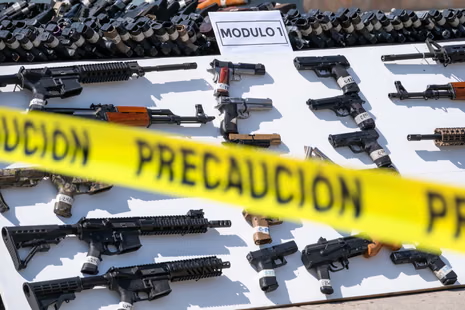
Sheinbaum said that reducing US gun trafficking could significantly weaken the power of organised crime groups operating throughout Mexico. Speaking during a press briefing in Mexico City, she stressed that many weapons used by criminal cartels originate from across the northern border. According to Mexican authorities, roughly three quarters of firearms recovered from cartel operations can be traced back to the United States.
The Mexican leader explained that stopping the flow of weapons would greatly limit the firepower available to violent criminal organisations. She argued that tackling the problem requires closer cooperation between both governments rather than public criticism or political accusations. Her comments highlighted a longstanding concern within Mexico that illegal firearms crossing the border continue to fuel violence across many regions.
The issue resurfaced after Trump spoke during a summit of Latin American leaders at his golf resort in Florida. During the meeting he proposed the creation of what he described as a “counter-cartel coalition” across the Americas. The gathering, branded the Shield of the Americas summit, focused on regional security concerns including drug trafficking and organised crime networks.

During his speech, Trump argued that Mexico remained central to the hemisphere’s struggle with cartel violence. He claimed that criminal organisations operating there were responsible for much of the instability affecting the region. The remarks quickly drew criticism from Mexican officials and political commentators who felt the comments overlooked broader causes of violence.
Sheinbaum responded by reiterating that Mexico has repeatedly asked Washington to address US gun trafficking more aggressively. She noted that powerful rifles and high-capacity firearms often end up in cartel hands after being purchased legally in the United States. Once smuggled across the border, these weapons can dramatically increase the destructive capacity of organised crime groups.
Mexican authorities have long argued that the availability of these firearms is a critical driver of violence. Criminal organisations often rely on military-style weapons to protect drug routes and fight rival gangs. Such weapons are frequently recovered during raids conducted by the Mexican army and federal police forces.
The debate over US gun trafficking is not new, and it has previously reached the courts. In 2021, the Mexican government launched an unprecedented lawsuit against several American gun manufacturers. Officials accused the companies of negligent marketing practices that allegedly facilitated the illegal flow of weapons into Mexico.
However, the legal battle faced a major setback last year. The case was ultimately dismissed after the United States judiciary ruled that the claims could not proceed under existing American law. Mexican officials expressed disappointment with the decision but insisted that diplomatic efforts to address US gun trafficking would continue.
During the Florida summit, Trump also referred to Sheinbaum personally while discussing regional security issues. He described her as a “beautiful woman” with a “beautiful voice” while recounting a conversation about potential cooperation against drug cartels. According to Trump, he once suggested sending American forces into Mexico to eliminate cartel groups.
Sheinbaum firmly rejected the idea of foreign military operations on Mexican territory. She stated that Mexico’s sovereignty must always be respected, even when addressing complex security challenges. Her response emphasised that any collaboration must occur through lawful partnerships between governments.
The Mexican president confirmed that she had previously told Trump that the United States military would not be permitted to enter Mexico for anti-cartel operations. She explained that the stance reflects a consistent national policy maintained by successive Mexican administrations. Mexican officials argue that security cooperation must remain focused on intelligence sharing and coordinated policing rather than military intervention.
Trump has repeatedly suggested that stronger direct action could help dismantle cartel networks. Throughout his political career he has spoken about the possibility of using American military resources to target major drug trafficking organisations. Such proposals have sparked debate in both countries, with critics warning they could damage diplomatic relations.
Political analysts in Mexico also responded strongly to the remarks. One of the most prominent voices was analyst Viri Ríos, who described Trump’s comments about Sheinbaum as inappropriate and dismissive. She argued that focusing blame solely on Mexico ignores the complex cross-border nature of organised crime.
Ríos suggested that the United States plays a significant role in sustaining cartel activity through both drug demand and weapons availability. She noted that many criminal groups depend heavily on firearms purchased or trafficked from American territory. In her view, addressing US gun trafficking is essential if both nations want to reduce cartel violence across the region.
Experts frequently point out that drug markets and weapons supply chains are deeply interconnected across North America. Demand for narcotics in the United States generates massive profits for criminal organisations operating in Mexico. At the same time, the steady flow of weapons strengthens those groups and allows them to challenge government forces.
Many security specialists believe cooperation between the two countries remains essential for tackling organised crime effectively. Border enforcement efforts already include joint investigations, intelligence exchanges and coordinated law enforcement operations. Despite political tensions, such partnerships have produced several successful operations against trafficking networks.
Sheinbaum’s government has emphasised that stronger border monitoring could significantly disrupt illegal weapons movements. Mexican officials often highlight the need for improved tracking of firearm purchases and stricter oversight of gun dealers in the United States. They argue that even modest reductions in smuggling could weaken cartel influence over time.
In recent years, law enforcement agencies on both sides of the border have expanded efforts to identify trafficking routes. Investigators frequently analyse recovered firearms to determine their origin and movement through criminal networks. These tracing programmes have helped authorities map the pathways used by smugglers transporting weapons southward.
Diplomatic relations between Mexico and the United States have historically been shaped by issues surrounding migration, trade and security. The current debate over US gun trafficking reflects deeper disagreements about responsibility for regional violence. Nevertheless, both governments recognise that long-term stability depends on cooperation rather than confrontation.

Observers note that Sheinbaum’s remarks were carefully framed to emphasise partnership rather than conflict. While she rejected Trump’s criticism of Mexico, she also highlighted areas where joint action could produce meaningful results. Her message suggested that progress requires shared accountability from both sides of the border.
The broader challenge facing the region remains complex and deeply rooted. Drug trafficking organisations continue to operate sophisticated networks stretching across several countries. These groups rely on profits from narcotics sales while maintaining access to powerful firearms and advanced smuggling routes.
For many communities in Mexico, the consequences of cartel violence remain severe and deeply personal. Residents in affected areas often face threats, intimidation and disruptions to daily life. Governments on both sides of the border therefore face increasing pressure to deliver effective solutions.
Whether diplomatic dialogue will produce new policies on weapons trafficking remains uncertain. However, the renewed focus on US gun trafficking has once again highlighted the shared responsibility underlying North America’s security challenges. The coming months may reveal whether political leaders can transform this debate into meaningful cross-border action.
Related News:
 British Woman in Iran ‘Losing Hope’ Amid Ongoing Detention
 BBC to Apologise Over Edited Trump Speech Amid Backlash
 Britain deploys RAF specialists to assist Belgium with drone threats
 US Justice Department Files Lawsuit Against California Over Partisan Voting Maps
 Greene Pushes Epstein Files Amid Trump Fallout
 Trump Deploys DHS to Charlotte in Major Arrest Operation
 December Run-Off in Chile as Election Produces No Winner
 Canada Passes Carney’s First Budget in Tight Parliamentary Vote
 Shadow Fleet at Sea: Europe’s Battle Against Illicit Oil Shipping
 Pentagon Officials in Ukraine to Discuss War End
 Venezuela Threatens Nobel Winner Machado with Fugitive Status
 Georgians Defy Government Crackdown After Year of Protests
 EU plans $105bn Ukraine aid using frozen Russian assets
 Global campaign launched to free Palestinian leader Barghouti
 Trump Policies Boost China’s Global Rise, Survey Finds
 Iran unrest slows under brutal crackdown and global tensions
 Pentagon Signals Reduced Role in Deterring North Korea
 Thousands Protest ICE Operations in Nationwide US Day of Action
 Epstein Files Reveal Trump Officials’ Emails with Financier
 Starmer Condemns ‘Depraved’ Russian Strikes on Ukraine
 Herzog visit sparks protests across Australian cities
 UK and US Drop in Global Corruption Index Rankings
 Sydney Protest Escalates and Elderly Woman Suffers Severe Injury
 Tarique Rahman’s Rise Toward Bangladesh’s Top Job
 Glass Cliff Debate After Ley’s Ouster
 Canberra Poster Seizure Sparks Free Speech Row
 Evo Morales Returns After Mysterious Absence
 AFP Reviews Pauline Hanson Comments
 Duterte ICC Hearing Begins Amid Defiance
 Trump Tariffs Threat Spark UK and EU Alarm
 The Dangerous Rise of Remigration Across Modern Europe
 Trump’s Marathon Speech Fails to Mask a Growing National Disconnect
 Jacinda Ardern Moves To Australia Following Her US Fellowships
 US to offer passport services in West Bank settlements
 Jacinda Ardern Move Sparks Kiwi Reflection
 Health Funding Row Rocks US‑Africa Relations
 Nick Greiner Warns Over Election Review Fallout
 New UK-EU Reset Faces Criticism from Parliament
 Cuba charges six exiles for terrorism after speedboat raid
 Iran Defiance Grows Amid US-Israel War Pressure
 US Strikes on Iran Set for Most Intense Day Yet
 Iran Nuclear Stockpile Sparks US Special Forces Debate
 Queensland Protest Ban Sparks First Arrests
 China’s Ethnic Unity Law Set to Reshape Minority Schools
 Moscow Internet Blackouts Raise Censorship Fears
 Republicans Rebuke FCC Threat Over Iran War Coverage
 Oil Prices Surge as IEA Weighs Emergency Release
 Trump Nato threats expose Iran strategy vacuum
 UK Minister Denies Iran Missile Threat to Britain
 Danish Election Deadlock Shakes Frederiksen’s Grip
 Trump to Visit China in May After Iran War Delay
 Pope Rebukes Leaders for War as Middle East Tensions Rise
 Trump to Deploy “God Squad” Over Gulf Wildlife Protections
 Army Probes Apache Flyover at Kid Rock’s Nashville Estate
 Italian Town Buys Mussolini Villa to Keep Away Fascist Fans
 Report Says Pezzullo Acted ‘Recklessly’ in Dealings
 Trump Employs Nixon’s Madman Theory Amid Iran Crisis
 Trump Voices Frustration Over Nato Role in Iran Conflict
 Hungary election: Orbán faces biggest test amid scandal
 Suspected Plot Targets Pipeline Before Hungary Vote
 Trump Slams UK Ties and Threatens To Rewrite Trade Deal
 Southeast Asia Turns to Russia Amid Energy Crisis
 Capitalism ‘Suicidal’, Warns Petro at Climate Summit
 Judge halts deportation of Yemeni refugees in US
 Activists allege abuse after Gaza flotilla seizure
 Trump approval plunges amid Iran war fears
 Ohio’s Battle for Trust: Democrats Vying to Flip the Buckeye State
 US ‘Narco Boat’ Strikes Draw Global Outcry
 Afghan Families Left in Limbo Face Risk of Deportation
 Tensions Emerge in Netanyahu-Trump Alliance
 US Awaits Iran Reply on New Ceasefire Proposal
 Discontent grows around Putin amid war strain
 Starmer Leadership Under Pressure After Setbacks
 House Curbs Trump’s War Powers in Rare Rebellion
 Germany Summons Chinese Envoy Over Russian Troop Training
 New South Wales Premier Chris Minns Signals Tough Road Ahead for Labor
 Le Pen to Run for President Despite Embezzlement Conviction
 Ukraine Creates Long-Range Strike Command
 Le Pen’s Popularity Holds Despite Conviction
 Houthis Strike Saudi Arabia as Middle East Tensions Rise