
Published: March 10, 2026
The English Chronicle Desk
The English Chronicle Online
A sudden surge in global oil prices following escalating military conflict involving the United States and Israel in Iran is beginning to reverberate across the world economy. The disruption of energy supplies from the Gulf region has triggered a sharp rise in oil and gas prices, unsettling financial markets and raising concerns about inflation, supply shortages, and economic slowdown in many countries.
The immediate concern stems from the interruption of shipping routes through the Strait of Hormuz, one of the most critical maritime passages for global energy trade. Nearly one-fifth of the world’s crude oil supply normally travels through this narrow waterway. With military tensions disrupting shipping traffic and forcing energy producers to cut output, analysts warn that the world could be facing one of the most significant oil supply shocks in modern history.

Oil markets reacted swiftly. Benchmark crude prices surged dramatically in the days following the escalation of hostilities. At one point early in the week, global oil prices approached $120 per barrel before retreating slightly to just under $85. Even at that level, the rise represents a substantial increase compared with prices recorded only a month earlier.
The war has highlighted the continued dependence of the global economy on Middle Eastern energy supplies. Despite years of discussion about diversification and renewable energy, the region remains a central pillar of global oil production and export. Earlier supply disruptions in the 1950s and 1970s had similarly dramatic impacts on the world economy, but analysts suggest that the current disruption could prove even more far-reaching.
Production cuts across several Gulf countries are already deepening the supply shortage. In Iraq, oil output has reportedly fallen by more than sixty percent as logistical challenges and security concerns hamper operations. Kuwait and the United Arab Emirates have also scaled back production, further tightening global supply.
The energy disruption extends beyond oil. Natural gas markets have also been affected after Qatar’s state-owned energy company halted portions of its production, citing military attacks near key facilities. Approximately twenty percent of global natural gas supplies have been affected, according to industry estimates. The sudden drop has already caused gas prices in Europe to almost double compared with levels recorded before the conflict began.
Energy analysts say alternative production sources are unlikely to compensate quickly for the lost supply. Producers outside the Middle East—including the United States, Brazil and Norway—have limited capacity to ramp up output on short notice. Existing pipelines that bypass the Strait of Hormuz provide only partial alternatives, leaving energy markets vulnerable to continued disruption.
Investment banks and energy research firms are warning that shortages could soon appear in regions heavily dependent on imported energy. Analysts at JP Morgan expect visible supply gaps in Asia and Europe within days if the current situation persists. Governments in several Asian countries have already begun considering emergency measures such as price caps, fuel rationing and early institutional closures to reduce consumption.
Bangladesh, which relies heavily on imported energy resources, has reportedly taken precautionary steps as well. State media reported that some universities have closed early ahead of the Eid al-Fitr holidays as authorities attempt to manage energy consumption during the crisis period.
The surge in energy prices is now spreading through wider economic systems. Higher fuel costs increase transportation expenses, raise manufacturing costs and eventually push up consumer prices for everyday goods. Economists warn that the result could be a new wave of global inflation at a time when many countries are still recovering from earlier economic shocks.
Even countries with large domestic energy production are not immune. In the United States, gasoline prices have climbed close to $3.50 per gallon, up sharply from roughly $2.90 only weeks earlier. The rise is beginning to affect household budgets and consumer sentiment.
Financial institutions are attempting to estimate the broader economic impact. Goldman Sachs recently projected that if oil prices temporarily reach $100 per barrel, global economic growth could fall by approximately 0.4 percentage points. Should prices climb higher, the effect could be far more severe.
Some analysts warn that in worst-case scenarios oil prices could surpass the peaks reached in 2022 following Russia’s invasion of Ukraine. If geopolitical tensions persist and supply disruptions continue, oil prices could potentially rise toward $150 per barrel. Such a surge would likely have significant consequences for both developed and developing economies.
Higher energy costs also affect industrial supply chains. Semiconductor manufacturing, a crucial industry for electronics and automotive production, requires large amounts of electricity and stable energy supply. Taiwan, a central hub of global chip production, relies heavily on imported energy. Any sustained energy shortage could disrupt semiconductor output, with ripple effects across global technology markets.
Technology companies in the United States have also expressed concerns that rising energy costs could slow the expansion of data centres and artificial intelligence infrastructure. The rapid growth of AI computing facilities requires substantial electricity consumption, making the sector sensitive to fluctuations in energy prices.
Beyond energy, several other commodities are experiencing price pressure because of the conflict. The Middle East is a significant supplier of aluminium, sulphur and fertiliser components such as urea. Rising prices for these materials could increase the cost of agricultural production and manufactured goods worldwide.
Farmers in several countries are already feeling the strain. In the United States, fertiliser import shipments typically rise sharply during March and April as planting season begins. However, uncertainty about supply chains has led some suppliers to delay deliveries while assessing the market impact of the war.
Farmers warn that higher fertiliser prices could severely reduce their profit margins this year. For some agricultural producers, the additional cost could amount to roughly $100 per acre, dramatically increasing production expenses. If these costs continue to rise, consumers could eventually see higher food prices.
The financial markets have responded cautiously to the unfolding crisis. Major stock indexes in energy-importing countries have recorded noticeable declines since the conflict began. Japan’s benchmark index has dropped roughly ten percent, while South Korea’s market has fallen by around fifteen percent. Germany’s DAX index has also declined by more than seven percent.
In contrast, the United States stock market has experienced relatively smaller losses. The S&P 500 has declined by just over one percent, reflecting the country’s stronger domestic energy production capacity.

Nevertheless, political pressure is mounting. Rising energy costs and inflation concerns could become a significant issue ahead of upcoming congressional elections in the United States. Observers say the economic consequences of the conflict could influence political debate in the months ahead.
Policy responses remain uncertain. Some governments have discussed releasing strategic oil reserves to stabilise the market, but analysts say such measures would only provide temporary relief. The scale of the current supply disruption may far exceed the capacity of emergency reserves.
Even if active military operations were to end quickly, energy markets may remain unstable. Analysts caution that geopolitical tensions could continue to threaten shipping routes and energy infrastructure long after any formal declaration of the end of hostilities.
For now, the global economy is watching closely. The conflict has once again demonstrated how deeply interconnected energy markets are and how geopolitical instability in one region can quickly spread economic consequences across the world.
Related News:
 Japan Braces as Takaichi Begins New Term with Huge Mandate for Low‑Tax, Ultra‑Conservative Agenda
 G7 to Hold Emergency Oil Talks as Markets Plunge
 Modi’s London Visit Seals Historic UK-India Trade Pact Amid Global Tensions
 Rubio Calls Russian Oil Imports a Strain on India-US Relations
 Rachel Reeves to lead UK trade push in Saudi Arabia amid rights debate
 Canada Passes Carney’s First Budget in Tight Parliamentary Vote
 India’s Labour Law Overhaul Sparks Fierce Debate
 Carney’s Alberta Pipeline Deal Sparks Immediate Pushback
 Austrian Airlines Halts Tehran Flights Amid Political Unrest
 Trump Administration Probe of Fed’s Powell Draws Pushback
 Mark Carney Walks Diplomatic Tightrope on China Visit
 ‘Repatriate the Gold’: Germany Debates Bringing Reserves Home
 After the Landslide: Can India Reset Ties with BNP Bangladesh?
 China Strikes at Japan’s Core — Will PM Takaichi Back Down?
 South Korea’s Ex-President Faces Death Penalty in Insurrection Trial
 US and Indonesia Finalise Deal to Cut Tariffs to 19%
 US Trade Deficit Hits Fresh High Despite Trump’s Tariffs
 Kim Jong Un Reappointed as Ruling Party Chief
 What Now for Asia After Trump’s Tariffs Were Struck Down?
 The Taekwondo Teacher Tasked With Healing India’s Troubled State
 Trump’s tariff strategy collapse sows global chaos and confusion
 Japan to Deploy Missiles on Island Near Taiwan by 2031
 Why Asian Firms Are Not Cheering Trump Tariff Ruling
 Why Asian Firms Are Not Cheering Trump Tariff Ruling
 Nine Killed in Karachi Consulate Protest
 Could Kim’s Teen Daughter Become North Korea’s Next Leader?
 Rap Star May Beat Ex‑PM — What This Says About Nepal’s Gen Z
 The Little Town Making Nearly All of China’s Lanterns
 Nepal Leaders Call on Voters to Ensure Success of ‘Historic’ Election
 China Sets Lowest Economic Growth Target Since 1991
 Nepal Holds First General Election Since Gen Z Protests Toppled Government
 Stock Markets and Oil Prices Still Volatile Over Fears Iran War May Drag On
 Nepal Election 2026: When Will We Get the Results?
 Iran Drones Hit Azerbaijan Airport as War Widens
 Iran War Raises Questions Over China’s Global Plan
 Fuel and Remittances: How Iran Conflict Hits India At Home
 Sri Lanka Takes Control of Second Iranian Vessel a Day After US Sub Attack
 Energy Firms Keep Fuel Price Hike ‘Under Scrutiny’
 US Eases Sanctions on Russian Oil Sales to India During Iran Conflict
 Nepal election 2026: Rapper Balendra Shah on track to be next PM as his party heads for landslide
 Reeves Faces Triple Threat as Markets Reel From Global Turmoil
 China Moves to Enshrine ‘Ethnic Unity’ Law
 Cost of Living Crisis Returns to Centre Stage
 UK Must Act with Courage and Clarity on Israel-Palestine Conflict, Says Foreign Affairs Committee Report
 Radioactive Leak at UK’s Nuclear Warhead Base Sparks Outcry Over Safety and Secrecy
 Hong Kong Summons UK and Australian Envoys Following Asylum Grants to Democracy Activists
 Is the UK Ready to Put Boots on the Ground in Ukraine? Assessing Military Capacity and Challenges
 Yvette Cooper Signals Global Momentum Towards Gaza Peace Deal Amid Humanitarian Crisis
 Kemi Badenoch Unveils ‘Golden Rule’ to Halve Spending Cuts for Deficit Reduction at Tory Conference
 Russia’s Latest Push to Win US Favors Shows Deep Desperation
 Trump’s UK Ambassador Urges North Sea Drilling to Strengthen US Ties
BBC to Apologise Over Edited Trump Speech Amid Backlash
Trump’s UK Ambassador Urges North Sea Drilling to Strengthen US Ties
BBC to Apologise Over Edited Trump Speech Amid Backlash
 Britain deploys RAF specialists to assist Belgium with drone threats
 Millionaires group urge Reeves to introduce wealth tax to ‘lift kids out of poverty’
 Trump Urges Herzog to Grant Netanyahu Full Pardon
 Indian authorities demolish Kashmir home linked to Red Fort blast
 Greene Pushes Epstein Files Amid Trump Fallout
 December Run-Off in Chile as Election Produces No Winner
 Shadow Fleet at Sea: Europe’s Battle Against Illicit Oil Shipping
 India’s COP30 Delay Raises Global Climate Concerns
 Georgians Defy Government Crackdown After Year of Protests
 Starmer Says Labour’s Economic Plan Needs Years to Deliver
 EU Says US Ties Have Suffered ‘Big Blow’ After Greenland Crisis
 UK New Car Discounts Near £6,000 as Prices Are Slashed
 Could Manchester Lead the UK’s Economic Revival?
 Australian Families Leave Syrian Camp for Home
 Starmer Weighs Fast-Tracking Defence Boost
 Nine Arrested in France Over Death of Far‑Right Student
 Australian PM Says Former Prince Andrew Has Suffered ‘Extraordinary Fall’ but That Won’t Prompt Republic Referendum
 Farage Chagos Islands Row Sparks Fury
 Ukraine Negotiator Reveals What It Feels Like Facing Russia
 American Citizen Killed in Cuba Boat Shooting, U.S. Officials Say
 Iran’s Regime Still Intact — Coming Days Will Test Its Survival
 Herzog Asio meeting sparks security storm
 Finland Plans to Lift Decades‑Old Ban on Hosting Nuclear Weapons
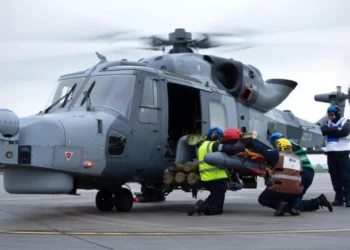 Minister Meets Crews Who Will ‘Take Out’ Iranian Drones
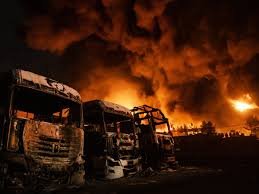 Oil Prices Surge Above $100 Amid Iran War
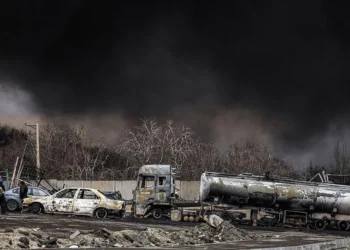 Nine Days of Strikes Reshape the Middle East
 Trump Pressures Congress Over Save America Act
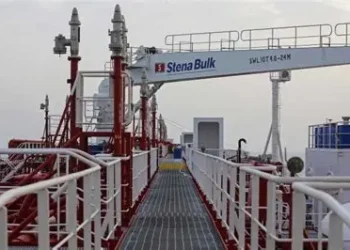 Iran War Puts Trump at Political Risk Amid Rising Prices