Published: 16 March 2026. The English Chronicle Desk. The English Chronicle Online.
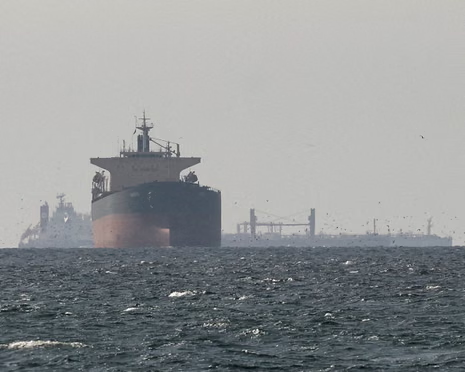
The Strait of Hormuz crisis has intensified global political tensions as Washington urges allies to protect a vital shipping route. The renewed dispute has emerged amid escalating conflict between the United States, Israel, and Iran in the Gulf region. The strategic waterway, carrying a large share of the world’s oil exports, has become a central focus of diplomatic pressure and military caution.
Former US president Donald Trump has increased pressure on Western allies to assist in securing the strait. He warned that failure to respond could damage the future credibility and unity of NATO. His remarks reflect growing concern in Washington about the economic and strategic consequences of the ongoing disruption.
The Strait of Hormuz crisis began after Tehran moved to restrict shipping following airstrikes by the United States and Israel. The attacks targeted Iranian military infrastructure and missile facilities, escalating an already tense regional conflict. Iran’s response effectively blocked commercial tanker traffic through the narrow channel linking the Persian Gulf with global markets.
The strait is considered one of the world’s most important energy routes. Roughly one fifth of globally traded oil passes through this narrow maritime corridor each day. Any disruption therefore creates immediate consequences for energy markets and international trade networks.

Global oil markets reacted sharply as the crisis deepened during the past several weeks. Prices climbed above 104 dollars per barrel during early Monday trading sessions. Analysts described the surge as the most severe oil supply disruption seen in modern energy history.
Trump argued that countries heavily dependent on the waterway should share responsibility for safeguarding it. Speaking in an interview with the Financial Times, he emphasised that nations benefiting from the route must ensure its stability. He warned that a lack of support from allies would create a “very bad” future for NATO cooperation.
The US president also revealed that his administration had approached several governments for military assistance. He declined to identify all those contacted but mentioned multiple major economies. According to his earlier public statements, Washington had hoped countries including Britain, Japan, France, and South Korea would participate.
Despite the appeals, allied governments have responded cautiously and avoided committing naval forces to the region. Many officials fear that additional military deployments could escalate tensions further rather than calm the situation. Diplomats also remain concerned about becoming directly involved in an expanding conflict.
The government of United Kingdom has indicated it may consider limited support measures rather than full naval participation. British officials suggested that aerial minesweeping capabilities could assist commercial shipping safely navigating the strait. However, defence experts warned that sending large warships might inflame the already volatile regional situation.
Meanwhile, France has emphasised that its existing military presence in the region is focused on stability and deterrence. French officials said they preferred diplomatic coordination rather than immediate escalation. They stressed that maintaining balance in the Gulf remains the priority.
In Japan, political leaders face domestic challenges regarding any overseas military deployment. Prime minister Sanae Takaichi confirmed that Tokyo has no current plans to dispatch naval vessels to escort tankers. Japan’s constitution places strict limitations on military operations outside its territory.
Japan’s dependence on Middle Eastern energy supplies makes the situation particularly sensitive. Around ninety percent of the country’s oil imports originate from that region. Most of those shipments travel directly through the Strait of Hormuz.
With supplies under threat, Japanese authorities have already taken emergency economic measures. The government authorised the release of strategic oil reserves to ease immediate supply pressure. This marked the first such move since the energy disruptions following the 2022 invasion of Ukraine.
Japan initially released fifteen days of oil reserves held by private companies across the country. Officials confirmed that additional government-owned reserves would follow if the crisis continued. The decision highlights the serious economic consequences of prolonged instability in the Gulf.
Australia has also declined to deploy naval forces to the waterway. Transport minister Catherine King stated publicly that Canberra had no plans to send ships to the strait. She added that Australia recognised the importance of the route but had not committed to direct military involvement.

South Korea adopted a similarly cautious position. Officials in Seoul said they would maintain close consultations with Washington before making any decisions. They emphasised that any response would require careful review of national security implications.
European governments are expected to discuss the crisis during meetings of foreign ministers in Brussels. Diplomats from the European Union are considering ways to strengthen a small naval mission already operating in the Middle East. However, officials say the mission may not expand directly into the Strait of Hormuz.
The geopolitical dimension of the crisis extends beyond Western alliances. Trump has also urged China to play a role in resolving the disruption. Beijing remains one of Iran’s closest international partners and a major purchaser of Gulf energy supplies.
Trump suggested that China has a strong economic incentive to assist in reopening the strait. According to his remarks, Chinese industries rely heavily on oil transported through the passage. He argued that Beijing should therefore help ensure that shipping flows resume safely.
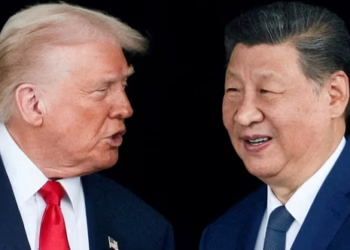
The US president also hinted that diplomatic relations with China could be affected by the situation. He indicated that a planned summit with Chinese leader Xi Jinping might be delayed. Trump said he wanted clearer cooperation regarding the Strait of Hormuz crisis before travelling to Beijing.
China has reportedly engaged in discussions with Iranian authorities about allowing safe passage for energy shipments. While details remain limited, diplomatic sources say talks focused on guaranteeing uninterrupted oil deliveries. The negotiations highlight the broader international stakes involved in the conflict.
At the centre of the dispute stands Iran’s determination to respond to military attacks on its territory. Iranian leaders insist the blockade is a defensive measure against continued airstrikes by foreign forces. They argue that the United States and Israel initiated the confrontation through targeted operations.
Iran’s foreign minister Abbas Araghchi rejected claims that Tehran sought negotiations or a ceasefire. Speaking to American media, he emphasised that Iran was prepared to defend itself indefinitely. He also denied reports suggesting the government had asked for diplomatic talks.
Araghchi insisted that the country remained stable despite heavy losses from recent military strikes. Those attacks reportedly destroyed significant parts of Iran’s naval fleet and missile capabilities. Several senior Iranian commanders were also killed during the aerial bombardments.
Nevertheless, Iranian officials say their military response will continue while foreign forces remain active. Drone and missile attacks across the Gulf region have increased since the conflict began. These incidents have raised fears that the crisis could expand beyond its current boundaries.
The human impact of the conflict has already been felt in neighbouring states. In Abu Dhabi, a missile strike killed one person after hitting a civilian vehicle. Authorities confirmed that several other casualties occurred in earlier attacks.
Meanwhile, aviation disruptions have added further pressure to regional infrastructure. Dubai International Airport temporarily halted operations following a drone-related incident near the runway. Emergency services responded quickly after a nearby fire triggered safety concerns.
As the conflict enters its third week, uncertainty continues to dominate global political discussions. Financial markets remain sensitive to any signs of escalation or diplomatic breakthrough. Energy analysts warn that prolonged disruption could have lasting economic consequences.
Trump has predicted that oil prices will drop sharply once the war concludes. He suggested that the conflict might end within several weeks. However, many experts believe the timeline remains highly uncertain given the complex geopolitical dynamics involved.
For now, the Strait of Hormuz crisis represents one of the most serious challenges facing global energy security. Governments around the world continue balancing economic stability with the risks of deeper military involvement. The coming weeks may determine whether diplomacy or confrontation shapes the future of the Gulf region.
Related News:
 BBC to Apologise Over Edited Trump Speech Amid Backlash
 Britain deploys RAF specialists to assist Belgium with drone threats
 US Justice Department Files Lawsuit Against California Over Partisan Voting Maps
 Greene Pushes Epstein Files Amid Trump Fallout
 Trump Deploys DHS to Charlotte in Major Arrest Operation
 December Run-Off in Chile as Election Produces No Winner
 Canada Passes Carney’s First Budget in Tight Parliamentary Vote
 Shadow Fleet at Sea: Europe’s Battle Against Illicit Oil Shipping
 Pentagon Officials in Ukraine to Discuss War End
 Venezuela Threatens Nobel Winner Machado with Fugitive Status
 Georgians Defy Government Crackdown After Year of Protests
 India’s Labour Law Overhaul Sparks Fierce Debate
 EU plans $105bn Ukraine aid using frozen Russian assets
 Global campaign launched to free Palestinian leader Barghouti
 Trump Policies Boost China’s Global Rise, Survey Finds
 Iran unrest slows under brutal crackdown and global tensions
 Pentagon Signals Reduced Role in Deterring North Korea
 Thousands Protest ICE Operations in Nationwide US Day of Action
 Epstein Files Reveal Trump Officials’ Emails with Financier
 Starmer Condemns ‘Depraved’ Russian Strikes on Ukraine
 Herzog visit sparks protests across Australian cities
 UK and US Drop in Global Corruption Index Rankings
 Sydney Protest Escalates and Elderly Woman Suffers Severe Injury
 Tarique Rahman’s Rise Toward Bangladesh’s Top Job
 Glass Cliff Debate After Ley’s Ouster
 Canberra Poster Seizure Sparks Free Speech Row
 Evo Morales Returns After Mysterious Absence
 AFP Reviews Pauline Hanson Comments
 Duterte ICC Hearing Begins Amid Defiance
 Trump Tariffs Threat Spark UK and EU Alarm
 The Dangerous Rise of Remigration Across Modern Europe
 Trump’s Marathon Speech Fails to Mask a Growing National Disconnect
 Jacinda Ardern Moves To Australia Following Her US Fellowships
 US to offer passport services in West Bank settlements
 Jacinda Ardern Move Sparks Kiwi Reflection
 Health Funding Row Rocks US‑Africa Relations
 Nick Greiner Warns Over Election Review Fallout
 New UK-EU Reset Faces Criticism from Parliament
 Cuba charges six exiles for terrorism after speedboat raid
 Iran Defiance Grows Amid US-Israel War Pressure
 US Strikes on Iran Set for Most Intense Day Yet
 Injured Mojtaba Khamenei Elevated as Iran Leader
 Gordon Brown urges court for crimes against children
 Moscow Internet Blackouts Raise Censorship Fears
 Oil Prices Jump After Trump Claims Iran Oil Hub Destroyed
 Republicans Rebuke FCC Threat Over Iran War Coverage
 Oil Prices Surge as IEA Weighs Emergency Release
 Danish Election Deadlock Shakes Frederiksen’s Grip
 Trump to Visit China in May After Iran War Delay
 Pope Rebukes Leaders for War as Middle East Tensions Rise
 Trump to Deploy “God Squad” Over Gulf Wildlife Protections
 Army Probes Apache Flyover at Kid Rock’s Nashville Estate
 Italian Town Buys Mussolini Villa to Keep Away Fascist Fans
 Report Says Pezzullo Acted ‘Recklessly’ in Dealings
 Trump Employs Nixon’s Madman Theory Amid Iran Crisis
 Trump Voices Frustration Over Nato Role in Iran Conflict
 Hungary election: Orbán faces biggest test amid scandal
 Suspected Plot Targets Pipeline Before Hungary Vote
 Trump Slams UK Ties and Threatens To Rewrite Trade Deal
 Southeast Asia Turns to Russia Amid Energy Crisis
 Capitalism ‘Suicidal’, Warns Petro at Climate Summit
 Judge halts deportation of Yemeni refugees in US
 Activists allege abuse after Gaza flotilla seizure
 Trump approval plunges amid Iran war fears
 Ohio’s Battle for Trust: Democrats Vying to Flip the Buckeye State
 US ‘Narco Boat’ Strikes Draw Global Outcry
 Ohio Primaries Set Stage for Crucial Midterms
 Afghan Families Left in Limbo Face Risk of Deportation
 Tensions Emerge in Netanyahu-Trump Alliance
 US Awaits Iran Reply on New Ceasefire Proposal
 Hormuz Talks Near Critical Stage
 Discontent grows around Putin amid war strain
 Starmer Leadership Under Pressure After Setbacks
 House Curbs Trump’s War Powers in Rare Rebellion
 Germany Summons Chinese Envoy Over Russian Troop Training
 New South Wales Premier Chris Minns Signals Tough Road Ahead for Labor
 Le Pen to Run for President Despite Embezzlement Conviction
 Ukraine Creates Long-Range Strike Command
 Le Pen’s Popularity Holds Despite Conviction
 Houthis Strike Saudi Arabia as Middle East Tensions Rise