Published: 21 March 2026. The English Chronicle Desk. The English Chronicle Online
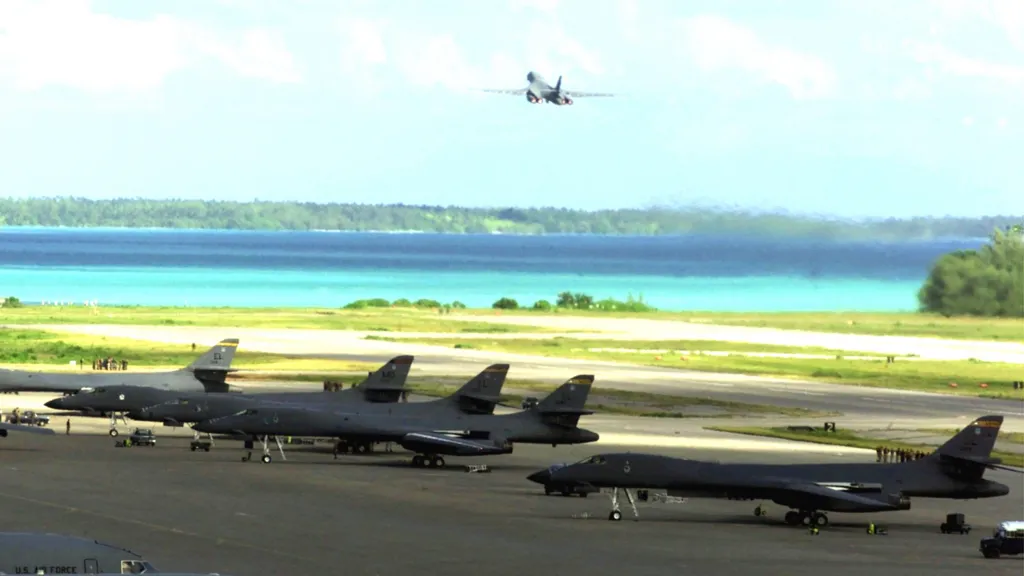
Reports emerged overnight that Iran attempted to strike the strategically important US-UK military base on Diego Garcia, but the attack was unsuccessful. According to the Wall Street Journal and CNN, citing unnamed US officials, two ballistic missiles were launched toward the remote atoll in the Indian Ocean; one failed mid-flight while the other was intercepted by a US warship, leaving the base unaffected. The exact timing of the attempted strike remains unclear.
The UK Ministry of Defence condemned the action, describing Iran’s conduct as “reckless attacks, lashing out across the region and holding hostage the Strait of Hormuz,” and emphasising the threat posed to British interests and allies. While the US military declined to comment on the incident, security analysts have begun scrutinising Iran’s missile capabilities, questioning whether Tehran possesses ballistic systems capable of reaching the base, which lies approximately 2,350 miles from Iran. Some experts, however, suggest Iran’s Khorramshahr missile could potentially have a range up to 1,800 miles.

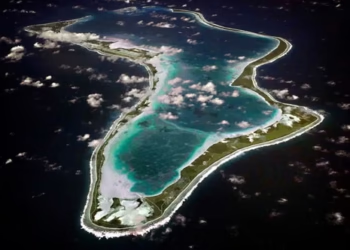
Diego Garcia, a secretive and strategically positioned island in the Chagos Archipelago, has long served as a launchpad for operations in the Middle East. Its capacity to accommodate long-range bombers and host advanced military infrastructure has made it a focal point in US-UK defence planning. Until recently, UK policy limited the use of its bases for strikes directly threatening British interests. This stance was broadened last week under the principle of “collective self-defence,” permitting operations against Iranian sites targeting vessels traversing the Strait of Hormuz, a vital artery through which roughly one-fifth of the world’s oil passes.
International tensions surrounding the strike are compounded by diplomatic friction. Iran’s Foreign Minister Abbas Araghchi criticised the UK for endangering British lives, warning of Tehran’s right to self-defence. Meanwhile, former US President Donald Trump criticised UK and NATO allies for what he deemed insufficient action to secure regional waterways, repeatedly labelling them as “cowards” in the face of a “simple” military task with minimal risk.
Domestically, UK politicians are debating the implications of allowing US forces to operate from British bases in the conflict. The Liberal Democrats and Green Party have called for a parliamentary vote, while Conservative leader Kemi Badenoch decried the policy shift as the “mother of all U-turns.” Prime Minister Sir Keir Starmer has scheduled a Cobra meeting next week to assess measures to mitigate potential economic fallout from energy market disruptions caused by the conflict, as highlighted by projections from the International Energy Agency.
The historical context of Diego Garcia further complicates the situation. Although the Chagos Islands remain under UK control, the British government has agreed to transfer sovereignty to Mauritius while retaining a lease on the military base. This arrangement has faced domestic opposition and criticism from Chagossians displaced during the 1960s to make way for the base. Disputes over the legality of British sovereignty and the ethical ramifications of displacement continue to surface as the island’s military significance grows amid renewed regional hostilities.

Iran has previously targeted US and allied facilities across the Middle East, including drone strikes on RAF Akrotiri in Cyprus, one of which caused minimal damage to the runway. In response to the latest attempted strike, the UK dispatched HMS Dragon, a Type 45 destroyer, to the region, enhancing protective measures around Diego Garcia. Military experts emphasise that while the interception of missiles demonstrates readiness, the incident underscores persistent vulnerabilities and the need for continued vigilance.
As geopolitical tensions escalate, the failed strike on Diego Garcia exemplifies the precarious balance between military preparedness, diplomatic negotiations, and domestic political considerations. The international community continues to monitor developments, while the UK government faces the dual challenge of defending strategic interests and mitigating economic and societal impacts arising from the conflict.
Related News:
 British Woman in Iran ‘Losing Hope’ Amid Ongoing Detention
 BBC Journalist Held and Interrogated in Vietnam
 Green Party Surges Past Labour in Latest UK Poll
 Celebrities and Charities Demand UK Government Act on Child Poverty
 Trump’s UK Ambassador Urges North Sea Drilling to Strengthen US Ties
 FBI Director Kash Patel Defends Girlfriend Amid Government Jet Claims
 French Taxi Driver Cleared in David Lammy Theft Case After Fare Dispute
 ‘Reckless’ cuts to victims’ services will cost more than they save
 Millionaires group urge Reeves to introduce wealth tax to ‘lift kids out of poverty’
 Starmer Faces Growing Dissent as Labour MPs Weigh Leadership Challenge
 Reeves rejects £1bn plea for NHS redundancy payouts
 Politics latest: Starmer ‘will fight any leadership coup’ as Streeting denies attempt to oust Labour PM
 PM Condemns Leaks, Vows Loyalty to Ministers and Stability
 Major Rent Reform Ends No-Fault Evictions in England
 Peers Flood Assisted Dying Bill with 942 Amendments
 England’s Special Needs Support Faces Breaking Point
 MoD warned over Excel risks before Afghan data breach
 Labour Faces Historic Decline in Wales
 PM Highlights UK Business at G20 in South Africa
 Kate Forbes: Motherhood Harder Than Politics
 Most Tories Expect to Support a Farage-Led Government
 Labour MP claims devolution bill is ‘blatant discrimination’ against Cornwall
 Millions Face Higher Taxes Under Reeves New Budget
 Peers Get Extra Time to Debate Assisted Dying Bill
 Starmer Says Labour’s Economic Plan Needs Years to Deliver
 Culture secretary to review Telegraph takeover by Daily Mail owner
 Plans to Limit Jury Trials Face Retreat After Mounting Opposition
 Right Must Unite After Jenrick Defection, Urges Rees-Mogg
 UK Ministers Drop Foreign Student Targets for Global Education Push
 MPs warn AI financial risks threaten UK stability
 MPs warn AI financial risks threaten UK stability
 No Gas Boiler Ban as UK Warm Homes Plan Backs Heat Pumps
 Hugh Grant Joins Call for Under-16 Social Media Ban in UK
 Shinzo Abe’s killer receives life sentence in Japan
 Lords Vote Piles Pressure on Starmer Over Social Media Ban
 Reform UK Health Plan ‘Would Cost £1.7bn’, Streeting Says
 Police response times face strict new national limits
 Labour policing overhaul sparks fears over growing central control
 Tories criticised after Braverman defection sparks mental health row
 Burnham Westminster return hopes fade amid Labour rift
 Starmer warns of toxic division politics in Reform challenge
 Starmer China visit raises human rights pressure on Beijing
 Labour Must Revive High Streets to Avoid Election Collapse
 Calls Grow for King Charles to Apologise for Crown’s Role in Slavery
 Palantir contracts face UK halt calls over transparency
 Labour Thinktank Row Deepens Over Journalist Probe Claims
 Sarwar call shakes Labour as No 10 calms fears
 Labour Lord Doyle Apologises Over Paedophile Ties in Political Storm
 Cabinet Secretary Shake-Up Triggers Due Diligence Warning
 Starmer Faces Inquiry Calls Over Thinktank Probe
 Royal Mail Delivery Crisis Deepens Amid Weather Chaos
 Labour Together probe scandal sparks fresh Cabinet Office investigation
 Farage to Name Jenrick as Reform Chancellor Pick
 NHS Negligence Ruling Raises Payout Costs
 Civil Service Pay: Union Urges Ministers to End ‘Barking Mad’ Limits
 Antonia Romeo appointment sparks criticism
 Trump and Chagos Deal Rift Over Iran Strikes
 Farage Chagos Islands Row Sparks Fury
 Trump Tariffs Threat Spark UK and EU Alarm
 Gasfield Deal Sparks Debate Over Fracking in Lincolnshire
 Reform UK targets workers’ rights repeal
 Mandelson Denounces Arrest Over ‘Baseless’ Fleeing Claims
 Russian Trade Routed Through British Islands Exposed
 Mandelson Arrest: Met Apologises to Hoyle
 Palestine Action ban appeal moves forward
 Reeves Must Back Defence Plan or Face Dismissal, Says Unite Chief
 NHS Maternity Units Cover Up Harmful Childbirth Errors
 Green Party Stuns Labour in Gorton and Denton Byelection
 Refugee Status Overhaul Sparks UK Debate
 Trump Rebukes Starmer Over Iran Strikes Row
 BBC Charter Reform Sparks Independence Battle
 Asylum Seekers to Work After Year-Long Wait
 Thousands Protest Iran Strikes Outside US Embassy London
 US Bombers Arrive at RAF Base Amid Rising Iran Tensions
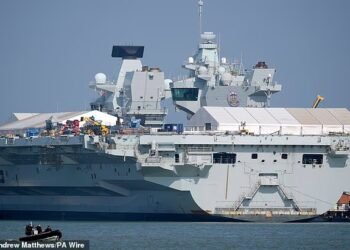 UK Prepares Aircraft Carrier for Middle East Crisis
 UK Oil and Gas Supplies Reassured Amid Middle East Concerns
 Proposed Law Leaves Gap for Children of Convicted Paedophiles
 Ministers Urged to Act Faster on Deepfakes Threat
 Yvette Cooper: UK Must Follow Principles, Not US Pressure
 UK Cuts Climate Aid by 14% in Strategic Refocus