Published: 17 April 2026. The English Chronicle Desk. The English Chronicle Online.
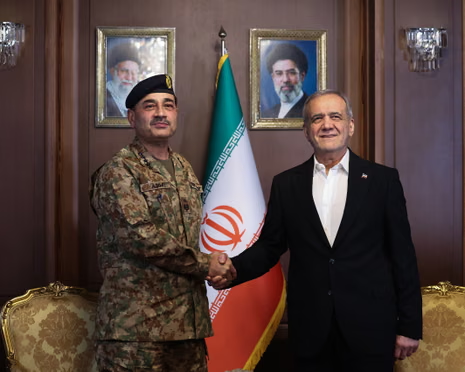
Stepping off a plane on Wednesday evening, Field Marshal Asim Munir walked straight into the warm embrace of Iran’s foreign minister and chief negotiator, Abbas Araghchi. Dressed in full army fatigues, the powerful chief of Pakistan’s military cut an unusual figure as a beacon for peace. Yet that was just the role he intended to play during this critical week. Munir had rushed to Tehran in what many saw as a last-ditch attempt to revive Pakistan’s efforts to mediate an end to the war. This conflict between the United States and Iran has reached a boiling point that threatens the entire region. Four days earlier, the US vice-president, JD Vance, left Islamabad after more than twenty-one hours of intense talks. Those discussions between the US and Iran unfortunately failed to broker a definitive and lasting peace deal. But even as the US president, Donald Trump, quickly lashed out, the situation remained quite fluid. He imposed a naval blockade on the strait of Hormuz that risked escalating the war further. Simultaneously, he also praised Munir’s fantastic efforts in continuing negotiations between the two warring sides. On Wednesday night, the army chief arrived in Tehran with a fresh framework for talks. He carried a new proposal from Washington for a fresh round of talks next week. This meeting is scheduled to take place in Islamabad to find a common ground soon.

Pakistan has emerged as an unlikely diplomatic broker between Iran and the United States lately. Munir is widely seen as a key driving force behind this surprising geopolitical shift today. Pakistan’s army chief was one of the few able to get the top leadership talking. He can get the US and Iranian leadership on the phone at any moment now. He passes along messages as a trusted intermediary to both sides with great tactical skill. It is widely acknowledged that the negotiations have been coordinated from the city of Rawalpindi. This is the seat of the army rather than the civilian seat in Islamabad. Field Marshal Munir is the driving force because without him this would not work well. This sentiment was echoed by Maleeha Lodhi, who served as a former senior Pakistani diplomat. She has represented the nation at the United Nations, the US, and the UK previously. She noted that the foreign ministry is currently acting as a junior partner in this. Countries like Iran and the US have immense confidence in Asim Munir right now. Our government ministers are really an adjunct to the military’s primary diplomatic efforts today.
It was Munir’s phone calls that led the frantic international efforts just last week. These calls resulted in a last-minute ceasefire agreement after Trump’s recent and very dark threats. Trump had suggested that Iran’s civilisation would die if they did not agree to deals. Trump is said to have directly leaned on Munir to use his deep influence. He wanted the General to use his knowledge of the Iranians to reach an off-ramp. When the US and Iranian delegations met in Islamabad on Saturday, Munir was there. He sat as the critical third party in the room during those very tense hours. This week, Munir travelled to Iran as the critical messenger and lead negotiator personally. Meanwhile, Pakistan’s prime minister, Shehbaz Sharif, took a different diplomatic trip to Saudi Arabia. He aimed to shore up regional support for the country’s ongoing peacemaking efforts elsewhere. Analysts have emphasised that it is not unusual for Pakistan’s army chief to lead. This unelected yet overwhelmingly powerful position often shapes the country’s entire foreign policy. He is the face of foreign engagements even when civilian governments are in charge. US presidents have long preferred dealing with Pakistan’s military leaders over the elected ones.
Yet Munir was not always an obvious international statesman according to many regional experts. After his appointment in 2022, his focus was largely on pressing domestic Pakistani issues. This included a crushing of the country’s political opposition and consolidating his internal power. He orchestrated an unprecedented concentration of his own power within the borders of Pakistan. However, over the past year and a half, he has pushed himself globally now. He has been busy cultivating strong relationships in Washington, Riyadh, and also in Tehran. By the end of 2025, he had visited the White House twice for meetings. He oversaw US-Pakistani deals on cryptocurrency and mineral mining during his various state visits. He even signed a significant defence pact with Saudi Arabia to bolster regional security. He’s been very good at building relationships with leaders through frequent and direct visits. He is not a laid-back leader who waits for a phone call to happen. As seen in his diplomatic activism, he will pick up the phone himself often. Crucial to Munir’s current clout was his part in rebuilding the US-Pakistani bond. He did this during the second Trump administration through a combination of strategic wins.
He used a mixture of lobbying, flattery, and economic deals to gain Trump’s trust. He gave Trump an early victory by handing him several high-profile wanted individuals. These terrorists were extradited to the US to face justice in the American courts. Then, the US intervened in the rising hostilities between India and Pakistan last May. Pakistan effusively thanked Trump and even nominated him for the Nobel Peace Prize then. Munir successfully managed to claim victory in that conflict to boost his own image. This further elevated his position both domestically and on the international stage quite significantly. Two months later, Pakistan spent over five million dollars on Washington lobbyists for access. Munir was then invited to the White House for a private and exclusive lunch. He appeared to charm the US president with flattery and lucrative investment opportunities. These opportunities ranged from oil and minerals to the growing sector of digital crypto. Trump liked Munir so much he was formally invited back very soon after that. The president showered him with gushing praise during their many meetings in the office. He called him an exceptional man and a great fighter during his public remarks. He even referred to the general as his favourite field marshal in the world..

Munir is also well-versed in communicating with Iran’s powerful Revolutionary Guards on their terms. While relations between Islamabad and Tehran were shaky in early 2024, things have changed. Much goodwill was rebuilt last year after Pakistan’s unequivocal condemnation of certain regional actions. Public sentiment in Pakistan remains overwhelmingly pro-Iran among the general population and the military. As Avinash Paliwal of Soas University describes it, Munir had been dealt a hand. He played a bad hand very well through agile handling of the Trump administration. He understood the importance of personality-driven diplomacy in the modern era of world politics. The personalised and centralised system under his command allows Pakistan a degree of flexibility. This flexibility helps them play the role of the mediator with great credibility now. Nonetheless, Paliwal cautions against giving too much credit to just one single man today. Pakistan’s wide-ranging diplomatic campaign involves many key government ministers flying across the entire globe. They have travelled to China, Saudi Arabia, and Turkey to push for this deal. Muhammad Mehdi, a political analyst, said Munir has been at the very forefront here. But this has been a collective effort by many sides in the government.
Many sides in the military have had a role to play in this success. As analysts emphasise, much rides on the ultimate success of these very delicate talks. This matters for Munir personally and for Pakistan’s push to be seen as credible. They want to be a diplomatic interlocutor with enough clout to push for peace. This deal seemed completely impossible just a few weeks ago to most global observers. But most pressing for the military is the urgent need to end this war. The conflict risks further economic and security devastation in Pakistan if it continues longer. Even if a deal were struck soon, Munir’s role would likely not end there. Pakistan could emerge as a major operational player in maintaining peace in the Gulf. This is a man who feels he will have a stronger role later. He wants to be part of whatever security architecture develops in the Middle East. Pakistan now is absolutely central to peace-building in this very troubled part of the world. For Munir, this is clearly about building a lasting and powerful global story. He seeks to transform his nation into an indispensable partner for the Western powers. The road ahead remains difficult but the General seems ready for the challenge. Every move he makes is calculated to ensure Pakistan’s voice is heard very clearly. The eyes of the world now remain fixed on the next meeting in Islamabad. Success there could change the course of history for the entire twenty-first century. Failure is not an option for the man who would be the peacemaker.
Related News:
 Ukraine war briefing: Zelenskyy offers help to Saudi Crown prince on combatting Iranian drones
 Ukraine Sends Drone Experts to Defend US Bases in Jordan
 Saudi Arabia Urging US to Keep Up Iran Attacks
 Diplomacy on the Brink: Pakistan’s Risky Peace Mission
 Trump Slams Europe as Transatlantic Tensions Boil Over
 High-Value Target: Iranian Strike Destroys US Radar Plane
 UN Warns Israeli Death Penalty Bill Could Be a War Crime
 Pakistan and China Propose Five-Part Peace Plan
 Trump Issues Stark Warning After Strike On Iran’s Largest Bridge
 Hope and Fear as Iranians Flee Across the Turkish Border
 The Price of Hubris: Trump, Netanyahu, and the ‘Easy’ War
 Israel Defies Ceasefire as Lebanon Operations Persist
 Middle East Peace Crisis: Ceasefire Strained by New Violence
 Pakistan Brokers Historic Peace Deal Amid Rising Tensions
 Netanyahu Vows Continued Lebanon Strikes Amid Peace Talks
 Islamabad Hosts Historic Peace Talks Between Iran and USA
 US and Iran Pursue Extension of Ceasefire via Pakistan
 Trump’s Islamabad Gamble: The High Stakes of a New Iran Deal
 Can Trump’s Ceasefire Hold in Lebanon?
 Global order shifts amid Trump-era turmoil
 Middle East Crisis Escalates as Oil Routes Shake Markets
 Saudi Arabia Blocks Trump’s Naval Plan for Hormuz Strait
 Tensions Emerge in Netanyahu-Trump Alliance
 UAE’s Secret Strike on Iran Risks Wider Gulf Conflict
 Netanyahu Claims Secret UAE Visit Amid Regional Conflict
 Netanyahu Calls Early Election Amid Coalition Turmoil
 Plea for Mercy: The Battle to Bring Ahmed al-Doush Home
 Trump Issues New Threat of Strikes Amid Iran Standback
 Global Outrage After Israeli Minister Mocks Bound Activists
 Israeli Strikes in Lebanon Kill 10 Amid Ceasefire Strain
 Hunger increasingly weaponised in global conflicts
 Former ICC prosecutor condemns US sanctions
 Trump and Netanyahu Clash Over Crucial US and Iran Peace Deal
 Washington Brokerage Sparking Hope Amid Regional Firestorms
 Israel Defies Trump in Direct Strikes on Targets Across Iran
 US and Iran Agree Historic Framework to End 15-Week War
 Global Powers Navigate Fragile Peace as Hormuz Reopens
 Trump Signs Landmark Iran Accord in Versailles
 Uncertainty Prevails as Landmark Peace Talks Abruptly Conclude Before Commencement
 Iran To Propose New Shipping Fees In Strait Of Hormuz
 Grief and Devotion Amidst the Rubble of Nabatieh
 High Drama in Tehran Over Secret Nuclear Letters
 Iran Prepares for Massive Six-Day Funeral for Khamenei
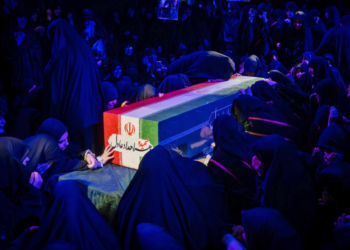 Iran Prepares for Massive Funeral for Supreme Leader
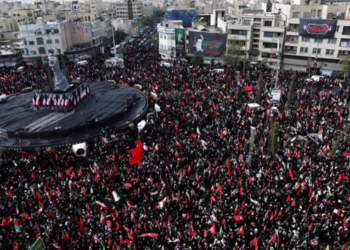 Iran Bids Farewell to Fallen Leader in Massive Procession
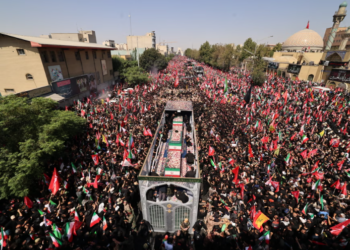 Iran Mourns: Millions at Khamenei’s Final Procession
 Hamas Proposes Handing Over Control of Gaza Strip
 Israeli Officer Investigated for Car Grenade Attack
 Yemen Accuses Iran of Violating National Sovereignty
 Trump Threatens Iran Power Strikes Over Hormuz Impasse
 Houthis Strike Saudi Arabia as Middle East Tensions Rise
 Friedman Uninvited From 2024 Adelaide Writers’ Week
 New Zealand Covid Response Praised Despite Lingering Scars
 Injured Mojtaba Khamenei Elevated as Iran Leader
 Trump’s Six-Week Iranian War: The High Cost of Ignorance
 Reform UK Pledges To Halt Visas Over Reparations Demands
 US and Iran Agree to Two-Week Provisional Ceasefire
 Trump Signals Hope for New Iran Talks as Ceasefire Fades
 Trump’s Presidency: A House of Cards Collapsing?
 US Forces Seize Iranian Ship Near Hormuz Blockade
 Trump Starts $166bn Tariff Refund Process
 Investigation: Offshore Loans and Sanctions
 Prominent Voices Challenge Palestine Action Ban
 Cross-Border Crisis Shatters Fragile Afghan Peace
 The Burning Lens: An Iranian Artist’s Visual Resistance
 FIFA Confirms Global Ban for Benfica Star Prestianni
 One Nation Candidate’s Surprising Ties to Independents
 Putin Signals War End as Russian Momentum Stalls
 Romania’s Judicial Crisis: A System Under Siege
 Scepticism and tight security as Beijing braces for Trump
 Philippine Senator Flees After Days Under Senate Siege
 Tensions Flare as Israeli Nationalists March in Jerusalem
 Secrecy Down Under: Albanese Faces FoI Scandal
 Tony Abbott Returns as New Liberal Party President
 Discontent grows around Putin amid war strain
 Teaching Machines Right From Wrong in the Digital Age
 Trump Urged to Condemn UFC Fighter Over Obama Slurs
 US Military Pacific Boat Strike Kills Three People
 Trump’s Mount Rushmore Speech: A Divisive Anniversary
 Trump Swaps Planes Amid Iran Tensions