
Published: 27 April 2026. The English Chronicle Desk. The English Chronicle Online.
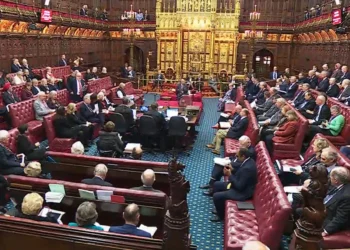
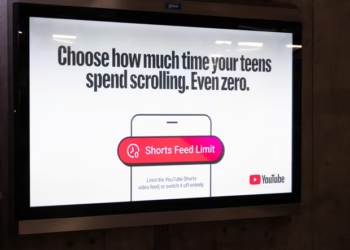
The House of Lords prepares for a significant confrontation regarding children’s digital safety this coming Monday. Peers will cast their votes on a controversial government amendment potentially delaying crucial social media restrictions. This legislative move could postpone meaningful action on children’s online access for up to three long years. Such a substantial delay has triggered an immediate and vocal backlash from various advocacy groups and senior peers. Ministers recently tabled this amendment within the children’s wellbeing and schools bill to buy extra time. Critics warn this strategy risks watering down earlier government promises to implement changes within a few months. There is widespread fear that this approach might result in only limited interventions like basic parental controls. Such measures would fall far short of the sweeping access restrictions initially promised to concerned parents and experts.
Campaigners are now urgently calling upon the Lords to decisively reject this hesitant government approach during voting. They are instead throwing their full support behind a much tougher proposal championed by the Tory peer Lord John Nash. This robust amendment would legally compel the government to raise the minimum age for social media access to sixteen. Furthermore, it mandates that these new age restrictions must be fully enacted within a period of only twelve months. Peers have already demonstrated their strong support for Lord Nash’s proposal on three separate occasions during this legislative process. The most recent vote saw the amendment pass with a significant margin of one hundred and twenty-six votes. Despite this clear expression of parliamentary will, the government previously used its Commons majority to block the proposed change. This has led to its critical reintroduction at the very last stage of the bill’s passage through the upper house.

The legislative calendar adds immense pressure because the prorogation of parliament is widely expected to occur within the next week. Consequently, Monday’s vote represents the final opportunity for peers to force this urgent issue back onto the national political agenda. If the bill fails to complete its parliamentary passage in time, the government risks losing the entire piece of legislation. Lord Nash, a former Conservative schools minister, has offered a blistering critique of the government’s current tactical maneuvers. He explicitly accused ministers of saying one thing while simultaneously legislating for something entirely different in this specific bill. Nash argued that the new amendment directly contradicts earlier assurances that meaningful action would be taken very quickly indeed.
During a recent statement, Lord Nash described the government’s position as nothing short of a deliberate act of public deception. He questioned the logic of promising action in months while tabling amendments that propose waiting for three full years. The peer rhetorically asked what exactly would change for the better during that extended three-year waiting period for children. He warned that social media platforms will only continue to grow more powerful during that time of complete legislative inaction. More children will inevitably be harmed and the consequences could tragically worsen if the current status quo remains unchanged. Nash insisted that this is not a serious proposal and that parliament should not treat it with any genuine respect. He urged his colleagues to use this final chance to reject the government’s shamefully inadequate approach to digital regulation.
Instead, he encouraged the house to vote for his amendment, which would codify the commitment to raising the age to sixteen. As the bill reaches its final stages, Lord Nash declared that he would not stop until that commitment is secured. High-profile voices are also joining the national debate, reflecting the deep public concern surrounding children’s online health and safety. Last week, the singer Cheryl Tweedy publicly endorsed an outright ban on social media for those under the age of sixteen. She described current platforms as addictive, emotionally destroying forces that cause significant harm to young people throughout the United Kingdom. Meanwhile, various senior tech executives have continued to deny that their specific platforms are inherently addictive to vulnerable young children.

These denials have failed to placate the growing number of campaigners echoing the stern criticisms leveled by Lord John Nash. Ellen Roome, a bereaved mother who lost her son Jools Sweeney, highlighted that this issue is a vital test of political urgency. Jools Sweeney sadly passed away during a suspected incident involving a dangerous viral online challenge often found on social media platforms. Roome expressed her profound disbelief that the government now wants up to three years before it will finally take action. She noted with particular frustration that the proposed government action could mean as little as simple parental control software settings. This amendment is seen by many as a direct insult to every grieving parent who has campaigned in their child’s memory. They work tirelessly so that other families do not have to endure the same heartbreak that they have personally experienced.
The campaign continues to demand answers about how many more children will be harmed every single day by these catastrophic effects. Roome added that we must consider how many more children will be lost while the prime minister reserves the option of doing almost nothing. She questioned how this delay could possibly square with the language previously given to parents that action would come in months. Tomorrow, parliament has its final chance to reject this charade and vote for the amendment proposed by Lord Nash. She implored the members of the House of Lords to simply do the right thing and act immediately to protect our youth. The government is expected to argue that significantly more time is required to carefully consider the complex evidence regarding social media. They will likely point to the immense practical challenges of enforcing strict new rules on massive, global, and highly sophisticated tech platforms. Despite these governmental concerns, the pressure from campaigners and the House of Lords remains at an all-time high for this week.
Related News:
 Green Party Surges Past Labour in Latest UK Poll
 Trump’s UK Ambassador Urges North Sea Drilling to Strengthen US Ties
 French Taxi Driver Cleared in David Lammy Theft Case After Fare Dispute
 Millionaires group urge Reeves to introduce wealth tax to ‘lift kids out of poverty’
 Starmer Faces Growing Dissent as Labour MPs Weigh Leadership Challenge
 Reeves rejects £1bn plea for NHS redundancy payouts
 PM Condemns Leaks, Vows Loyalty to Ministers and Stability
 Major Rent Reform Ends No-Fault Evictions in England
 Peers Flood Assisted Dying Bill with 942 Amendments
 Most Tories Expect to Support a Farage-Led Government
 Labour MP claims devolution bill is ‘blatant discrimination’ against Cornwall
 Starmer Says Labour’s Economic Plan Needs Years to Deliver
 Culture secretary to review Telegraph takeover by Daily Mail owner
 UK Government Borrowing Drops to £11.6bn in December
 Labour Blocks Burnham as Party Rift Deepens Ahead of Polls
 Andy Burnham and the Labour Rift Over Power and Leadership
 Huge mistake: Labour blocks Burnham from byelection bid
 Artificial intelligence will cost jobs, admits Liz Kendall
 Labour targets Greens on drugs in Gorton Denton byelection
 Greens nominate Hannah Spencer for Gorton and Denton byelection
 Mandelson Faces Police Inquiry Over Epstein Leak
 Starmer Condemns ‘Depraved’ Russian Strikes on Ukraine
 Labour Thinktank Row Deepens Over Journalist Probe Claims
 Morgan McSweeney downfall shocks Labour leadership
 Labour Lord Doyle Apologises Over Paedophile Ties in Political Storm
 Cabinet Secretary Shake-Up Triggers Due Diligence Warning
 Starmer Faces Inquiry Calls Over Thinktank Probe
 Royal Mail Delivery Crisis Deepens Amid Weather Chaos
 UK shelves £110m border project amid trade strain
 Farage Unveils Reform UK Frontbench Team
 California Democrats Vow Trump Reckoning
 Trump Tariffs Threat Spark UK and EU Alarm
 Wales Approves Assisted Dying Bill Consent
 UK EU Trade Reset Gains Public Backing
 Your Party leadership fight nears dramatic end
 NHS Maternity Units Cover Up Harmful Childbirth Errors
 Green Party Stuns Labour in Gorton and Denton Byelection
 Corbyn Leads Your Party in Coordinated Left-Flank Strategy
 Labour Together scandal sparks clean break vow
 Asylum Seekers to Work After Year-Long Wait
 Starmer Row as Greens Demand Apology
 Proposed Law Leaves Gap for Children of Convicted Paedophiles
 Gordon Brown urges court for crimes against children
 Starmer Praised for Stance on Trump and Iran Conflict
 Inquiry into HMRC child benefit errors launched by NAO
 NHS Plans to Cut Overseas Workers Labeled Overambitious
 Farage Faces Backlash Over Crypto Cameo Endorsements
 Family Court Reform Promises New Era for UK Families
 Army Probes Apache Flyover at Kid Rock’s Nashville Estate
 Relationship with Trump may be beyond repair, Starmer warned
 Unions Raise Concerns Over Doctors’ Pay Dispute
 UK Government Poised to Revive Stalled Hillsborough Law
 Starmer Faces Commons Test Over Mandelson Scandal
 UK Stands Firm on Falklands Amid US Rift
 Crackdown Backfires on UK Climate Protesters
 Starmer Survives Mandelson Rebellion
 Labour Members Doubt Starmer Future as Burnham Leads Poll
 Reform UK Faces Crisis as Newly Elected Councillors Resign
 Farage Faces New Questions Over Private Helicopter Use
 NHS Drug Deal Faces Legal Threat Over US Trade Agreement
 Green Party Makerfield Candidate Resigns Over Posts
 UK Welfare: Focus on Jobs Over Benefit Cuts, Says JRF
 Secret Role of UK Security Services in Troubles Amnesty Law
 Starmer Leadership Under Pressure After Setbacks
 The Hidden Crisis Eroding Trust in British Communities
 Deepfake Abuse on X Sparks Safety Concerns for Dissidents
 Modernising the Military: Carns Demands Urgent Procurement Reform
 UK Ministers Lobby Trump Over Under-16s Social Media Ban
 Starmer Resolves to Fight Burnham in Leadership Battle
 Starmer Resigns as Prime Minister Amid Internal Pressure
 MP Warning: Northern Rail Risks Repeating HS2 Failures
 Hollie Ridley to Step Down as Labour General Secretary
 New South Wales Premier Chris Minns Signals Tough Road Ahead for Labor
 Jarvis Urges Burnham to Secure 3.5% Defence Spending
 Farage Warns Sky News Following Financial Inquiry
 Reform UK Finances Face Deep NCA Probe
 Ann Widdecombe, Formidable Political Figure, Dies at 78
 Treasury Reform Urged After Tragic Loss
 Sadiq Khan Backs Call for Maximum UK Work Heat Limit
 Former Diplomats Urge UK and France to Act on Palestine