Published: 27 April 2026. The English Chronicle Desk. The English Chronicle Online.
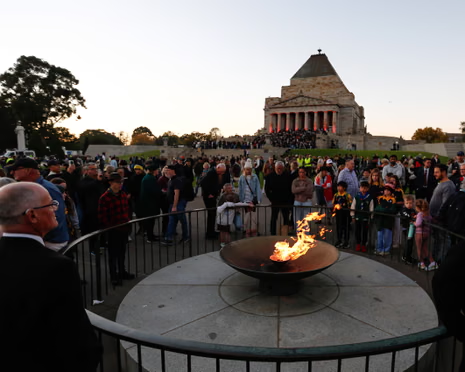
A prominent anti-immigration organisation has denied coordinating the recent disruption at national memorial services. This denial follows significant public backlash regarding the organised booing during various Anzac Day ceremonies across the country. The group claims it did not actively orchestrate the protests despite posting provocative questions online beforehand. One specific social media post asked followers exactly how loud they planned to be during this year’s events. Booing during the traditional welcome to country ceremonies has now marred these solemn national services for two years. This recurring behaviour has ignited a broad and heated public debate regarding the role of these traditions today.
Uncle Ray Minniecon, a respected Indigenous elder, served in the armed forces with pride and immense personal distinction. He was subjected to public mocking while giving an acknowledgment of country at the Sydney dawn service event. Minniecon later stated that the audible derision was entirely unexpected and proved to be completely unnecessary during proceedings. He expressed deep confusion regarding the intense levels of hatred directed toward Indigenous Australians in public spaces. He questioned what specific crimes his people had committed to warrant such aggressive reactions from fellow citizens. The elder described the situation as deeply mysterious and painful for those participating in the honoured traditions.

Active opposition toward welcome to country ceremonies was heavily encouraged by the group known as Fight for Australia. Its leader describes this specific organisation as the sister group to the larger, more established March for Australia. That larger organisation has successfully staged numerous major anti-immigration rallies across the nation over the last several years. Reports indicate that Fight for Australia encouraged its many online supporters to contact local branches of the RSL. They specifically asked that these welcomes to country ceremonies not be included in the traditional Anzac Day order.
On Friday, the organisation posted a video of a Melbourne service from the previous year, featuring a protest. That video included superimposed text directly asking followers how loud they planned to be during the upcoming memorial service. The March for Australia group maintains a very large following across its primary social media platforms and community pages. The individual identified as the main organiser for both groups goes by the online moniker of Bec Freedom. She has thousands of followers and consistently shares content that aligns with the group’s broader ideological mission. Fight for Australia, although launched only recently, shares the same content and messaging across all its linked digital channels.
Bec Freedom explicitly claimed that her group did not formally organise the booing seen at these solemn events. However, she notably refused to offer an apology for the activity or the disruption caused to the families. She stated that they simply asked followers about their plans due to substantial grassroots public interest in the specific topic. She firmly stands by the inflammatory content she posted on social media platforms leading up to the holiday. She further claimed that people chose to boo to demonstrate their unhappiness with rituals performed on such sacred days.
When asked if the behaviour was disrespectful to veterans, she shifted the focus toward the ritual itself instead. She argued that it is fundamentally disrespectful to perform what she termed woke rituals on a day for soldiers. The leader insisted that the ceremony itself was the target, while her group appreciates the service of the military. This distinction does little to comfort those who see the behaviour as an affront to the Anzac spirit. Meanwhile, others connected to the movement were actively blocked from attending services by law enforcement in Western Australia.
Police in Perth prevented five individuals from entering the dawn service due to their known association with the group. Officers explicitly told them they were being removed because authorities believed they would interrupt the sanctity of the service. A statement from Western Australian police confirmed they removed fifteen people identified as members of these specific groups. No formal arrests were made during these interventions, which were designed to maintain the peace and protect the veterans. This intervention highlights the growing tension that local authorities must manage during these increasingly controversial public memorial events.

On a national broadcast, Minniecon highlighted the rising hostility toward Indigenous Australians since the defeat of the recent referendum. He explained that all they ask is for basic acknowledgment and respect while people are on their traditional land. He noted that it is not difficult to understand why respect remains a core part of human social interaction. He expressed frustration that this particular reaction is occurring despite the shared history of this country and its people.
The political establishment has reacted sharply to these events, with the Opposition leader calling the behaviour totally un-Australian. Angus Taylor condemned the booing but argued that the acknowledgments themselves are becoming overused and therefore devalued over time. His comments mirrored those of former leaders who previously claimed the rituals were overdone during the last election cycle. Conversely, the leader of the Greens, Larissa Waters, described the act of booing as being utterly and truly disgraceful. She pointedly reminded the public that many Indigenous Australians have served with distinction in the nation’s own defence force.
Other political figures have also weighed in, with some expressing strong condemnation while others remain critical of the ceremonies. One Nation MP Barnaby Joyce stated that he did not condone the booing but remains opposed to the ceremonies. He argued that people who have served the nation do not necessarily need to be welcomed to their own country. The Deputy Prime Minister, Richard Marles, strongly disagreed and described the entire situation as being deeply and profoundly disrespectful. He emphasized that the welcome to country is a simple and respectful gesture for any public event in Australia. He concluded that the booing stands in direct opposition to everything that Anzac Day signifies for the entire nation.
Related News:
 UK Banks Granted Reprieve as BoE Delays Basel III Capital Rules Until 2028
 Singapore Corruption Scandal: Details Emerge on Iswaran’s Luxury Flight and Ties to Tycoon Ong Beng Seng
 Corfu Beyond the Crowds: Discovering Serenity in Southern Villages and Hidden Taverns
 Peter Andre Praises Son Junior’s ‘Quiet Season’ Amid Ongoing Family Dispute
 Massive 641-Mile Storm Set to Batter UK with 15 Hours of Rain and Strong Winds
 Jeremy Clarkson’s Pub: A Sunday Lunch Like No Other
 Scottish Government Mandates Single-Sex Toilets and Changing Facilities in Schools
 Reeves Faces Setback as Labour May Miss Homes Target
 Kate Winslet to Narrate Film Highlighting King’s Environmental Mission
 Trump’s UK Ambassador Urges North Sea Drilling to Strengthen US Ties
 Federal Immigration Shift: Officers Leave Louisiana for Minneapolis
 Fatal Bolton Taxi Crash Claims Three Teens and Driver
 Australia grants Asio powers to designate hate groups under new laws
 Friedman Uninvited From 2024 Adelaide Writers’ Week
 ScottishPower Tops List of Worst UK Energy Suppliers
 Judi Dench Champions Fight to Save London’s Green Spaces
 Crowborough Camp Welcomes First Asylum Seekers
 BBC Funding Crisis: Tim Davie Warns of Jeopardy Ahead
 ABC Facebook Page Briefly Hacked, Adult Photos Posted
 Artificial intelligence will cost jobs, admits Liz Kendall
 Older Women Vanish from BBC Screens, Review Confirms Bias
 Meta trial over child exploitation claims begins
 Streeting moves on doctor pay to end strike dispute
 Ben Stokes injury joke after brutal ball strike
 UK and US Drop in Global Corruption Index Rankings
 Send spending gap leaves deprived areas behind
 Hidden Crisis: Domestic Abuse Suicide Toll in UK
 UK Unemployment Rate Climbs to 5.2% Peak
 Canberra Poster Seizure Sparks Free Speech Row
 BBC World Cup Presenting Duties Shared Among Trio
 Wales Approves Assisted Dying Bill Consent
 CPS Updates Guidance on Honour-Based and Dowry Abuse
 Stewart Brand on Musk, Bezos and a Life of Long Thinking
 English Cricket Faces Moral Crisis Over Indian Investment
 Jacinda Ardern Move Sparks Kiwi Reflection
 Middle East Airspace Crisis Strands Thousands
 Kelly Wilkinson Inquest Reveals Bail Failure
 Asylum Seekers to Work After Year-Long Wait
 Princess Eugenie steps down as patron of anti-slavery charity
 New Zealand Covid Response Praised Despite Lingering Scars
 Injured Mojtaba Khamenei Elevated as Iran Leader
 The Kill Line: A Shifting Vision of the American Dream
 Inquiry into HMRC child benefit errors launched by NAO
 Family of Alleged Bondi Gunman Seeks Name Suppression
 Rising Costs Force Families to Rethink Days Out
 Air Canada CEO Faces Outcry Over Recent Language Misstep
 Extreme Weather: Europe Shivers as Cyclone Narelle Hits
 Scott Mills Sacked by BBC Over Personal Conduct Claims
 Palantir Boss Defends NHS Deal Amid Government Break Clause
 Asia Turns Back to Coal Amid Middle East Energy Crisis
 Relationship with Trump may be beyond repair, Starmer warned
 Trump’s Six-Week Iranian War: The High Cost of Ignorance
 US and Iran Agree to Two-Week Provisional Ceasefire
 Battle of Britain Tower to House Tourists and Bats
 The Challenger: Will Péter Magyar End the Orbán Era?
 UK Government Poised to Revive Stalled Hillsborough Law
 Democrats Move to Impeach Defense Secretary Pete Hegseth
 Security Alert Near Israeli Embassy as Police Investigate
 Ben Roberts-Smith Denies War Crime Allegations in First Statement
 Home Office Faces Legal Risks Over Asylum Hotel Living
 US-Iran Standoff: Will Trump Deploy Ground Troops?
 Crisis in NHS Surgery Scheduling Hits Patients Hard
 Investigation Into Anti-Trump Motives After Gala Shooting
 Cross-Border Crisis Shatters Fragile Afghan Peace
 Urban Flood Crisis: A Growing Threat to English Homes
 The Fear Gap: Why Europe Feels Less Safe Than It Is
 US Military Pacific Boat Strike Kills Three People
 Dettol Apologises for ‘Toxic Men’ Advert Backlash in China
 UK Care Crisis: Row Explodes Over New Visa Settlement Rules
 Sainsbury’s Boss Optimistic As Grocery Inflation Eases
 US Advance Past Bosnia in World Cup Thriller
 Trump’s Mount Rushmore Speech: A Divisive Anniversary
 Trump’s Red-Card Intervention Hurts the US World Cup
 US Airman Avoids British Court in Indecent Exposure Case
 Britain’s Mini Fan Craze Sparks Major Waste Crisis
 Trump Swaps Planes Amid Iran Tensions
 Ann Widdecombe, Formidable Political Figure, Dies at 78
 UK Schools Struggle as Classrooms Top 40C
 Yemen Accuses Iran of Violating National Sovereignty
 Houthis Strike Saudi Arabia as Middle East Tensions Rise