Published: 30 April 2026. The English Chronicle Desk. The English Chronicle Online
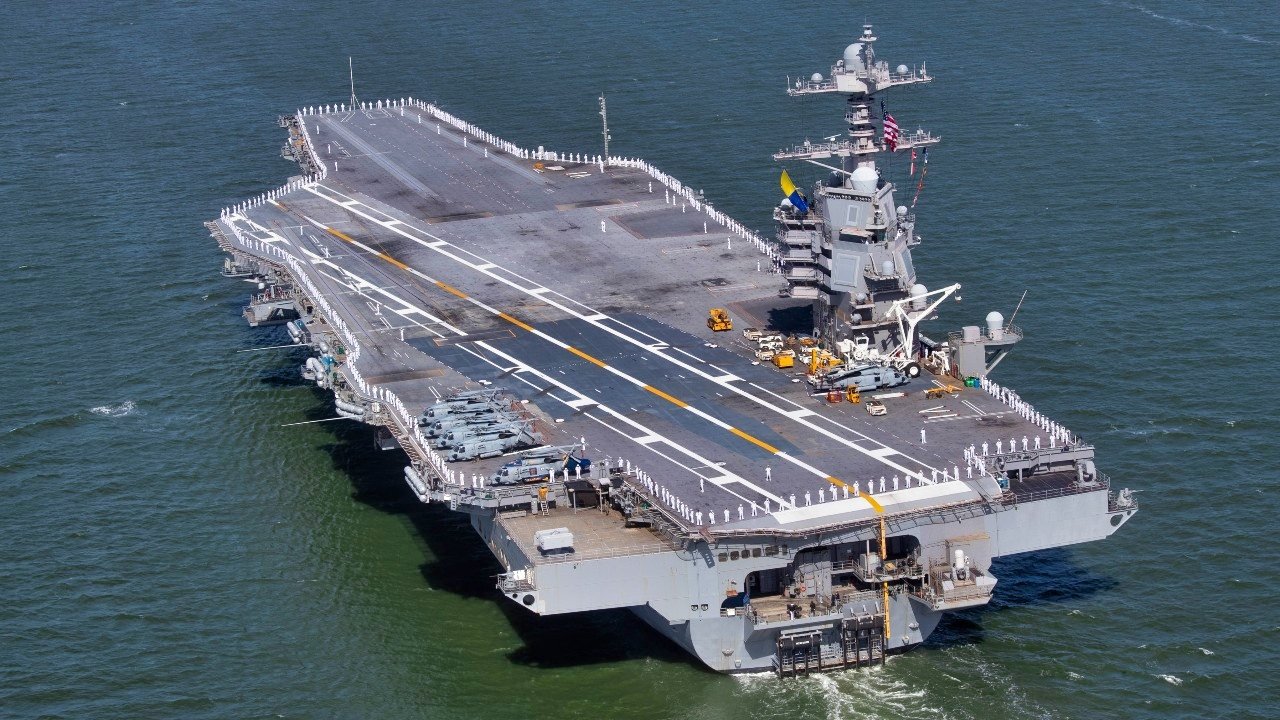
The world’s largest aircraft carrier, the USS Gerald R Ford, is preparing to return to its home port in Virginia after an extended overseas deployment that has drawn significant attention within military and political circles. According to US defence officials, the carrier will begin its journey back from the Middle East in the coming days, concluding a deployment lasting more than 300 days—one of the longest in modern US naval history.
The Ford’s deployment has been marked by high operational tempo across multiple regions, including the Mediterranean Sea, the Caribbean, and waters under the US Central Command area of responsibility. Officials confirmed that the carrier is expected to arrive back in Virginia in mid-May, following a period of sustained activity involving NATO exercises, maritime security operations, and regional deterrence missions.
However, some of the claims circulating about the deployment, including suggestions that the carrier participated in combat operations involving Iran or the capture of Venezuelan President Nicolás Maduro, have not been supported by verified military or government sources. US defence officials have not confirmed any such operations, and independent reporting indicates no evidence that the carrier was involved in direct combat actions against Iran or any operation resulting in Maduro’s detention. Analysts suggest these claims likely stem from misinformation or confusion surrounding separate regional military developments and naval repositioning activities.

The USS Gerald R Ford, commissioned as the lead ship of the US Navy’s most advanced carrier class, has instead been primarily engaged in strategic deterrence and presence missions. Its deployment began in June when it departed Naval Station Norfolk, initially operating in the Atlantic and Mediterranean regions before being repositioned multiple times in response to evolving geopolitical tensions. The carrier’s presence in different theatres reflected Washington’s broader strategy of maintaining rapid-response naval capability across key global chokepoints.
US officials have described the deployment as part of routine but extended operational requirements, driven by shifting security conditions in multiple regions. Speaking before the House Armed Services Committee, Defence Secretary Pete Hegseth acknowledged that the extended deployment placed strain on both personnel and equipment. He noted that operational demands required flexibility, even when they led to longer-than-usual sea periods for the carrier strike group.
The deployment also drew attention due to the unusual concentration of US naval power in the Middle East at certain points during the rotation cycle. At one stage, multiple aircraft carriers were present in or near the region, reflecting heightened tensions and the need to maintain a strong maritime deterrent posture. Military analysts described the situation as uncommon in the post-Cold War era, though not without precedent during periods of major international instability.
Throughout its deployment, the USS Gerald R Ford operated across several key maritime zones, including the Mediterranean Sea, where it supported allied naval exercises, and later the Caribbean, where it participated in counter-narcotics surveillance operations and regional security patrols. It also transited through the Suez Canal during repositioning toward the Red Sea, highlighting the carrier’s strategic mobility.
The ship’s extended time at sea has raised ongoing discussions within defence circles about fleet readiness and personnel welfare. Naval experts note that prolonged deployments, while sometimes necessary, can place considerable strain on both sailors and mechanical systems. The Ford has previously faced technical challenges since its commissioning, including maintenance issues related to its advanced electromagnetic launch system, as well as a fire incident that required repairs during its early service period.
Despite these challenges, US Navy leadership has repeatedly emphasised that the carrier remains fully mission-capable. Officials argue that extended deployments are sometimes unavoidable due to global commitments and the need to respond rapidly to emerging crises. The Navy also maintains that lessons learned from such long deployments are used to improve future scheduling, maintenance cycles, and crew rotations.
The Ford’s return comes at a time when global naval activity remains elevated, with increased competition among major powers in both the Atlantic and Indo-Pacific regions. Defence analysts suggest that the deployment reflects a broader US strategy of demonstrating sustained presence rather than engaging in direct combat operations. The carrier’s operations have largely focused on deterrence, intelligence gathering, and allied coordination rather than offensive action.

The record-setting nature of the deployment has also drawn comparisons with historical naval operations. While the Ford’s nearly 300-day mission is among the longest in recent decades, it does not surpass Cold War-era deployments such as those conducted by earlier carrier classes, which sometimes exceeded 330 days at sea. Nevertheless, modern operational complexity, technological demands, and global reach make such extended deployments particularly challenging in today’s naval environment.
As the USS Gerald R Ford prepares to return home, attention is likely to shift toward maintenance cycles, crew recovery, and preparation for future assignments. The Navy is expected to conduct a full assessment of the carrier’s systems and operational performance following its extended mission. Meanwhile, officials continue to emphasise that no credible evidence supports claims of involvement in high-profile political detentions or direct warfare operations that have circulated in some unofficial reports.
The conclusion of this deployment marks the end of a significant chapter for the US Navy’s most advanced aircraft carrier, highlighting both the scale of modern naval operations and the increasing demands placed on maritime forces in a complex global security environment.
Related News:
 Trump orders US troop pullout from Germany
 Trump Receives Machado’s Nobel Medal in White House Meeting
 Thousands Protest ICE Operations in Nationwide US Day of Action
 Epstein Files Reveal Trump Officials’ Emails with Financier
 Thousands Protest ICE in New York Against Trump Deportation Campaign
 UK Prepares Aircraft Carrier for Middle East Crisis
 Michigan Battleground: Middle East Crisis Stirs US Senate Race
 Trump Signals Hope for New Iran Talks as Ceasefire Fades
 GOP Senator Criticizes Trump’s Feud With Pope Leo XIV
 Investigation Into Anti-Trump Motives After Gala Shooting
 Trump likens US Navy actions to ‘pirates’
 Indiana Republicans Defy Trump in Key Vote Test
 Tensions Emerge in Netanyahu-Trump Alliance
 Putin Declares Russia Victory at Scaled Victory Day Parade
 US judge dismisses Kilmar Abrego Garcia indictment
 Tulsi Gabbard exits after turbulent intelligence tenure
 Zelenskyy warns over Oreshnik threat as Kyiv hit
 Discontent grows around Putin amid war strain
 Former ICC prosecutor condemns US sanctions
 Trump Weighs Retreat from Controversial $1.8bn Slush Fund
 Trump’s Mount Rushmore Speech: A Divisive Anniversary
 House Democrats Divided Over Israel Military Funding Bid
 Houthis Strike Saudi Arabia as Middle East Tensions Rise
 Trump dismisses concerns over 250-day carrier deployment
 US National Guard Member Killed in DC Shooting
 Mandelson apologises over Epstein ties after public scrutiny
 Government Unveils Northern Powerhouse Rail Plans
 Trump Calls Greenland Critical for US Security After Denmark Talks
 Trump press secretary attacks reporter over ICE question
 Kyrsten Sinema Faces High-Profile Lawsuit Over Marriage Interference
 Iran unrest slows under brutal crackdown and global tensions
 Starmer Challenges US Over Controversial Greenland Deal
 Spoof “Make America Go Away” Caps Rally Denmark Over Greenland
 Trump Fed bid heads to Supreme Court
 Starmer Resists Matching Trump Amid Greenland Tensions
 Partial US Government Shutdown Hits Homeland Security Funding
 Sinema payment row deepens after $9,000 transfer claim
 US-Cuba Negotiations Shift as Oil Blockade Looms
 Nurses’ families fear breakup under UK immigration crackdown
 Ukraine, Russia Meet in Geneva Ahead of War Anniversary
 California Democrats Vow Trump Reckoning
 Trump’s Surgeon General Pick Evades Vaccine Questions
 Tommy Robinson Meets Trump Officials at US State Department
 Adelaide University Faces Backlash Over Event Cancellation
 Ukraine war briefing: Zelenskyy offers help to Saudi Crown prince on combatting Iranian drones
 New Zealand Covid Response Praised Despite Lingering Scars
 Starmer Praised for Stance on Trump and Iran Conflict
 UK Ministers Signal Strategic Independence From Trump Demands
 Big Tech Faces Investigation Over Australia’s Social Media Ban
 Farage Shuns Truss as US Right-Wing Roadshow Hits London
 Reform UK Pledges To Halt Visas Over Reparations Demands
 Trump’s Presidency: A House of Cards Collapsing?
 US Catholics Caught Between President and the Pope
 Trump Starts $166bn Tariff Refund Process
 UK Stands Firm on Falklands Amid US Rift
 Trump Defiant After Washington Hotel Shooting
 Identity Revealed: Suspected Washington Gunman Named
 UK Envoy Sparks Controversy Over Special Relationship Claims
 Judge halts deportation of Yemeni refugees in US
 Activists allege abuse after Gaza flotilla seizure
 White House Security Case Sparks Political Firestorm
 Trump approval plunges amid Iran war fears
 Ohio’s Battle for Trust: Democrats Vying to Flip the Buckeye State
 US ‘Narco Boat’ Strikes Draw Global Outcry
 Ohio Primaries Set Stage for Crucial Midterms
 Afghan Families Left in Limbo Face Risk of Deportation
 One Nation Candidate’s Surprising Ties to Independents
 US Awaits Iran Reply on New Ceasefire Proposal
 Immigration Judges Fear Pressure in Trump Era
 Tony Abbott Returns as New Liberal Party President
 US green card applicants must apply from abroad, DHS says
 Hormuz Talks Near Critical Stage
 DeSantis’s ‘Alligator Alcatraz’ Faces Final Shutdown
 House Curbs Trump’s War Powers in Rare Rebellion
 Trump Urged to Condemn UFC Fighter Over Obama Slurs
 US Military Pacific Boat Strike Kills Three People
 US Courts Back Trump on Park Signage Removals
 Iran Mourns: Millions at Khamenei’s Final Procession
 Trump Swaps Planes Amid Iran Tensions
 Trump Refuses to Sign Housing Bill, But Law Takes Effect