Published: 04 May 2026. The English Chronicle Desk. The English Chronicle Online.
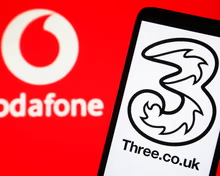
The British telecommunications landscape is witnessing a massive shift as Vodafone moves to acquire full ownership. This ambitious plan involves a multi-billion pound buyout of the remaining stake held by CK Hutchison today. The deal represents a significant turning point for the nation’s largest mobile network operator and its customers. Vodafone is prepared to pay four point three billion pounds in cash to finalize this historic transaction. By cancelling the shares held by the Hong Kong conglomerate, Vodafone will simplify its corporate structure. This move marks the end of a long partnership between the two global telecommunications giants recently.
CK Hutchison is currently reshaping its global portfolio to focus on boosting returns for its many shareholders. The company has recently explored selling major assets including its extensive port operations and retail business branches. This strategy follows the initial merger between Three UK and Vodafone which took place back in 2023. That original sixteen billion pound tie-up created a market leader with over twenty-seven million active mobile subscribers. It effectively combined the third and fourth largest networks into one dominant force within the British market. The merger allowed the new entity to leapfrog competitors like EE and Virgin Media O2 quite easily.

The billionaire businessman Li Ka-shing has guided CK Hutchison through several decades of significant international growth. His company agreed to sell the remaining forty-nine percent stake in the joint venture known as VodafoneThree. This decision allows the Hong Kong group to realize the full value of its long-term British investment. For Vodafone, the buyout provides total autonomy over the future direction of the country’s biggest mobile network. Experts suggest that having a single owner will streamline the decision-making process for the entire company. This efficiency is crucial as the industry moves toward more advanced digital infrastructure and high-speed services.
Last year, Vodafone committed to spending over one billion pounds on expanding its network coverage across Britain. This investment was a cornerstone of the merger agreement designed to improve service for millions of users. The consolidation of the industry reduced the number of major network operators from four down to three. This change initially sparked concerns from the competition watchdog regarding potential price increases for the general public. However, the regulatory body eventually approved the merger after securing several legally binding commitments from the firms. These protections were designed to ensure that consumers continue to receive fair value and reliable mobile services.
Susannah Streeter from the Wealth Club believes this buyout will enable Vodafone to execute plans much faster. She noted that joint ventures often struggle with slow decision-making processes and conflicting corporate goals and strategies. With full control, Vodafone can now accelerate the rollout of its vital five-G infrastructure across the country. Improving network quality will allow the firm to compete more effectively on performance and overall service reliability. There is also a significant opportunity for the company to expand its popular home broadband service offerings. Bundling digital services is seen as a lucrative strategy for generating consistent and high-margin recurring revenue.
Canning Fok has been a key figure in the telecommunications industry since the early days of mobile. He reflected on how his group was among the first to invest in three-G technology years ago. The journey from a small startup to the number one operator in Britain is quite a feat. He expressed pride in the delivery of groundbreaking products and services to consumers throughout the United Kingdom. The sale allows his group to exit the market while the company is at its peak. This transition marks the end of an era for the brand formerly known as Three UK.
The deal must still pass through several regulatory checks before it can be officially completed later this year. This includes a review under the National Security and Investment Act to ensure there are no risks. Leaders at CK Hutchison described the agreement as a win-win situation for both of the involved parties. Following the news, share prices for the Hong Kong group saw a healthy rise on the market. Meanwhile, Vodafone shares experienced a very slight dip as investors digested the details of the massive payout. Most analysts believe the long-term benefits of full ownership will eventually outweigh the initial high cost.
The British public will likely see the impact of this deal through improved signal and faster speeds. Vodafone is eager to prove that its increased market power will directly benefit the average mobile user. By investing heavily in new technology, the company aims to set a new standard for connectivity nationwide. The focus will remain on providing seamless transitions between mobile data and high-speed home fiber optic networks. This integration is essential for modern businesses and families who rely on constant internet access every day. The evolution of the UK mobile market continues to move at a very rapid pace indeed.
The English Chronicle will continue to monitor the progress of this deal as it moves toward completion. National regulators will be watching closely to ensure that the promised investments in infrastructure are actually delivered. If successful, Vodafone will solidify its position as the undisputed leader of the British telecommunications sector today. The company’s ability to navigate these changes will define its success for the next decade and beyond. For now, the focus remains on the complex legal and financial steps required to finish the buyout. It is a bold move that signals great confidence in the future of the British economy.

Digital services are becoming more integrated into every aspect of our daily lives and professional working environments. Vodafone’s strategy appears to be aligned with the growing demand for reliable and high-capacity data networks everywhere. The competition with BT and Virgin Media will undoubtedly intensify as each firm seeks a larger share. This rivalry is good for innovation as companies strive to offer the best possible technology to customers. We can expect more announcements regarding new features and improved coverage as the year progresses toward winter. The telecommunications sector remains one of the most dynamic and essential parts of the modern global economy.
Ultimately, the success of this four billion pound deal depends on Vodafone’s ability to manage its growth. The company must balance the need for profit with the responsibility of running a vital national utility service. Millions of people depend on their mobile phones for work, health, and staying connected with their families. Maintaining trust with the public will be just as important as maintaining the physical towers and cables. As the second half of the year approaches, all eyes will be on the final regulatory decisions. This story represents a landmark moment in the history of British business and global corporate strategy.
Related News:
 Virgin Trains Moves Closer to Challenging Eurostar Monopoly
 North Sea oil workers must lose weight or face job loss
 New laws to bolster UK’s defences against cyber attacks on NHS, transport and energy
 UK Taskforce Unveils Plan to Streamline Nuclear Reactor Rules
 UK Car Sales Pass 2 Million as Chinese Brands Surge
 MPs warn AI financial risks threaten UK stability
 MPs warn AI financial risks threaten UK stability
 AI job losses UK: Britain faces sharper employment shock
 UK AI avatar firm Synthesia valuation jumps to $4bn
 SpaceX Plans $1.5tn IPO Amid Planetary Alignment
 Amazon mistakenly signals new global layoffs to employees
 UK New Car Discounts Near £6,000 as Prices Are Slashed
 Bithumb Bitcoin Mistake Shocks Crypto World
 BT Names New Openreach Chief Amid Major Fibre Expansion
 AI fears hit UK wealth and comparison sites
UK Firms Warned of Rising Iran Cyber Threats
AI fears hit UK wealth and comparison sites
UK Firms Warned of Rising Iran Cyber Threats
 UK Firms Warned of Rising Iran Cyber Threats
 Revealed: UK AI Push Faces Phantom Investment Claims
 Tesla Enters British Energy Market Following Ofgem Approval
 ABC Staff Strike Over Pay and AI Concerns
 High Court Orders Lynch Estate to Pay £920m to HPE
 UK Watchdog Probes Five Firms Over Fake Review Failings
 New Gmail Feature Ends Era of Embarrassing Email Names
 Apple at 50: Three Products That Changed How We Live
 OpenAI Halts Stargate UK Project Amid Energy Crisis
 Washington Summit Targets Massive Cyber Risks From Latest AI Breakthrough
 Heavier SUVs Accelerate Britain’s Pothole Crisis
 Europe EV Demand Surges as Fuel Prices Rise
 Reform UK funding: mystery billionaire revealed
 Disney+ Wins Champions League Rights in Key Markets
 DeepMind Staff Vote to Unionize Over US Military Contract
 A Massive Legal Triumph Reshapes the Future of AI
 SpaceX IPO Filing Reveals Bizarre Details of Musk’s Empire
 Tech Giant Nvidia Shatters Wall Street Financial Projections
 China mine blast death toll rises to 90
 UK rejects EV charging VAT cut amid Treasury clash
 UK firms accused of ‘AI washing’ boom
 SpaceX Targets Record Listing as Musk Eyes Trillionaire Status
 SpaceX Prepares for Historic Valuation Launch
 Silicon Valley Shifts South as AI Boom Transforms City Housing
 CMA Approves Major Bakery Merger to Prevent Market Collapse
 BT and Verizon Form Landmark Global Joint Venture
 AI Transformation Sparks Major Job Cuts at British American Tobacco
 Trump Faces Backlash Over $2bn Earnings Since Return
 Ocado CEO Tim Steiner to Step Down by 2028
 Record £28m Fine for Virgin Media Over Cancellation Woes
 Xavier Niel Becomes Vodafone’s Largest Shareholder
 Weight-Loss Drugs Offer Food Savings Mainly to High Earners
 Reeves Faces Setback as Labour May Miss Homes Target
 Trump’s UK Ambassador Urges North Sea Drilling to Strengthen US Ties
 UK Bans Fake Numbers: Scammers Lose Their Trick
 Vibe coding’ named Collins dictionary’s word of the year
 Millionaires group urge Reeves to introduce wealth tax to ‘lift kids out of poverty’
 Sundar Pichai Cautions on AI Hype and Market Risks
 Starmer Says Labour’s Economic Plan Needs Years to Deliver
 Starmer Faces Parliamentary Battles Over UK-EU ‘Reset’ Plan
 ScottishPower Tops List of Worst UK Energy Suppliers
 Trump Fed bid heads to Supreme Court
 EU launches Grok AI probe into X over explicit images
 ABC Facebook Page Briefly Hacked, Adult Photos Posted
 Meta trial over child exploitation claims begins
 UK Unemployment Rate Climbs to 5.2% Peak
 Stewart Brand on Musk, Bezos and a Life of Long Thinking
 The Kill Line: A Shifting Vision of the American Dream
 Rising Costs Force Families to Rethink Days Out
 US and Iran Agree to Two-Week Provisional Ceasefire
 Silent Tracks: Rail Line Without Passengers
 Aramco Surges as East-West Pipeline Counters Gulf Tensions
 High Street Crisis: Fears Grow Over Post Office Closures
 UK Firms Freeze Spending as Iran Conflict Bites
 Reeves to Fast-Track Clean Energy Amid Iran Crisis
 Oil Markets Face ‘Red Zone’ Threat Amid Iran Crisis
 Belfast Approves Pilot Extension of Sunday Trading Hours
 Tube Strike Brings Capital to a Standstill Over Shift Disputes
 BP Stands Firm on Amanda Blanc Amid Boardroom Storm
 UK House Prices Drop For Third Month Due To War Fears
 Stolen Mobiles Could Soon Become Useless Bricks
 Sainsbury’s Boss Optimistic As Grocery Inflation Eases
 Sydney Records Hottest June Since 1859 as Expert Warns New High a ‘Signature’ of Global Warming
 Telstra Software Fault Triggers Massive Nationwide Outage