Published: 09 May 2026. The English Chronicle Desk. The English Chronicle Online.
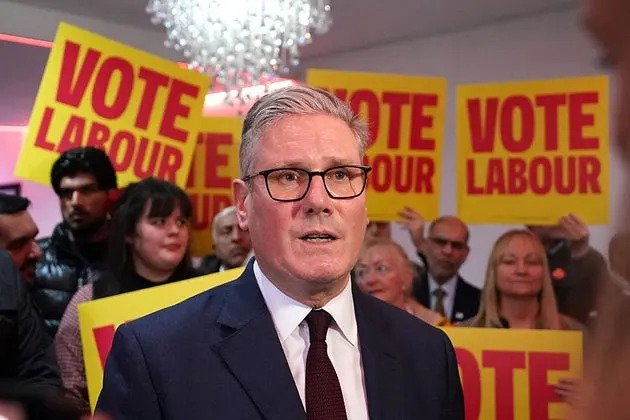
British Prime Minister Keir Starmer is facing the gravest political crisis of his leadership after Labour suffered devastating defeats across England, Wales and Scotland in a dramatic election setback that has intensified calls within his own party for him to announce a timetable for his departure.
The local and devolved election results delivered a political earthquake across the United Kingdom, exposing growing public dissatisfaction with Labour less than two years after the party returned to power in Westminster. The losses have triggered open rebellion among sections of Labour’s parliamentary ranks, with several MPs now questioning whether Starmer can realistically lead the party into the next general election.
As counting concluded across much of the country, Labour had lost more than 1,400 council seats in England alone, surrendering control of authorities that had long been considered safe strongholds. The damage extended far beyond local government, with Labour also suffering a humiliating collapse in Wales, where the party had dominated politics for more than a century.
In Scotland, Labour failed to build momentum and instead lost further ground to the Scottish National Party, which secured another commanding electoral performance. The results collectively marked one of the worst electoral setbacks for Labour in modern times and highlighted the increasingly fractured nature of British politics.

The elections revealed the continued breakdown of Britain’s traditional two-party system, with votes splintering across multiple political movements. Reform UK, led by Nigel Farage, emerged as one of the biggest winners of the elections, making major gains across England and overtaking Labour and the Conservatives in several regions once viewed as politically untouchable.
At the same time, the Green party achieved significant breakthroughs, particularly in London and other urban areas where progressive voters appear increasingly frustrated with Labour’s direction under Starmer. In Wales and Scotland, nationalist parties also capitalised on voter discontent, further eroding Labour’s influence.
The scale of the defeat has left many Labour MPs deeply alarmed about the party’s future prospects. Behind closed doors, discussions have intensified over whether Starmer should step aside before the next general election, which is expected within the next three years.
Several MPs are reportedly pushing for an orderly transition rather than a sudden leadership coup. According to party insiders, growing numbers believe Starmer has become politically damaged beyond repair and no longer possesses the public appeal necessary to defeat either Reform UK on the right or the Greens on the left.
One of the most outspoken interventions came from Debbie Abrahams, a Labour MP representing a northern English constituency increasingly threatened by Reform UK’s rise. Speaking publicly after the results, she warned that Labour was heading towards electoral disaster if the current trajectory continued.
Abrahams argued that the prime minister must prioritise the country over personal ambition and suggested that any transition should happen within months rather than years. Her comments reflected a broader sense of panic within Labour’s parliamentary ranks, especially among MPs representing formerly safe working-class seats now vulnerable to populist challengers.
Despite the growing unrest, Starmer continues to retain the public support of senior cabinet figures. Former deputy prime minister Angela Rayner and Health Secretary Wes Streeting, both regularly mentioned as potential future leaders, have publicly backed him for now.
However, political observers note that leadership tensions within governing parties often escalate rapidly after major electoral defeats, especially when public confidence begins to erode. Labour MPs fear that waiting too long to act could leave the party unable to recover before the next national election.
Complicating any succession plans is the position of Andy Burnham, the mayor of Greater Manchester, who is widely viewed among Labour members as the most popular potential replacement for Starmer. Burnham’s appeal has grown significantly following the elections, with many activists and MPs believing he could reconnect Labour with disillusioned voters across northern England.
Yet Burnham currently sits outside Westminster politics, serving as mayor rather than as a Member of Parliament. Under Labour rules, he cannot contest the leadership unless he first returns to the House of Commons through a parliamentary by-election.
Some Labour MPs are reportedly exploring ways to create such an opportunity, although party officials close to Starmer have resisted efforts to facilitate Burnham’s return. Internal tensions over succession planning are therefore expected to intensify in the coming months.
Starmer himself has rejected suggestions that he should resign. In a newspaper opinion piece published after the elections, the prime minister acknowledged the results were “very tough” and admitted voters had sent a clear warning to the government.
However, he insisted Labour should not abandon its current political strategy by moving sharply to either the left or the right. Instead, Starmer argued that the party must continue trying to build a broad coalition capable of appealing to voters across ideological divides.
His critics within Labour remain unconvinced. Many argue that the government has struggled to develop a compelling political identity since taking office in 2024. While some ministers have praised Starmer’s handling of foreign affairs and international diplomacy, including relations with the United States and Europe, others admit privately that domestic policy has often appeared hesitant and reactive.
Repeated policy reversals and communication failures have damaged Labour’s credibility with voters, according to party insiders. The government has also struggled to counter the rise of Reform UK, whose anti-establishment message has resonated strongly in economically struggling regions.
Nigel Farage’s growing influence has become a major source of anxiety for Labour strategists. Reform UK’s success in these elections demonstrated its ability to attract former Labour voters frustrated by concerns over immigration, living standards and political trust.
Meanwhile, the Greens have continued attracting younger and progressive voters who believe Labour has become too cautious on climate change, social justice and public investment. The rise of both Reform and the Greens has squeezed Labour from opposite directions, creating a difficult balancing act for Starmer’s leadership.
Political analysts say the current crisis resembles broader trends across Europe, where traditional mainstream parties increasingly face pressure from populist, nationalist and issue-based challengers.

The Conservative Party also endured a difficult election night under leader Kemi Badenoch, losing more than 500 councillors and failing to capitalise on Labour’s difficulties. Nevertheless, Labour’s losses dominated the national conversation because they raised serious questions about the durability of Starmer’s government.
Some Labour figures warn that forcing out another prime minister mid-term could further damage public trust. Britain experienced extraordinary political instability between 2016 and 2022, when the Conservatives cycled through four prime ministers in rapid succession before suffering heavy defeat at the following general election.
Yet others inside Labour argue that failing to act decisively could prove even more dangerous if Reform UK continues its momentum and Labour’s poll ratings deteriorate further.
For now, Starmer remains in Downing Street, but the election results have transformed the political atmosphere surrounding his government. What was once viewed as a stable parliamentary majority now appears increasingly fragile as Labour faces mounting internal divisions, electoral losses and growing uncertainty about its future direction.
With pressure intensifying daily, the coming months may determine not only Starmer’s political survival but also the future shape of British politics itself.
Related News:
 British Woman in Iran ‘Losing Hope’ Amid Ongoing Detention
 BBC Journalist Held and Interrogated in Vietnam
 Zohran Mamdani becomes New York City’s first Muslim mayor
Zohran Mamdani names all-female transition team for NYC mayoralty
Zohran Mamdani becomes New York City’s first Muslim mayor
Zohran Mamdani names all-female transition team for NYC mayoralty
 Second world war veterans honoured as King leads Remembrance Sunday
 BBC director-general and news chief resign amid bias row
 Rama Rebukes Mahmood for Targeting Albanian Families
 Russian Vessel Used Lasers on RAF Pilots, UK Claims
 Ireland Boosts Ukraine Aid as Zelensky Visits Dublin
 US Africa aid remarks spark anger after leaked State email
 Starmer China visit raises human rights pressure on Beijing
 UK and EU Signal Fresh Push for Defence Cooperation Talks
 Cory Bernardi joins One Nation for SA election
 Starmer Condemns ‘Depraved’ Russian Strikes on Ukraine
 Trump Warns Over Chagos Islands Deal
 Trump and Chagos Deal Rift Over Iran Strikes
 Andrew Mountbatten-Windsor Arrest After FBI Radar
 Farage Chagos Islands Row Sparks Fury
 Trump Tariffs Threat Spark UK and EU Alarm
 UK Allows US Base Use Amid Iran Tensions
 Trump Rebukes Starmer Over Iran Strikes Row
 UK Prepares Aircraft Carrier for Middle East Crisis
 Gordon Brown urges court for crimes against children
 Yvette Cooper: UK Must Follow Principles, Not US Pressure
 UK Minister Denies Iran Missile Threat to Britain
 Army Probes Apache Flyover at Kid Rock’s Nashville Estate
 Relationship with Trump may be beyond repair, Starmer warned
 Charles Faces Trump Test in High-Stakes US Visit
 UK Stands Firm on Falklands Amid US Rift
 Ceasefire Standoff Deepens in Ukraine War
 Koh-i-noor Diamond Row Reignites Colonial Debate
 UK Pushes for New EU Goods Trade Deal
 Reeves Fights to Keep Treasury Role Amid Labour Turmoil
 Farage and Reform UK Reshape British Politics
 Starmer Leadership Under Pressure After Setbacks
 Deadly Russian Air Raids Strike Across Ukraine
 UK Government Cancels Higher Education Programme for Women and Girls
 New South Wales Premier Chris Minns Signals Tough Road Ahead for Labor
 Labour MPs Urge Burnham to Revive UK Aid Target
 UK Must Act with Courage and Clarity on Israel-Palestine Conflict, Says Foreign Affairs Committee Report
 Radioactive Leak at UK’s Nuclear Warhead Base Sparks Outcry Over Safety and Secrecy
 Is the UK Ready to Put Boots on the Ground in Ukraine? Assessing Military Capacity and Challenges
 Trump’s UK Ambassador Urges North Sea Drilling to Strengthen US Ties
BBC to Apologise Over Edited Trump Speech Amid Backlash
Trump’s UK Ambassador Urges North Sea Drilling to Strengthen US Ties
BBC to Apologise Over Edited Trump Speech Amid Backlash
 Millionaires group urge Reeves to introduce wealth tax to ‘lift kids out of poverty’
 Reeves rejects £1bn plea for NHS redundancy payouts
 PM Condemns Leaks, Vows Loyalty to Ministers and Stability
 Greene Pushes Epstein Files Amid Trump Fallout
 Shadow Fleet at Sea: Europe’s Battle Against Illicit Oil Shipping
 Starmer Says Labour’s Economic Plan Needs Years to Deliver
 Pentagon Signals Reduced Role in Deterring North Korea
 Artificial intelligence will cost jobs, admits Liz Kendall
 Mandelson Faces Police Inquiry Over Epstein Leak
 Morgan McSweeney downfall shocks Labour leadership
 UK and US Drop in Global Corruption Index Rankings
 Farage Unveils Reform UK Frontbench Team
 Canberra Poster Seizure Sparks Free Speech Row
 Evo Morales Returns After Mysterious Absence
 Wales Approves Assisted Dying Bill Consent
 Jacinda Ardern Moves To Australia Following Her US Fellowships
 Jacinda Ardern Move Sparks Kiwi Reflection
 Corbyn Leads Your Party in Coordinated Left-Flank Strategy
 Nick Greiner Warns Over Election Review Fallout
 Asylum Seekers to Work After Year-Long Wait
 Starmer Row as Greens Demand Apology
 Injured Mojtaba Khamenei Elevated as Iran Leader
 Inquiry into HMRC child benefit errors launched by NAO
 Pakistan Targets Militant Hideouts in Afghanistan
 Air Canada CEO Faces Outcry Over Recent Language Misstep
 UK Government Poised to Revive Stalled Hillsborough Law
 Silent Tracks: Rail Line Without Passengers
 RFU Backs Borthwick Despite England’s Poor Six Nations
 Major test for Labour as polls open in Great Britain
 Reform UK Faces Crisis as Newly Elected Councillors Resign
 Secret Role of UK Security Services in Troubles Amnesty Law
 The Hidden Crisis Eroding Trust in British Communities
 Deepfake Abuse on X Sparks Safety Concerns for Dissidents
 Farage Warns Sky News Following Financial Inquiry
 Ann Widdecombe, Formidable Political Figure, Dies at 78
 Houthis Strike Saudi Arabia as Middle East Tensions Rise