
Published: 14 May 2026. The English Chronicle Desk. The English Chronicle Online.
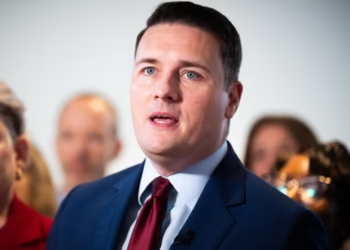
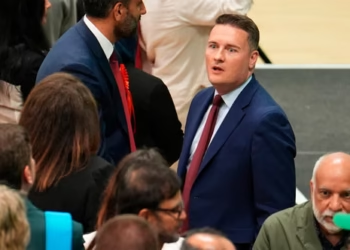
The halls of Westminster are currently buzzing with a frantic and electric energy. Wes Streeting stands at a very significant crossroads in his bright political career. Many colleagues have long viewed him as a natural successor to the Prime Minister. However, recent events suggest that his window of opportunity may be closing very fast. The Health Secretary has cultivated a reputation for being both sharp and highly ambitious. Yet, he now risks being labeled the David Miliband of this current era. That comparison serves as a stern warning for any politician who waits too long. Miliband was once the clear heir apparent but never secured the ultimate crown. Streeting now faces a similar test of his timing and his political courage.
The atmosphere in London changed dramatically during the recent and grand King’s Speech. Rumors began to swirl that a leadership challenge was finally and officially imminent. Allies of Streeting had previously downplayed any talk of a sudden Cabinet resignation. They insisted he was focused entirely on the massive task of fixing the NHS. But the quiet whispers of “planning, not plotting” have turned into loud shouts. Briefings suggested that Streeting might resign his post as early as this Thursday. This move would effectively fire the starting gun on a fresh leadership contest. Supporters argue that the party needs a more dynamic and communicative leader now. They believe Streeting possesses the charisma that the current Prime Minister often lacks.
The Dynamics of Power
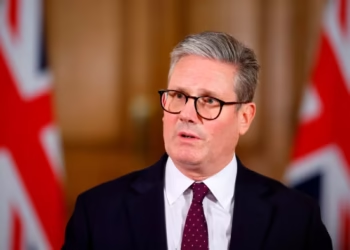
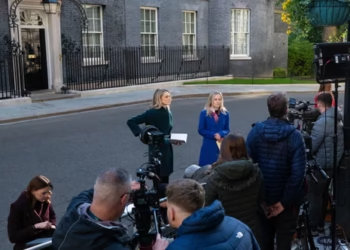
Keir Starmer has proven to be a much more resilient leader than expected. He recently delivered a “reset” speech intended to shore up his wavering authority. While the speech received a lukewarm reception, Starmer managed to hold his ground. He has not folded under the pressure of minor ministerial resignations this week. Instead, Downing Street has begun to strike back with its own aggressive briefings. They have mocked Streeting for allegedly losing his nerve at the vital moment. Some officials claimed he lacked the eighty MPs required to trigger a vote. This public humiliation was capped by a very brief meeting at Number Ten. Streeting emerged after only seventeen minutes, looking somewhat lonely on the famous doorstep.
The struggle for the soul of the Labour Party is far from over. Streeting’s team has been working the phones to gather wide parliamentary support. They are even reaching out to the left wing of the party now. This strategy shows a desperate need to reach the twenty percent threshold. Some left-wing MPs might back him simply to remove the current leadership. They view him as a more effective media performer for the general public. However, many others remain deeply skeptical of his centrist and modernizing policy positions. Streeting must convince a very diverse coalition that he can actually win. If he fails to launch a bid, his authority will likely evaporate.
Future Scenarios and Risks
The potential for a multi-candidate race adds another layer of deep complexity. If Streeting jumps, figures like Angela Rayner or Ed Miliband might follow. A crowded field could split the vote and keep Starmer in power. Alternatively, it could pave the way for a more radical shift leftward. Streeting is betting that his personal popularity can overcome these various obstacles. He has spent months preparing detailed policy papers for a future government. His supporters point to his consistent performance in difficult television news interviews. They argue that he is the only candidate ready for the job. But in politics, being ready is rarely enough without the right timing.
The comparison to David Miliband remains a very haunting shadow over his bid. Miliband famously hesitated when Gordon Brown was at his most vulnerable point. That hesitation allowed his brother, Ed, to eventually seize the party leadership. Streeting knows that he cannot afford to make that same historic mistake. He must decide if the current moment represents his best and final chance. The British public is watching this internal drama with a mix of curiosity. They want a government that is focused on their daily cost-of-living concerns. Internal bickering often alienates the very voters that Labour needs to keep. Streeting must balance his personal ambition with the stability of the country.
Statistical Realities and Public Sentiment
To understand the stakes, one must look at the demographics of support. Recent internal polling suggests that Streeting performs well with younger, urban professional voters. Among voters aged eighteen to thirty-four, his approval rating sits at forty percent. This is notably higher than the thirty-two percent currently held by Keir Starmer. However, the picture changes when looking at different ethnic and social groups. Streeting has a thirty-five percent favorability rating among Black British and Asian voters. This is a solid foundation, but it is not yet a majority. He needs to broaden his appeal to older voters in the north. Those voters often prioritize experience and steady leadership over youthful and energetic charisma.
The Prime Minister still holds a significant advantage among voters over fifty-five. In this demographic, Starmer leads Streeting by a margin of fifteen percentage points. This gap highlights the challenge Streeting faces in a full national campaign. He must prove that he is not just a darling of London. Winning a leadership contest requires winning over the entire United Kingdom electorate. Streeting’s background as a former student leader gives him some grassroots credibility. But the transition to national statesman is a very steep and difficult climb. He must articulate a vision that resonates beyond the Westminster bubble tonight. Success will require a mix of policy substance and raw political instinct.
The Path Forward
As the deadline for a potential resignation nears, the tension is palpable. Streeting’s loyalists are urging him to take the leap without any delay. They fear that waiting will only allow Starmer to grow much stronger. The Prime Minister’s allies are equally determined to crush this budding rebellion. They believe that a failed challenge will end Streeting’s career for good. This high-stakes poker game will define the future of the Labour Party. Whether Streeting becomes Prime Minister or a footnote remains to be seen. He has the talent, the team, and the drive to succeed. But he also faces a formidable opponent who refuses to walk away.
In the coming days, the British public will see his true mettle. A resignation letter would be a declaration of war against the establishment. Staying in the Cabinet would be a sign of strategic and cautious patience. Both paths carry immense risks for a man of his high standing. The ghost of David Miliband will be watching from the political sidelines. Streeting surely knows that history rarely gives a politician two chances at greatness. He must decide if he is a leader or a follower. The English Chronicle will continue to monitor this developing story very closely. For now, the fate of the government hangs in the delicate balance.
Related News:
 UK Banks Granted Reprieve as BoE Delays Basel III Capital Rules Until 2028
 Singapore Corruption Scandal: Details Emerge on Iswaran’s Luxury Flight and Ties to Tycoon Ong Beng Seng
 Corfu Beyond the Crowds: Discovering Serenity in Southern Villages and Hidden Taverns
 Zelenskyy Signs Fighter Jet Deal Amid Russian Drone Attacks
 Sundar Pichai Cautions on AI Hype and Market Risks
 Shadow Fleet at Sea: Europe’s Battle Against Illicit Oil Shipping
 Snow and Ice Cause Travel Chaos in North Yorkshire
 Director Michael Caton-Jones Reflects on Career and Beginnings
 Inside the Helpline Protecting Missing Children in the UK
 PlayStation PS5 Deals Hit Lowest Prices Ahead of Black Friday
 US Suspends Afghan Immigration After White House Shooting
 Five-Year-Old Dies After Rare Tonsil Surgery Complication
 Starmer Says Labour’s Economic Plan Needs Years to Deliver
 ‘Extinct’ Antelope Returns to Sahara, Bringing Hope
 IndiGo Cancels Hundreds of Flights Amid Pilot Shortages
 Young Britons Face Heaviest Burden from Ageing Population, Lords Warn
 U‑Turn on Farmers’ Inheritance Tax Sparks Political Firestorm
 Aston Villa Remain Arsenal’s Key Obstacle in Title Pursuit
 Irish Beach Tragedy: Irish Drown at Whitehaven Beach in Australia
 Starmer Faces Parliamentary Battles Over UK-EU ‘Reset’ Plan
 Met Police Vetting Failures Let Serial Rapists Remain
 Federal Immigration Shift: Officers Leave Louisiana for Minneapolis
 Fatal Bolton Taxi Crash Claims Three Teens and Driver
 Australia grants Asio powers to designate hate groups under new laws
 Friedman Uninvited From 2024 Adelaide Writers’ Week
 ScottishPower Tops List of Worst UK Energy Suppliers
 Judi Dench Champions Fight to Save London’s Green Spaces
 Crowborough Camp Welcomes First Asylum Seekers
 BBC Funding Crisis: Tim Davie Warns of Jeopardy Ahead
 ABC Facebook Page Briefly Hacked, Adult Photos Posted
 Artificial intelligence will cost jobs, admits Liz Kendall
 Older Women Vanish from BBC Screens, Review Confirms Bias
 Meta trial over child exploitation claims begins
 Streeting moves on doctor pay to end strike dispute
 Ben Stokes injury joke after brutal ball strike
 UK and US Drop in Global Corruption Index Rankings
 Send spending gap leaves deprived areas behind
 Hidden Crisis: Domestic Abuse Suicide Toll in UK
 UK Unemployment Rate Climbs to 5.2% Peak
 Canberra Poster Seizure Sparks Free Speech Row
 BBC World Cup Presenting Duties Shared Among Trio
 Wales Approves Assisted Dying Bill Consent
 CPS Updates Guidance on Honour-Based and Dowry Abuse
 Stewart Brand on Musk, Bezos and a Life of Long Thinking
 Wes Streeting faces narrow road to Labour members’ favour
 Keir Starmer Struggles to Secure His Grip on Downing Street
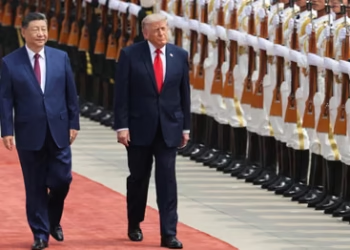 Trump and Xi Convene in Beijing for Historic High-Stakes Summit
 Tensions Flare as Israeli Nationalists March in Jerusalem
 UK Firms Freeze Spending as Iran Conflict Bites
 UK Job Market Squeezed as Iran War Drives Jobless Rate to 5%
 Reeves to Fast-Track Clean Energy Amid Iran Crisis
 The Battle for Wembley Sparking Unprecedented Legal Warfare
 Tony Abbott Returns as New Liberal Party President
 Pope Meets Families in Italy Toxic Waste Zone
 Royal Ascot Allegation Sparks Wider Police Inquiry
 Secret Role of UK Security Services in Troubles Amnesty Law
 Tube Strike Brings Capital to a Standstill Over Shift Disputes
 Teaching Machines Right From Wrong in the Digital Age
 Is Ollie Robinson the Chaos English Cricket Needs Today?
 The Hidden Crisis Eroding Trust in British Communities
 Saving the Scalloped Hammerhead: The Pacific Battle
 Stolen Mobiles Could Soon Become Useless Bricks
 Clean Air Initiatives Spark Major Fall in London Hospital Admissions
 Fearless Pioneer of Investigative Journalism Dies Aged 83
 Trump Urged to Condemn UFC Fighter Over Obama Slurs
 The Fear Gap: Why Europe Feels Less Safe Than It Is
 US Military Pacific Boat Strike Kills Three People
 Dettol Apologises for ‘Toxic Men’ Advert Backlash in China
 UK Care Crisis: Row Explodes Over New Visa Settlement Rules
 Sainsbury’s Boss Optimistic As Grocery Inflation Eases
 US Advance Past Bosnia in World Cup Thriller
 Trump’s Mount Rushmore Speech: A Divisive Anniversary
 Trump’s Red-Card Intervention Hurts the US World Cup
 US Airman Avoids British Court in Indecent Exposure Case
 Britain’s Mini Fan Craze Sparks Major Waste Crisis
 Trump Swaps Planes Amid Iran Tensions
 Ann Widdecombe, Formidable Political Figure, Dies at 78
 UK Schools Struggle as Classrooms Top 40C
 Yemen Accuses Iran of Violating National Sovereignty
 Houthis Strike Saudi Arabia as Middle East Tensions Rise