Published: 20 May 2026. The English Chronicle Desk. The English Chronicle Online
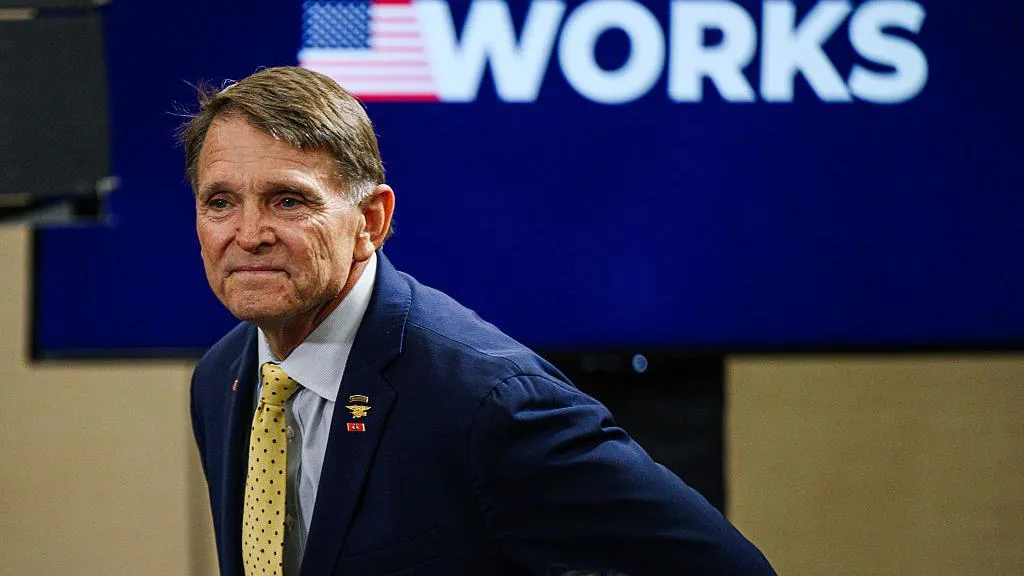
In a result that marks a seismic shift in the hierarchy of the Republican Party, seven-term Congressman Thomas Massie was decisively defeated in Kentucky’s fourth district primary on Tuesday, falling to a challenger hand-picked and heavily bolstered by President Donald Trump. Ed Gallrein, a retired Navy SEAL and farmer, secured 54.8% of the vote, effectively ending Massie’s tenure in a district where he had once seemed untouchable. The defeat, occurring in what was billed as the most expensive House primary in United States history, serves as a visceral, “asymmetric” demonstration of the President’s absolute dominance over the GOP, reinforcing the message that dissent—particularly from established incumbents—will no longer be tolerated within the modern Republican tent.

The contest was defined by a series of sharp, “clinical” disagreements that transcended traditional party politics. Massie, long considered a maverick and a libertarian-leaning firebrand, had carved out a reputation for himself as one of the few GOP voices willing to challenge the party’s direction on key issues of war and transparency. His opposition to U.S. military involvement in Iran, his refusal to back the President’s signature “One Big Beautiful Bill,” and, perhaps most controversially, his relentless crusade to force the release of government files related to the late convicted sex offender Jeffrey Epstein, placed him on a collision course with the White House. For President Trump, Massie was not merely a legislative opponent but a “bad guy” who had to be removed, a target for a broader “retribution” strategy intended to keep the Republican ranks disciplined and unified.
The campaign itself was a brutal, “asymmetric” battle of resources and influence. Pro-Israel interest groups, including the Republican Jewish Coalition Victory Fund and AIPAC, poured millions of dollars into the district, framing Massie’s votes against foreign aid as fundamentally “anti-Israel.” This influx of outside capital created a massive “bottleneck” for Massie, who had historically relied on his strong, localized grassroots base to carry him to victory. In the final weeks of the campaign, the President’s intervention became all-encompassing; he dispatched Defense Secretary Pete Hegseth to the district to campaign alongside Gallrein, while frequently using his own rallies to label Massie “the worst ‘Republican’ congressman in history.” This relentless pressure culminated in a result that observers describe as a “clinical” excision of a political irritant, with Gallrein thanking the President in his victory speech for the endorsement that made his ascension possible.
The emotional resonance of the defeat was palpable on election night. In his concession speech, Massie—known for his dry, iconoclastic wit—could not resist a final, “nasty” swipe at his opponent, quipping that he would have conceded hours earlier if he hadn’t had to “find Ed Gallrein in Tel Aviv.” The remark, while met with laughter by his supporters, highlighted the congressman’s long-standing frustration with the influence of outside PAC money in what was once a local Kentucky race. Despite the loss, Massie claimed that his message still resonated with the younger demographic, who chanted “No more wars!” and “America First!” throughout his final address. He framed his defeat not as a rejection of his principles, but as a victory for a “go along to get along” strategy that he argued the party establishment—and the voters—seemed to prefer.
The national implications of the result are, for many, sobering. Massie now joins a shrinking list of elected Republicans who have either been ousted or chosen to retire following conflicts with the President, an “accountability rot” that has systematically diminished the diversity of thought within the GOP’s legislative caucus. The defeat is being viewed by White House insiders as a “message campaign,” a way to show that even an incumbent as entrenched as Massie can be dismantled if they cross the leadership. As a senior adviser to the President remarked to the press, the strategy is less about retribution and more about basic management: “Occasionally you have to shoot a hostage.”

For the people of Kentucky’s fourth district, the result brings an end to a high-octane period of political turmoil. Massie, who will remain in Congress until his term ends in January, has promised to spend his final months in office pushing back harder than ever against the President’s agenda, now freed from the pressure of another primary. However, the path ahead for the district is clear. Ed Gallrein enters the general election with the full, unwavering backing of the party machine and the President himself, signaling a future where the district’s representation will be perfectly aligned with the White House’s priorities. In the wake of the loss, the “speechless determination” of the voters to follow the President’s lead suggests that the party has moved past the era of the maverick congressman, embracing a new, unified identity where loyalty is the highest currency and the primary is merely the first step toward total consolidation.
Related News:
 Two National Guard Soldiers Critically Injured Near White House
 American Mother Extradited From UK to U.S. on Murder Charges
 Russia losses Ukraine war peace talks intensify amid rising deaths
 Trump Taiwan China drills: US President Downplays Tensions
 US Venezuela protests sweep cities after intervention
 US Cities Erupt in Protests Against Trump’s Venezuela Military Action
 Trump Escalates Minnesota Immigration Surge Amid Rising Tensions
 Trump Says US Must ‘Own’ Greenland to Block Russia, China
 Trump Weighs Response to Iran Crackdown as Tehran Says Communication Open With US
 Australia’s US Ambassador Rudd to Step Down Early
 US Clears Nvidia AI Chip Sales to China in Policy Shift
 Trump Threatens Strong Action If Iran Executes Protesters
 Trump Receives Machado’s Nobel Medal in White House Meeting
 Greenland Crisis Forces Europe to Draw a Line With Trump
 Iran Cannot Be Bombed Into Democracy, Only Helped There
 Trump Aide Sparks Fury as Greenland Dispute Intensifies
 EU Says US Ties Have Suffered ‘Big Blow’ After Greenland Crisis
 Arizona border shooting leaves suspect hospitalised after agent pursuit
 Videos reveal earlier clash before Alex Pretti shooting
 ‘Painful Times’ as Melinda Gates Responds to Epstein Files
 Trump Praises ‘Terrific’ Petro After White House Talks
 Fears of New Arms Race as US-Russia Nuclear Weapons Treaty Expires
 US Military Says Two Killed in Strike on Alleged Drug Boat in Eastern Pacific
 US and Iran Hold Nuclear Talks as Trump Ramps Up Military Threats
 Venezuela’s Opposition Says Party Leader Kidnapped Hours After Being Freed
 Trump Says Iran Regime Change Is “Best Thing That Could Happen”
 Obama Slams Trump’s Racist ‘Ape’ Video Amid Backlash
 Actor Robert Duvall, Who Starred in The Godfather, Dies Aged 95
 ‘He Did It for Us’: US Soldier Recalls Jesse Jackson’s Efforts to Free Him and Two Other POWs
 Iran Says ‘Guiding Principles’ Agreed With US at Nuclear Talks
 Stephen Colbert Says CBS Spiked Interview With Democrat Over FCC Fears
 Moment Officers Rescue Injured Bald Eagle From Icy Hudson River
 Eight Skiers Found Dead After California Avalanche
 US Urges Iran to Make Deal as Military Presence Rises
 Desperate Hunt for Breakthrough in Nancy Guthrie Case Turns to Mexico
 US Will Not Back Out of Tariff Deals with UK and Others, Says Trump Trade Representative
 Who Was El Mencho, Mexico’s Most Wanted Man?
 Inside Atlanta’s Soul Food Revolution
 Threat of Further Violence Looms After Mexican Cartel Rampage
 Bill Gates ‘Took Responsibility’ Over Epstein Ties in Staff Meeting, Foundation Says
 US ‘Suitcase Murderer’ Deported From Bali After 11 Years in Jail
 American Citizen Killed in Cuba Boat Shooting, U.S. Officials Say
 Hopes and Fears as US Iranians Take to Streets After Toppling of Supreme Leader
 Iran, the US, and a World Cup That Starts in Three Months
 Trump Faces Questions Over Iran Conflict Plan
 Did Trump Declare War and Did Congress Approve Iran Attacks? What to Know
 The US Now Has the Medicine for Cheap Swarming Drone Attacks
 Trump Underestimated the Iranian Regime’s Will to Survive
 U.S. Tells Citizens to Leave Israel Now as Regional Conflict Escalates
 US Senate Backs Trump War Powers Amid Iran Missile Barrage
 US Senate Vote Fails to Rein in Trump War Powers on Iran
 UK Prepares Aircraft Carrier for Middle East Crisis
 Pete Hegseth Iran War Remarks Spark Alarm
 Real Estate Brothers Convicted in Sex Trafficking Trial
 Trump Threatens Iran With ‘Twenty Times Harder’ Oil Strike
 Iran War Puts Trump at Political Risk Amid Rising Prices
 Iran Rejects Ceasefire, Warns Trump With Chilling Message
 Trump’s Confidence Undimmed — But Every Iran Option Carries Risk
 Trump Seeks to Delay Meeting With Xi
 ‘In Our Backyard’: FBI Labels Michigan Synagogue Attack as Hezbollah-Inspired Terrorism
 Chain of Fire: US Bunker Busters Strike Major Iranian Ammo Depot in Isfahan
 ‘Southern White House’ Stunt: US Army Probes Apache Flyby at Kid Rock’s Mansion
 ‘Targeting the Truth’: US Journalist Shelly Kittleson Abducted in Central Baghdad
 ‘The Warthog’s Stopover’: American Tank Busters Land at Lakenheath En Route to the Gulf
 ‘The Show Must Go On’: Megan Thee Stallion Hospitalized Mid-Performance in Broadway Debut
 ‘At the Doorstep of the Future’: Florida’s Space Coast Braces for Historic Artemis II Launch
 Americans Struggle as Petrol Prices Surge Past Four Dollars
 US Airman Rescued in Daring Mission After F-15 Shot Down in Iran
 Beyond the Flyby: What Artemis II Tells Us About the Next Giant Leap
 Charles Faces Trump Test in High-Stakes US Visit
 US Court Ruling Reshapes Voting Rights Landscape
 US states redraw maps after voting rights ruling
 Trump likens US Navy actions to ‘pirates’
 Giuliani hospitalised in critical condition
 Trump Threatens UN Budget Cuts as US Pushes ‘Trade Over Aid’ Agenda
 Trump warns Iran as Middle East tensions surge again
 US Court Restores Abortion Pill Access Temporarily
 Miami Upgrades Shake Up F1 Title Fight
 Tensions Emerge in Netanyahu-Trump Alliance
 US Awaits Iran Reply on New Ceasefire Proposal