Published: 26 May 2026. The English Chronicle Desk. The English Chronicle Online.
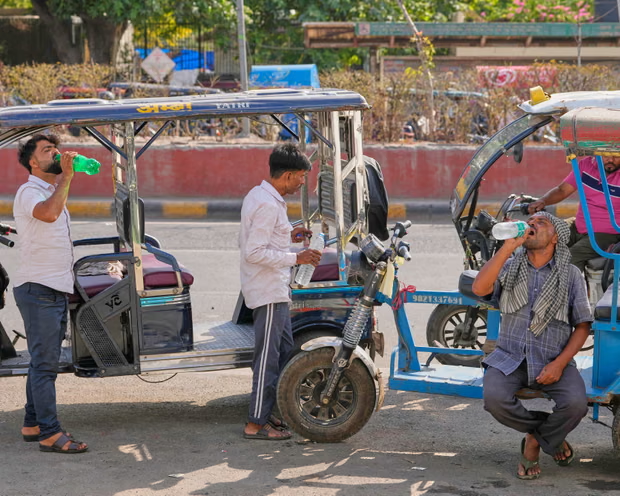
By the time Jalaj Jha begins getting ready for work each morning, he already feels drained. Awakening in a cramped room in Delhi, with no ventilation except a rattling fan pushing hot air around, the twenty-four-year-old gig worker has ahead of him a twelve-hour shift delivering groceries. I barely sleep three or four hours in this heat, Jha said, wiping dust off his motorbike, which he uses for deliveries. I wake up exhausted. It feels like my body is pulling me down. It is only seven in the morning, but the temperature is already thirty degrees Celsius, which is the lowest temperature of the day. During the day it can soar to more than forty-five degrees Celsius. This week, Delhi registered the hottest May day in the last two years, and the warmest May night in fourteen years.
Rising temperatures are turning cities across south and south-east Asia into places where workers can no longer recover from the heat. A new report by United States-based People’s Courage International, using research in Delhi, Dhaka, Kathmandu, Jakarta and Quezon City, has found hotter nights, combined with the urban heat island effect, which is the trapping of heat inside dense cities, are leaving millions of informal workers exhausted before a new workday even begins. For delivery riders, construction workers and street vendors living in cramped settlements with little ventilation or unreliable electricity, sleep itself is becoming difficult. The inability to rest and cool down is worsening heat-related illnesses, reducing productivity and pushing already vulnerable workers into deeper economic stress. The crisis is worsening in south Asia as climate change is predicted to triple the chance of pre-monsoon heatwaves, such as a fifteen-day one that turned deadly last month.
Scientists say night-time temperatures are rising faster than daytime temperatures across much of the region, reducing the hours people once relied on to recover from extreme heat. Across Asia, the International Labour Organization estimates that more than seventy per cent of the workforce are exposed to excessive heat at some point during their jobs, with informal workers among the most vulnerable. This has a big impact in countries like India, where nearly ninety per cent of workers are employed in the informal economy. Experts warn that cities across the region remain poorly prepared for worsening heatwaves. Some governments, including Delhi’s, have introduced heat action plans and advisories, water kiosks, early warning alerts and directions to reschedule outdoor work during peak afternoon heat. But researchers say most responses remain reactive and fail to directly address the needs of workers living and working in extreme heat.
The international report, based on interviews with more than twenty-two hundred internal migrant workers across the five cities, found nearly eight in ten said extreme heat was disrupting their livelihoods or households. Workers reported losing wages because they could not work full shifts, spending more money on water, medicines and transport, and struggling with headaches, dizziness and fatigue during long workdays outdoors. Heat impacts are silent and generally creep up on workers, said researcher Ameena Kidwai. Workers reported impacts across their lives, including at home and work, on their commute, as well as on their mental health and sense of community, Kidwai said. Ajay Kumar, thirty-two, a roadside vegetable vendor in Gurugram on the outskirts of Delhi, spends hours every day pulling a three-wheeler rickshaw loaded with vegetables through dense traffic after buying produce from a wholesale market seven kilometres away.
Every day my head spins with the heat, but I have no option but to work for my family, said Kumar, who has four children. Researchers describe this growing exhaustion as a recovery deficit where workers begin each day already physically depleted. Sleep deprivation, they say, is contributing not only to lower productivity and worsening health, but also to anxiety and emotional exhaustion. Kumar, who moved from a village in Bihar in search of work four years ago, lives with his wife and children in a cramped room with no ventilation except for a rusty fan. He said he wanted to buy a cooler this summer but could not afford one. I barely make three to four hundred rupees a day, and most of that goes in feeding my family, he said. I keep some water with me and damp my scarf, and that helps my head. At night, Kumar’s family often sleep on the open terrace of their building because the room becomes unbearably hot. But even then, it takes me hours to fall asleep.
The situation highlights a massive gap in how cities manage the intersection of urban design, economic growth, and the human cost of climate change. Urban planners note that modern concrete structures absorb vast amounts of solar radiation throughout the day, releasing it back into the local environment long after dusk. This dynamic prevents the traditional cooling period that previously allowed human bodies to reset after grueling physical labor. As a consequence, delivery drivers and outdoor vendors are entering an endless loop of biological stress that chips away at their long-term health. The systemic nature of the problem means individual coping mechanisms, like using wet cloths or sleeping on roofs, are no longer sufficient shields against the environment.
Labor advocates argue that the lack of institutional safeguards for gig workers exacerbates this environmental injustice. Because food delivery riders and couriers are classified as independent contractors rather than formal employees, tech platforms bear little responsibility for their physical welfare. There are no mandatory paid cooling breaks, no health insurance provisions for heatstroke, and no financial compensation for hours lost during peak midday temperatures. The algorithmically driven nature of their work penalizes them for taking breaks, creating a perverse incentive to continue riding even when showing clear symptoms of heat exhaustion. This lack of structural support leaves millions of workers to choose between physical safety and immediate financial survival.
Public health professionals are increasingly concerned about the hidden toll this sustained heat takes on the human body over several years. While heatstroke represents an immediate and visible medical emergency, chronic exposure to extreme temperatures causes quiet damage to vital internal organs. Kidney disease, cardiovascular strain, and persistent metabolic imbalances are becoming far more prevalent among informal urban workers who cannot find regular respite from the warmth. The mental strain of enduring constant discomfort also fractures family dynamics and reduces overall community resilience, creating a widespread societal crisis that extends far beyond the workplace. Without cooling infrastructure, public health systems will face an overwhelming surge in preventable chronic conditions.
Addressing this regional crisis requires a fundamental shift from temporary relief measures to permanent, structural urban reform. Experts suggest that municipal authorities must mandate heat-resilient building codes that prioritize natural ventilation and reflective materials for low-income housing settlements. Expanding urban green spaces and installing large-scale, accessible cooling centers in dense commercial hubs would provide immediate physical relief for transit workers. Furthermore, gig economy platforms must be legally compelled to integrate weather-activated financial bonuses and compulsory rest periods into their delivery dispatch software. Only through comprehensive policy changes can cities protect the vulnerable populations that keep their urban economies running every day.
International climate financing must also pivot to address the specific vulnerabilities of urban informal workers in developing nations. While global funds often focus on large infrastructure projects or agricultural adaptation, the immediate survival of urban labor forces requires targeted micro-investments. Funding could support community-led cooling initiatives, subsidized solar-powered fans for informal settlements, and localized early warning networks designed specifically for outdoor workers. As global temperatures continue to climb, the ability of these workers to endure the heat will determine the economic stability of major metropolitan regions across Asia. Protecting them is not just an ethical obligation, but an absolute necessity for sustainable urban survival.
Related News:
 UK Banks Granted Reprieve as BoE Delays Basel III Capital Rules Until 2028
 Singapore Corruption Scandal: Details Emerge on Iswaran’s Luxury Flight and Ties to Tycoon Ong Beng Seng
 Corfu Beyond the Crowds: Discovering Serenity in Southern Villages and Hidden Taverns
 Peter Andre Praises Son Junior’s ‘Quiet Season’ Amid Ongoing Family Dispute
 Massive 641-Mile Storm Set to Batter UK with 15 Hours of Rain and Strong Winds
 Jeremy Clarkson’s Pub: A Sunday Lunch Like No Other
 Scottish Government Mandates Single-Sex Toilets and Changing Facilities in Schools
 Reeves Faces Setback as Labour May Miss Homes Target
 Kate Winslet to Narrate Film Highlighting King’s Environmental Mission
 Trump’s UK Ambassador Urges North Sea Drilling to Strengthen US Ties
 Federal Immigration Shift: Officers Leave Louisiana for Minneapolis
 Fatal Bolton Taxi Crash Claims Three Teens and Driver
 Australia grants Asio powers to designate hate groups under new laws
 Friedman Uninvited From 2024 Adelaide Writers’ Week
 ScottishPower Tops List of Worst UK Energy Suppliers
 Judi Dench Champions Fight to Save London’s Green Spaces
 Crowborough Camp Welcomes First Asylum Seekers
 BBC Funding Crisis: Tim Davie Warns of Jeopardy Ahead
 ABC Facebook Page Briefly Hacked, Adult Photos Posted
 Artificial intelligence will cost jobs, admits Liz Kendall
 Older Women Vanish from BBC Screens, Review Confirms Bias
 Meta trial over child exploitation claims begins
 Streeting moves on doctor pay to end strike dispute
 Ben Stokes injury joke after brutal ball strike
 UK and US Drop in Global Corruption Index Rankings
 Send spending gap leaves deprived areas behind
 Hidden Crisis: Domestic Abuse Suicide Toll in UK
 UK Unemployment Rate Climbs to 5.2% Peak
 Canberra Poster Seizure Sparks Free Speech Row
 BBC World Cup Presenting Duties Shared Among Trio
 Wales Approves Assisted Dying Bill Consent
 CPS Updates Guidance on Honour-Based and Dowry Abuse
 Stewart Brand on Musk, Bezos and a Life of Long Thinking
 English Cricket Faces Moral Crisis Over Indian Investment
 Jacinda Ardern Move Sparks Kiwi Reflection
 Middle East Airspace Crisis Strands Thousands
 Kelly Wilkinson Inquest Reveals Bail Failure
 Asylum Seekers to Work After Year-Long Wait
 Princess Eugenie steps down as patron of anti-slavery charity
 New Zealand Covid Response Praised Despite Lingering Scars
 Injured Mojtaba Khamenei Elevated as Iran Leader
 The Kill Line: A Shifting Vision of the American Dream
 Inquiry into HMRC child benefit errors launched by NAO
 Family of Alleged Bondi Gunman Seeks Name Suppression
 Rising Costs Force Families to Rethink Days Out
 Air Canada CEO Faces Outcry Over Recent Language Misstep
 Extreme Weather: Europe Shivers as Cyclone Narelle Hits
 Scott Mills Sacked by BBC Over Personal Conduct Claims
 Palantir Boss Defends NHS Deal Amid Government Break Clause
 Asia Turns Back to Coal Amid Middle East Energy Crisis
 Relationship with Trump may be beyond repair, Starmer warned
 Trump’s Six-Week Iranian War: The High Cost of Ignorance
 US and Iran Agree to Two-Week Provisional Ceasefire
 Battle of Britain Tower to House Tourists and Bats
 The Challenger: Will Péter Magyar End the Orbán Era?
 UK Government Poised to Revive Stalled Hillsborough Law
 Democrats Move to Impeach Defense Secretary Pete Hegseth
 Security Alert Near Israeli Embassy as Police Investigate
 Ben Roberts-Smith Denies War Crime Allegations in First Statement
 Home Office Faces Legal Risks Over Asylum Hotel Living
 US-Iran Standoff: Will Trump Deploy Ground Troops?
 Crisis in NHS Surgery Scheduling Hits Patients Hard
 Investigation Into Anti-Trump Motives After Gala Shooting
 Dubai Assets Linked to Sudan’s RSF Militia Exposed
 Blue Badge Abuse: The Rising Tide of Public Hostility
 The Fear Gap: Why Europe Feels Less Safe Than It Is
 US Military Pacific Boat Strike Kills Three People
 Dettol Apologises for ‘Toxic Men’ Advert Backlash in China
 UK Care Crisis: Row Explodes Over New Visa Settlement Rules
 Sainsbury’s Boss Optimistic As Grocery Inflation Eases
 US Advance Past Bosnia in World Cup Thriller
 Trump’s Mount Rushmore Speech: A Divisive Anniversary
 Trump’s Red-Card Intervention Hurts the US World Cup
 US Airman Avoids British Court in Indecent Exposure Case
 Britain’s Mini Fan Craze Sparks Major Waste Crisis
 Trump Swaps Planes Amid Iran Tensions
 Ann Widdecombe, Formidable Political Figure, Dies at 78
 UK Schools Struggle as Classrooms Top 40C
 Yemen Accuses Iran of Violating National Sovereignty
 Houthis Strike Saudi Arabia as Middle East Tensions Rise