Published: 26 May 2026. The English Chronicle Desk. The English Chronicle Online.
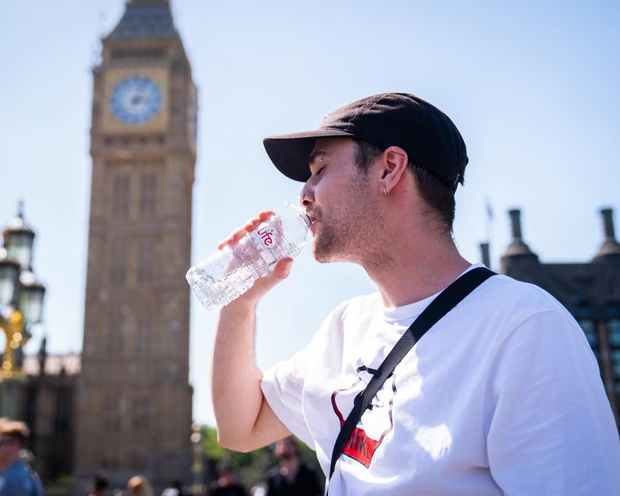
The United Kingdom is currently experiencing an extraordinary and unprecedented period of early summer weather. This dramatic weather shift has broken multiple historical temperature records across the entire nation. Mainstream media outlets and social media platforms are filled with stories of this heat. Citizens from London to Edinburgh are sharing their experiences of the intense sunshine. Experts confirm this is not just a standard spell of pleasant spring weather. The Met Office has officially reported that the country is seeing truly historic temperatures. Monday brought a level of heat never before documented during this time of year. Millions of residents are now adjusting to conditions usually seen in mid-summer.
A remarkable milestone was reached as the nation experienced a genuine tropical night. This phenomenon occurs when overnight temperatures fail to drop below the twenty-degree Celsius mark. At Kenley airfield in south London, the mercury stayed above twenty-one point three degrees. This milestone represents a significant departure from typical British springtime conditions during May. It is the second consecutive day that the overnight minimum temperature record was broken. On the previous Sunday evening, the same location recorded a low of nineteen point four. That brief record was shattered just twenty-four hours later by this current heatwave. Such consecutive record-breaking events are exceptionally rare in British meteorological history.
The daytime temperatures have been equally astonishing for meteorologists and the general public. Kew Gardens in south-west London recorded a staggering peak of thirty-four point eight degrees. This figure represents the highest provisional meteorological spring temperature ever recorded in the UK. The previous maximum temperature for May had stood firmly for many decades. That old record of thirty-two point eight degrees was reached in nineteen twenty-two. It was later matched in nineteen forty-four but had never been exceeded until now. Shuttering a record that stood for over eighty years highlights the current situation. The sheer scale of this heatwave has caught the attention of international observers.
The extreme heat is not isolated to just a few London parks. The Met Office confirmed that twelve separate monitoring locations broke existing records on Monday. These historic readings stretched from Suffolk in the east to Berkshire and Warwickshire. Furthermore, ninety-seven individual monitoring sites reached or surpassed thirty degrees Celsius on Monday. This widespread heat demonstrates that the weather system is affecting vast areas of England. The geographic spread of these high temperatures has surprised many long-term weather watchers. It shows a systemic shift rather than a localized spike in daily temperatures. The intensity of the sun has transformed the English landscape within days.
Senior meteorologists have expressed deep concern over the speed of this development. In the past, traditional British heatwaves built up slowly over many consecutive days. Today, these extreme thermal events develop rapidly and with immense atmospheric power. Forecasters state that the ongoing climate crisis is actively boosting this intense heat. The baseline global temperature has risen due to decades of carbon pollution. This higher baseline allows weather systems to reach unprecedented peaks very quickly. The speed of the onset leaves less time for the public to prepare. It creates immediate challenges for infrastructure and public health systems across Britain.
The hot weather is expected to continue through Tuesday for many regions. Highs of thirty-five degrees are predicted for large swathes of southern England. Some specific areas in Wales could even see the mercury reach thirty-six. These intense forecasts cover the Midlands alongside the south-east and the south-west. East Anglia and south Wales are also included in these severe weather warnings. Residents in these areas are being advised to take sensible precautions against heat. Finding shade and staying hydrated are essential during these peak afternoon hours. The prolonged sunshine is altering daily routines for workers and students alike.
Official heatwave thresholds are being met across a massive portion of the country. To qualify as a heatwave, temperatures must meet specific limits for three days. For this time of year, the highest threshold in London is twenty-eight. By Sunday evening, eight parts of England had already met these strict conditions. These locations included Heathrow, Kew Gardens, Northolt, and areas within Oxfordshire and Suffolk. Essex also joined the list of places experiencing official heatwave conditions quite early. Analysts expect the final number of qualifying locations to rise much higher. Complete data from the busy bank holiday weekend is still being processed.
The sudden arrival of extreme heat has brought significant risks of wildfires. On Monday evening, a major fire broke out in Edinburgh’s Holyrood Park. The blaze began in the dry vegetation near the historic St Anthony’s chapel. Emergency services were alerted to the spreading flames at around six-fifty PM. Firefighters worked tirelessly through the night to bring the wildfire under control. Thick clouds of smoke rose over Arthur’s Seat, visible across the city. Two fire engines remained at the scene on Tuesday morning to extinguish hotspots. Local residents were strongly advised to keep their windows closed as a precaution.
This extreme weather event is not confined solely to the British Isles. Similar intense heatwaves are currently sweeping across continental Europe this week. France and Spain are also expecting to break temperature records on Tuesday afternoon. Scientists agree that the risk of unnatural heat extremes is rising globally. A blanket of carbon pollution is effectively smothering the Earth and trapping heat. This pollution is driving average global temperatures to unprecedented and dangerous levels. The current European heatwave is a direct symptom of this broader global trend. International cooperation on emissions is increasingly seen as a vital necessity.
Climate experts are urging immediate action on both mitigation and long-term adaptation. Cutting global emissions to net zero remains the primary goal for scientists. This reduction is the only definitive way to halt worsening climate change. However, more extreme heat is already locked into our near future. The global weather pattern known as El Niño is expected to develop soon. When El Niño joins forces with climate change, more records will fall. This combination could make the coming years even hotter than this current one. Managing the immediate impacts has become a priority for local governments.
Adapting to our already warmed climate is now an urgent economic consideration. The UK Climate Change Committee highlighted this point in a recent report. They noted that proactive adaptation is far less costly than reacting to disasters. Building resilient infrastructure can protect citizens from the dangers of extreme heatwaves. Upgrading housing, transport links, and water systems will save significant public funds. It also protects vulnerable populations from the direct physical threats of extreme weather. The current May heatwave serves as a powerful reminder of this reality.
Temperatures are expected to decline gradually as the week progresses toward midweek. However, the weather will remain warm, with highs staying in the late twenties. Dry and sunny spells will persist, providing pleasant conditions after the intensity breaks. This slight cooling trend will offer welcome relief to many sweltering communities. It will allow emergency services and infrastructure networks to recover from the strain. The historic nature of this week will be analyzed for months to come. It marks a clear turning point in the story of British springtime.
Related News:
 Reeves Faces Setback as Labour May Miss Homes Target
 Kate Winslet to Narrate Film Highlighting King’s Environmental Mission
 Trump’s UK Ambassador Urges North Sea Drilling to Strengthen US Ties
 UK Bans Fake Numbers: Scammers Lose Their Trick
 M&S Profits More Than Halve After Cyber-Attack
 Patients to Test Health at Home to Ease NHS Winter Pressure
 Millionaires group urge Reeves to introduce wealth tax to ‘lift kids out of poverty’
 Reeves rejects £1bn plea for NHS redundancy payouts
 Northern Lights may illuminate UK skies this week
 PM Condemns Leaks, Vows Loyalty to Ministers and Stability
 Major Rent Reform Ends No-Fault Evictions in England
 Stroke Patient Mistaken for Drunk, Care Delayed
 Inside the Helpline Protecting Missing Children in the UK
 Boots Showstopper Beauty Bundle Outshines Many Advent Calendars This Holiday Season
 PlayStation PS5 Deals Hit Lowest Prices Ahead of Black Friday
 Five-Year-Old Dies After Rare Tonsil Surgery Complication
 Starmer Says Labour’s Economic Plan Needs Years to Deliver
 UK unemployment rises to four-year high of 5.1% before budget
 Wiltshire Police Use Lasso to Catch Rampaging Village Goat
 Coasting Drinks: The Trend Redefining Alcohol Enjoyment This New Year
 Rising Hate Crimes Threaten Safety on UK Public Transport
 Starmer Faces Parliamentary Battles Over UK-EU ‘Reset’ Plan
 Met Police Vetting Failures Let Serial Rapists Remain
 Google Employee Claims Redundancy After Harassment Report
 Fatal Bolton Taxi Crash Claims Three Teens and Driver
 ScottishPower Tops List of Worst UK Energy Suppliers
 Judi Dench Champions Fight to Save London’s Green Spaces
 Crowborough Camp Welcomes First Asylum Seekers
 BBC Funding Crisis: Tim Davie Warns of Jeopardy Ahead
 Artificial intelligence will cost jobs, admits Liz Kendall
 Older Women Vanish from BBC Screens, Review Confirms Bias
 Streeting moves on doctor pay to end strike dispute
 Send spending gap leaves deprived areas behind
 Hidden Crisis: Domestic Abuse Suicide Toll in UK
 UK Unemployment Rate Climbs to 5.2% Peak
 BBC World Cup Presenting Duties Shared Among Trio
 Wales Approves Assisted Dying Bill Consent
 CPS Updates Guidance on Honour-Based and Dowry Abuse
 Asylum Seekers to Work After Year-Long Wait
 Inquiry into HMRC child benefit errors launched by NAO
 Rising Costs Force Families to Rethink Days Out
 Scott Mills Sacked by BBC Over Personal Conduct Claims
 Palantir Boss Defends NHS Deal Amid Government Break Clause
 Relationship with Trump may be beyond repair, Starmer warned
 UK Government Poised to Revive Stalled Hillsborough Law
 UK Staycations Rise as Travel Fears Grow
 Home Office Faces Legal Risks Over Asylum Hotel Living
 Official Admits Debate Over Mandelson Vetting Records
 Crisis in NHS Surgery Scheduling Hits Patients Hard
 Welsh Labour Faces Potential Historic Election Defeat
 Blue Badge Abuse: The Rising Tide of Public Hostility
 UK Faces Future Where Deaths Outnumber Births Yearly
 Scott Parker Leaves Burnley After Premier League Drop
 Silent Tracks: Rail Line Without Passengers
 RFU Backs Borthwick Despite England’s Poor Six Nations
 Major test for Labour as polls open in Great Britain
 Keir Starmer Struggles to Secure His Grip on Downing Street
 Fear and Betrayal: The Chilling Case of Kouri Richins
 Farage Faces Standards Probe Over Cash Property Purchase
 Closing the Gap: UK Pensions Commission Demands Action
 Sun and Jams: Britain Braces for a Sizzling Bank Holiday
Russian Electronic Attack Targets UK Defence Chief Jet
Sun and Jams: Britain Braces for a Sizzling Bank Holiday
Russian Electronic Attack Targets UK Defence Chief Jet
 UK Shoppers Face Prolonged Price Rises At Tills
 Tube Strike Brings Capital to a Standstill Over Shift Disputes
 BP Stands Firm on Amanda Blanc Amid Boardroom Storm
 Teaching Machines Right From Wrong in the Digital Age
 UK House Prices Drop For Third Month Due To War Fears
 The Hidden Crisis Eroding Trust in British Communities
 Deepfake Abuse on X Sparks Safety Concerns for Dissidents
 Stolen Mobiles Could Soon Become Useless Bricks
 Clean Air Initiatives Spark Major Fall in London Hospital Admissions
 United Kingdom Politics Worse Now Than Before Brexit, Warns MP
 Russian Tanker Captain Remanded in UK Court After Channel Seizure
 Shocking Zoo Incident Sparks Attempted Murder Probe
 The Hybrid School Revolution Defying the Social Media Ban
 UK Care Crisis: Row Explodes Over New Visa Settlement Rules
 Sainsbury’s Boss Optimistic As Grocery Inflation Eases
 US Airman Avoids British Court in Indecent Exposure Case
 Ann Widdecombe, Formidable Political Figure, Dies at 78
 UK Schools Struggle as Classrooms Top 40C